Cosmic Latte: The Universe's Average Colour Revealed

The universe's average colour, known as cosmic latte, is a beige hue derived from the light of 200,000 galaxies.
| Active satellites | 15,738 |
| Catalogued objects | 31,269 |
| Starlink active | 9,985 |
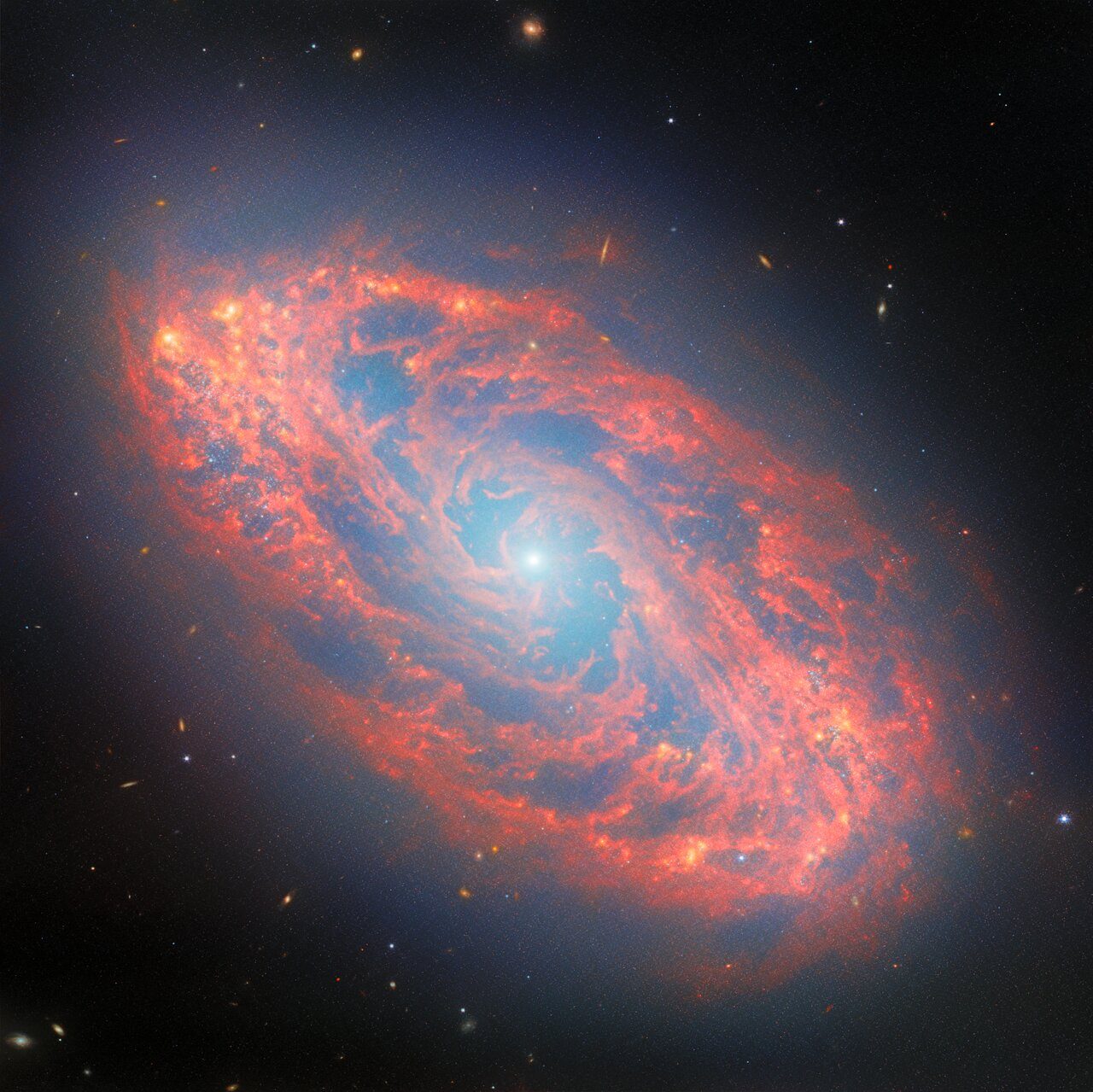
The universe, in its vast complexity, can be distilled into a single average colour: a shade whimsically named 'cosmic latte'. This hue, a light beige, was determined by averaging the light emitted from 200,000 galaxies as part of the 2dF Galaxy Redshift Survey. The resulting colour, represented in computer terms as #FFF8E7, reflects the composite light of stars and galaxies, revealing a universe that has shifted towards redder tones over the past 10 billion years.
The Science Behind the Shade
The transition towards a redder cosmic spectrum suggests a shift in stellar populations, with redder stars becoming more prevalent. This change is indicative of the universe's ageing process, as older, cooler stars dominate the light output. The study of such cosmic averages offers insights into the lifecycle of galaxies and the evolution of the universe itself. For those interested in observing the night sky, tools like Orbital Radar's pass predictor can help track visible satellite passes, providing a practical connection to the celestial sphere.
Frequently Asked Questions
What is the average colour of the universe?
How was the universe's average colour determined?
Cite this article
Pick a style, then copy it or download it for your reference manager.Orbital Radar. (2026, September 29). Cosmic Latte: The Universe's Average Colour Revealed. Retrieved November 13, 2026, from https://orbitalradar.com/blog/cosmic-gallery-2026-09-29
“Cosmic Latte: The Universe's Average Colour Revealed.” Orbital Radar, 29 Sept. 2026, orbitalradar.com/blog/cosmic-gallery-2026-09-29. Accessed 13 Nov. 2026.
Orbital Radar (2026) Cosmic Latte: The Universe's Average Colour Revealed. Available at: https://orbitalradar.com/blog/cosmic-gallery-2026-09-29 (Accessed: 13 November 2026).
Orbital Radar. “Cosmic Latte: The Universe's Average Colour Revealed.” Last modified September 29, 2026. https://orbitalradar.com/blog/cosmic-gallery-2026-09-29.
@misc{orbitalradar_blog_cosmic_gallery_2026_09_29,
  author       = {{Orbital Radar}},
  title        = {Cosmic Latte: The Universe's Average Colour Revealed},
  year         = {2026},
  month        = sep,
  howpublished = {\url{https://orbitalradar.com/blog/cosmic-gallery-2026-09-29}},
  url          = {https://orbitalradar.com/blog/cosmic-gallery-2026-09-29},
  urldate      = {2026-11-13},
  note         = {Accessed 2026-11-13}
}
TY - ELEC AU - Orbital Radar, TI - Cosmic Latte: The Universe's Average Colour Revealed PY - 2026 DA - 2026/09/29 PB - Orbital Radar UR - https://orbitalradar.com/blog/cosmic-gallery-2026-09-29 Y2 - 2026/11/13 LA - en ER -
Live figures change, so keep the date you accessed the page. How to cite Orbital Radar