A Celestial Encounter: Comet Tempel 2 Meets Messier 30
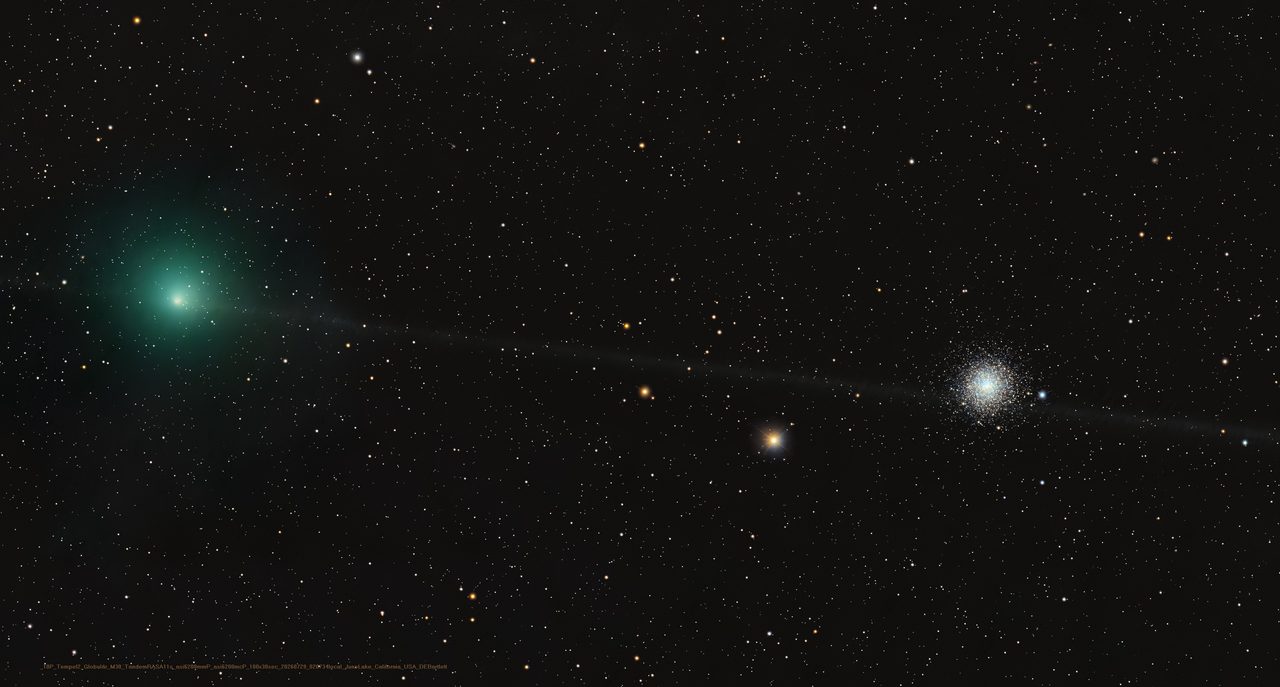
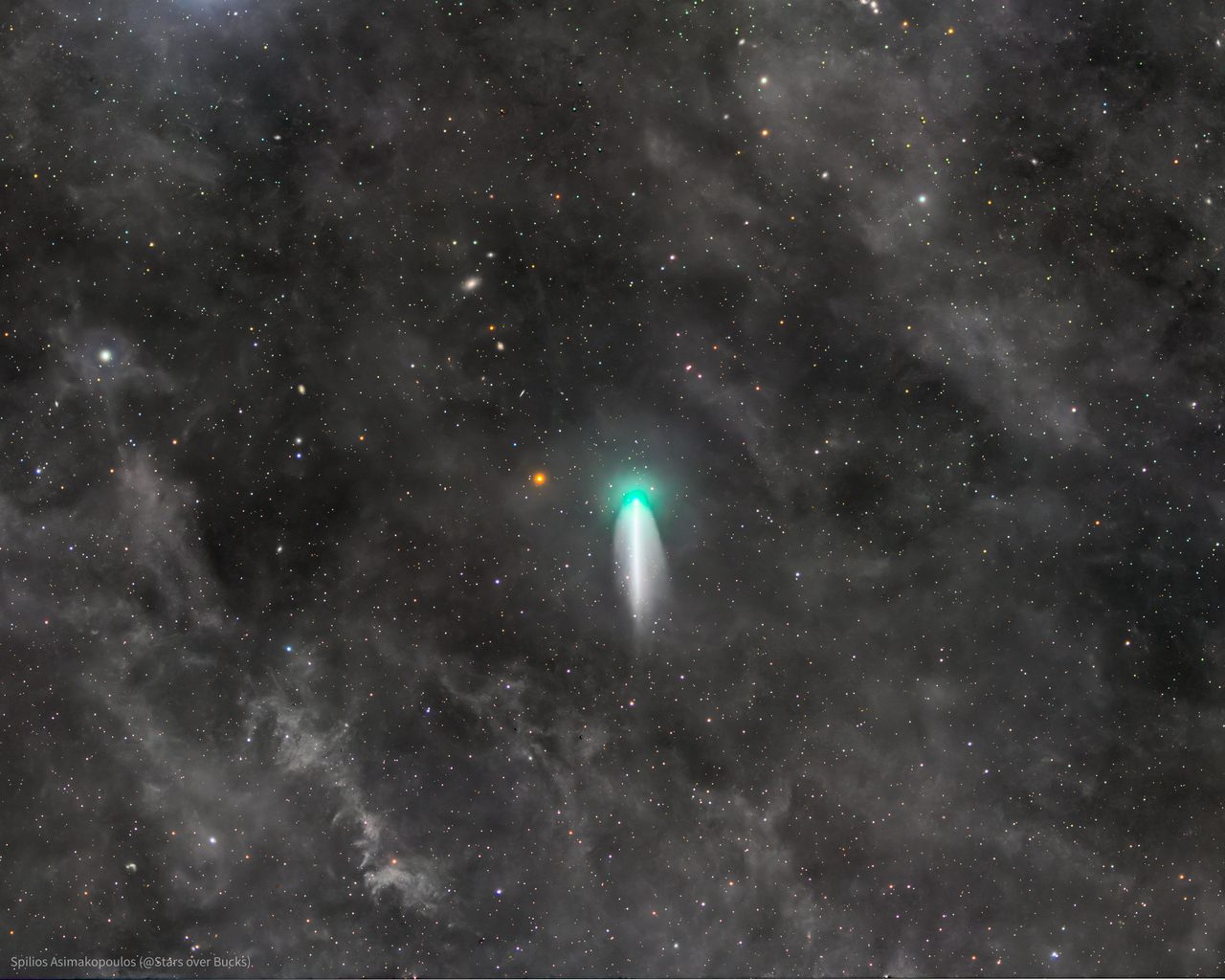
Comet Tempel 2 and globular cluster Messier 30 share the sky in a rare celestial encounter, captured in a stunning image.
In a captivating celestial scene, periodic comet 10P/Tempel 2 appears to dance with the globular star cluster Messier 30. Captured on July 29, this image showcases the comet's greenish coma juxtaposed against the dense star field of M30. While the comet is a mere 3.5 light-minutes from Earth, Messier 30 lies at a staggering distance of 28,000 light-years. This juxtaposition highlights the vast scales of space, where objects separated by immense distances can appear side by side in our night sky.
The Legacy of Charles Messier
Charles Messier, an 18th-century astronomer, famously catalogued objects that could be mistaken for comets. His Messier Catalogue remains a valuable resource for astronomers today, listing nebulae and star clusters like M30. Comet Tempel 2, named after its discoverer Wilhelm Tempel, follows a predictable orbit, making it a periodic comet. Such comets, with their regular returns, offer insights into the dynamics of our solar system.
Observing the Night Sky
For those keen to observe celestial events, tools like the Orbital Radar pass predictor can help plan your stargazing sessions. While comets like Tempel 2 may require a telescope to view, understanding their paths and interactions with other celestial bodies enriches our appreciation of the cosmos.
Frequently Asked Questions
What is Comet Tempel 2?
What is a globular star cluster?
📎 Cite this article
Orbital Radar Newsroom. (2026). A Celestial Encounter: Comet Tempel 2 Meets Messier 30. Orbital Radar. https://orbitalradar.com/blog/cosmic-gallery-2026-08-08"A Celestial Encounter: Comet Tempel 2 Meets Messier 30." Orbital Radar, 9 August 2026, https://orbitalradar.com/blog/cosmic-gallery-2026-08-08.@misc{orbitalradar_cosmic_gallery_2026_08_08,
title = {A Celestial Encounter: Comet Tempel 2 Meets Messier 30},
author = {{Orbital Radar}},
year = {2026},
howpublished = {\url{https://orbitalradar.com/blog/cosmic-gallery-2026-08-08}}
}