The Pulsar's Dance: A Cosmic Metronome in the Sky
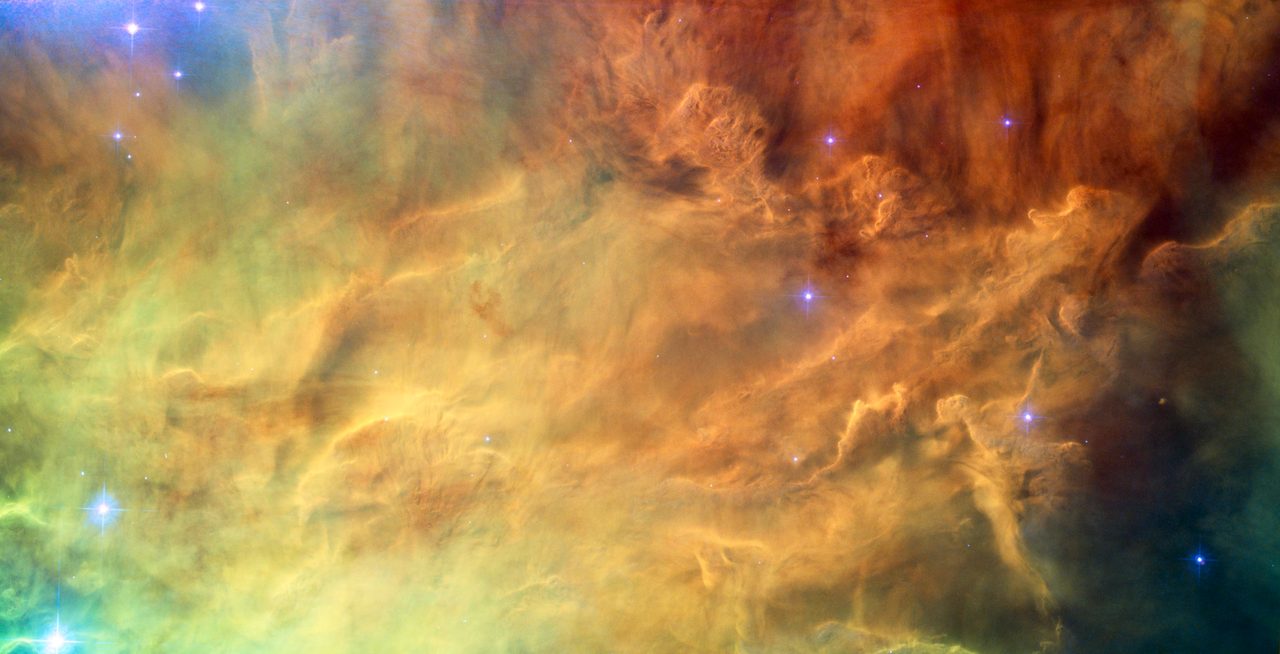
Discover the pulsar, a cosmic marvel spinning 716 times per second, and its role in space science.
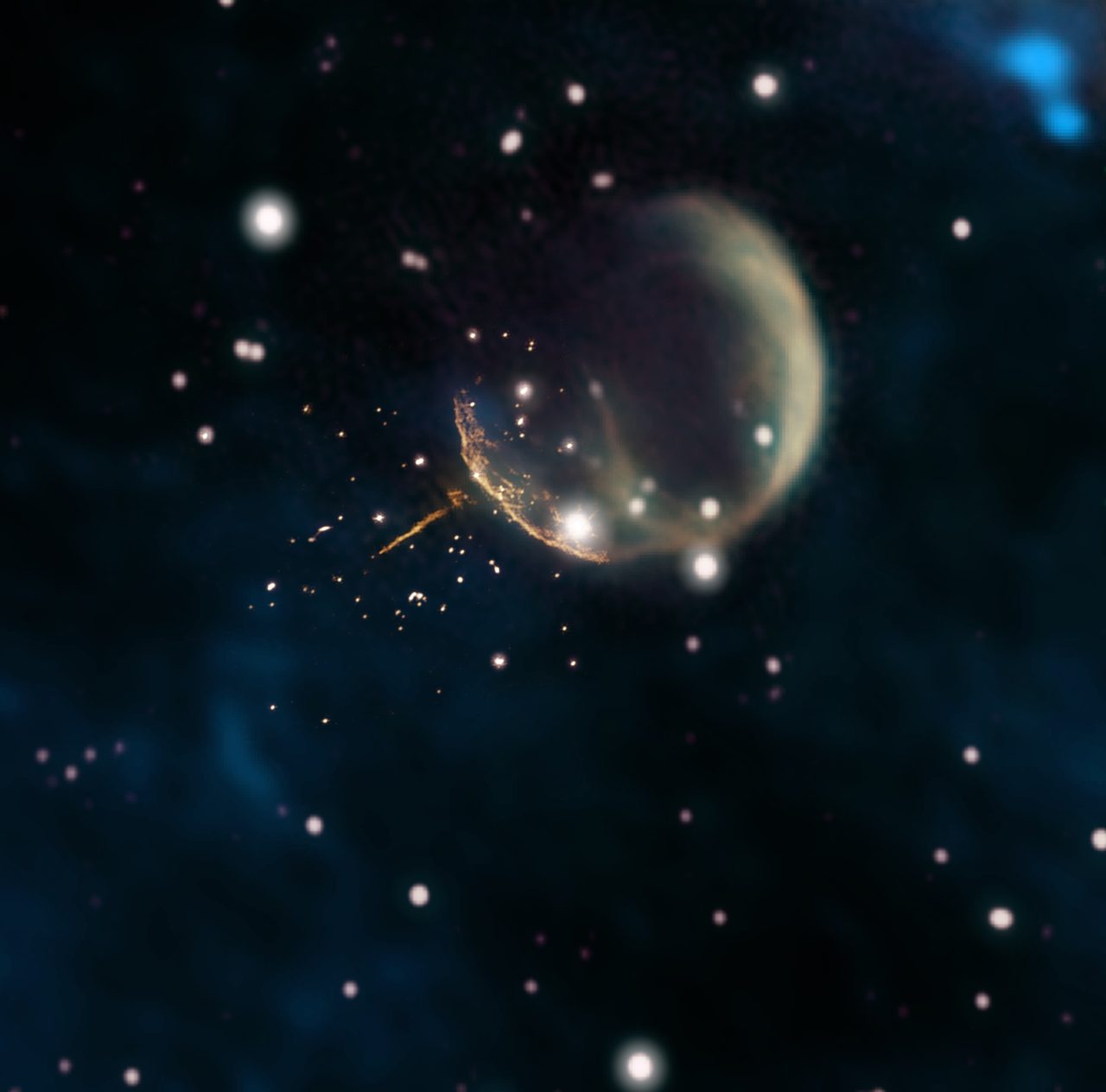
Pulsars, the remnants of massive stars, are among the universe's most precise natural clocks. These neutron stars emit beams of electromagnetic radiation from their magnetic poles, which sweep across Earth as they rotate. The pulsar highlighted today spins at an astonishing rate of 716 times per second, making it one of the fastest known. This rapid rotation is a result of the conservation of angular momentum, akin to a figure skater pulling in their arms to spin faster.
Pulsars are not just fascinating for their speed; they are also valuable tools for astronomers. Their regular pulses allow scientists to study extreme states of matter, test the laws of physics under intense conditions, and even detect gravitational waves. The precision of pulsars makes them excellent candidates for navigation in space, a concept being explored for future deep-space missions.
For those interested in observing the sky, while pulsars themselves are not visible to the naked eye, their influence can be felt in various space missions. You can track satellites and other celestial objects that might be visible from your location using the Orbital Radar pass predictor.
Frequently Asked Questions
What is a pulsar?
How fast can pulsars spin?
📎 Cite this article
Orbital Radar Newsroom. (2026). The Pulsar's Dance: A Cosmic Metronome in the Sky. Orbital Radar. https://orbitalradar.com/blog/cosmic-gallery-2026-06-19"The Pulsar's Dance: A Cosmic Metronome in the Sky." Orbital Radar, 19 June 2026, https://orbitalradar.com/blog/cosmic-gallery-2026-06-19.@misc{orbitalradar_cosmic_gallery_2026_06_19,
title = {The Pulsar's Dance: A Cosmic Metronome in the Sky},
author = {{Orbital Radar}},
year = {2026},
howpublished = {\url{https://orbitalradar.com/blog/cosmic-gallery-2026-06-19}}
}