Unveiling the Mysteries of Galaxy NGC 474's Shells
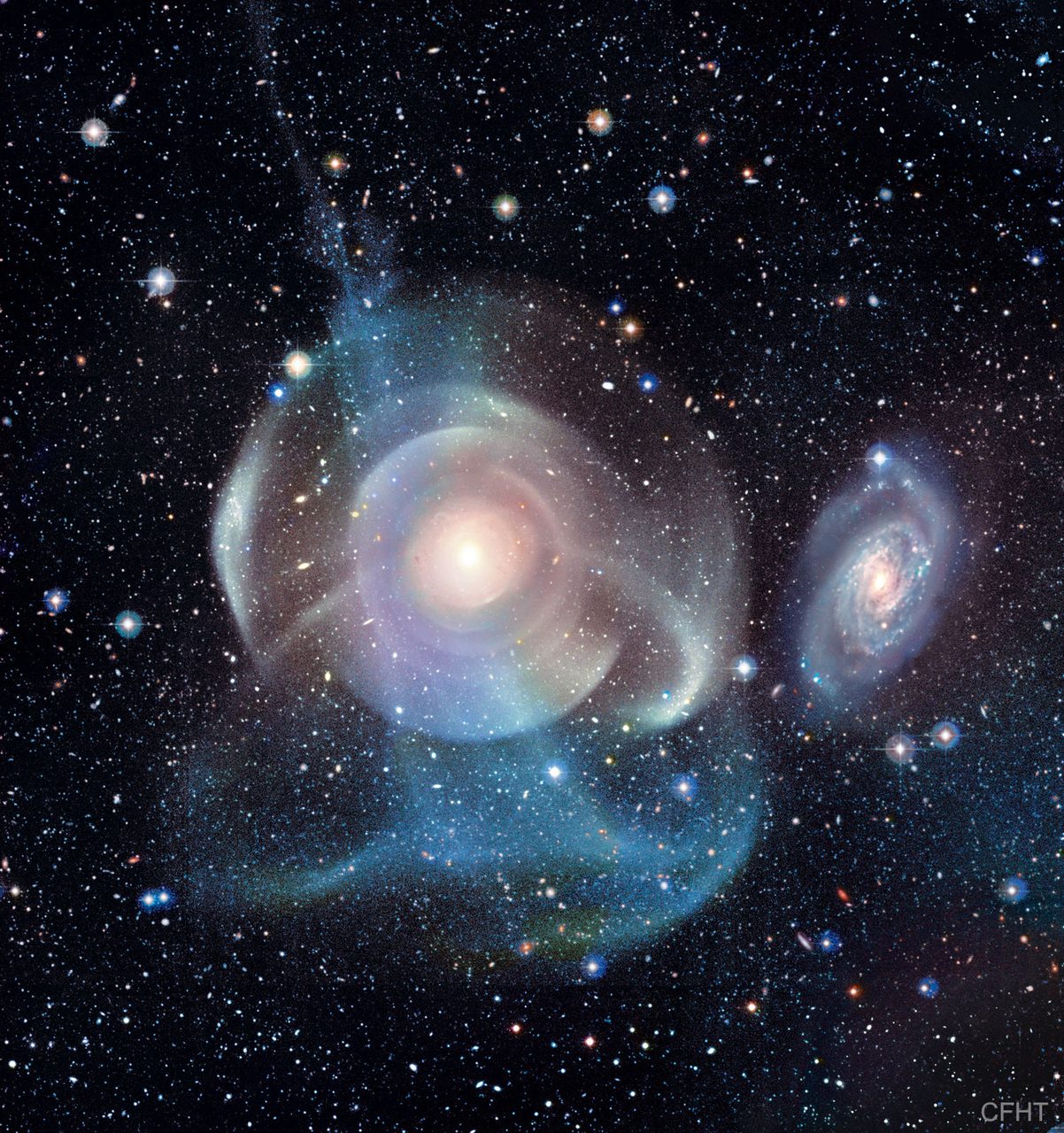
Galaxy NGC 474's shells reveal a complex history of cosmic interactions, possibly from tidal tails or density waves.
The galaxy NGC 474, located approximately 100 million light years away in the constellation Pisces, presents a captivating astronomical puzzle. Unlike typical elliptical galaxies, NGC 474 displays multiple shell-like structures in its halo, suggesting a tumultuous past. These shells might be the remnants of smaller galaxies absorbed over the past billion years, or they could represent density waves caused by an ongoing collision with a nearby spiral galaxy. This image highlights the intricate and dynamic nature of galaxy halos, challenging our understanding of galactic evolution.
Galactic Interactions and Cosmic Evolution
The shells of NGC 474 underscore the dynamic processes that shape galaxies over cosmic timescales. Such features are not unique to NGC 474; our own Milky Way exhibits similar complexities in its halo, hinting at a history of mergers and interactions. These phenomena are crucial for understanding the broader context of galaxy formation and evolution. The study of tidal tails and density waves provides insights into the gravitational forces at play in the universe, offering a window into the past interactions that have shaped galaxies like NGC 474.
Observing the Cosmic Ballet
For those interested in observing galaxies like NGC 474, a telescope capable of capturing deep-sky images is essential. While NGC 474's shells are subtle, they are a testament to the rich tapestry of cosmic interactions that can be observed with the right equipment. To explore other celestial phenomena, you can use the Orbital Radar Pass Predictor to track visible satellite passes and enhance your stargazing experience.
Frequently Asked Questions
What causes the shells around galaxy NGC 474?
How far is galaxy NGC 474 from Earth?
📎 Cite this article
Orbital Radar Newsroom. (2026). Unveiling the Mysteries of Galaxy NGC 474's Shells. Orbital Radar. https://orbitalradar.com/blog/cosmic-gallery-2026-07-12"Unveiling the Mysteries of Galaxy NGC 474's Shells." Orbital Radar, 13 July 2026, https://orbitalradar.com/blog/cosmic-gallery-2026-07-12.@misc{orbitalradar_cosmic_gallery_2026_07_12,
title = {Unveiling the Mysteries of Galaxy NGC 474's Shells},
author = {{Orbital Radar}},
year = {2026},
howpublished = {\url{https://orbitalradar.com/blog/cosmic-gallery-2026-07-12}}
}