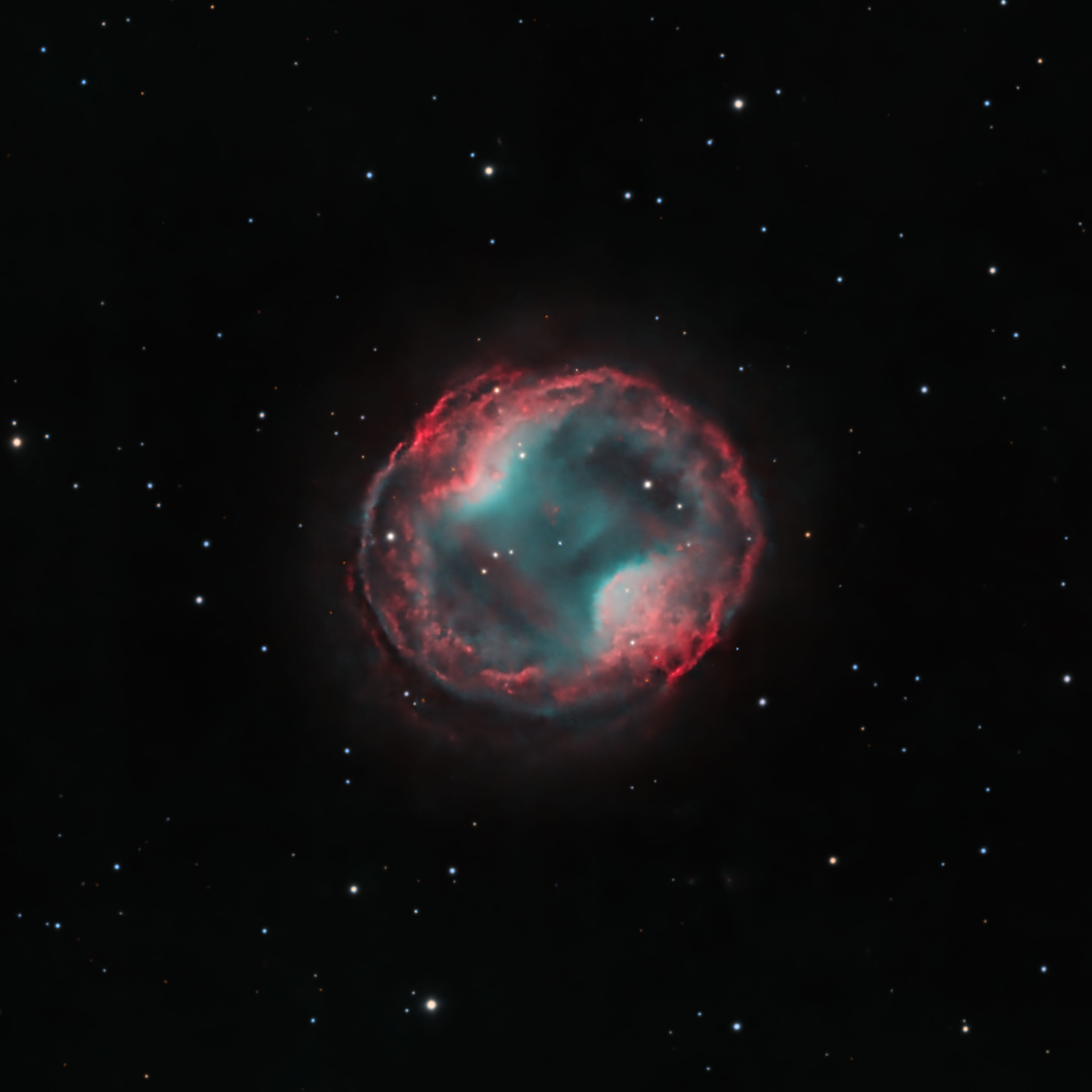
Unveiling the Lion's Head Nebula: A Stellar Endgame
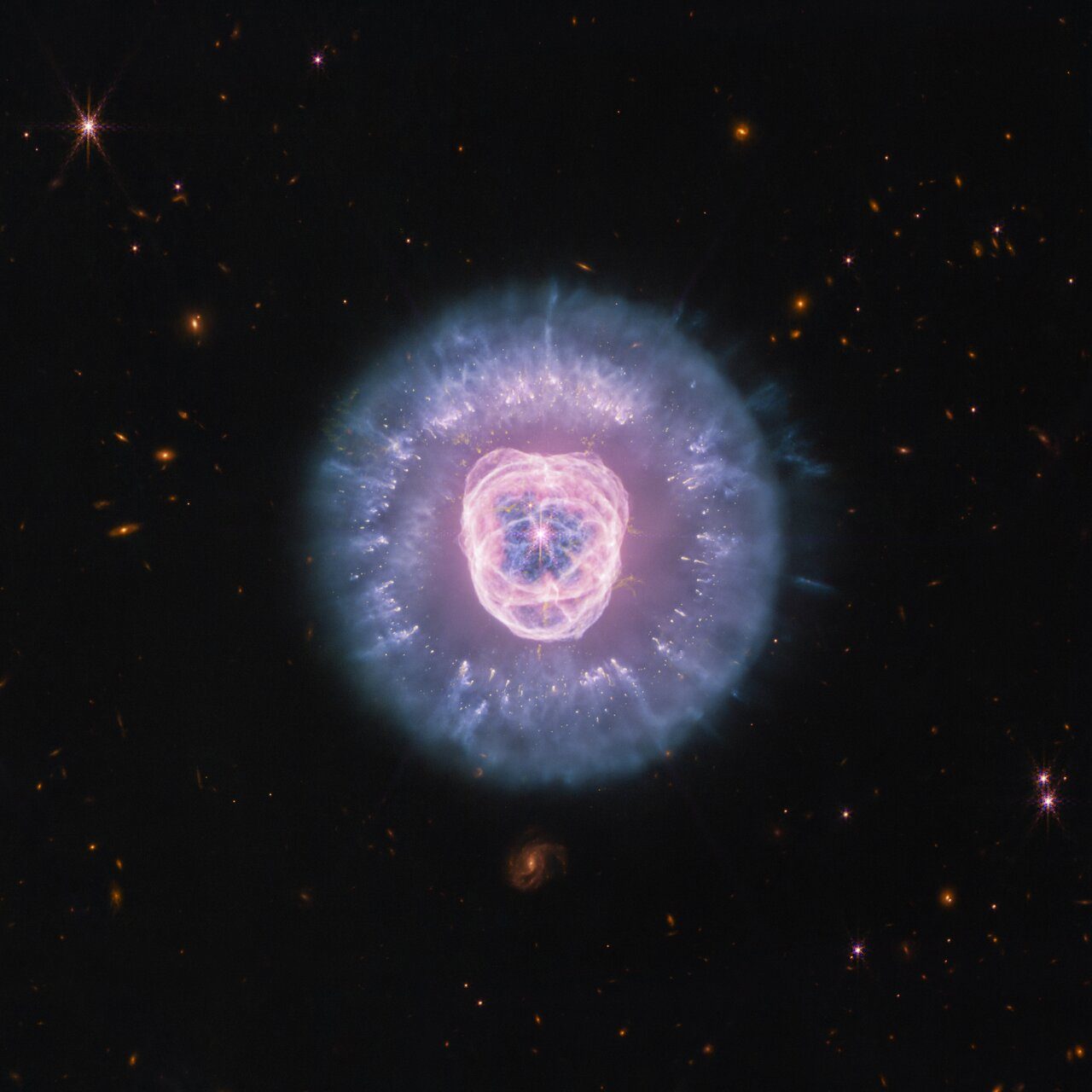
The James Webb Space Telescope reveals the Lion's Head Nebula, showcasing the remnants of a Sun-like star and offering insights into stellar evolution.
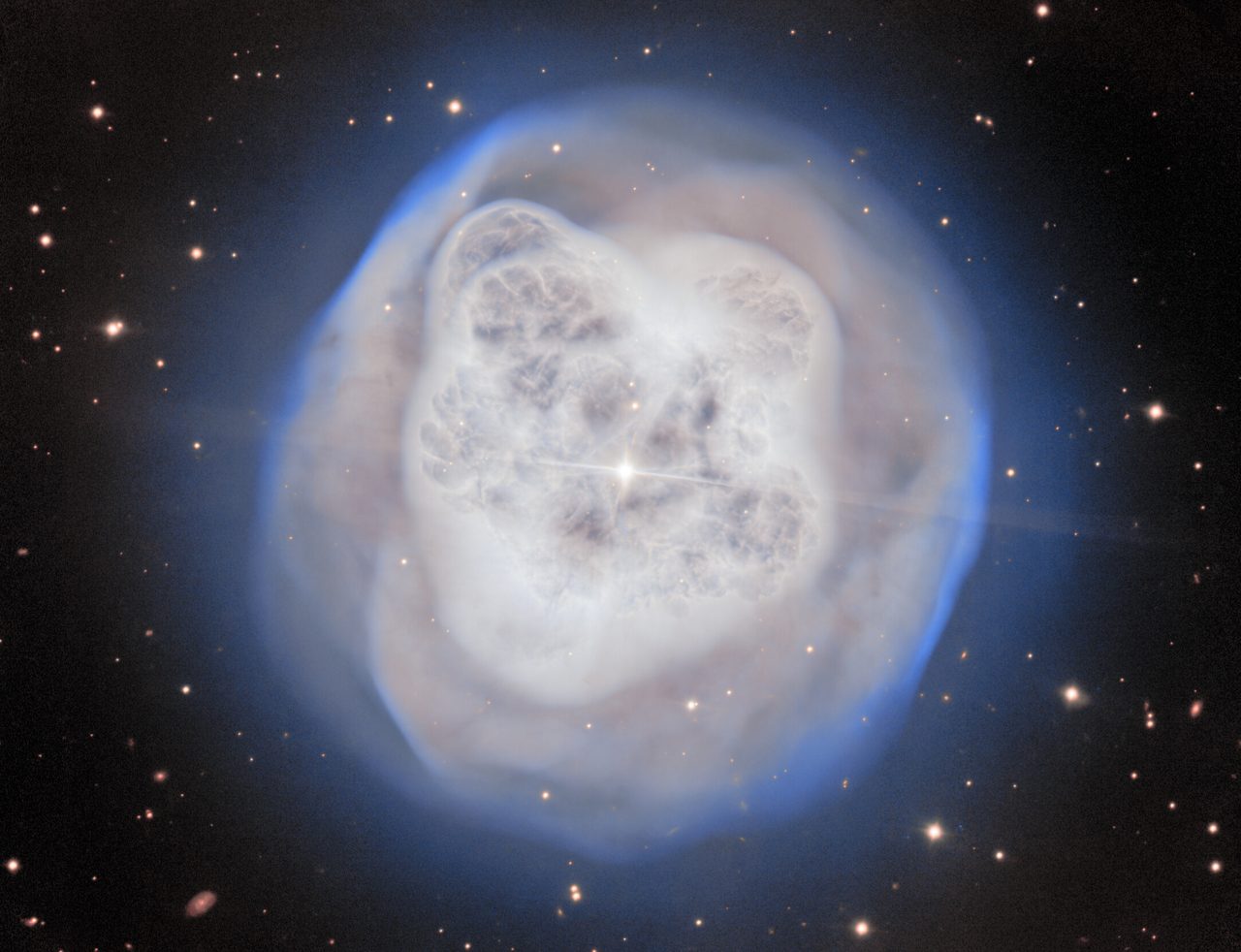
The James Webb Space Telescope (JWST) has captured a stunning image of the Lion's Head Nebula, also known as NGC 2392. This nebula is a planetary nebula, a term used to describe the glowing shell of gas and dust ejected by a star similar to our Sun in its final stages. The image, taken with JWST's NIRCam and MIRI instruments, reveals intricate details of the nebula's structure, including the central white dwarf—the remnant core of the star—surrounded by ionized gas and dust clumps. These features form the striking visage of a lion's head, with the white dwarf at its nose.
The Lion's Head Nebula is a testament to the fate that awaits stars like our Sun. As these stars exhaust their nuclear fuel, they shed their outer layers, creating a vibrant display of ionized gases. The intense radiation from the white dwarf ionizes the surrounding gas, causing it to glow and expand into complex shapes. This process provides astronomers with a laboratory to study the interactions between stellar remnants and their expelled materials, offering clues about the lifecycle of stars and the evolution of our galaxy.
Connecting the Dots in Space Science
The study of planetary nebulae like the Lion's Head Nebula is crucial for understanding the chemical enrichment of the universe. As stars shed their outer layers, they release elements such as carbon, nitrogen, and oxygen into the interstellar medium, contributing to the formation of new stars and planets. This process is a key component of the cosmic cycle of matter.
The JWST's observations of NGC 2392 also highlight the importance of advanced telescopes in space science. By providing high-resolution images and data across multiple wavelengths, instruments like JWST enable scientists to probe the physical conditions within nebulae and refine models of stellar evolution. For those interested in tracking the progress of JWST and other missions, the Orbital Radar Launch Schedule offers updates on upcoming launches and missions.
Frequently Asked Questions
What is the Lion's Head Nebula?
How does the James Webb Space Telescope observe nebulae?
📎 Cite this article
Orbital Radar Newsroom. (2026). Unveiling the Lion's Head Nebula: A Stellar Endgame. Orbital Radar. https://orbitalradar.com/blog/cosmic-gallery-2026-08-26"Unveiling the Lion's Head Nebula: A Stellar Endgame." Orbital Radar, 27 August 2026, https://orbitalradar.com/blog/cosmic-gallery-2026-08-26.@misc{orbitalradar_cosmic_gallery_2026_08_26,
title = {Unveiling the Lion's Head Nebula: A Stellar Endgame},
author = {{Orbital Radar}},
year = {2026},
howpublished = {\url{https://orbitalradar.com/blog/cosmic-gallery-2026-08-26}}
}