Unveiling the Crystal Ball Nebula: A Stellar Dance
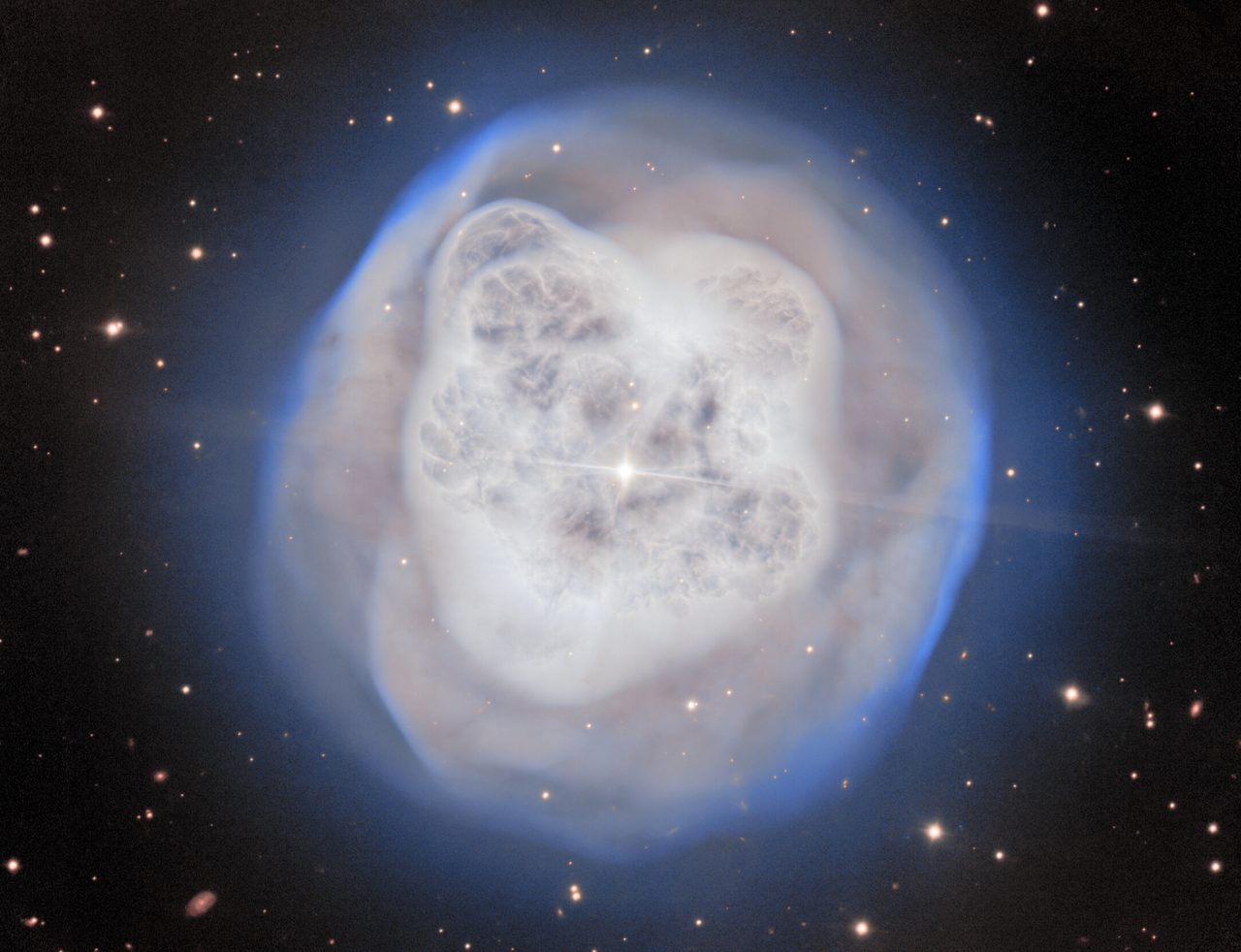
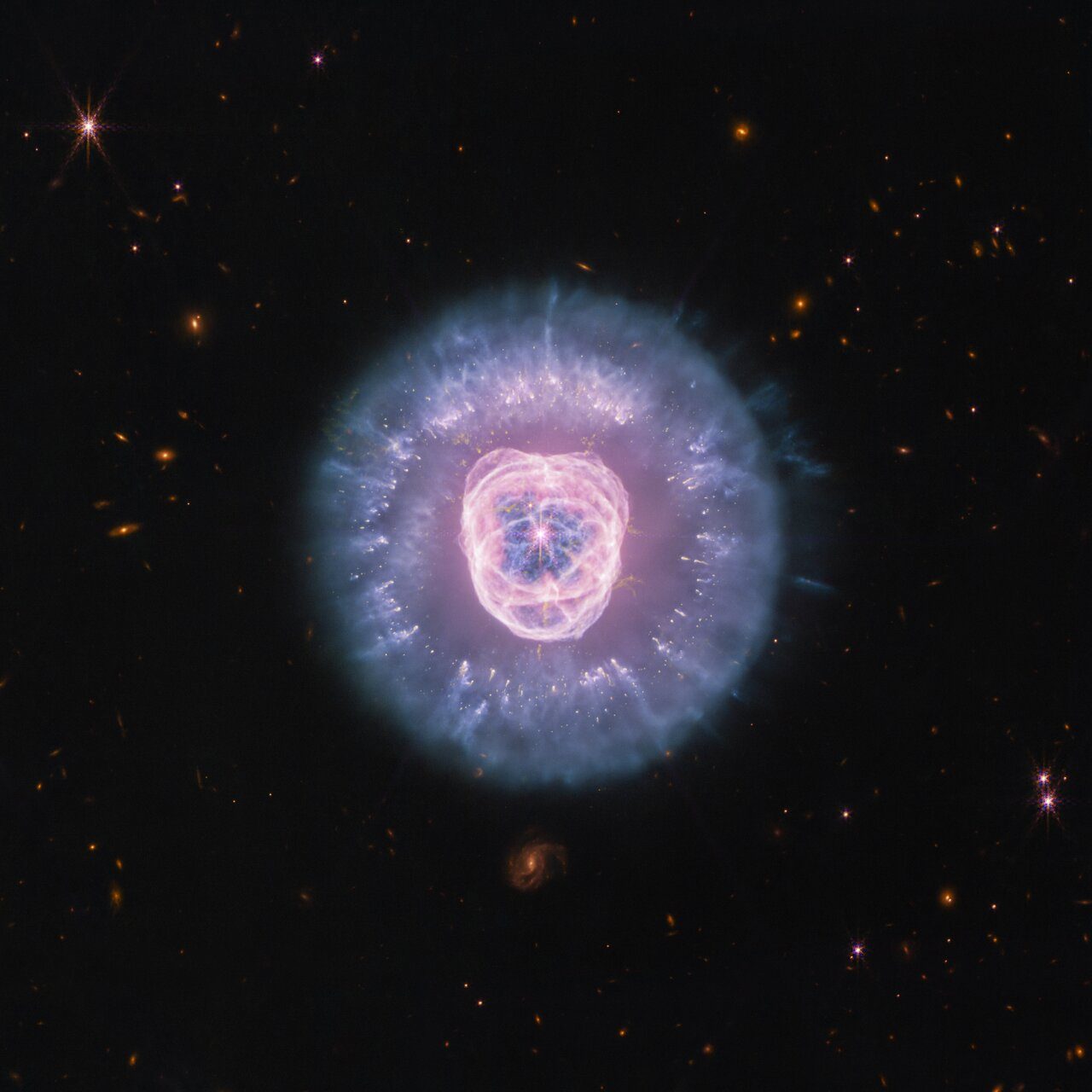
NGC 1514, the Crystal Ball Nebula, reveals the intricate dance of a binary star system, shaping its glowing gas shell.
The Crystal Ball Nebula, officially known as NGC 1514, offers a glimpse into the life cycle of stars. Located 1,500 light-years away, this planetary nebula was first documented by William Herschel in 1790. It showcases the aftermath of a star's transformation into a red giant, ejecting its outer layers of gas. These layers are heated by the exposed core, emitting a glow that outshines the Sun's surface temperature, creating the nebula's striking appearance.
The slightly asymmetrical form of NGC 1514 reveals the presence of a binary star system at its heart. As these stars orbit each other over a nine-year period, they sculpt the surrounding gas, giving the nebula its distinctive shape. This celestial dance will continue to influence the nebula's structure until it eventually dissipates in 10,000 to 25,000 years.
The Broader Cosmic Context
Planetary nebulae like NGC 1514 are crucial to understanding stellar evolution. They represent a fleeting phase in the life of medium-sized stars, offering insights into the processes that enrich the interstellar medium with heavy elements. The study of such nebulae can also inform our understanding of binary star systems, which are common in the galaxy.
For those interested in tracking celestial phenomena, the Orbital Radar Debris Map provides a comprehensive view of objects in Earth's orbit, including active satellites and space debris. While NGC 1514 is far beyond our planet's orbital environment, understanding the dynamics of such distant objects enhances our grasp of the cosmos.
Frequently Asked Questions
What is a planetary nebula?
Why is NGC 1514 called the Crystal Ball Nebula?
Cite this article
Pick a style, then copy it or download it for your reference manager.Orbital Radar. (2026, May 28). Unveiling the Crystal Ball Nebula: A Stellar Dance. Retrieved November 25, 2026, from https://orbitalradar.com/blog/cosmic-gallery-2026-05-28
“Unveiling the Crystal Ball Nebula: A Stellar Dance.” Orbital Radar, 28 May 2026, orbitalradar.com/blog/cosmic-gallery-2026-05-28. Accessed 25 Nov. 2026.
Orbital Radar (2026) Unveiling the Crystal Ball Nebula: A Stellar Dance. Available at: https://orbitalradar.com/blog/cosmic-gallery-2026-05-28 (Accessed: 25 November 2026).
Orbital Radar. “Unveiling the Crystal Ball Nebula: A Stellar Dance.” Last modified May 28, 2026. https://orbitalradar.com/blog/cosmic-gallery-2026-05-28.
@misc{orbitalradar_blog_cosmic_gallery_2026_05_28,
  author       = {{Orbital Radar}},
  title        = {Unveiling the Crystal Ball Nebula: A Stellar Dance},
  year         = {2026},
  month        = may,
  howpublished = {\url{https://orbitalradar.com/blog/cosmic-gallery-2026-05-28}},
  url          = {https://orbitalradar.com/blog/cosmic-gallery-2026-05-28},
  urldate      = {2026-11-25},
  note         = {Accessed 2026-11-25}
}
TY - ELEC AU - Orbital Radar, TI - Unveiling the Crystal Ball Nebula: A Stellar Dance PY - 2026 DA - 2026/05/28 PB - Orbital Radar UR - https://orbitalradar.com/blog/cosmic-gallery-2026-05-28 Y2 - 2026/11/25 LA - en ER -
Live figures change, so keep the date you accessed the page. How to cite Orbital Radar