Unveiling the Sombrero Galaxy's Hidden Secrets
The Sombrero Galaxy, M104, offers a unique view with its striking hat-like structure. Discover its secrets and significance in cosmic observations.
| Active satellites | 15,746 |
| Catalogued objects | 31,503 |
| Starlink active | 10,057 |
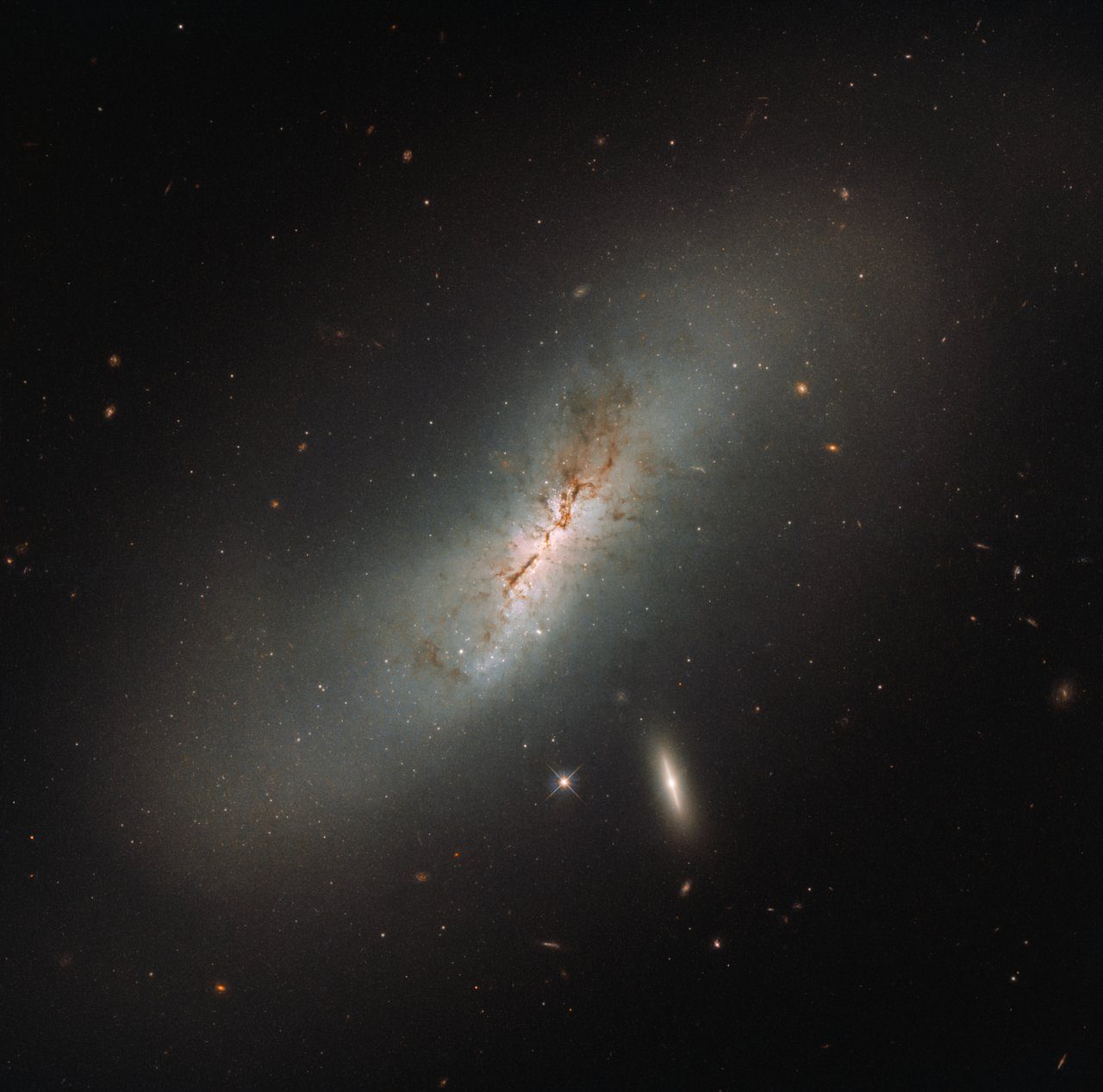
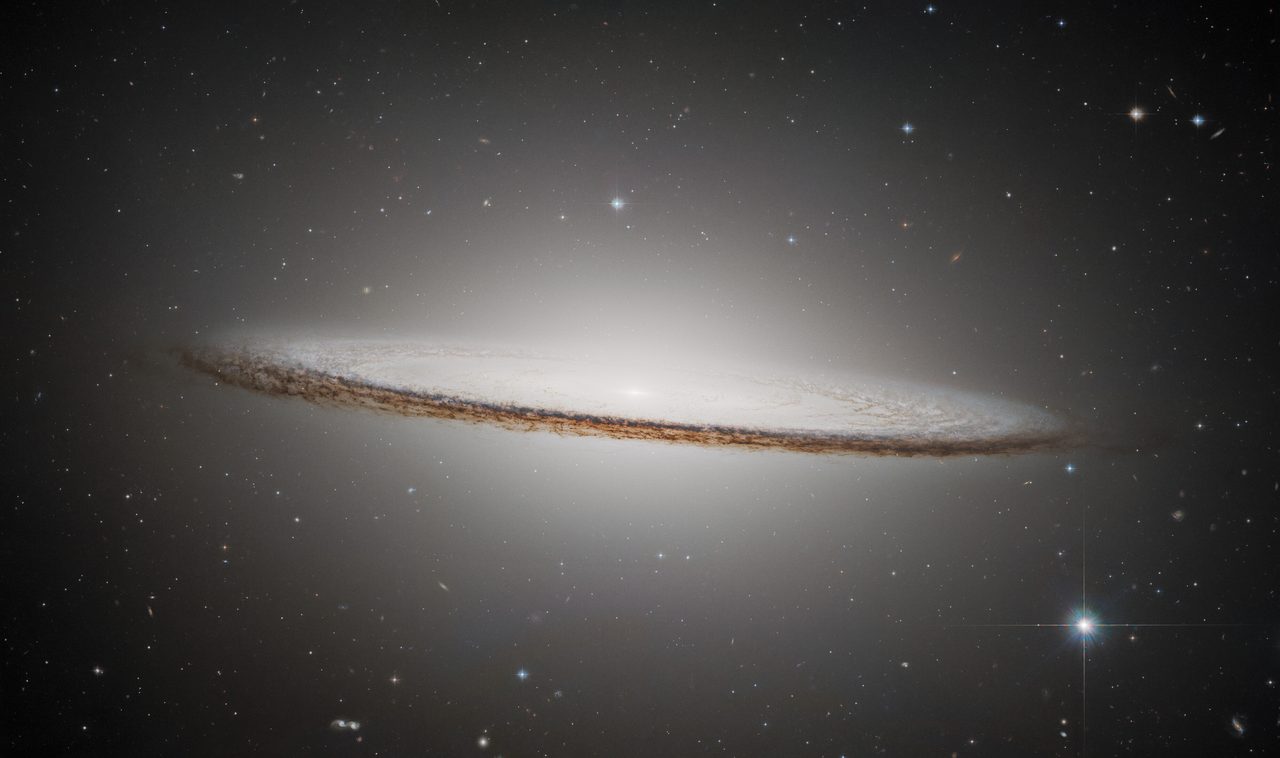
The Sombrero Galaxy, officially known as M104, captivates astronomers and enthusiasts alike with its distinctive shape resembling a wide-brimmed hat. This spiral galaxy, located approximately 31 million light-years from Earth in the constellation Virgo, is renowned for its bright nucleus and prominent dust lane. These features are beautifully highlighted in deep space images, revealing a complex structure that challenges our understanding of galactic formation and evolution.
The Science Behind the Sombrero
The Sombrero Galaxy's unique appearance is due to its nearly edge-on orientation and a massive central bulge, which is thought to contain a supermassive black hole. This black hole is a focal point for studying the dynamics of galaxy cores and the role of dark matter. As astronomers continue to analyse data from telescopes like Hubble, they uncover details about the galaxy's star formation rate and the distribution of its stellar populations. These insights contribute to a broader understanding of spiral galaxies in our universe.
Observing the Sombrero Galaxy
For those keen to observe M104, the galaxy is best viewed through a telescope in the spring months when Virgo is prominent in the night sky. While visible to amateur astronomers, capturing its intricate details requires more advanced equipment. To track the visibility of celestial objects, including the Sombrero Galaxy, enthusiasts can use the Orbital Radar pass predictor to plan their observations.
Frequently Asked Questions
What is the Sombrero Galaxy?
How can I observe the Sombrero Galaxy?
Cite this article
Pick a style, then copy it or download it for your reference manager.Orbital Radar. (2026, October 6). Unveiling the Sombrero Galaxy's Hidden Secrets. Retrieved November 20, 2026, from https://orbitalradar.com/blog/cosmic-gallery-2026-10-06
“Unveiling the Sombrero Galaxy's Hidden Secrets.” Orbital Radar, 6 Oct. 2026, orbitalradar.com/blog/cosmic-gallery-2026-10-06. Accessed 20 Nov. 2026.
Orbital Radar (2026) Unveiling the Sombrero Galaxy's Hidden Secrets. Available at: https://orbitalradar.com/blog/cosmic-gallery-2026-10-06 (Accessed: 20 November 2026).
Orbital Radar. “Unveiling the Sombrero Galaxy's Hidden Secrets.” Last modified October 6, 2026. https://orbitalradar.com/blog/cosmic-gallery-2026-10-06.
@misc{orbitalradar_blog_cosmic_gallery_2026_10_06,
  author       = {{Orbital Radar}},
  title        = {Unveiling the Sombrero Galaxy's Hidden Secrets},
  year         = {2026},
  month        = oct,
  howpublished = {\url{https://orbitalradar.com/blog/cosmic-gallery-2026-10-06}},
  url          = {https://orbitalradar.com/blog/cosmic-gallery-2026-10-06},
  urldate      = {2026-11-20},
  note         = {Accessed 2026-11-20}
}
TY - ELEC AU - Orbital Radar, TI - Unveiling the Sombrero Galaxy's Hidden Secrets PY - 2026 DA - 2026/10/06 PB - Orbital Radar UR - https://orbitalradar.com/blog/cosmic-gallery-2026-10-06 Y2 - 2026/11/20 LA - en ER -
Live figures change, so keep the date you accessed the page. How to cite Orbital Radar