The Pelican Nebula: A Stellar Transformation in Progress
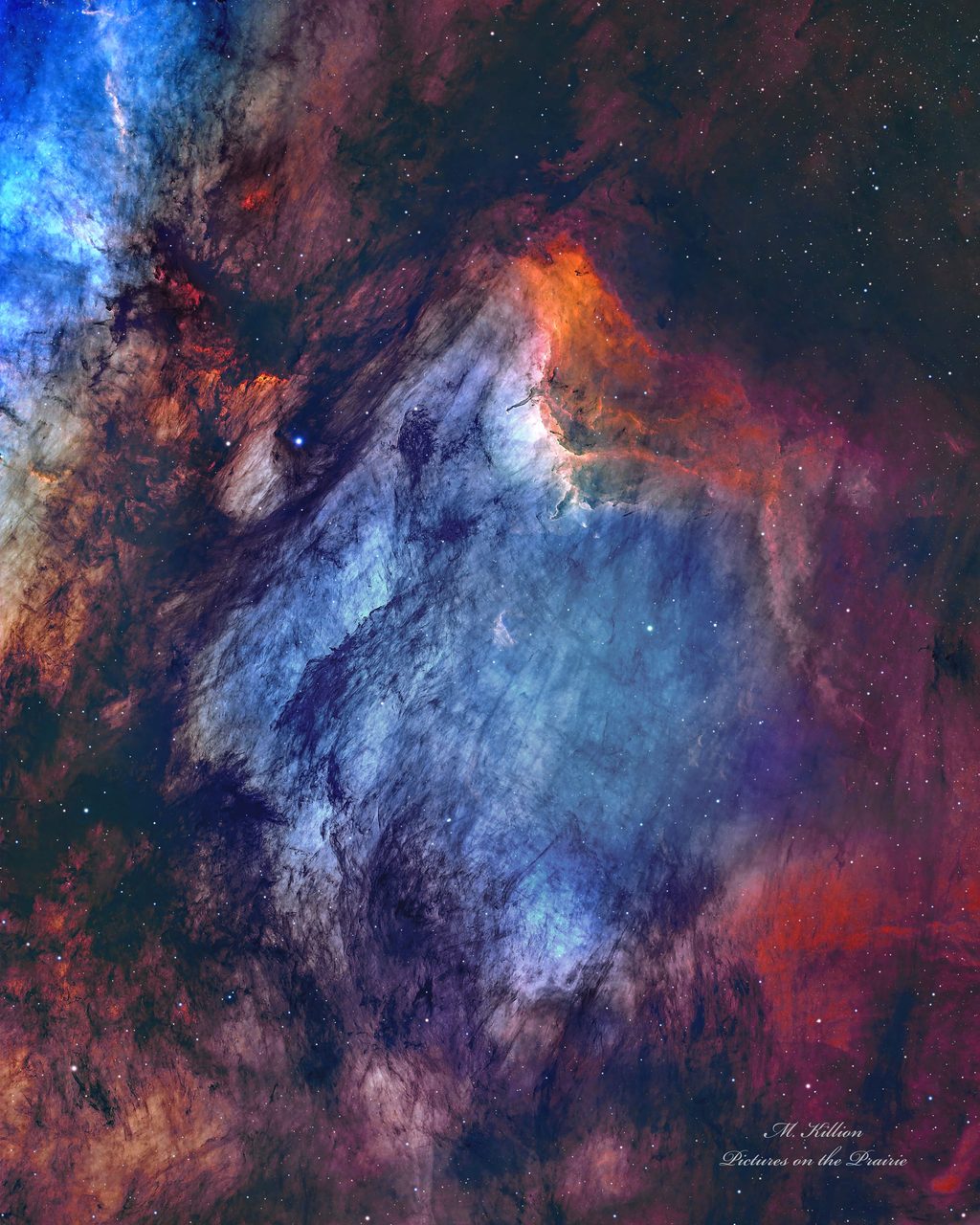
The Pelican Nebula, IC 5070, showcases active star formation and evolving gas clouds, captured in stunning detail over 25 hours of exposure.
| Active satellites | 18,036 |
| Catalogued objects | 29,435 |
| Starlink active | 9,807 |
The Pelican Nebula, officially designated IC 5070, is a captivating region of space undergoing significant transformation. This image, captured over 25 hours of exposure from Utah, USA, reveals the intricate details of the nebula's filamentary dust and active star-forming regions. The nebula is part of a larger complex that includes the North America Nebula, from which it is divided by a molecular cloud filled with dark dust. The energetic light from young stars is gradually transforming the cold gas into hot gas, creating an ionization front visible as a bright orange boundary in the upper right of the image.
The Science Behind the Nebula
The Pelican Nebula is a prime example of the dynamic processes that govern star formation and the evolution of gas clouds in space. The ionization front, where cold gas is heated by stellar radiation, is a key feature for astronomers studying these processes. Over millions of years, the nebula's appearance will change as the balance of stars and gas shifts. This transformation is driven by the interaction between the nebula's dense gas regions and the radiation from young stars. Such regions are of great interest to astronomers, as they offer insights into the lifecycle of stars and the formation of stellar systems.
Observing the Night Sky
To observe features like the Pelican Nebula, astronomers often rely on long exposure times and specialised equipment to capture the faint details of distant nebulae. For amateur astronomers, checking the Orbital Radar pass predictor can help plan observations by providing information on satellite passes that might interfere with viewing. Additionally, understanding the broader context of the space environment, such as the 29,435 tracked objects in orbit, can enhance appreciation of the challenges faced in astronomical observations.
Frequently Asked Questions
What is the Pelican Nebula?
Why is the Pelican Nebula significant?
📎 Cite this article · data available
Orbital Radar Newsroom. (2026). The Pelican Nebula: A Stellar Transformation in Progress. Orbital Radar. https://orbitalradar.com/blog/cosmic-gallery-2026-09-08"The Pelican Nebula: A Stellar Transformation in Progress." Orbital Radar, 8 September 2026, https://orbitalradar.com/blog/cosmic-gallery-2026-09-08.@misc{orbitalradar_cosmic_gallery_2026_09_08,
title = {The Pelican Nebula: A Stellar Transformation in Progress},
author = {{Orbital Radar}},
year = {2026},
howpublished = {\url{https://orbitalradar.com/blog/cosmic-gallery-2026-09-08}}
}