Unveiling the Pelican Nebula: A Stellar Transformation
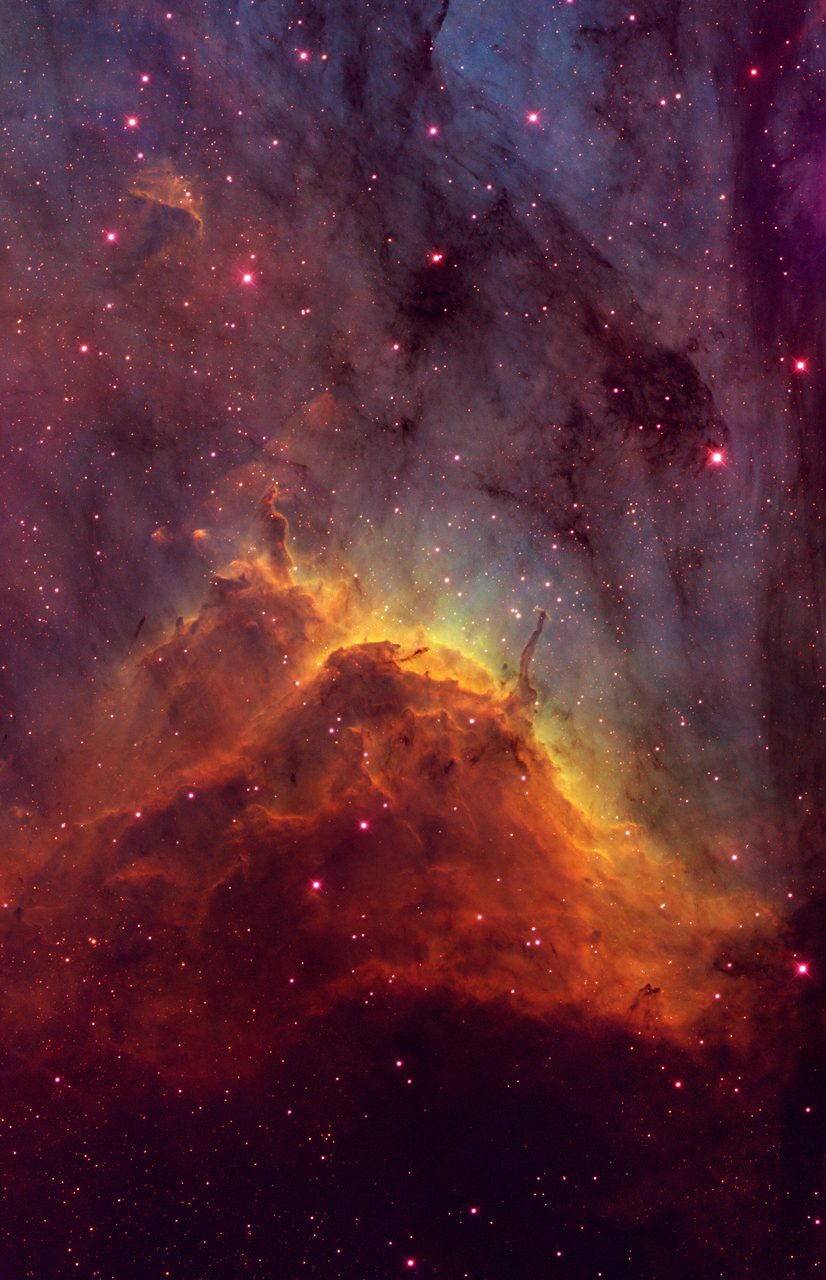
The Pelican Nebula, IC 5070, is a dynamic region of star formation and gas transformation, captured in a detailed 25-hour exposure.
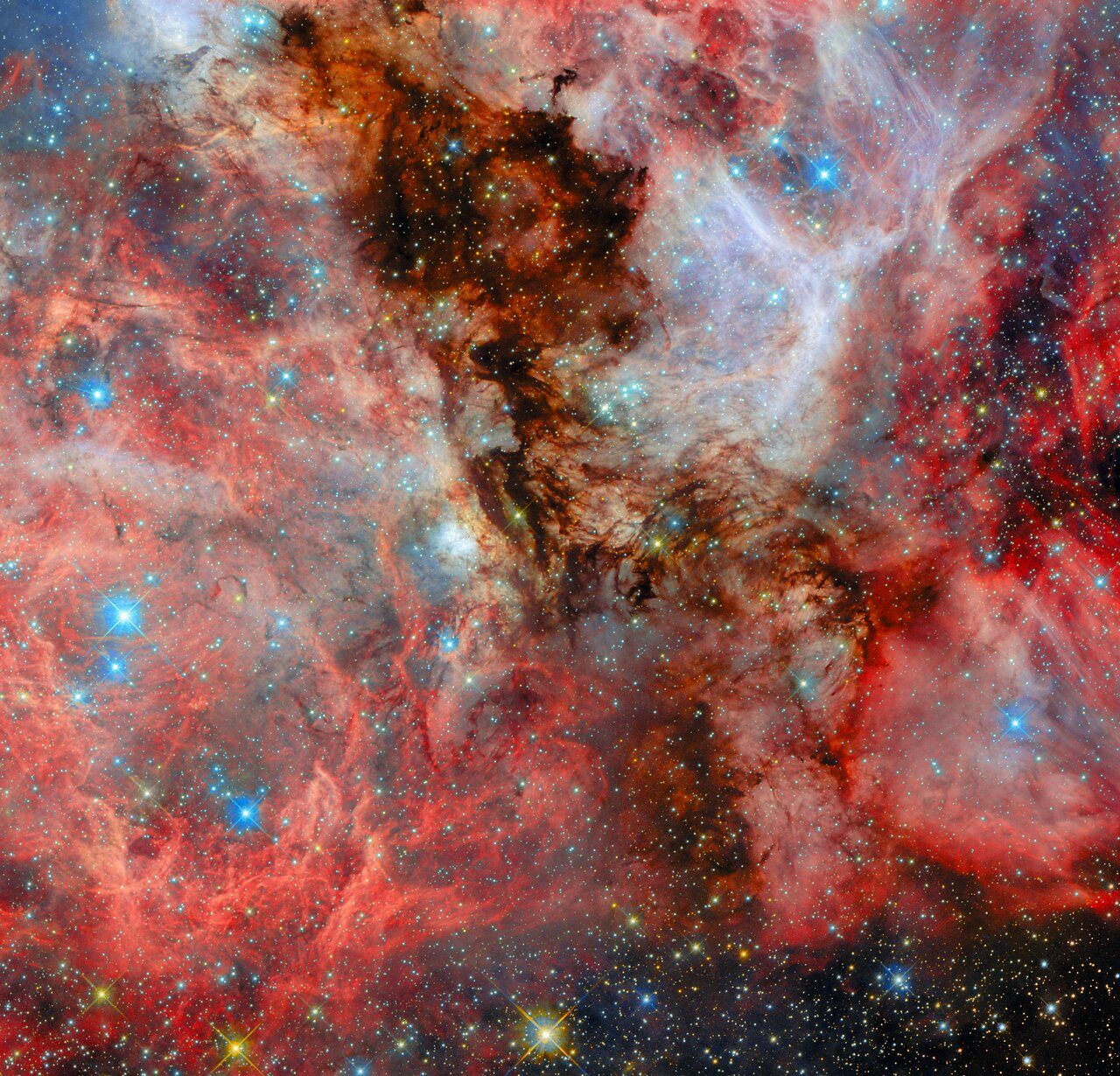
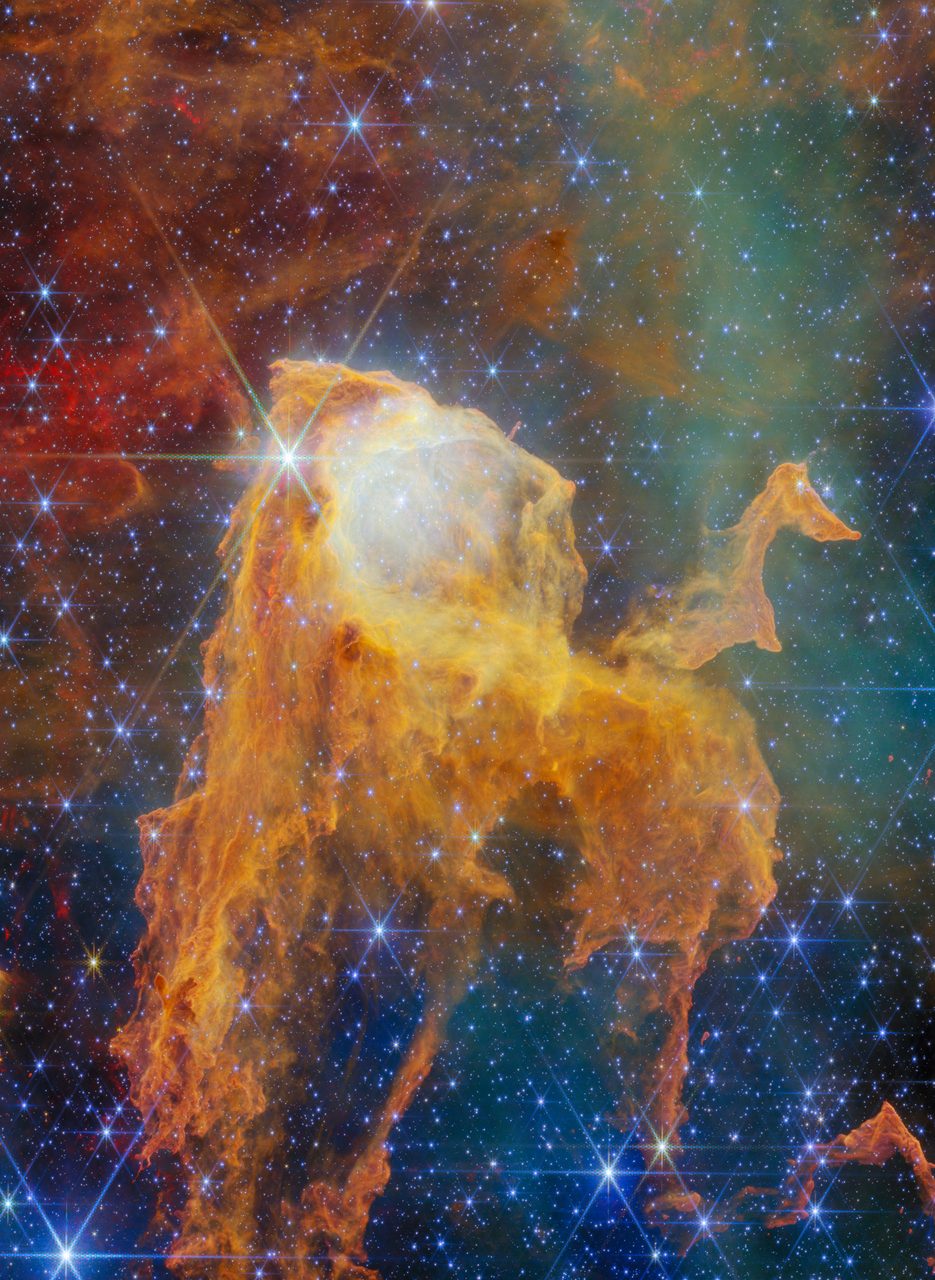
The Pelican Nebula, officially designated as IC 5070, is a captivating region of the night sky where stellar birth and cosmic transformation are vividly on display. Located near the North America Nebula, this area is rich with molecular clouds and dark dust, which divide the two nebulae. The image reveals intricate details of the dust and gas filaments that make up the nebula. This celestial scene is a hotspot for star formation, where the light from young, energetic stars is gradually heating and ionizing the surrounding cold gas, creating a visible ionization front that glows brightly in orange hues.
The Science of Stellar Nurseries
The Pelican Nebula is a prime example of a stellar nursery, where new stars are born from the gravitational collapse of gas and dust. The ionization front, a boundary between hot and cold gas, is a key feature in understanding the lifecycle of such nebulae. As the young stars continue to emit radiation, they shape the surrounding environment, influencing future star formation. This dynamic process can be observed over millions of years, leading to significant changes in the nebula's appearance. For those interested in tracking the movements of satellites and other celestial objects, the Orbital Radar pass predictor can provide valuable insights into when these phenomena are visible from Earth.
Observing the Pelican Nebula
While the Pelican Nebula is best viewed through long-exposure astrophotography, amateur astronomers can spot this region of the sky with a good telescope under dark skies. Located in the constellation Cygnus, the nebula is part of a rich field of stars and other deep-sky objects. Observers can use star charts or apps to locate the North America Nebula, from which the Pelican Nebula is separated by a dark dust lane. The Satellite Eye tool on Orbital Radar offers real-time satellite imagery that can enhance the viewing experience by providing context and additional details about the region.
Frequently Asked Questions
What is the Pelican Nebula?
Why is the Pelican Nebula important?
📎 Cite this article
Orbital Radar Newsroom. (2026). Unveiling the Pelican Nebula: A Stellar Transformation. Orbital Radar. https://orbitalradar.com/blog/cosmic-gallery-2026-09-07"Unveiling the Pelican Nebula: A Stellar Transformation." Orbital Radar, 8 September 2026, https://orbitalradar.com/blog/cosmic-gallery-2026-09-07.@misc{orbitalradar_cosmic_gallery_2026_09_07,
title = {Unveiling the Pelican Nebula: A Stellar Transformation},
author = {{Orbital Radar}},
year = {2026},
howpublished = {\url{https://orbitalradar.com/blog/cosmic-gallery-2026-09-07}}
}