Why Is Landing on Mars So Hard?
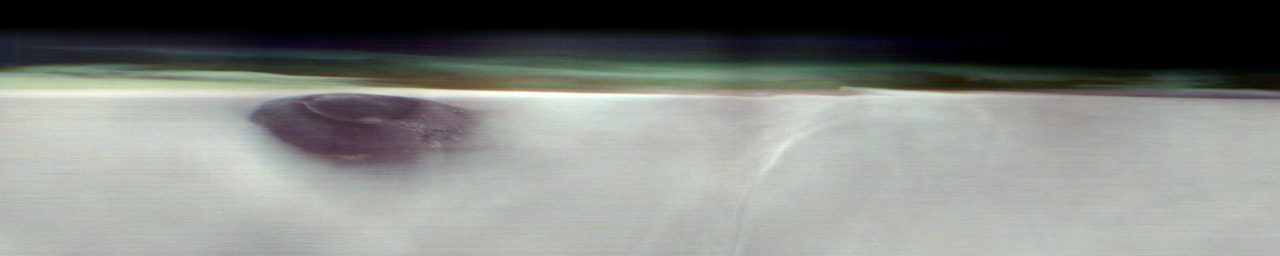
Mars has enough atmosphere to threaten an arriving spacecraft, but not enough to land it safely with a parachute alone. Every landing must solve both problems autonomously.
| Active satellites | 15,874 |
| Starlink active | 10,081 |
| Catalogued objects | 31,825 |
| Predicted re-entries | 20 |
| Active close approaches | 22 |
| People in space | 10 |
Landing on Mars is hard because its thin atmosphere creates dangerous heating during entry but cannot slow a spacecraft enough for a safe touchdown using a parachute alone. A lander must coordinate heat protection, aerodynamic braking and a final landing system autonomously, because commands from Earth arrive too late to guide the descent.
Engineers call this tightly coupled sequence entry, descent and landing (EDL). Each stage must deliver the spacecraft within the limits the next stage can handle: an error in altitude, speed or timing can leave too little room to recover. Surviving the heat is not enough if the spacecraft reaches its landing system’s operating altitude while still travelling too fast.
The challenge is a physical and engineering problem, not a matter of luck. The missions featured in Orbital Radar’s Mars Rovers guide illustrate different engineering responses; failed landings reveal where assumptions, hardware or software fell short. Understanding those limits explains both successful touchdowns and why future landers need different solutions.
Why does Mars’s thin atmosphere make landing so difficult?
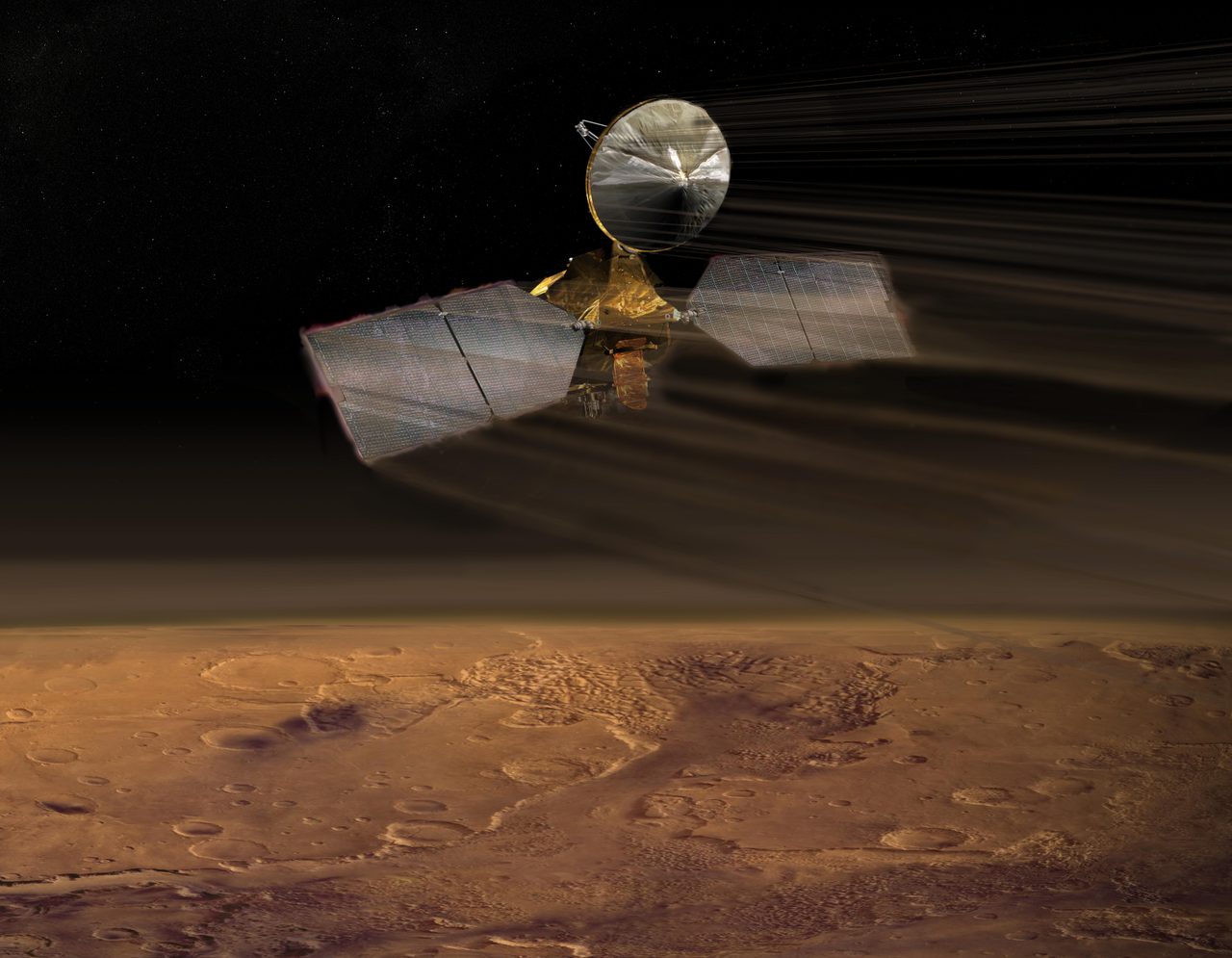
Mars has enough atmosphere to generate intense heating during entry, but too little dense air near the surface to make a parachute-only landing practical for a rover. An arriving spacecraft must survive a high-speed encounter with gas that cannot then slow it sufficiently for a gentle touchdown.
Atmospheric drag is the resistance a spacecraft experiences as it moves through gas. Denser air and greater speed produce stronger drag; shape determines how effectively the craft pushes against that air. Mass matters too: with the same shape and exposed area, a heavier spacecraft needs more braking force to slow at the same rate.
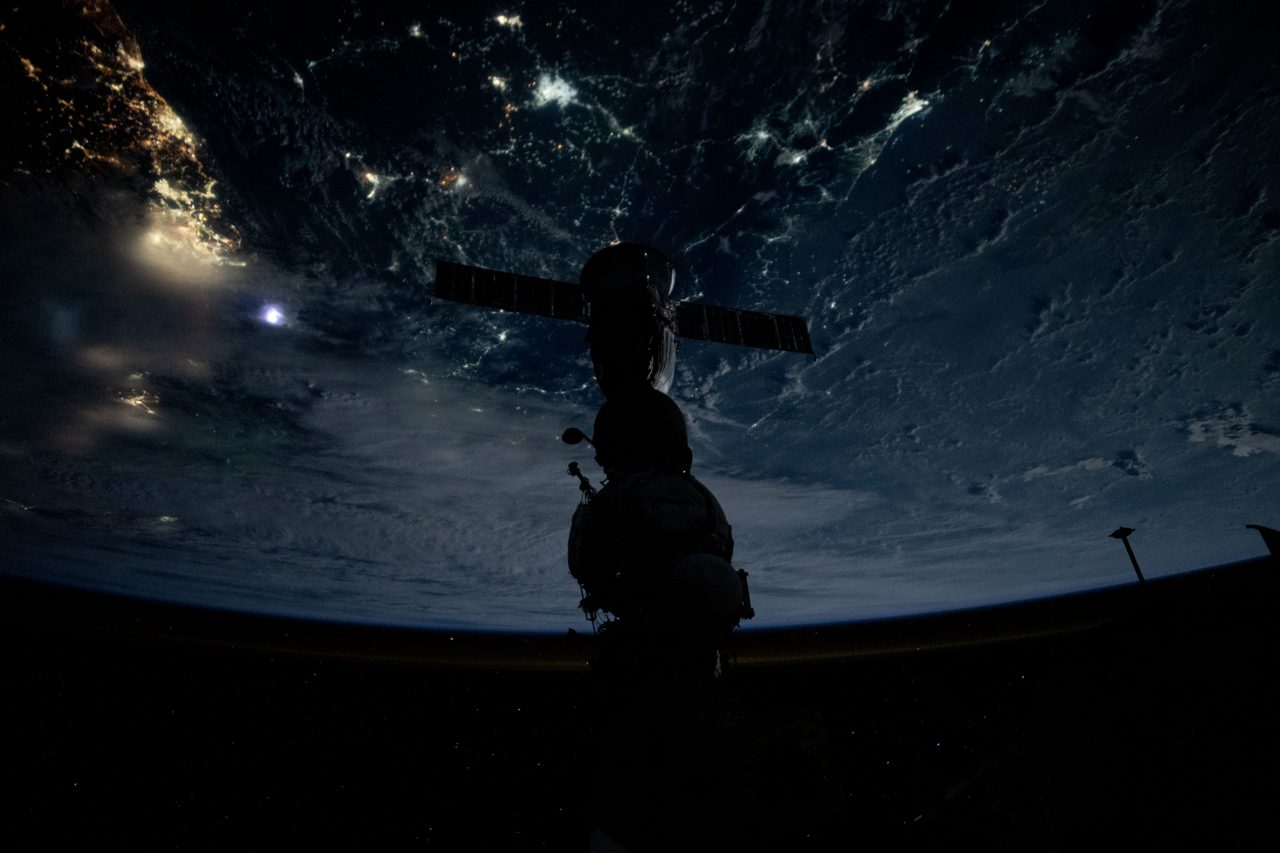
Earth’s substantial atmosphere provides much stronger aerodynamic braking, although landing systems still need to manage the final descent. Orbital Radar tracking data lists 15,874 active satellites in orbit as of 20 October 2026. Orbital Radar tracking data lists 1,107 re-entries for 2026 as of 20 October 2026. These atmospheric returns illustrate the broader challenge of shedding orbital speed, rather than simply falling towards a surface.
The Moon has essentially no atmosphere, so landers must use propulsion rather than aerodynamic drag. Mars occupies an awkward middle ground: atmospheric braking helps, but cannot finish the job.
Elevation further narrows the margin. High terrain leaves less atmosphere overhead and less vertical distance for slowing down before impact. The terrain surrounding landing regions can be explored on Orbital Radar’s Mars globe.
How does a Mars heat shield survive entry?

A Mars heat shield survives entry by keeping intensely heated gas away from the spacecraft and sacrificing protective material to carry energy away. The incoming vehicle compresses the gas ahead of it, creating a shock wave that sharply raises the gas temperature. Describing this heating simply as friction against the air misses the central role of compression.
The blunt heat shield holds that shock wave away from the spacecraft, reducing the heat transferred to its surface. It forms the forward face of the aeroshell, the protective enclosure surrounding the vehicle during entry. Its material undergoes ablation: the controlled loss of protective material that carries energy away, while the remaining shield limits heat reaching the spacecraft underneath.
Survival also depends on the entry corridor: the range of approach angles that allows safe atmospheric braking. Too steep an approach increases heating and deceleration loads while compressing the time available to slow down. Too shallow an approach can provide insufficient braking or allow the spacecraft to skip back out of the atmosphere. The shield and trajectory must therefore be designed together.
For an explicitly Earth-only comparison, Orbital Radar tracking data records 1,107 Earth re-entries during 2026 as of 20 October 2026. Orbital Radar tracking data records 64 Earth re-entries during October 2026. These figures describe Earth-orbit activity, not Mars arrivals, and do not establish equivalent landing problems. Orbital Radar’s Perseverance page provides a Mars-specific mission reference.
Why can’t a parachute land a Mars rover by itself?
A parachute cannot land a Mars rover by itself because the thin atmosphere provides too little drag to slow a practical rover-sized system to a safe touchdown speed. Opening a canopy increases the area pushing against the air, but at a given speed and canopy size, the braking force is much smaller than in a denser atmosphere.
The parachute must also open during supersonic flight (travel faster than the local speed of sound). Inflation creates a sudden load on the fabric, suspension lines and spacecraft attachments, while disturbed airflow behind the entry vehicle can make the canopy oscillate or inflate unevenly. Deployment must fall within a suitable speed range: too fast risks excessive opening loads; too slow leaves insufficient height and time for braking.
Making the parachute larger helps, but brings more fabric mass, a bulkier packed assembly and greater structural demands. A larger canopy must still unfold and inflate reliably under violent conditions, without tangling or tearing. Engineers therefore balance braking performance against what the spacecraft can carry and safely deploy.
Parachute descent is an intermediate phase, not the touchdown system. Mars missions still need rockets, airbags or another final-stage mechanism to remove or absorb the remaining speed. Orbital Radar’s Mars rover guide provides context on the vehicles these landing systems have delivered.
How does a sky crane put a rover on Mars?
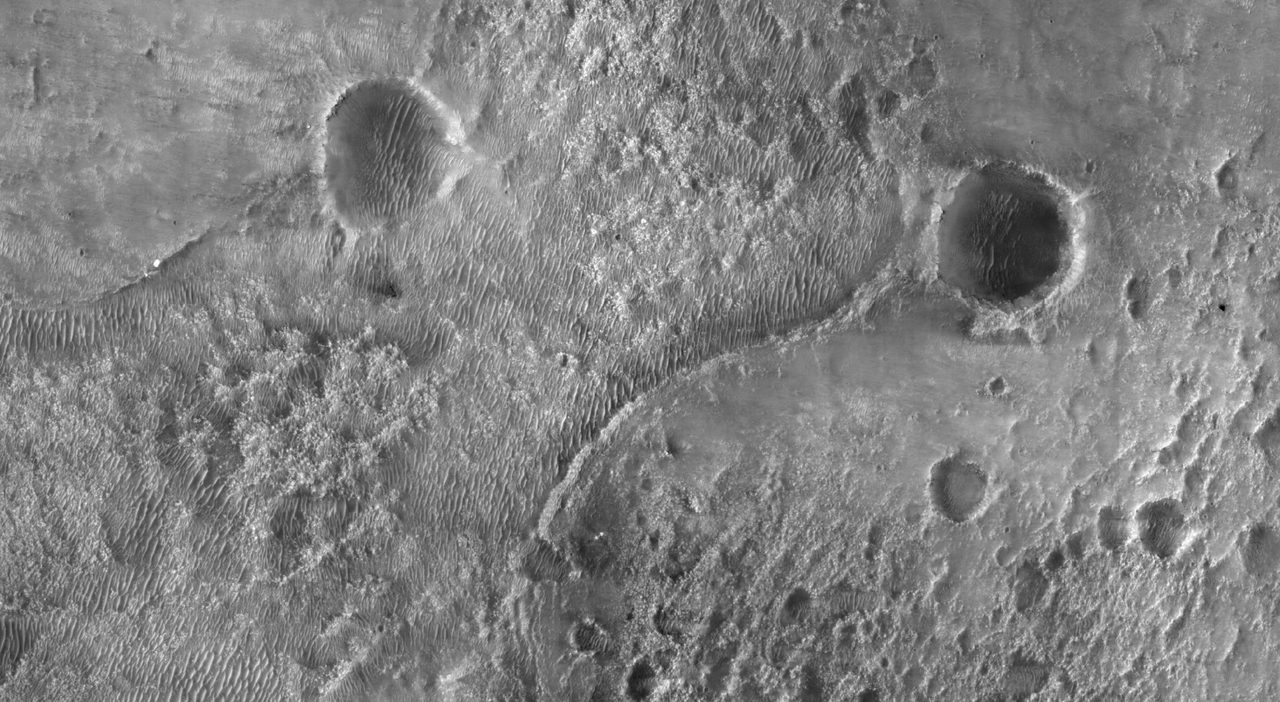
A sky crane uses a rocket-powered descent stage to slow a rover above Mars, then lowers it on cables so that it touches down directly on its wheels. The stage stays overhead during lowering, controlling the descent while the rover deploys its wheels beneath it.
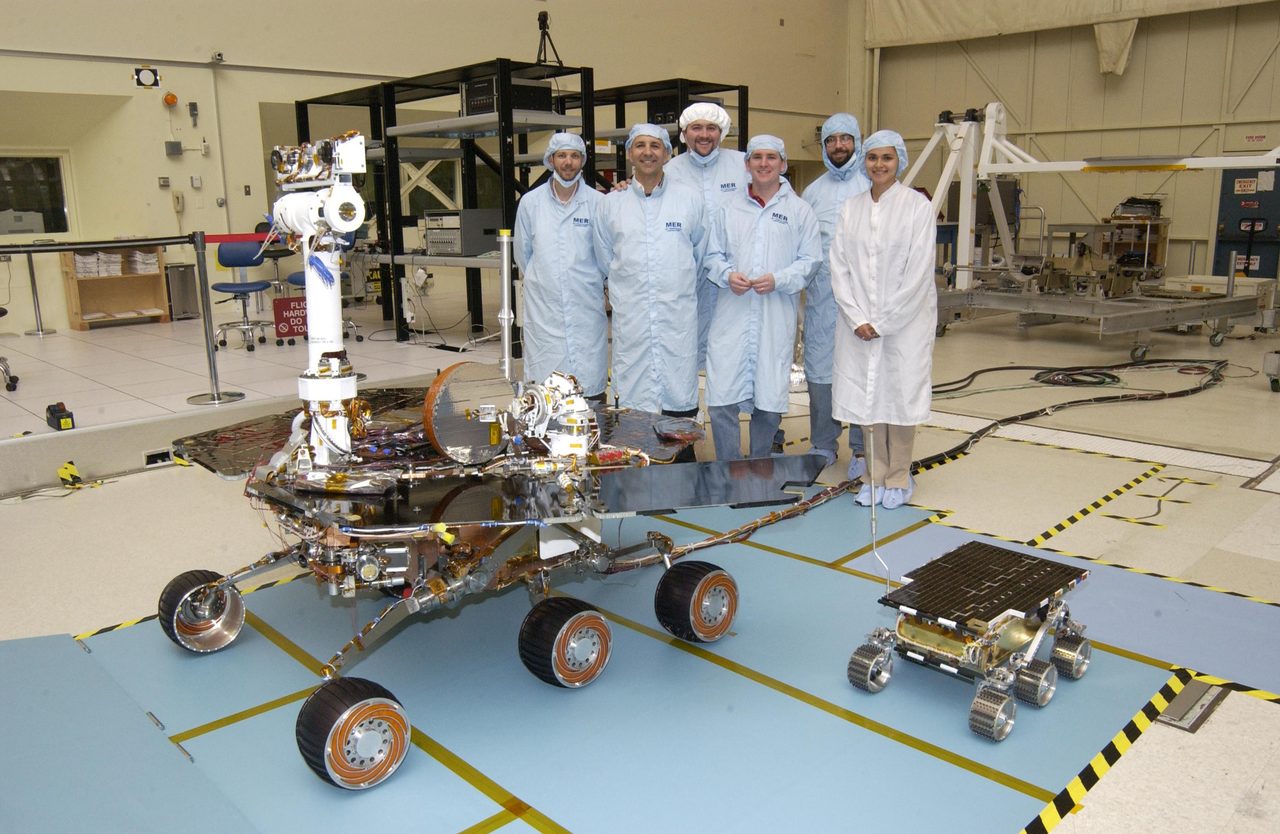
Curiosity and Perseverance used this architecture because their large, heavy bodies made airbags unsuitable and a conventional landing platform would have required a difficult drive down ramps. The sky crane delivered each rover ready to stand on its own suspension, without carrying a tall platform to the surface. It is a solution tailored to these rovers, not a standard feature of every Mars mission.
The final sequence has distinct steps that must happen in order. First, the rover’s wheels meet the ground and the system detects touchdown from the changed load on the descent stage. Next, pyrotechnic cutters (devices actuated by small explosive charges) sever the suspension cables and the connecting electrical cable. Only after separation does the descent stage execute its flyaway manoeuvre, carrying its remaining propellant away from the rover before crashing at a distance.
Keeping the engines above the rover avoids mounting it on a rocket-powered platform, but does not eliminate exhaust effects. Rocket plumes still disturb dust and loose material, so engine placement, clearance and the final flight path remain engineering concerns. Orbital Radar’s Mars rover profiles provide context on the vehicles this landing system was designed to deliver.
Why can’t mission control steer a Mars landing?
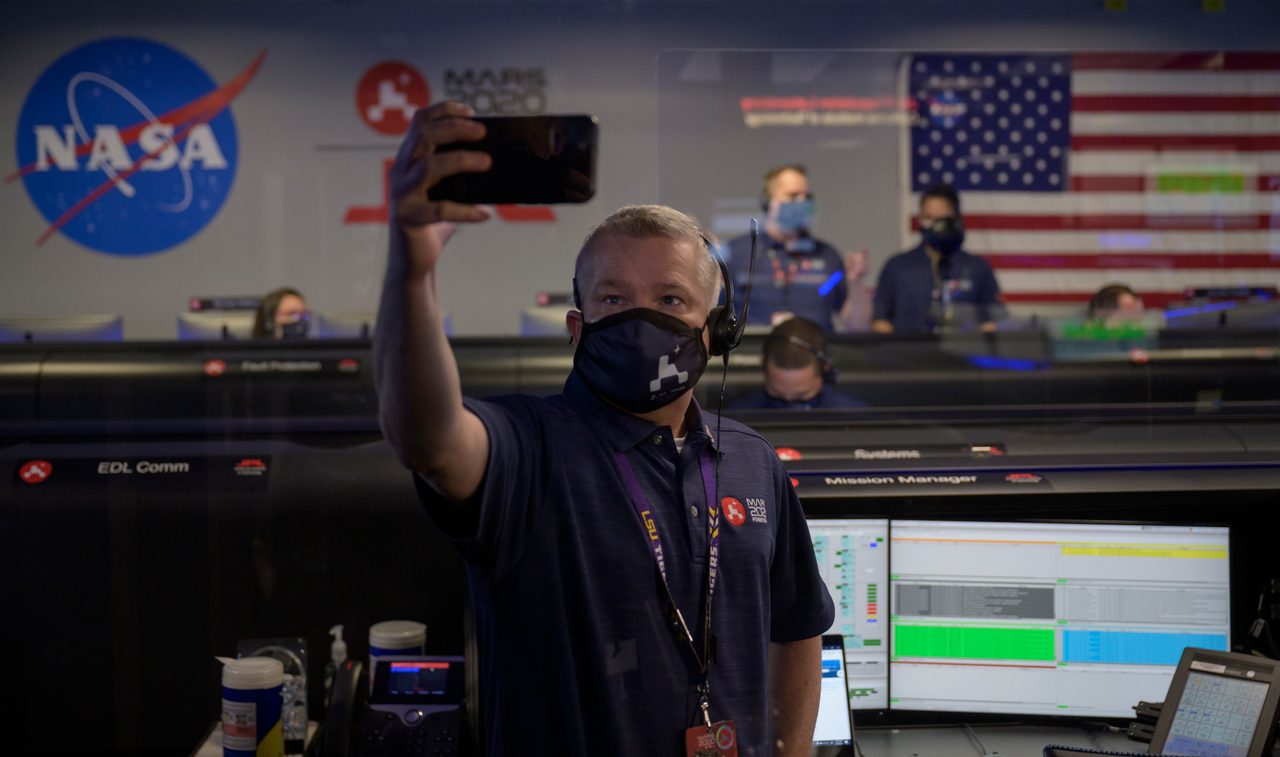
Mission control cannot steer a Mars landing in real time because radio signals travel at the speed of light, and the distance between Earth and Mars makes the delay too long. That distance changes as the planets orbit the Sun, so the signal travel time changes too. By the time engineers receive a report and send a response, the spacecraft may already have passed the moment when that instruction could help.
The lander must therefore control its own descent. Onboard sensors estimate motion and altitude; software uses those estimates to select actions; and actuators—devices that turn commands into physical movement—adjust the spacecraft’s orientation or thrust. This sequence runs without waiting for permission from Earth.
Terrain-relative navigation adds a way to determine position: the spacecraft compares images taken during descent with stored maps of the surface. Recognising mapped features helps it estimate where it is and select a reachable landing point away from hazardous terrain. Orbital Radar’s Perseverance profile provides context for a rover that used this technique.
A communications outage is not, by itself, a navigation failure. Telemetry—the measurements and status reports transmitted to engineers—can be interrupted while the onboard landing sequence continues. Losing the signal means controllers cannot immediately see what is happening, not necessarily that the spacecraft has lost its ability to land.
How do weather and terrain change the landing risk?
Weather changes how a spacecraft slows and drifts during descent; terrain determines whether its touchdown point is survivable. Variations in atmospheric density alter drag, so the same entry trajectory can produce a different descent path. Winds push the spacecraft sideways, while gusts and wind shear (changes in wind speed or direction) can make a parachute swing and shift the eventual touchdown location.
Engineers describe this uncertainty using a landing ellipse: the predicted area within which a spacecraft may reach the surface, not an exact destination. Atmospheric conditions, navigation errors and spacecraft performance all contribute to its size and shape. Hazard-avoidance systems can help select safer ground during descent, but only within the spacecraft’s remaining steering capability.
Different surface hazards pose different threats. Rocks can damage landing hardware or obstruct a rover’s route; slopes can leave a lander tilted, threatening stability or equipment deployment. Cliffs create abrupt drops and inaccessible routes, while soft ground can let landing feet sink or trap wheels after an otherwise successful arrival.
Scientifically valuable terrain is not necessarily safe terrain. Ancient river deposits and exposed rock layers can preserve evidence of past environments, but may sit among ridges, scarps and boulders. A broad, low, relatively smooth plain offers fewer obstacles and more atmosphere overhead for braking. Orbital Radar’s Perseverance profile provides a mission example of exploring a scientifically rich landing region.
What have failed Mars landings taught engineers?
Failed Mars landings have taught engineers that touchdown depends on interpreting sensors correctly, not just surviving the descent. They have also shown why a reconstructed failure must be distinguished from an observed event.
Mars Polar Lander disappeared during its descent in 1999. Investigators concluded that deploying its landing legs could have generated a spurious touchdown indication, causing the software to shut down the engines while the spacecraft was still airborne. This was a probable failure mechanism reconstructed without descent telemetry (measurements transmitted by the spacecraft), not a directly observed engine shutdown.
Schiaparelli’s failure in 2016 provided clearer evidence. Its inertial measurement unit, which measured motion and rotation, saturated during parachute descent: the motion exceeded its measurement range. The navigation software then calculated an incorrect orientation and an altitude below the surface, triggering premature parachute release and a brief engine firing before shutdown, while the lander remained well above the ground.
Beagle 2’s arrival in 2003 should not simply be labelled a confirmed impact. Later orbital imagery indicated that it reached the surface but did not fully deploy; incomplete opening could have prevented communication. These cases underline the importance of testing sensor limits, checking contradictory estimates and examining deployment failures.
A single Mars landing success percentage therefore needs a definition: counting launch failures, cruise losses, atmospheric probes or partial successes produces a different result from counting only attempted touchdowns. Orbital Radar’s Mars globe provides geographical context for exploring the planet.
Present-day Earth-orbit totals describe a different population, not a Mars landing denominator. Orbital Radar tracking data lists 15,874 active satellites as of 20 October 2026. Orbital Radar tracking data lists 31,825 catalogued objects, including debris, as of 20 October 2026.
Why will landing heavier spacecraft on Mars be harder?
Heavier spacecraft are harder to land on Mars because their mass can grow faster than the area available to slow them. Ballistic coefficient measures mass relative to aerodynamic drag area, accounting for shape: a higher value means less atmospheric braking for a given mass. A heavier vehicle with a similar shape and frontal area therefore retains more speed deeper into the atmosphere.
Simply enlarging existing landing systems does not solve this. Larger heat shields must withstand heating and structural loads while fitting inside a launch vehicle or deploying reliably. Bigger parachutes face greater opening forces and stability challenges; larger descent engines require more propellant, which itself adds mass that must be slowed.
Supersonic retropropulsion means firing braking engines while the spacecraft is still travelling faster than sound. For larger Mars vehicles, it could provide substantial braking before parachutes or conventional terminal descent would suffice. That differs from the Perseverance landing sequence, in which a parachute slowed the vehicle before powered descent began. Engine exhaust interacting with the incoming airflow introduces additional control and heating challenges.
Crewed landers and cargo deliveries must also arrive close enough to habitats, power supplies and other equipment to be useful, without endangering them. Landing pads and prepared routes may become important infrastructure; rocket exhaust can excavate soil and throw debris towards nearby hardware. Orbital Radar’s Mars Sample Return overview illustrates the related challenge of delivering additional sample-retrieval hardware: proposed architectures remain subject to change, and every added surface element creates another demanding landing.
How can I explore Mars landing sites on Orbital Radar?
Start with Orbital Radar’s Mars Globe to explore landing regions spatially, then use the Mars Rovers page at /mars-rovers for mission context. The interactive planetary view helps you understand where missions landed; it is not live footage of a descent and does not provide a live entry, descent and landing (EDL) forecast.
For a practical comparison, find Perseverance’s landing region in Jezero crater, then open Perseverance’s mission page. Consider how its search for evidence of ancient microbial life relates to the crater’s ancient lake and river-delta deposits. Connect that destination with the heat shield, parachute, powered descent and sky-crane sequence described earlier: reaching scientifically valuable terrain requires a landing system capable of delivering the rover safely.
Repeat the exercise with another mission, comparing its terrain and scientific goals with its landing architecture. Use the globe for geographical context, not to infer unprovided measurements of slope, surface roughness or engineering safety margins.
Orbital Radar tracking data lists 20 upcoming Earth re-entries as of 20 October 2026. Orbital Radar tracking data lists 15 Earth re-entries this week. Those forecasts concern objects returning through Earth’s atmosphere, not imminent Mars landings; current Earth-orbit monitoring and historical Mars exploration are distinct activities.
Key takeaways
- Mars’s atmosphere creates substantial entry heating without providing enough drag for a parachute-only landing.
- Successful touchdown depends on an autonomous sequence of heat protection, atmospheric braking and a final landing system matched to the spacecraft.
- Mars landing failures have different causes, and a lost signal does not by itself prove that a spacecraft crashed.
- Heavier payloads make atmospheric braking harder and require landing systems that cannot simply be enlarged versions of existing rover designs.
Frequently Asked Questions
How long did Perseverance take to land after entering Mars’s atmosphere?
What was the first spacecraft to achieve a soft landing on Mars?
Did Viking use the same landing system as Curiosity?
Could astronauts use a parachute to land on Mars?
Why did Opportunity use airbags instead of a sky crane?
📎 Cite this article · data available
Orbital Radar Newsroom. (2026). Why Is Landing on Mars So Hard?. Orbital Radar. https://orbitalradar.com/blog/why-is-landing-on-mars-so-hard"Why Is Landing on Mars So Hard?." Orbital Radar, 21 October 2026, https://orbitalradar.com/blog/why-is-landing-on-mars-so-hard.@misc{orbitalradar_why_is_landing_on_mars_so_hard,
title = {Why Is Landing on Mars So Hard?},
author = {{Orbital Radar}},
year = {2026},
howpublished = {\url{https://orbitalradar.com/blog/why-is-landing-on-mars-so-hard}}
}