Unveiling the Jewels of Corona Australis
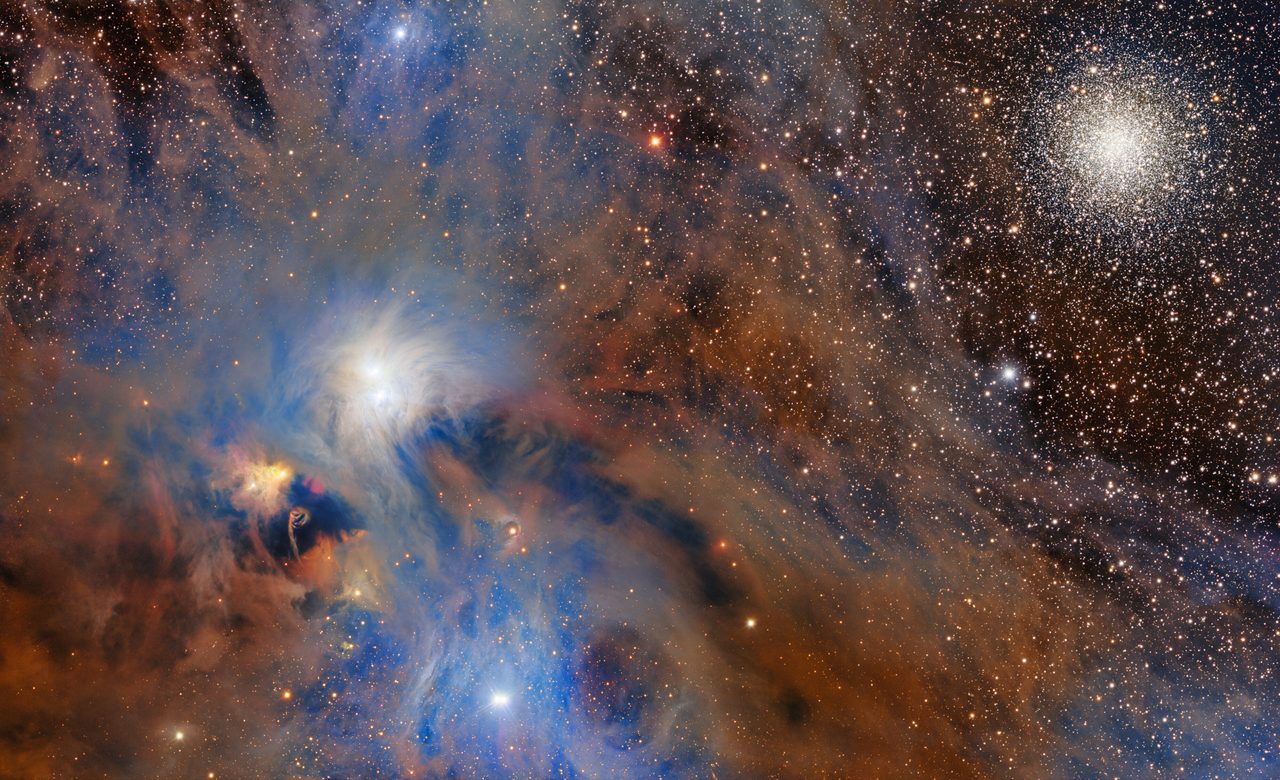
Discover the Corona Australis Molecular Cloud, a nearby star-forming region, and the distant Chandelier Cluster, a glittering celestial spectacle.
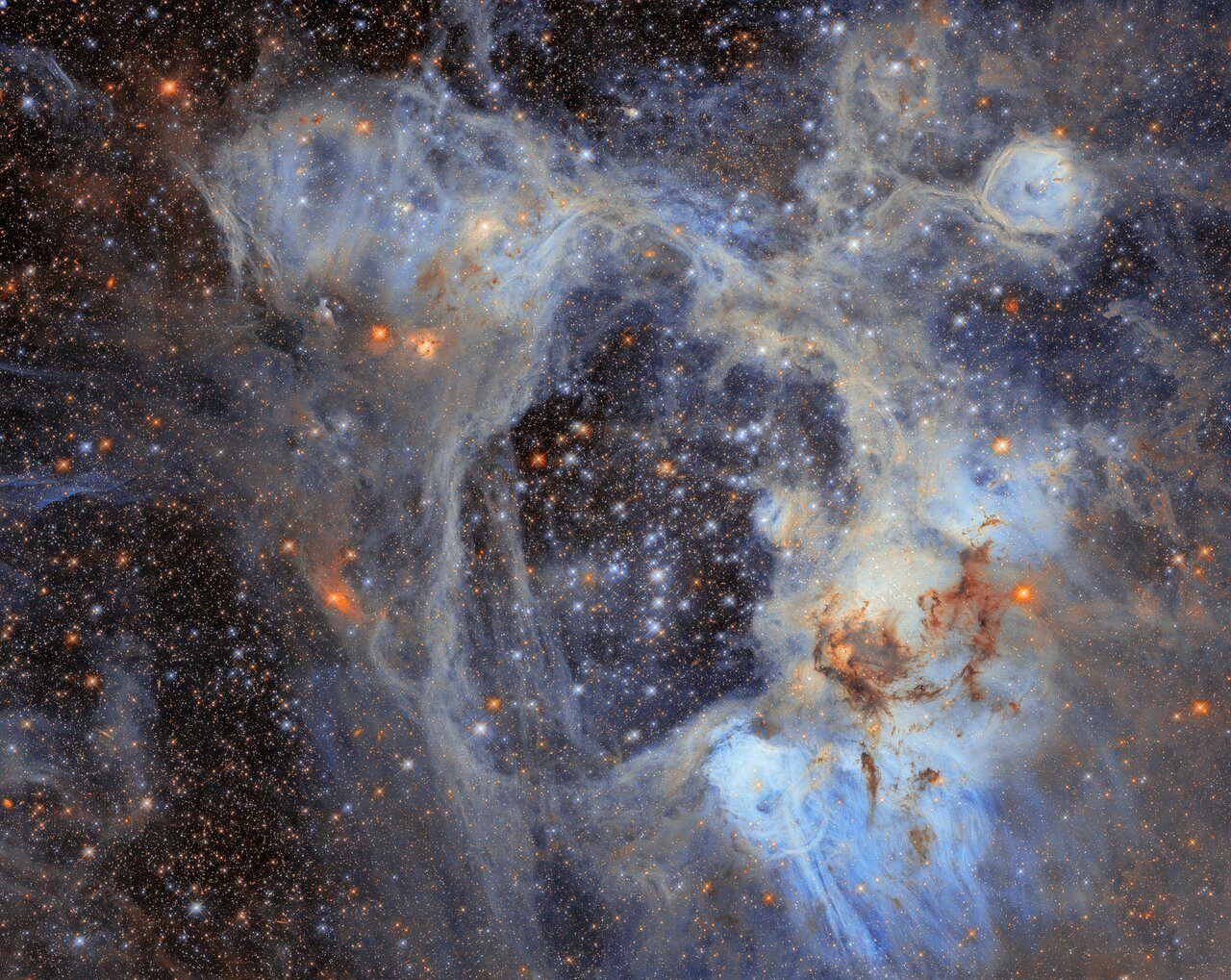
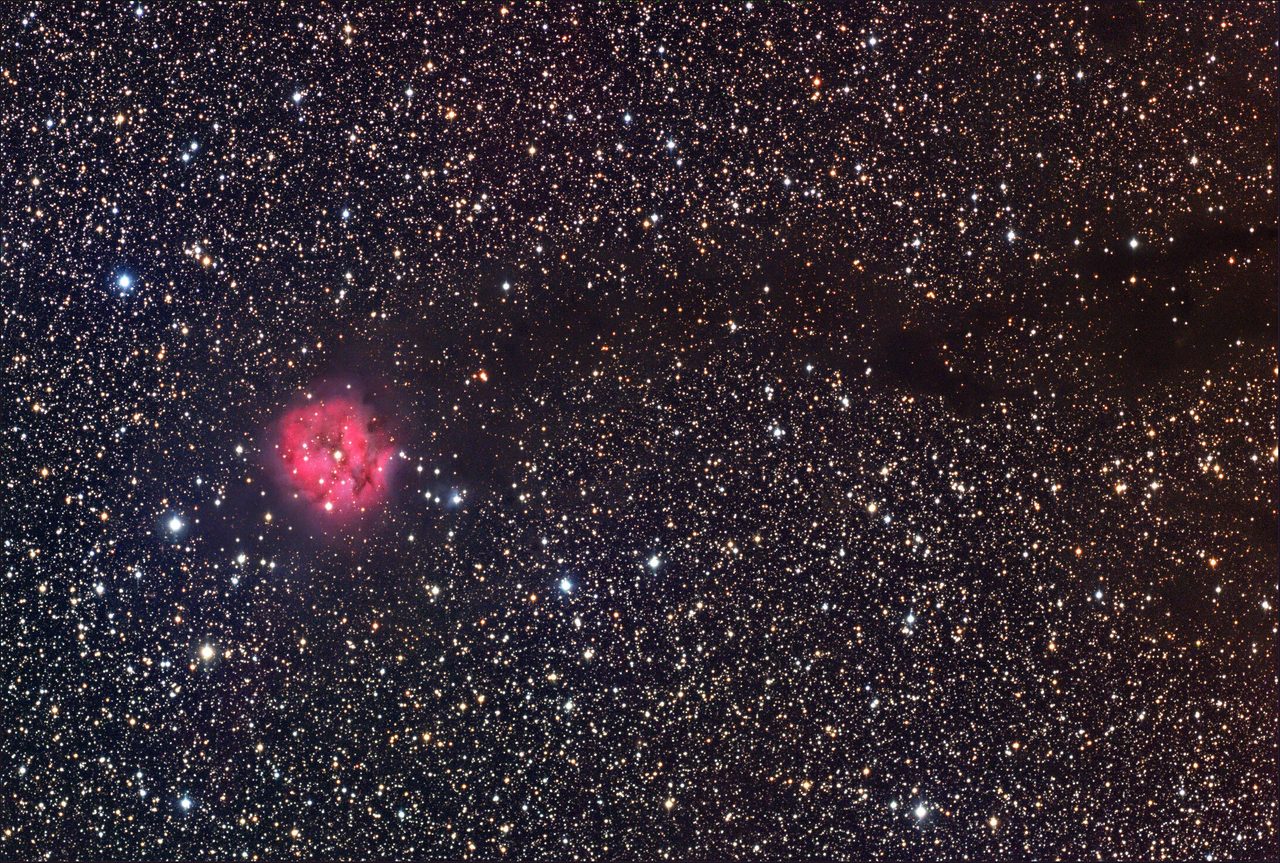
The Corona Australis Molecular Cloud, a mere 430 light years from Earth, is a captivating blend of reflection and emission nebulae. This region is a stellar nursery, where gas cools to temperatures as low as -260 Celsius, allowing it to collapse into protostars. The young stars within this cloud cast a blue tint as their light reflects off the surrounding dust, creating a visual spectacle. The R Coronae Australis binary system, a pair of stars within this region, further energises the nebula NGC 6729, causing it to glow with ionised gas.
In contrast, the Chandelier Cluster (NGC 6723) appears to dangle nearby but is actually much farther away, at tens of thousands of light years. This globular cluster contains stars almost as old as the universe itself, although it has experienced multiple star formation periods, resulting in a mix of slightly younger stars. The juxtaposition of these two celestial features offers a glimpse into different stages of stellar evolution.
Connecting the Dots in Space
The Corona Australis region is not only a visual delight but also a valuable site for understanding star formation. As one of the closest star-forming regions to Earth, it provides astronomers with a unique opportunity to study the processes that lead to star birth. Observations of this area contribute to our broader knowledge of how stars and planetary systems develop from molecular clouds.
While the Chandelier Cluster is not directly related to the star formation in Corona Australis, its presence in the same field of view highlights the vast scales and distances in our galaxy. The study of such clusters helps astronomers understand the early conditions of the Milky Way. For those interested in tracking the movement of celestial objects, the Orbital Radar pass predictor can provide insights into when these regions might be visible from Earth.
Frequently Asked Questions
What is the Corona Australis Molecular Cloud?
How far away is the Chandelier Cluster?
📎 Cite this article
Orbital Radar Newsroom. (2026). Unveiling the Jewels of Corona Australis. Orbital Radar. https://orbitalradar.com/blog/cosmic-gallery-2026-07-22"Unveiling the Jewels of Corona Australis." Orbital Radar, 23 July 2026, https://orbitalradar.com/blog/cosmic-gallery-2026-07-22.@misc{orbitalradar_cosmic_gallery_2026_07_22,
title = {Unveiling the Jewels of Corona Australis},
author = {{Orbital Radar}},
year = {2026},
howpublished = {\url{https://orbitalradar.com/blog/cosmic-gallery-2026-07-22}}
}