Why Does the ISS Need to Be Reboosted?
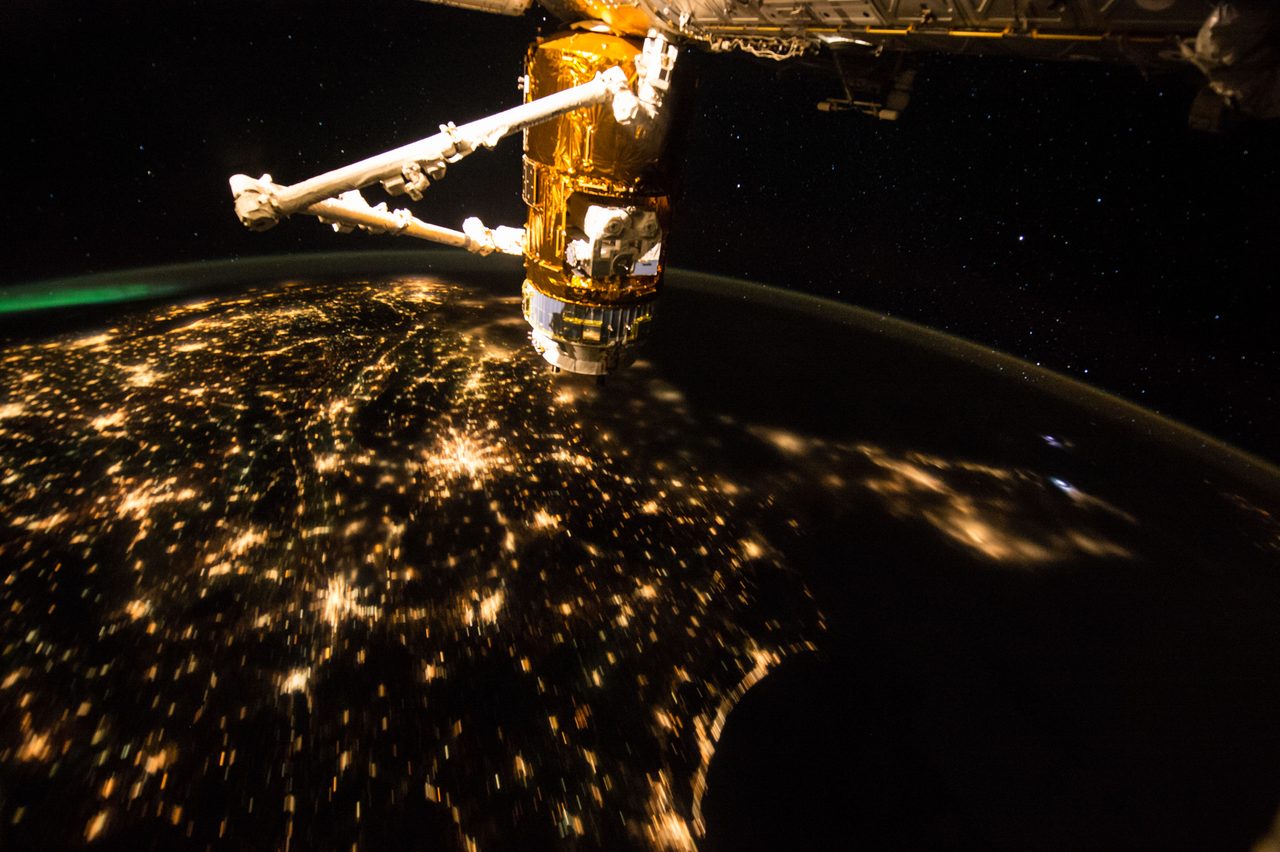
Thin air still slows the ISS near 400 km above Earth. Periodic engine burns replace lost orbital energy and keep the station at a useful operating altitude.
| Active satellites | 15,874 |
| Starlink active | 10,081 |
| Catalogued objects | 31,835 |
| Predicted re-entries | 17 |
| Active close approaches | 22 |
| People in space | 10 |
The International Space Station (ISS) needs to be reboosted because atmospheric drag gradually removes orbital energy and lowers its orbit. Periodic engine burns replace that energy, keeping the station near its intended operating altitude.
The apparent paradox is that space near 400 km is an extremely good vacuum, but not an entirely empty one. Sparse gas still resists the station’s motion, causing orbital decay (the gradual lowering of an orbit).
Orbital Radar tracking data lists 15,874 active satellites in orbit as of 20 October 2026. On that date, Orbital Radar’s live catalogue contains 31,835 objects, including debris: the ISS shares its orbital environment with much more than working spacecraft.
The station does not lose a fixed amount of height each day: atmospheric conditions, including changes driven by solar activity, affect the drag it encounters. The sections below explain that variation, the role of visiting spacecraft in reboosts, and the altitude changes readers can follow on Orbital Radar’s ISS tracker.
Why is there atmospheric drag at the ISS's altitude?
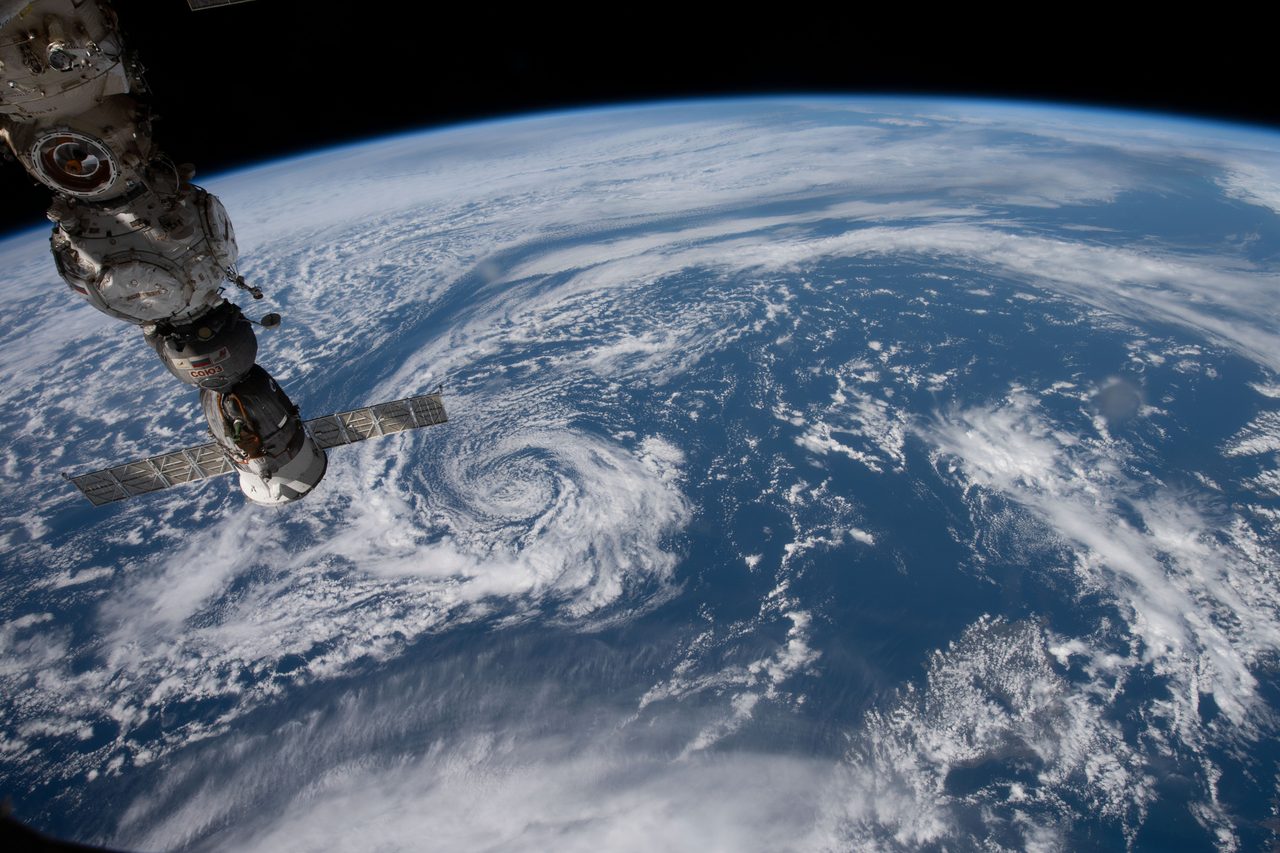
The ISS experiences atmospheric drag because Earth's atmosphere does not stop at a hard boundary: it gradually thins, leaving sparse gas even near the station's altitude of 400 km. The station travels through the thermosphere (an upper region of the atmosphere), where the gas is extremely thin but still capable of affecting a spacecraft's motion.
As the ISS moves through this gas, particles collide with its surfaces, including its large solar arrays. Those encounters exchange momentum and produce drag: a force opposing the station's motion relative to the surrounding atmosphere. Being in space therefore does not mean travelling through a perfect vacuum.
Each encounter has a tiny effect, but the collisions continue throughout every orbit. Drag removes orbital energy, gradually lowering the station's orbit rather than simply making it hover more slowly at the same height. The accumulated effect becomes meaningful because the force acts repeatedly, not because any individual collision is powerful.
Orbital Radar tracking data lists 15,874 active satellites in orbit as of 20 October 2026. Orbital Radar's live catalogue contains 31,835 objects, including debris, as of 20 October 2026. Atmospheric drag matters particularly to objects in lower orbits, where more gas remains; those totals span a much wider range of altitudes. The station's changing altitude can be followed on Orbital Radar's ISS tracker.
How much altitude does the ISS lose each day?
The ISS has no fixed daily altitude loss: atmospheric density, station orientation and operational activity all affect how quickly its orbit decays. A daily-loss figure describes conditions over a particular interval, not a permanent property of the station. Changing the area presented to the thin atmosphere can change drag, even without a substantial change in altitude.
Altitude at one moment is not the same as the overall size of an orbit. The ISS follows a slightly elliptical path, so its height rises and falls during each circuit without necessarily indicating orbital decay. Comparing a reading near the lowest point with another near the highest could therefore disguise a genuine loss—or suggest a gain that never occurred.
A useful decay estimate compares orbital data over time, particularly the semi-major axis (a measure of the orbit’s overall size), rather than isolated altitude readings. Reboosts and other intervening manoeuvres must be accounted for: simply subtracting two readings could mix drag-driven losses with deliberate orbit changes. Orbital Radar’s ISS tracker provides orbital context; our explanation of orbital decay describes how drag lowers satellite orbits.
Orbital Radar’s live catalogue contains 31,835 objects, including debris, as of 20 October 2026. Orbital Radar tracking data lists 15,874 active satellites in orbit as of 20 October 2026. Those catalogue totals describe the wider orbital population, not the ISS’s rate of descent.
How does a reboost actually raise the ISS's orbit?
A reboost raises the ISS’s orbit by firing engines to add orbital energy, usually with thrust directed broadly along the station’s direction of travel. The burn initially increases its speed, changing the path it follows around Earth rather than lifting the entire orbital path at once.
The ISS is not being held up against gravity: it remains in continuous free fall, moving forwards fast enough that its falling path curves around Earth. The same principle applies across the satellite population. Orbital Radar tracking data lists 15,874 active satellites in orbit as of 20 October 2026.
For a short forwards burn in an initially circular orbit, the station’s position barely changes during the firing, but its future trajectory does. The extra speed stretches that trajectory into an ellipse, raising the opposite side of the orbit. The burn point becomes the perigee (lowest point), while the apogee (highest point) rises; another forwards burn near apogee can raise the low side and make the orbit more circular.
This explains the apparent contradiction: an orbit-raising burn accelerates the station, yet a higher circular orbit has a lower orbital speed. As the station climbs, it exchanges kinetic energy (energy of motion) for gravitational potential energy and slows down. Its total orbital energy remains higher, even though its eventual circular-orbit speed is lower.
Orbit raising is also routine beyond the ISS. Orbital Radar tracking data lists 874 Starlink satellites raising their orbits as of 20 October 2026. Orbital Radar’s orbit-raising explanation explores how thrust changes an orbital path rather than simply pushing a spacecraft upwards.
Which spacecraft can reboost the ISS?
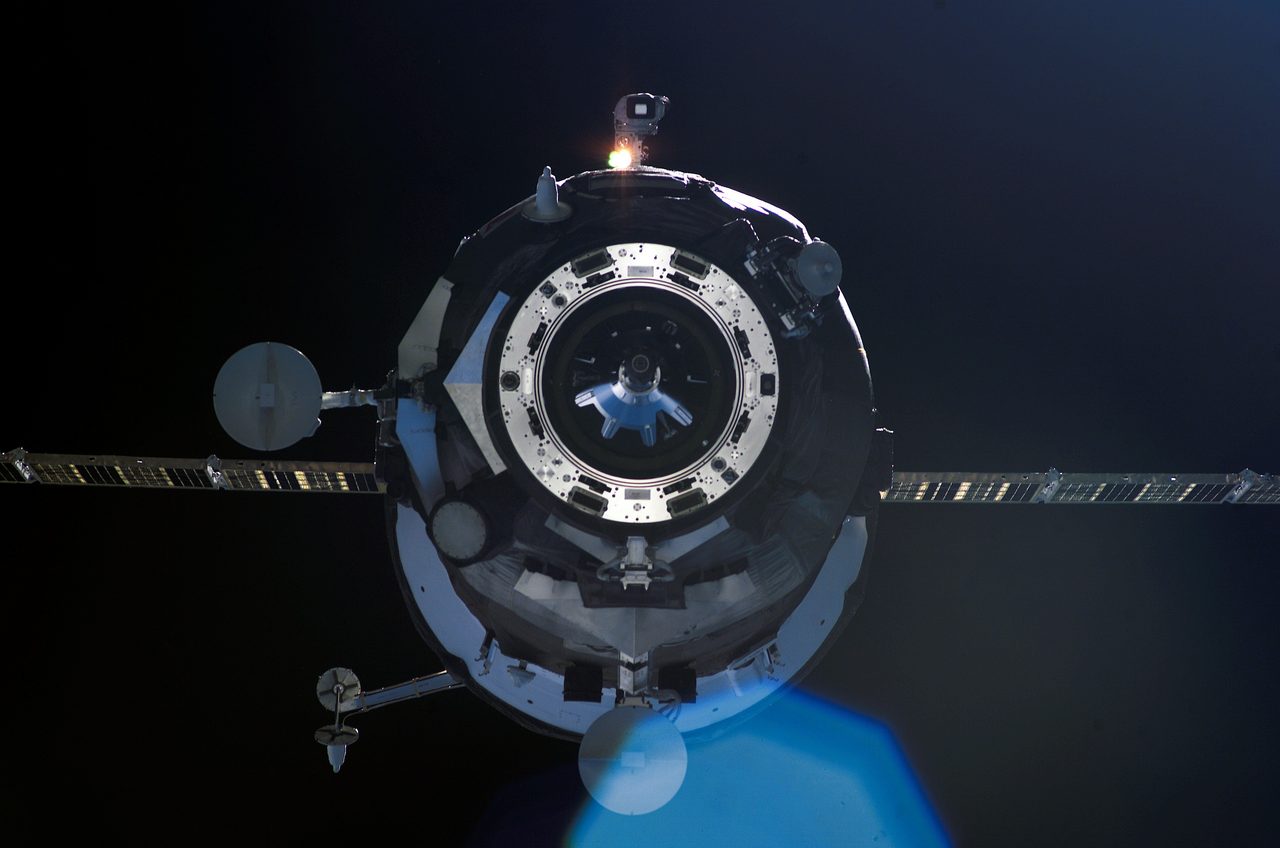
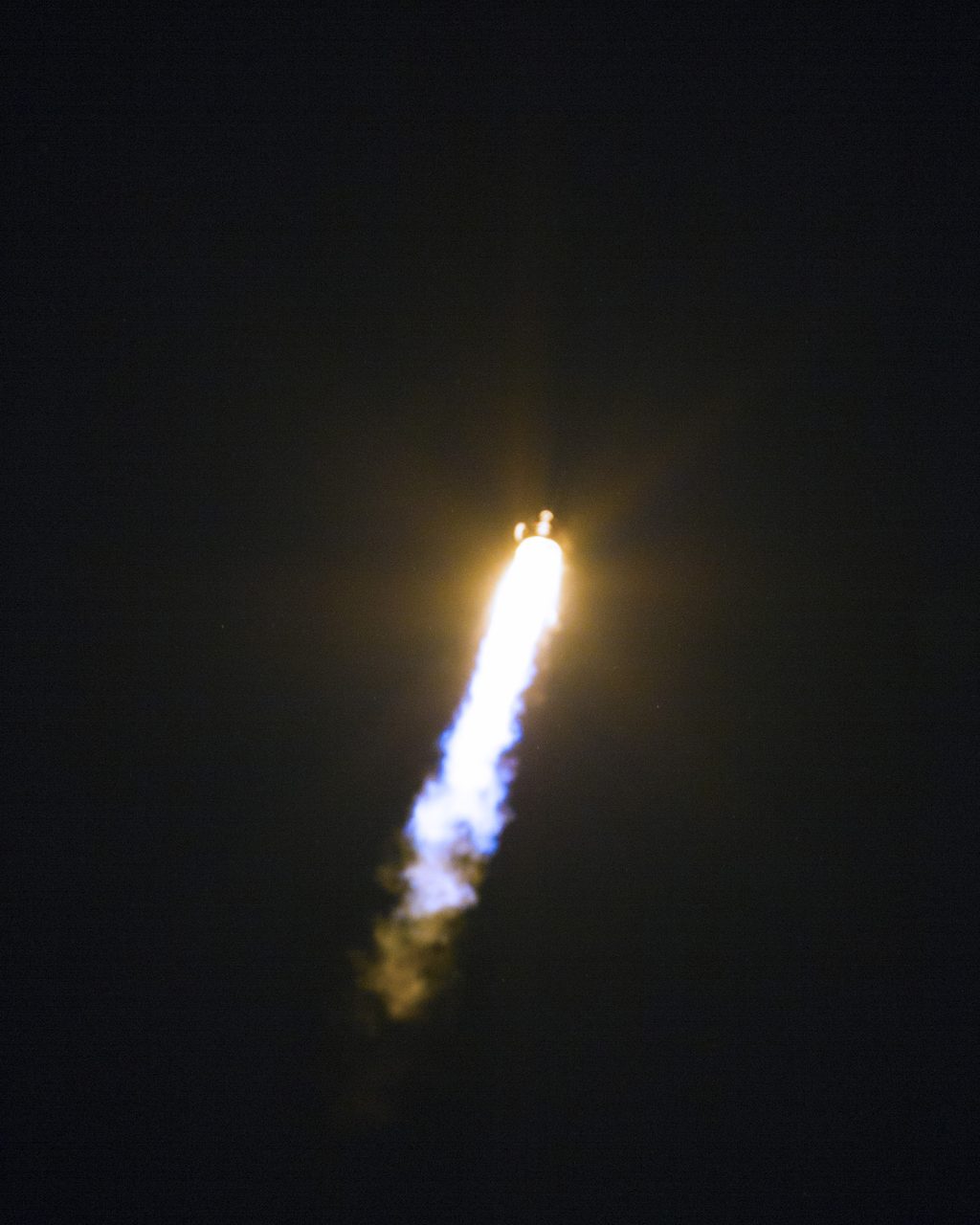
Russian Progress cargo spacecraft have long provided propulsion for ISS reboosts, alongside engines on the Russian segment’s Zvezda service module. Northrop Grumman’s Cygnus cargo spacecraft has also performed reboosts, and SpaceX’s Dragon has demonstrated the capability.
That does not mean every visiting spacecraft, or every mission using those vehicles, routinely raises the station’s orbit. A demonstrated capability must be supported by the appropriate vehicle configuration, available propellant and an approved operational plan. Cargo delivery and reboost propulsion are distinct tasks, even when the same spacecraft performs both.
During a reboost by a visiting spacecraft, its engines push against the vehicle’s structure, and that force passes through the docking connection into the station. The ISS and its docked spacecraft therefore accelerate together. Engineers must select a suitable station orientation and keep forces within structural loading limits: the docking mechanism and station framework cannot simply accept an arbitrary push from any direction.
The docking location matters because it determines how the thrust acts on the combined structure. Planners also consider how much usable propellant remains, other demands on that fuel, crew activities and scheduled arrivals or departures. Orbital Radar’s station-keeping guide explains the wider role of these planned propulsion manoeuvres.
Orbital Radar’s live catalogue contains 31,835 objects as of 20 October 2026. Orbital Radar tracking data lists 22 active close approaches as of 20 October 2026. These are catalogue-wide figures, not counts of threats to the ISS; choosing a propulsion source still requires station-specific assessment of the planned manoeuvre.
How often does the ISS need a reboost?
The ISS is reboosted according to an operational plan, not a universal fixed interval. Controllers schedule burns around the station’s changing orbit, visiting spacecraft and onboard activities, rather than simply repeating them after a set number of days.
Atmospheric drag gradually lowers the orbit. The timing and size of a reboost depend on how quickly altitude is being lost and the orbital altitude controllers want to maintain. A higher target generally reduces drag, but reaching it requires propellant and must remain compatible with other mission requirements.
Arriving spacecraft also influence that target. Their rendezvous plans depend on the station’s altitude and position along its orbit, so controllers can schedule a reboost to help establish suitable conditions for approach and docking.
The trade-offs include propellant use, crew schedules and research. Reboost acceleration briefly disturbs the near-weightless conditions that sensitive experiments require, so burns must be coordinated with station operations. Orbital Radar’s guide to station-keeping explains manoeuvres used to maintain an intended orbit.
These decisions sit within a broader orbital environment. Orbital Radar tracking data records 15,874 active satellites in orbit as of 20 October 2026. Orbital Radar tracking data records 10 people in space as of 20 October 2026. Neither figure sets the ISS reboost timetable: the station’s own trajectory and operational needs do.
Why can solar activity make the ISS lose altitude faster?
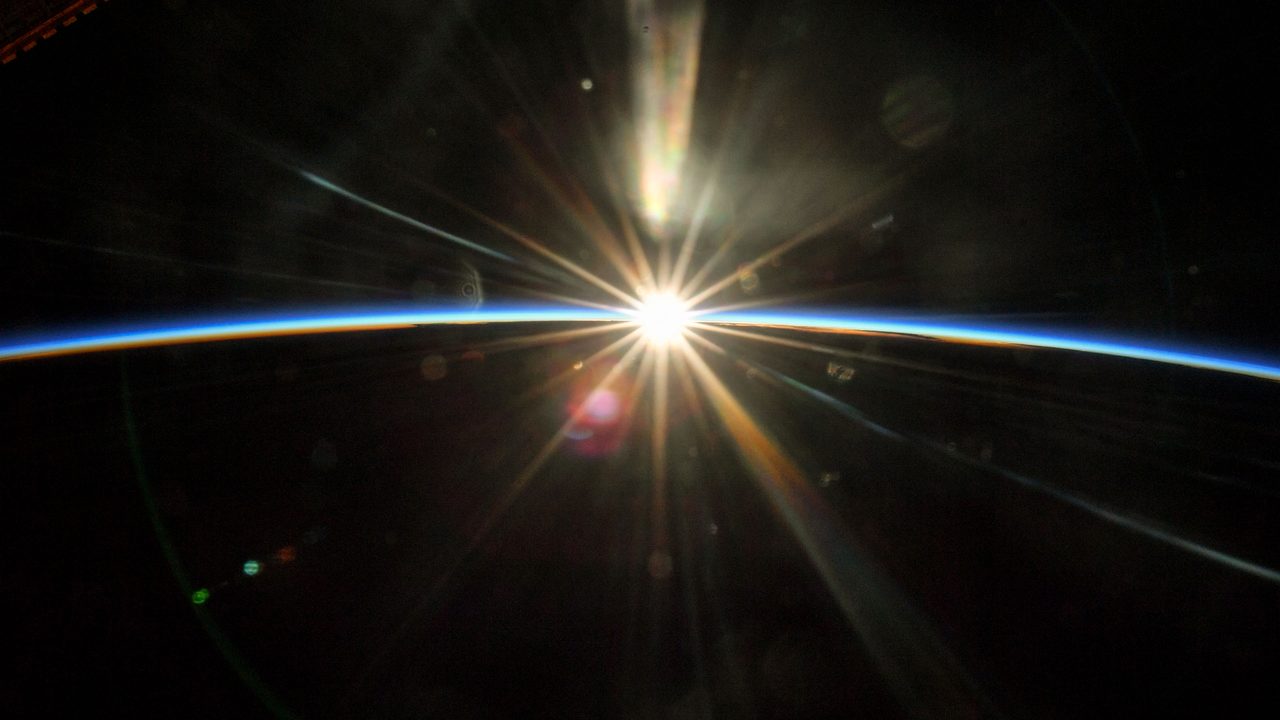
Solar activity can make the ISS lose altitude faster by heating and expanding the upper atmosphere, increasing gas density at the station’s altitude. The station then encounters more gas along its path, strengthening atmospheric drag and removing orbital energy faster.
The Sun’s roughly 11-year activity cycle changes the background conditions: stronger ultraviolet and X-ray emissions generally heat the thermosphere (the upper atmospheric layer through which the ISS travels). Shorter disturbances can occur during geomagnetic storms, when energy from the solar wind is transferred into Earth’s magnetic environment and upper atmosphere.
These effects do not produce an identical response every time. The density increase depends on the disturbance’s strength, timing and location, as well as existing atmospheric conditions; a solar flare alone does not imply a predictable amount of altitude loss.
Forecasting atmospheric density helps mission planners estimate drag, decide when reboosts may be needed and predict orbital decay. Orbital Radar’s ISS tracker provides orbital context, but current altitude alone cannot establish how quickly the station will descend.
Orbital Radar tracking data lists 15,874 active satellites in orbit as of 20 October 2026. Orbital Radar’s live catalogue contains 31,835 objects, including debris, as of 20 October 2026. For objects in low Earth orbit, atmospheric forecasts help constrain how their future paths will change.
What would happen if the ISS stopped being reboosted?
If the ISS stopped being reboosted, it would initially keep orbiting Earth, but atmospheric drag would progressively remove orbital energy. Without corrective manoeuvres, its orbit would shrink until the station eventually re-entered the atmosphere.
This process can reinforce itself: a lower orbit generally encounters denser air, increasing drag and potentially accelerating further descent. Reboosting interrupts that decline by adding orbital energy; it does not remove the atmosphere or permanently eliminate orbital decay.
Altitude alone cannot tell you exactly how long the ISS would remain in orbit. Atmospheric density changes with solar and geomagnetic conditions, while the station’s mass, orientation and configuration affect how strongly drag slows it. A predicted re-entry time therefore requires more than a single height measurement.
Orbital Radar tracking data records 1,107 re-entries in 2026 as of 20 October. Orbital Radar tracking data also lists 17 predicted upcoming re-entries. Those catalogue-wide figures are not a countdown for the ISS.
An unintended loss of orbital maintenance would be different from a deliberately controlled deorbit. A controlled deorbit uses planned manoeuvres to target atmospheric entry over a chosen remote region; uncontrolled decay cannot offer the same control over where surviving debris falls.
Regular reboosts therefore preserve a useful operating environment for research, crewed operations and visiting spacecraft. The changing orbit shown on Orbital Radar’s ISS tracker reflects an ongoing balance between atmospheric drag and orbital maintenance, not a permanent cure for decay.
Are reboosts the same as debris-avoidance manoeuvres?
No. Routine ISS reboosts chiefly maintain the station’s orbit, while debris-avoidance manoeuvres change the geometry of a predicted encounter with another object. Both involve changing the station’s motion, but they address different operational needs: countering orbital decay versus reducing collision risk.
A debris-avoidance manoeuvre can alter where the ISS will be when an object passes nearby, increasing the predicted separation at the encounter. Its timing and direction are chosen for that particular encounter, rather than simply to restore altitude lost through atmospheric drag.
An individual manoeuvre can sometimes serve both purposes: an avoidance burn may also raise the station’s orbit. That overlap does not make the terms interchangeable; a routine reboost is not automatically a response to debris, and an avoidance manoeuvre is not defined by whether it raises altitude.
Orbital Radar tracking data lists 22 active close approaches across its tracked population on 20 October 2026. This catalogue-wide figure is not a count of threats to the ISS, and a close approach does not by itself imply a collision.
Assessing a potential encounter requires predictions of both objects’ future positions and the uncertainties in those predictions. Apparent separation on a map cannot establish collision risk: objects that look close may pass at different times or altitudes. Orbital Radar’s station-keeping guide provides context for understanding how planned manoeuvres change an orbit, but a map view alone cannot tell readers whether an avoidance burn is needed.
How can I track the ISS's orbit on Orbital Radar?
Use Orbital Radar's ISS tracker to follow the International Space Station's position and altitude. The ISS is identified by NORAD catalogue number 25544, which distinguishes it from other tracked spacecraft. Its individual satellite page is available at /satellite/25544.
The map shows where the station is along its orbit, while instantaneous altitude describes its height at a particular moment. Neither should be confused with a longer-term change in the orbital path itself. The ISS does not follow a perfectly circular orbit, so its altitude can vary as it travels without that variation indicating a reboost or sustained orbital decay.
To assess a longer-term rise or fall, compare dated orbital records rather than isolated map positions. Useful measures include perigee and apogee (the lowest and highest points of an orbit), considered together across successive records. A single map view cannot establish a daily decay rate or prove that a reboost has occurred; that requires a time series of orbital measurements or confirmation of a manoeuvre.
Orbital Radar's live catalogue lists 15,874 active satellites in orbit on 20 October 2026. The ISS is one specific tracked object within that wider population, according to Orbital Radar tracking data.
If you also want to watch the station cross your sky, use the guide to seeing the ISS tonight. A visible pass depends on your location, viewing conditions and the station being sunlit while your sky is sufficiently dark.
Key takeaways
- The ISS needs reboosting because sparse atmospheric gas near 400 km steadily removes orbital energy.
- The station's altitude loss varies with atmospheric conditions and its configuration, so there is no fixed daily decay rate.
- Progress and Russian-segment propulsion support reboosting, while Cygnus and Dragon have also demonstrated the capability.
- Orbital Radar's ISS tracker helps readers follow the station, but identifying long-term decay requires comparisons over time rather than a single altitude reading.
Frequently Asked Questions
Can astronauts feel the ISS during a reboost?
Why not move the ISS into a much higher orbit?
Do the ISS solar panels affect atmospheric drag?
Does a reboost change when I can see the ISS?
Can the ISS use electric propulsion for reboosting?
📎 Cite this article · data available
Orbital Radar Newsroom. (2026). Why Does the ISS Need to Be Reboosted?. Orbital Radar. https://orbitalradar.com/blog/why-does-the-iss-need-reboosting"Why Does the ISS Need to Be Reboosted?." Orbital Radar, 20 October 2026, https://orbitalradar.com/blog/why-does-the-iss-need-reboosting.@misc{orbitalradar_why_does_the_iss_need_reboosting,
title = {Why Does the ISS Need to Be Reboosted?},
author = {{Orbital Radar}},
year = {2026},
howpublished = {\url{https://orbitalradar.com/blog/why-does-the-iss-need-reboosting}}
}