Why Don't Satellites Fall? How Orbits Really Work
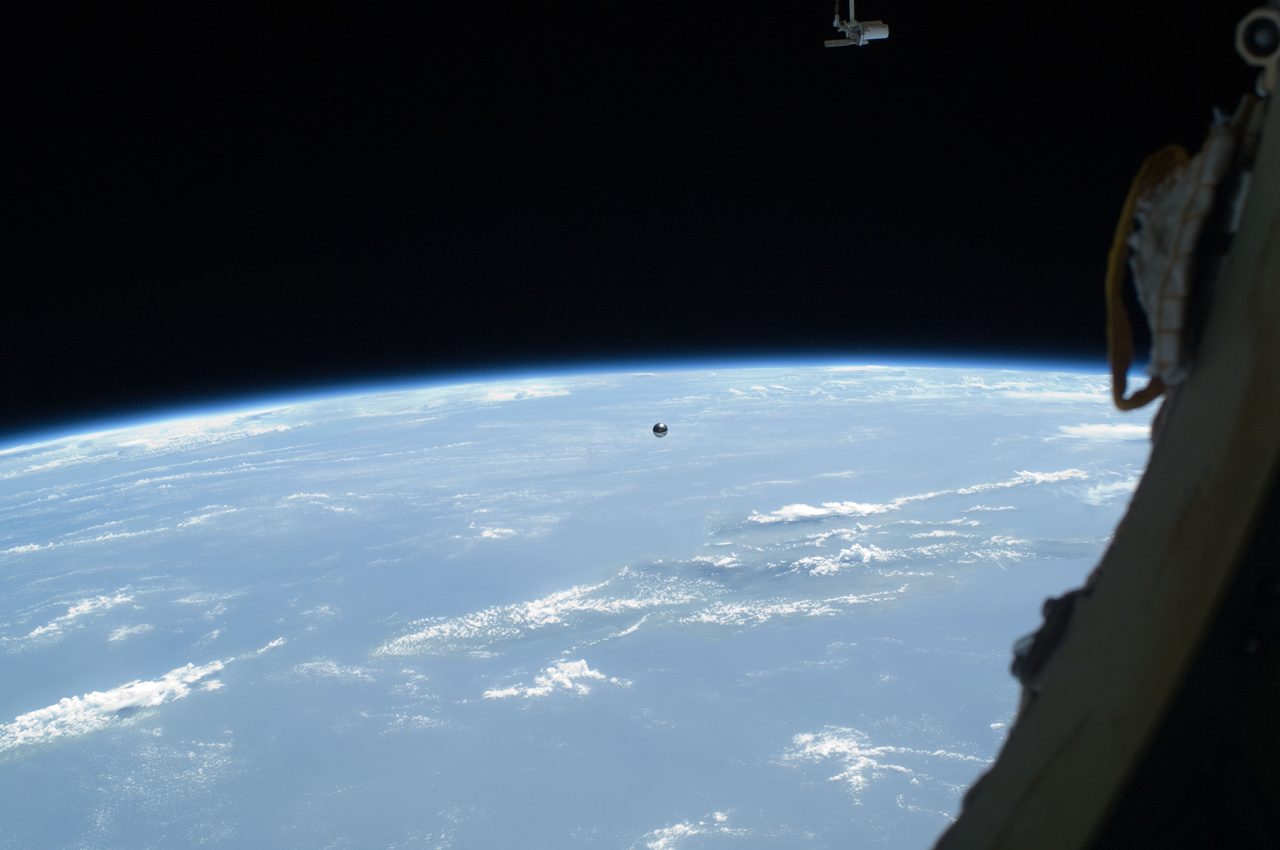
Satellites stay in orbit by falling around Earth rather than straight towards it. Their altitude and speed determine how they travel — and how atmospheric drag eventually brings some down.
| Active satellites | 16,720 |
| Starlink active | 9,676 |
| Catalogued objects | 32,109 |
| Active close approaches | 23 |
| People in space | 10 |
Satellites do fall: gravity continually pulls them towards Earth. They stay in orbit because their sideways speed carries them around Earth's curved surface rather than into it — they keep falling while the ground curves away beneath them.
According to Orbital Radar tracking data, 16,720 active satellites were in orbit on 26 November 2026. An ideal orbit needs no continuous propulsion: without air resistance or other disturbances, a satellite's existing motion and Earth's gravity are enough to keep it circling. Engines are not holding it up.
None of the 16,720 active satellites recorded by Orbital Radar tracking data on 26 November 2026 is beyond Earth's gravitational pull. But a real low Earth orbit (an orbit relatively close to Earth's surface) is not an empty, frictionless environment: thin atmospheric gases create drag, gradually removing orbital energy. That distinction explains why orbiting and eventually coming down are entirely compatible; Orbital Radar's satellite library provides a starting point for exploring the spacecraft involved.
How can a satellite keep falling without hitting Earth?
A satellite keeps falling without hitting Earth because it moves sideways fast enough for Earth's surface to curve away beneath it. It is not escaping gravity: it is continually falling around the planet. Orbital Radar tracking data lists 16,720 active satellites in orbit as of 26 November 2026.
Imagine throwing a ball horizontally from a high mountain, ignoring air resistance and obstacles. A gentle throw lands nearby; a faster throw carries the ball farther before it reaches the ground. Give it enough horizontal speed and, as gravity bends its path downwards, Earth's surface curves away beneath it at the same rate. The ball keeps missing the ground.
An orbit is a curved path followed under gravity. In a circular orbit, gravity continuously changes the direction of a satellite's motion without changing its speed: its height remains constant even though it is always falling towards Earth's centre. Its sideways motion means it never reaches that centre. In an elliptical orbit (an elongated, oval path), both its distance from Earth and its speed vary along the path.
Starlink accounts for 9,676 active satellites today, according to Orbital Radar tracking data. The same falling-around-Earth principle applies to those spacecraft and the other satellites represented in Orbital Radar's satellite library: constant height does not mean an absence of falling.
Is there still gravity where satellites orbit?
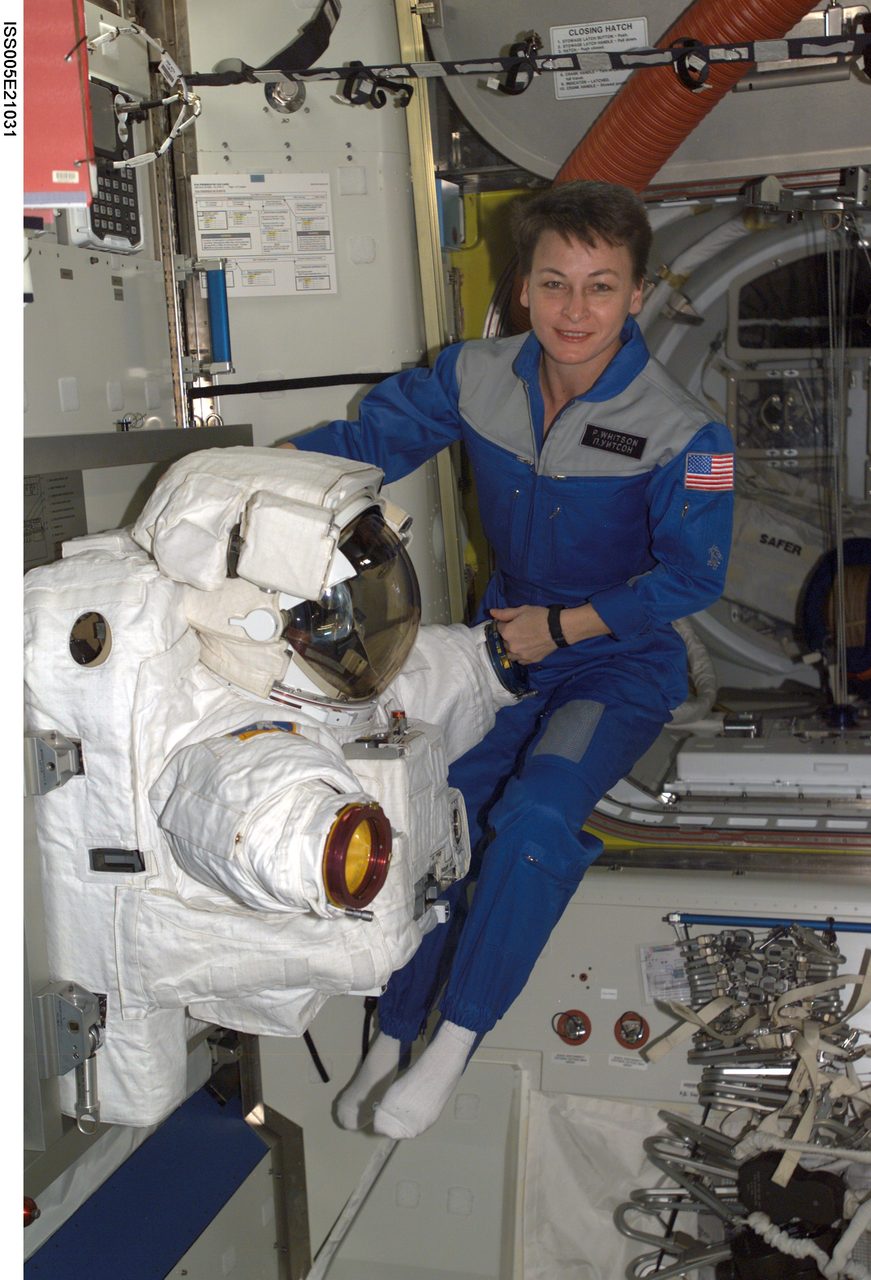
Yes: gravity remains strong where satellites orbit. At the International Space Station's roughly 400-kilometre altitude, gravitational acceleration is still about 90 per cent of its surface value. Earth's pull weakens gradually with distance from its centre, following an inverse-square relationship: doubling that distance reduces the acceleration to a quarter.
Orbital Radar tracking data records 10 people in space as of 26 November 2026. Their apparent weightlessness does not mean they have escaped gravity. Astronauts, their spacecraft and loose objects accelerate together in shared free fall, so a floor no longer needs to support them against Earth's pull. A released pen therefore floats beside an astronaut rather than dropping towards their feet.
Gravity and atmospheric density are different things. Crossing the conventional boundary of space, commonly placed at 100 kilometres, does not switch gravity off. Air density falls steeply with altitude, while gravity changes much more gradually; even around the station, a very thin atmosphere remains.
Orbital Radar tracking data lists 16,720 active satellites in orbit as of 26 November 2026. These spacecraft remain subject to gravity, despite operating far above most atmospheric gas. Orbital Radar's satellite library provides a starting point for exploring the spacecraft occupying those orbits.
How fast must a satellite travel at different altitudes?
A satellite in a circular orbit travels at approximately 7.7 kilometres per second at 400 kilometres altitude, compared with approximately 3.1 kilometres per second at geostationary altitude, about 35,786 kilometres above the equator. Higher circular orbits need less speed, not more.
The relationship is v = √(GM/r), where v is circular orbital speed, G is the gravitational constant, M is Earth's mass and r is the distance from Earth's centre. That last distinction matters: r is not simply the satellite's height above the ground.
Gravity weakens with distance, so a more distant circular orbit requires less speed for gravity to bend the satellite's path into a circle. A higher orbit also has a greater circumference; travelling a longer path at a lower speed means taking longer to complete each circuit. Orbital Radar's guide to the main orbital categories explains how these different routes around Earth are classified.
These are circular-orbit examples, not universal speed requirements at those heights. In an elliptical orbit (an oval-shaped path), speed depends on both the orbit's shape and the satellite's position: it moves faster near Earth and slower farther away.
Staying in orbit is also different from escaping Earth. Escape requires a different energy threshold: enough total orbital energy to leave without falling back, rather than remain on a bound path.
Orbital Radar tracking data lists 16,720 active satellites on 26 November 2026. Orbital Radar's live catalogue contains 32,109 objects, including debris, on 26 November 2026. The satellite library provides context for individual spacecraft and their orbits.
Do satellites need engines running to stay in orbit?
No: satellites do not need engines running continuously to stay in orbit. In an ideal orbit without resistance, a satellite coasts indefinitely; gravity bends its path rather than requiring an engine to hold it up. Real satellites encounter small disturbances, but these generally call for corrections, not continuous thrust.
Launch propulsion provides the energy to leave Earth and gain orbital speed. Orbit insertion establishes the intended initial orbit, using the launch vehicle or spacecraft engines; later manoeuvres change the satellite’s path, perhaps raising its altitude or avoiding another object.
Orbital Radar tracking data lists 1,277 Starlink satellites as raising their orbits on 26 November 2026. Station-keeping means occasional corrections that maintain a desired orbit or position, rather than continuous support against gravity.
A propulsion failure therefore does not make a satellite drop immediately: it retains its orbital motion. Its subsequent path depends on altitude, atmospheric drag (resistance from thin residual air) and other disturbances, including the gravitational influence of the Moon and Sun.
Orbital Radar tracking data lists 242 Starlink satellites as deorbiting on 26 November 2026. Readers can explore orbital changes with Orbital Radar’s satellite manoeuvre tracker, but an observed change does not necessarily establish its cause: propulsion, drag and measurement uncertainty must be distinguished.
Why do low satellites eventually fall back to Earth?
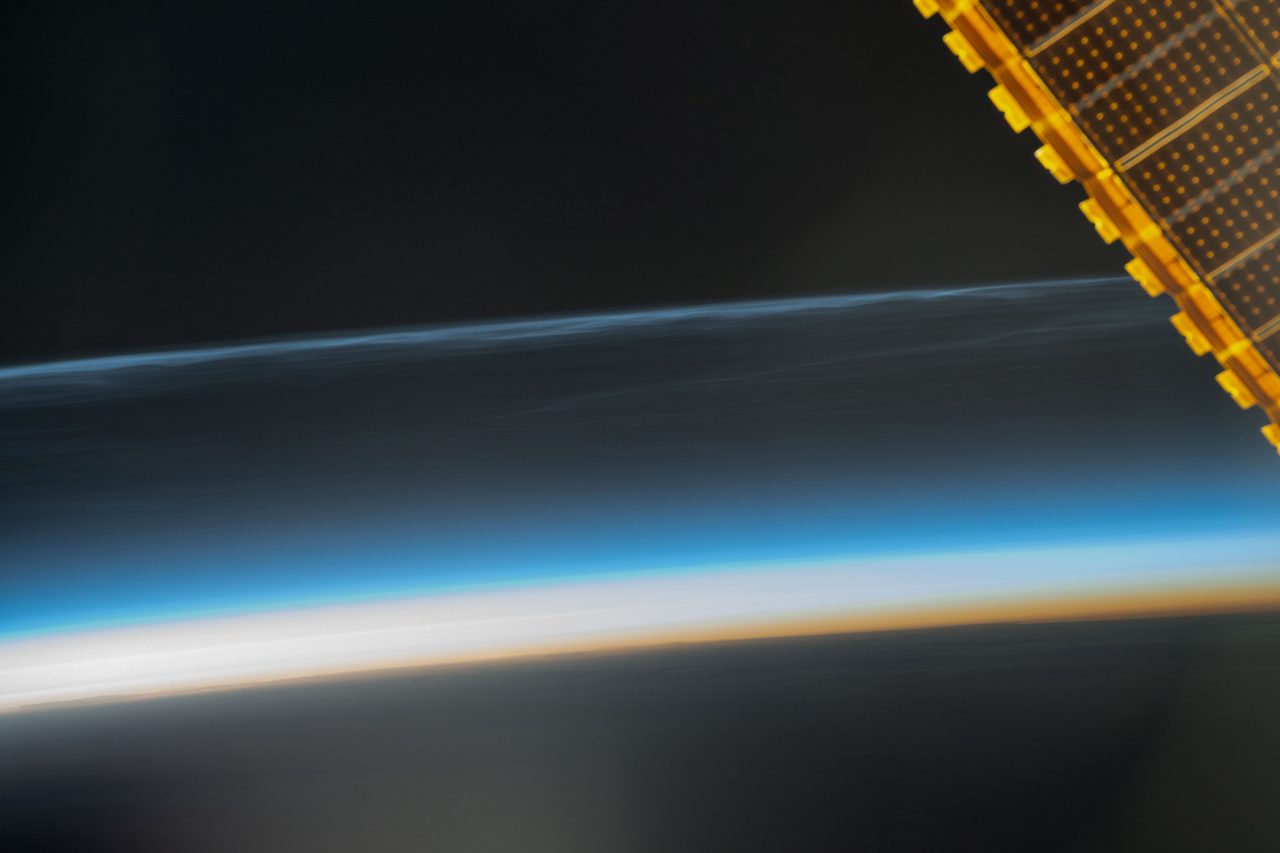
Low satellites eventually fall back because Earth's upper atmosphere has no sharp outer edge: even at orbital altitudes, sparse gas collides with spacecraft and creates drag. This resistance removes orbital energy, gradually lowering a satellite's path unless manoeuvres compensate.
Orbital decay (the gradual shrinking of an orbit) generally accelerates as the spacecraft encounters denser air below. According to Orbital Radar tracking data, 9,676 Starlink satellites were operational on 26 November 2026.
There is an apparent paradox: drag removes energy, yet a satellite settling into a lower, nearly circular orbit travels faster. Drag initially reduces its speed relative to the surrounding gas and changes its path; as it falls lower, gravity accelerates it. The resulting lower orbit has less total energy but a higher orbital speed: decay is not a steady slowing towards a halt.
Altitude matters, but cannot determine a satellite's lifetime alone. A heavy spacecraft with a small exposed area generally resists drag better than a lightweight, broad one, while changing orientation alters the area facing the gas. Solar activity can heat and expand the upper atmosphere, increasing density at a given altitude and accelerating decay.
Passive decay means allowing atmospheric drag to bring an orbit down without a deliberate deorbit manoeuvre. Operators can instead lower an orbit deliberately, leaving drag to complete the descent; this does not necessarily mean an immediate re-entry. According to Orbital Radar tracking data, 242 Starlink satellites were deorbiting on 26 November 2026. Orbital Radar's Re-entry Tracker provides a way to follow objects approaching atmospheric return, although changing atmospheric conditions make precise timing uncertain.
What happens when a satellite re-enters the atmosphere?
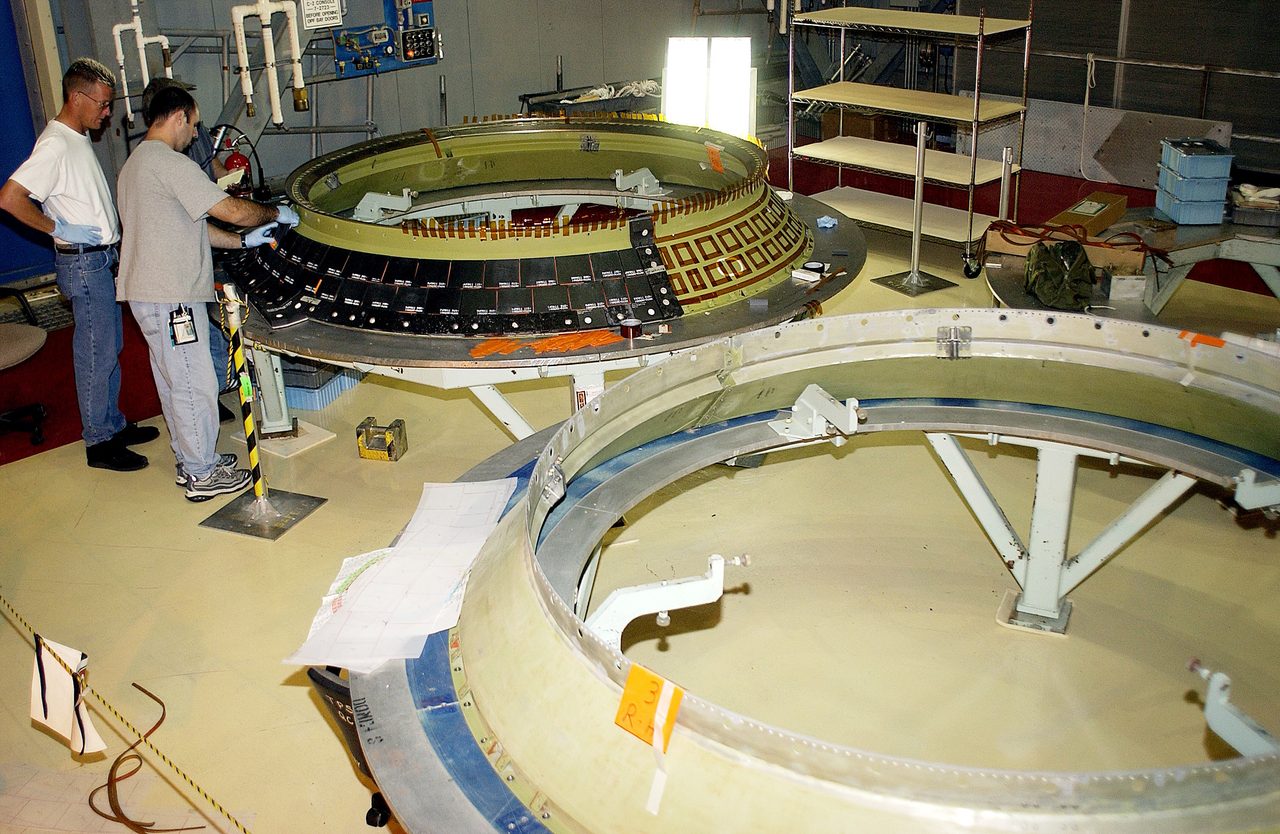
When a satellite re-enters, denser air slows it sharply, heats it and can tear it apart. Atmospheric re-entry is the passage back into the denser layers of Earth's atmosphere, where air resistance removes orbital speed.
A representative speed for an object returning from low Earth orbit is approximately 28,000 kilometres per hour; not every returning object travels at that speed. The vehicle compresses air ahead of it, intensely heating the gas, which transfers heat to its surface. This is not simply surface friction: exposed surfaces can exceed 1,600°C.
Orbital Radar tracking data lists 242 Starlink satellites as deorbiting on 26 November 2026. Deorbiting means lowering an orbit towards atmospheric re-entry, not necessarily entering the atmosphere immediately.
Expendable satellites can fragment and substantially burn up, although some components may survive to reach the surface. In an uncontrolled return, operators cannot precisely choose the impact location; a deliberately targeted re-entry uses manoeuvres to direct surviving debris towards a selected remote area, usually ocean.
Orbital Radar's live catalogue includes 2,221 rocket bodies as of 26 November 2026. Predictions for returning objects can be followed on the Orbital Radar Re-entry Tracker, but predicted locations remain uncertain.
Returning spacecraft are different: heat shields protect their structure, while carefully controlled trajectories manage heating and deceleration. Rather than being designed for disposal, these vehicles are engineered to carry their occupants or cargo safely through re-entry.
Will every satellite eventually come down?
No: not every satellite will re-enter Earth's atmosphere on a practical timescale. Atmospheric drag can gradually lower an orbit in low Earth orbit, but much higher satellites encounter so little air that atmospheric decay is negligible over practical timescales.
An inactive satellite is not the same as one that has re-entered. Losing power or communications does not remove its sideways velocity: it continues orbiting, potentially long after its mission ends.
Orbital Radar tracking data lists 32,109 catalogued objects in orbit on 26 November 2026, including debris. Orbital Radar tracking data lists 16,720 active satellites in orbit today. These are different measures: being in orbit does not mean an object is working. Orbital Radar's satellite library helps distinguish an object's operational status from its orbital characteristics.
Some high-altitude satellites are deliberately moved into a graveyard orbit (a disposal orbit away from an operational region). This frees space for working spacecraft; it is not a route down through the atmosphere.
Higher orbits are not perfectly unchanging. The Moon and Sun's gravity, Earth's uneven gravitational field and sunlight pressure (the tiny push exerted by light) can alter their shape and orientation. Those changes do not guarantee prompt re-entry: a defunct satellite can remain aloft rather than falling back within a human lifetime.
How can I check satellite altitudes and re-entries live?
Start with Orbital Radar’s /satellites-by-altitude page to compare orbital heights and see how the satellite population is distributed. Lower circular orbits require greater speed and encounter more atmospheric drag than higher ones: the distribution gives practical context to both principles, although altitude alone does not tell you when an object will return.
Open the satellite library at /library to inspect the available orbital details for an individual object. A single altitude reading is a snapshot, not evidence of a sustained descent: an elliptical orbit naturally carries a satellite through different heights. Look for repeated measurements showing that the orbit is shrinking, rather than comparing isolated readings taken at different points along its path.
According to Orbital Radar tracking data, 242 Starlink satellites were deorbiting on 26 November 2026. Orbital Radar tracking data also recorded 1,277 Starlink satellites raising their orbits on 26 November 2026. These categories help distinguish satellites descending towards atmospheric re-entry from those still climbing towards their intended operating heights.
Use the Orbital Radar re-entry tracker to follow predicted returns, treating forecasts as estimates rather than appointments. Predictions can shift as atmospheric conditions alter drag and new orbital measurements refine the projected trajectory. A deorbiting status does not provide an exact landing time or location, or establish that any material will reach the ground. The data sources page explains the provenance and limitations of the tracking information.
Key takeaways
- Satellites stay in orbit because their sideways motion turns gravitational free fall into a path around Earth.
- Higher circular orbits require lower speeds and take longer to complete than lower circular orbits.
- Atmospheric drag removes orbital energy from low satellites, often requiring corrective manoeuvres or eventually causing re-entry.
- Orbital Radar's altitude pages and Re-entry Tracker connect orbital mechanics with the satellites currently circling and returning to Earth.
Frequently Asked Questions
Why don't satellites crash into each other?
Can a satellite stay above the same place on Earth?
Why do satellites sometimes disappear while I am watching them?
Can satellites orbit in the opposite direction to Earth's rotation?
Does a heavier satellite fall faster than a lighter one?
Cite this article
Pick a style, then copy it or download it for your reference manager.Orbital Radar. (2026, November 26). Why Don't Satellites Fall? How Orbits Really Work. Retrieved November 26, 2026, from https://orbitalradar.com/blog/why-dont-satellites-fall-out-of-the-sky
“Why Don't Satellites Fall? How Orbits Really Work.” Orbital Radar, 26 Nov. 2026, orbitalradar.com/blog/why-dont-satellites-fall-out-of-the-sky. Accessed 26 Nov. 2026.
Orbital Radar (2026) Why Don't Satellites Fall? How Orbits Really Work. Available at: https://orbitalradar.com/blog/why-dont-satellites-fall-out-of-the-sky (Accessed: 26 November 2026).
Orbital Radar. “Why Don't Satellites Fall? How Orbits Really Work.” Last modified November 26, 2026. https://orbitalradar.com/blog/why-dont-satellites-fall-out-of-the-sky.
@misc{orbitalradar_blog_why_dont_satellites_fall_out_of_the_sky,
  author       = {{Orbital Radar}},
  title        = {Why Don't Satellites Fall? How Orbits Really Work},
  year         = {2026},
  month        = nov,
  howpublished = {\url{https://orbitalradar.com/blog/why-dont-satellites-fall-out-of-the-sky}},
  url          = {https://orbitalradar.com/blog/why-dont-satellites-fall-out-of-the-sky},
  urldate      = {2026-11-26},
  note         = {Accessed 2026-11-26}
}
TY - ELEC AU - Orbital Radar, TI - Why Don't Satellites Fall? How Orbits Really Work PY - 2026 DA - 2026/11/26 PB - Orbital Radar UR - https://orbitalradar.com/blog/why-dont-satellites-fall-out-of-the-sky Y2 - 2026/11/26 LA - en ER -
Live figures change, so keep the date you accessed the page. How to cite Orbital Radar