K2-18 b
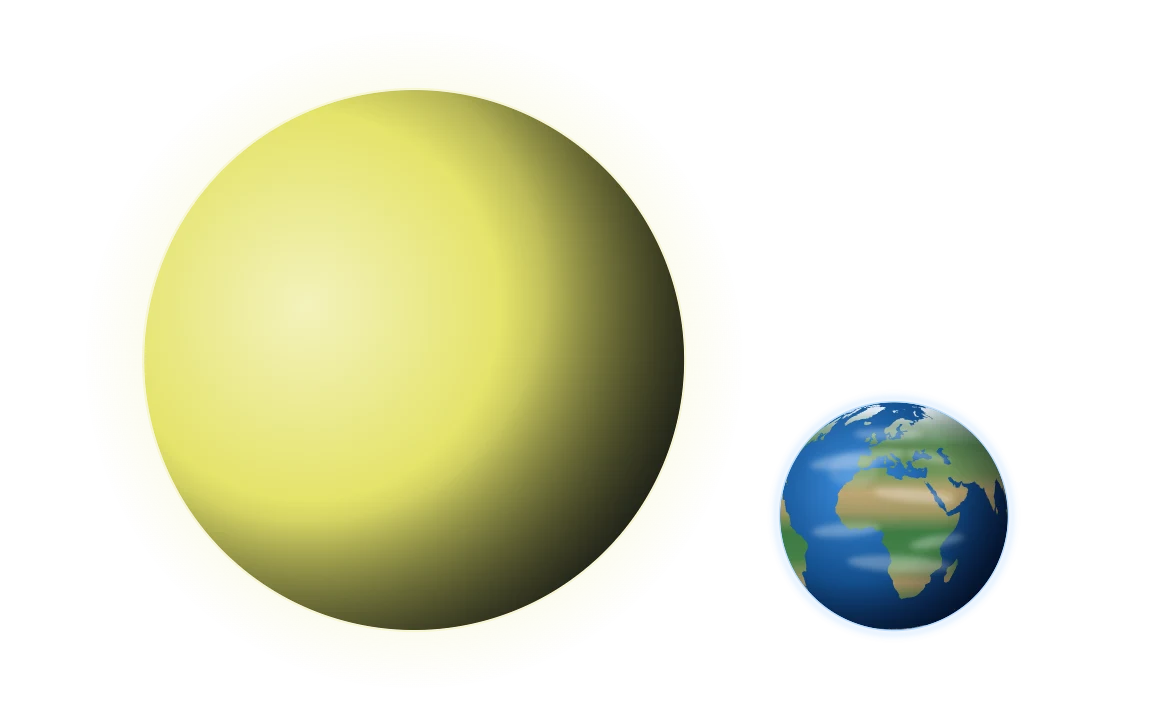
K2-18 b is a mini-Neptune 124 light-years away in Leo. It goes round K2-18 every 33 days.
When It Next Crosses Its Star
K2-18 b crosses the face of K2-18 every 33 days, as seen from Earth, dimming it by about 0.3% for about 2.7 hours.
Worked out from its orbit, so the real time may differ by up to 17 minutes. Telescopes catch these crossings to measure the planet and any atmosphere it has.
Find K2-18 tonight
Choose a place to see tonight's times
 K2-18In Leo, highest at midnight in MarchChoose a place for the times where you are
"Visible" means at least 7° above the horizon while the sky is dark. The planet itself cannot be seen: it is lost in its star’s glare.
The K2-18 System
K2-18 b orbits K2-18, a small red star 41% of the Sun’s width. One other planet is known in the system: K2-18 c.
It is 0.14 AU from its star (an AU is the distance from Earth to the Sun). That is closer in than the habitable zone, the green band.
Light from K2-18 takes 124 years to reach us. At the speed of Voyager 1, the trip would take about 2,187,000 years; even the fastest spacecraft ever launched would need about 194,000 years.
Distances are to scale; the planets are drawn much larger, at the same scale as each other.
How It Was Found and Studied
Found in 2015 by the Kepler space telescope during its K2 mission, as it crossed in front of its star, and confirmed in 2017 by the Spitzer Space Telescope.
- Year
- 2015
- Method
- Transit
Detected methane, and carbon dioxide at lower confidence, along with a much weaker, unconfirmed hint of dimethyl sulphide.
- Observations
- 3
- Years
- 2024
Saw a feature in the starlight filtering through the planet’s atmosphere that was first reported as water vapour; later work suggests methane is the more likely cause.
- Observations
- 2
- Years
- n/a
Split its starlight into colours to look for an atmosphere.
- Observations
- 1
- Years
- n/a
Mid-infrared data, published in 2025, were claimed to show dimethyl sulphide, but independent re-analyses found the signal too weak to count as a detection.
- Year
- 2024
Facts and Figures
- Star
- K2-18 (M2.5 V)
- Constellation
- Leo
- Distance
- 124 light-years
- Orbit
- 33 days, 0.14 AU
- Size
- 2.4 × Earth
- Mass
- 8.9 × Earth
- Temperature
- 6 °C (estimated)
- Discovered
- 2015, transit
K2-18 b is a planet between Earth and Neptune in size that orbits a small, cool red star, and it is best known for a disputed claim that its atmosphere might hold a sign of life. The James Webb Space Telescope has found methane and carbon dioxide in its air. In 2025, one research team reported a faint hint of dimethyl sulphide, a gas that on Earth comes mainly from marine plankton. Other scientists who checked the same data found no reliable evidence for it, and as of 2026 the claim is unconfirmed.
Frequently Asked Questions
Explore more


Cite this page
Pick a style, then copy it or download it for your reference manager.Orbital Radar. (2026, November 19). K2-18 b: Facts, Distance and Where to See Its Star. Retrieved November 28, 2026, from https://orbitalradar.com/exoplanets/k2-18-b
“K2-18 b: Facts, Distance and Where to See Its Star.” Orbital Radar, 19 Nov. 2026, orbitalradar.com/exoplanets/k2-18-b. Accessed 28 Nov. 2026.
Orbital Radar (2026) K2-18 b: Facts, Distance and Where to See Its Star. Available at: https://orbitalradar.com/exoplanets/k2-18-b (Accessed: 28 November 2026).
Orbital Radar. “K2-18 b: Facts, Distance and Where to See Its Star.” Last modified November 19, 2026. https://orbitalradar.com/exoplanets/k2-18-b.
@misc{orbitalradar_exoplanets_k2_18_b,
  author       = {{Orbital Radar}},
  title        = {K2-18 b: Facts, Distance and Where to See Its Star},
  year         = {2026},
  month        = nov,
  howpublished = {\url{https://orbitalradar.com/exoplanets/k2-18-b}},
  url          = {https://orbitalradar.com/exoplanets/k2-18-b},
  urldate      = {2026-11-28},
  note         = {Accessed 2026-11-28}
}
TY - ELEC AU - Orbital Radar, TI - K2-18 b: Facts, Distance and Where to See Its Star PY - 2026 DA - 2026/11/19 PB - Orbital Radar UR - https://orbitalradar.com/exoplanets/k2-18-b Y2 - 2026/11/28 LA - en ER -
Live figures change, so keep the date you accessed the page. How to cite Orbital Radar