Home Library Launch Vehicles Falcon Heavy
🚀 Launch Vehicle Profile

SpaceX Falcon Heavy

SpaceX's triple-core heavy-lift rocket — 12+ flights with a 100% mission success rate. 63,800 kg to low Earth orbit, 27 Merlin engines, reusable side boosters.

Overview

Falcon Heavy is SpaceX's heavy-lift launch vehicle, consisting of three Falcon 9 first-stage cores strapped together — a central core flanked by two side boosters. It is currently the most powerful operational rocket in the world by payload to orbit, capable of delivering 63,800 kg to LEO or 26,700 kg to geostationary transfer orbit (GTO). Both side boosters are recovered and reused; the centre core can also be recovered on some missions.

63,800 kg
Payload to LEO
26,700 kg
Payload to GTO
12+
Flights (100% Success)
27
Merlin Engines

Key Specifications

ParameterValue
OperatorSpaceX
First Flight6 February 2018
Height70 m (229.6 ft)
Diameter12.2 m (core + boosters)
Mass at Liftoff~1,420,788 kg
Engines27 × Merlin 1D (first stage), 1 × Merlin Vacuum (second stage)
Thrust at Liftoff~22,819 kN (5.13 million lbf)
Payload to LEO63,800 kg
Payload to GTO26,700 kg
Payload to Mars16,800 kg
ReusabilitySide boosters reusable, centre core optionally reusable
Launch SiteLC-39A, Kennedy Space Center, Florida

Flight History

Falcon Heavy's maiden flight in February 2018 famously launched Elon Musk's personal Tesla Roadster into a heliocentric orbit. The demonstration was a success, with both side boosters landing simultaneously at Cape Canaveral — one of the most iconic moments in modern rocketry.

As of its 12th flight in April 2026, Falcon Heavy has maintained a 100% mission success rate with 16 consecutive booster landings. Notable missions include US national security payloads (USSF-44, USSF-52 with the X-37B spaceplane), the Arabsat-6A communications satellite, NASA's Psyche asteroid mission, NASA's Europa Clipper mission to Jupiter's moons, NOAA's GOES-19 weather satellite, and ViaSat-3 F3. It is the only currently operational rocket capable of launching the heaviest US military and intelligence payloads.

Falcon Heavy vs Falcon 9

Falcon Heavy uses three Falcon 9 first-stage cores. The side boosters are typically flight-proven Falcon 9 boosters, while the centre core is a strengthened variant. The second stage is identical to Falcon 9. For payloads that fit within Falcon 9's capacity (~22,800 kg to LEO), SpaceX uses the single-stick Falcon 9; Falcon Heavy is reserved for payloads that exceed that limit or require direct insertion to high-energy orbits.

Future

Falcon Heavy will eventually be superseded by Starship, which offers vastly greater payload capacity (150,000+ kg to LEO) with full reusability. However, Falcon Heavy remains in active service with a significant manifest of US government and commercial missions through at least 2028, including NASA's Dragonfly rotorcraft mission to Saturn's moon Titan (launch window opening July 2028).
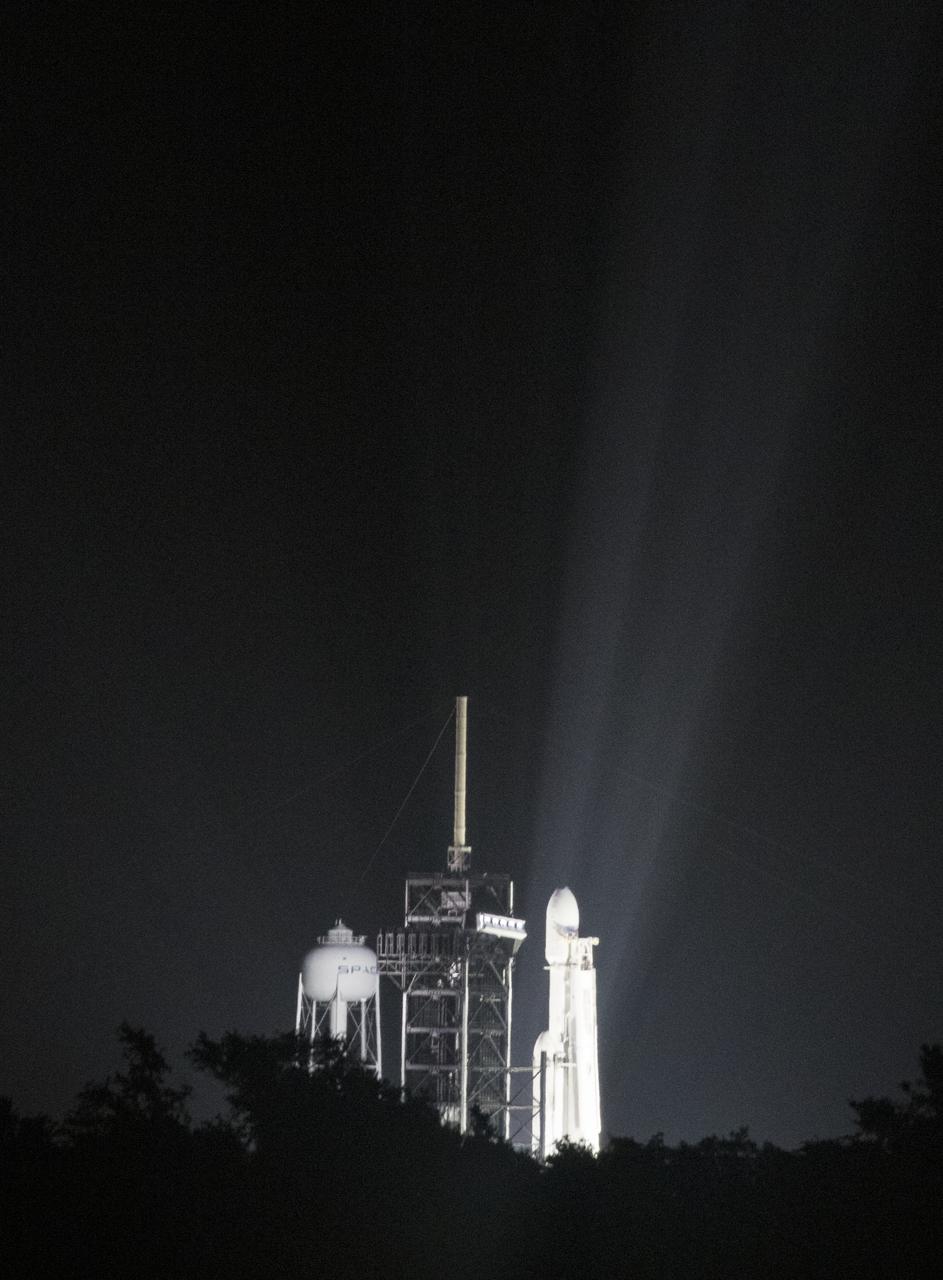
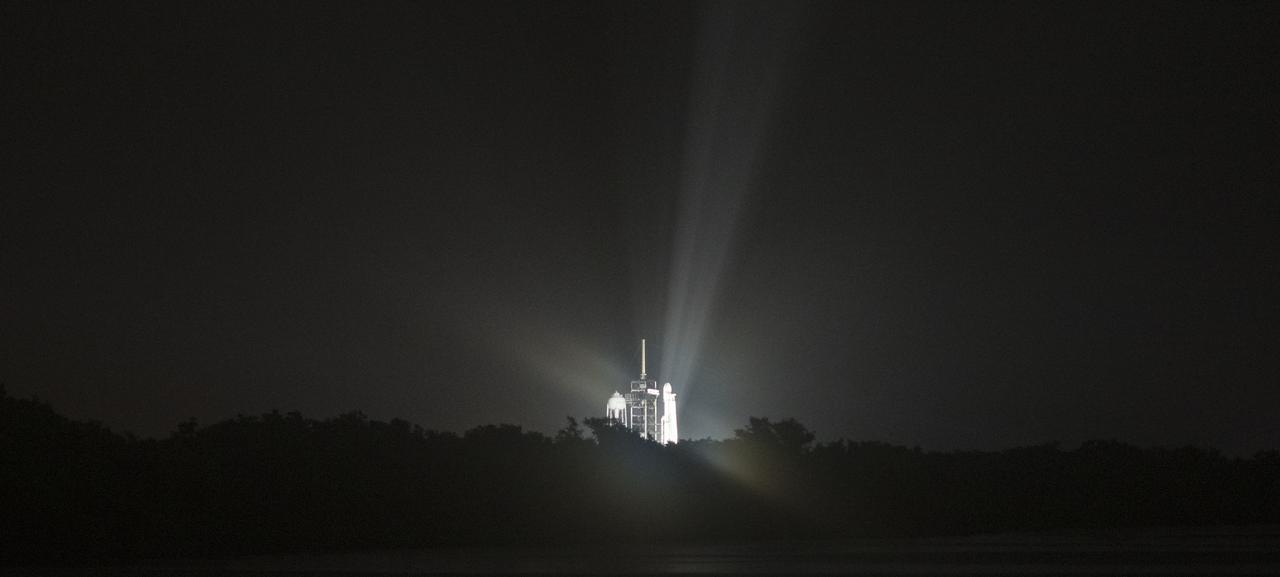
📍 Track on Orbital Radar
Follow upcoming Falcon Heavy missions live on the Launch Schedule from Kennedy Space Center — with countdown timers, mission details and pad locations. Browse the full Satellite Launch Log for Falcon Heavy mission-by-mission history.
🛰️

Which rocket for your payload?

Enter a payload mass and destination orbit to rank the global fleet by suitability — capability, cost, reliability and fit. Live calculation across 14 active launch vehicles.

🛠️

Anatomy & flight profile

Payload fairingSecond stageFirst stage
  • Height70 m
  • Stages2
  • Engines27 × Merlin
  • PropellantRP-1 / LOX

Height to scale

61.6 mVulcan Centaur63 mAriane 663 mH370 mFalcon 970 mFalcon Heavy1.8 m
📊

Falcon Heavy vs the global fleet

Vehicle Class Height LEO kg $/kg Flights Reuse Status
🇺🇸 Falcon Heavy you are here Heavy-lift 70 m 63,800 $1,520 12 ♻︎ Yes Active
🇺🇸 Falcon 9 Medium-lift 70 m 22,800 $2,700 400+ ♻︎ Yes Active
🇺🇸 Starship Super heavy-lift 121 m 150,000 7+ ♻︎ Yes In development
🇺🇸 SLS Super heavy-lift 98.1 m 95,000 $23,000 1 No Active
🇺🇸 New Glenn Heavy-lift 98 m 45,000 1 ♻︎ Yes Active
🇺🇸 New Shepard Suborbital 18.3 m 25 ♻︎ Yes Active
🇨🇳 Long March 5B Heavy-lift 53.7 m 25,000 4 No Active
🇪🇺 Ariane 6 Medium-to-heavy-lift 63 m 21,650 1 No Active
🇷🇺 Soyuz Medium-lift 46 m 8,200 $6,100 2,000+ No Active
🇮🇳 PSLV Medium-lift 44 m 3,800 $5,500 60+ No Active
🇳🇿 Electron Small-lift 18 m 300 $25,000 55+ ♻︎ Yes Active
🇺🇸 Vulcan Centaur Heavy-lift 61.6 m 27,200 2 No Active
🇯🇵 H3 Medium-to-heavy-lift 63 m 16,000 $3,200 3 No Active
🇪🇺 Vega-C Small-to-medium-lift 34.8 m 2,350 $17,000 2 No Return to flight

Tap any column to sort · figures are list-price estimates; live flight counts update daily.

🔗

Track Falcon Heavy across Orbital Radar

🛰️ Explore the Full Library
175+ pages of trackers, statistics, satellite profiles, space weather and more.
Open Library →

Frequently Asked Questions

Falcon Heavy produces approximately 22,819 kN (5.13 million lbf) of thrust at liftoff from 27 Merlin engines across three cores. It can deliver 63,800 kg to low Earth orbit.
The two side boosters are routinely recovered via propulsive landing. The centre core can also be recovered on a drone ship, though it is sometimes expended for maximum performance on heavy GTO missions.
Falcon Heavy launches heavy national security payloads, large GEO communications satellites, and high-energy planetary missions. Notable payloads include NASA's Europa Clipper and USSF missions.
A Falcon Heavy launch costs approximately $97 million in fully expendable mode or less when boosters are recovered. At roughly $1,520 per kilogram to LEO, it is one of the most cost-effective heavy-lift options.
Last updated: