Can a Falling Satellite Hit You? The Real Re-entry Risk
A falling satellite can hit someone, but the personal risk is very low. Explore what survives re-entry, documented debris strikes and what forecasts can actually tell you.
| Active satellites | 16,661 |
| Starlink active | 9,898 |
| Catalogued objects | 32,077 |
| Active close approaches | 13 |
| People in space | 10 |
Yes, a falling satellite or a surviving fragment can hit you. But the risk of injury to any particular person is very low: a strike is possible, not probable.
Atmospheric re-entry is a spacecraft’s passage back through Earth’s atmosphere, shedding orbital speed of around 28,000 km/h. Compressed air ahead of it produces intense heating, with surfaces exceeding 1,600°C; most exposed material burns up or breaks apart, but some dense or heat-resistant components can reach the ground. Orbital Radar tracking data lists 16,661 active satellites as of 7 November 2026.
Orbital Radar’s live catalogue contains 32,077 objects, including debris, as of 7 November 2026. Those orbital totals are not a measure of your chance of being struck: surviving debris must also reach a place where someone is exposed.
This article explains what survives, what recorded incidents tell us and why forecasts remain uncertain. Orbital Radar’s Re-entry Tracker provides a way to follow predicted returns, but a forecast window is not a precise impact prediction.
How likely is a falling satellite to hit me?
A falling satellite could hit you, but the risk to any particular person is very low. A fragment must survive atmospheric re-entry (the passage back through Earth's atmosphere), reach the ground and intersect the small area your body occupies. The possibility of debris reaching Earth is not the same as a substantial chance of it striking you.
Orbital Radar tracking data lists 32,077 catalogued objects, including debris, as of 7 November 2026. Orbital Radar tracking data lists 16,661 active satellites as of 7 November 2026. Neither count establishes your personal odds: objects differ in their construction, orbital paths and likelihood of returning to Earth.
A particular re-entry assessment considers how much material could survive and the combined area over which those fragments could strike someone. It also considers the spacecraft's orbital path and the distribution of people beneath the possible debris footprint (the region where surviving fragments might land). A path over sparsely populated terrain presents a different collective risk from one crossing densely populated areas.
Crucially, the combined risk to everyone beneath that footprint is not your individual probability of being hit. A global casualty estimate combines possible harm across an exposed population; it should not be read as one reader's odds. There is no universal numerical probability that applies to every falling satellite. Orbital Radar's Re-entry Tracker provides a starting point for following a particular returning object, rather than treating the entire orbital catalogue as an immediate personal threat.
What does casualty expectation actually mean?
Casualty expectation is the expected number of people injured or killed in a modelled event, not the probability that a particular person will be struck. For satellite re-entry, it describes the combined risk to the exposed population rather than your individual danger.
An expected value is an average across possible outcomes. It can be fractional because the calculation includes outcomes in which nobody is harmed alongside outcomes involving casualties. It is not a prediction that a particular number of people will be hurt, nor does it mean casualties are inevitable.
The model considers how many fragments might survive, the area within which each fragment could cause injury, and the population exposed along possible ground tracks (the paths beneath the descending object). Uncertainty about where debris will fall therefore affects the estimate.
Orbital Radar's live catalogue lists 32,077 tracked objects as of 7 November 2026. Orbital Radar tracking data identifies 2,212 rocket bodies as of 7 November 2026. These inventory counts are not casualty estimates: neither tells you how much material will survive a particular re-entry or who could be exposed.
The Orbital Radar casualty expectation glossary helps distinguish this population-wide measure from personal risk. When reading a warning, ask whether its figure describes expected casualties across everyone exposed or the chance of harm to an individual; those are different quantities.
Why do satellites fall back to Earth?
Satellites in low Earth orbit fall back because atmospheric drag gradually removes the energy that keeps them circling Earth. The atmosphere has no sharp upper boundary: even at orbital altitudes, sparse gas particles resist a spacecraft’s motion. Unless propulsion compensates for that drag, its orbit gradually lowers.
As the spacecraft descends into denser air, drag increases and the descent accelerates. Solar activity also changes the pace: increased solar heating can expand the upper atmosphere, raising the gas density at a satellite’s altitude and speeding orbital decay (the gradual lowering of an orbit). Quieter conditions can slow that process, although altitude and the spacecraft’s shape and mass also matter.
A controlled re-entry uses planned manoeuvres to direct a spacecraft towards a selected disposal area, usually over a remote ocean region. An uncontrolled re-entry occurs without that final targeting capability, so operators cannot select its final location. Orbital Radar’s Re-entry Tracker provides a way to follow objects approaching atmospheric re-entry.
16,661 satellites were active in orbit on 7 November 2026, according to Orbital Radar tracking data. That figure describes the scale of orbital activity, not a population about to fall: active satellites occupy different orbits and have different operating lifetimes. It is not a measure of the risk to people on the ground.
Which satellite parts can survive re-entry?
Some tanks, engine parts and other large, dense or heat-resistant components can survive re-entry, even when much of the surrounding satellite breaks apart or melts. Survival depends on how each component encounters the atmosphere, not simply on whether the spacecraft looks sturdy.
Atmospheric re-entry is a spacecraft’s passage back through Earth’s atmosphere, shedding orbital speed of roughly 28,000 km/h against air resistance. Air compressed ahead of the vehicle becomes intensely hot, transferring heat to its surfaces, which can exceed 1,600°C. Describing this as everything simply burning through friction misses the central role of air compression.
Exposed structures can heat rapidly, weaken and separate. Thin panels and lightweight attachments are generally more vulnerable than compact components with substantial material to heat through. Some tanks and engine components can therefore remain intact long enough to reach the surface, although belonging to either category does not guarantee survival.
Material, shape, shielding and breakup altitude all matter. A component initially sheltered inside a spacecraft may encounter intense heating later than an exposed part. Its shape affects how air flows around it and how quickly it slows down; its material affects when it softens or melts. The altitude at which the spacecraft breaks apart changes the heating and deceleration its fragments subsequently experience.
That is why neither a satellite’s total mass nor a photograph establishes how much debris will reach the ground. Assessing survival requires information about its construction and likely breakup sequence. Orbital Radar’s Atmospheric Re-entry glossary entry explains the heating behind that process and why returning spacecraft need thermal protection.
Has falling space debris ever hit anyone?
Yes: Lottie Williams reported being struck by a lightweight fragment in Tulsa, Oklahoma, in 1997, without injury. The widely reported incident was associated with a Delta II rocket re-entry, not an intact satellite falling onto a person.
That distinction matters: a light fragment brushing someone is a different event from a heavy component causing serious injury. Williams's account is widely cited, but the association with the rocket should not be presented as though investigators had conclusively traced her particular fragment to it. Both the strength of the identification and the injury outcome belong in any account of a debris strike.
In 2024, a surviving component from discarded International Space Station battery equipment penetrated the roof of a home in Naples, Florida. Nobody was injured. This was an identified piece of space hardware reaching an occupied building, rather than merely an unexplained roof impact.
Orbital Radar's live catalogue contained 32,077 tracked objects on 7 November 2026. Orbital Radar tracking data listed 2,212 rocket bodies on 7 November 2026. Those inventories provide context, not a count of objects about to fall or a measure of anyone's personal risk; the Orbital Radar Re-entry Tracker focuses on returning objects.
Property strikes demonstrate that debris can reach occupied places, but do not establish a high probability of an individual being hit. Nor does every reported metal fragment qualify as space debris: identification needs evidence, such as material analysis, manufacturing features and consistency with a known re-entry.
Where can satellite debris land?
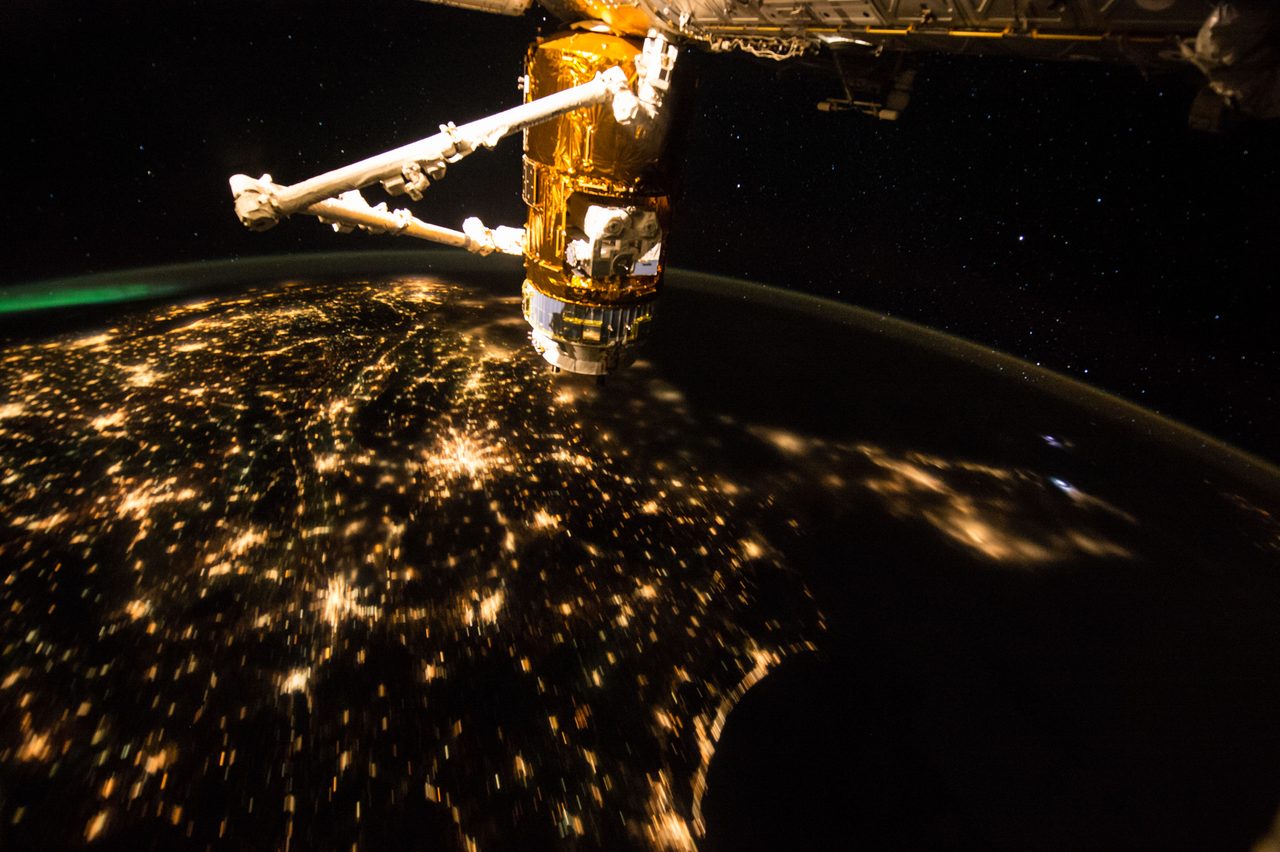
Satellite debris can land beneath the final flight path, within a broad latitude band set by the orbit. Orbital inclination (the angle between an orbit’s plane and Earth’s equator) determines how far north and south a satellite travels; surviving fragments generally fall within or near those limits.
A debris footprint is an area where surviving fragments may fall, not a single impact point. Fragments separate during atmospheric break-up and slow differently, spreading potential landing locations along the flight path and across it.
Orbital Radar’s live catalogue lists 32,077 tracked objects as of 7 November 2026. Those include 2,212 rocket bodies as of 7 November 2026, according to Orbital Radar tracking data. These catalogue totals are not counts of objects expected to fall imminently.
Oceans cover most of Earth, and sparsely populated regions offer fewer opportunities for debris to strike people. That reduces exposure overall, but does not guarantee that an uncontrolled re-entry will avoid populated places.
A controlled disposal deliberately targets a remote ocean area through a planned manoeuvre. An uncontrolled re-entry forecast that includes ocean describes a possible outcome, not a targeted disposal.
A satellite passing over your country does not mean debris is expected there: the overhead pass need not coincide with its final descent. The Orbital Radar Re-entry Tracker helps distinguish a forecast re-entry from an ordinary orbital pass.
Why do re-entry forecasts give a time window?
A re-entry forecast gives a range of possible times because the spacecraft’s final descent cannot be predicted exactly. That window is neither a promised impact time nor a public danger period for every place beneath its orbit.
The upper atmosphere changes density as solar activity and other conditions alter it. Denser air increases drag (air resistance), changing how quickly a spacecraft loses altitude. Its orientation also matters: an uncontrolled spacecraft may tumble, presenting different amounts of surface area to the airflow and making its remaining lifetime harder to calculate.
Timing uncertainty becomes location uncertainty because a spacecraft entering the atmosphere is shedding orbital speed of about 28,000 km/h. Even a modest shift in the predicted time can move the possible entry location a long distance along its ground track (the path beneath its orbit).
Tracking organisations publish successive estimates as fresh observations refine the orbit. Forecasts generally become more useful closer to re-entry, but uncertainty remains; a narrower window is not a guarantee of an exact time or location. Updates shown on the Orbital Radar re-entry tracker should be read as estimates, not appointments.
Orbital Radar’s live catalogue contains 32,077 tracked objects as of 7 November 2026. Orbital Radar tracking data lists 2,212 rocket bodies as of 7 November 2026. These catalogue totals are not counts of imminent re-entries.
A predicted atmospheric entry location is also not a predicted impact point. Break-up, differences in fragment mass and shape, and winds affect where surviving pieces eventually land, potentially spreading them along a debris footprint rather than concentrating them at the entry location.
How can I check a satellite re-entry on Orbital Radar?
Open the Orbital Radar Re-entry Tracker and consult the available re-entry information for the object you are interested in. Start by matching its name and catalogue identifier, rather than relying on a name alone: similarly named satellites or rocket stages can be different objects.
The catalogue identifier, often called a NORAD ID, is the tracking number used to distinguish an object. Where a forecast is displayed, read the full window—the interval during which re-entry is expected—not just a single predicted time. Check any displayed uncertainty and update information to understand how broadly the event is constrained and when the prediction was last revised.
32,077 objects were catalogued in orbit on 7 November 2026, according to Orbital Radar's live catalogue. That catalogue includes payloads (satellites and other mission objects), rocket bodies and debris; appearing in it does not mean an object is about to re-enter. A catalogue entry establishes what is being tracked, not that it presents an imminent danger on the ground.
Revisit the forecast as it develops, paying attention to changes in the window and any accompanying notes. Treat the tracking page as information about an object's expected return through the atmosphere, not as an impact warning for your location. For decisions about sheltering, avoiding an area or taking other protective action, follow official local safety instructions rather than inferring a threat from a predicted time or orbital track.
What should I do if I find suspected satellite debris?
Do not touch, move or take suspected spacecraft debris home, and keep other people away. Contact local authorities, describe what you have found and follow their instructions; use emergency services if anyone is injured or there is an immediate hazard, such as smoke, fire or escaping gas.
Fragments can have sharp edges, while pressure vessels (containers designed to hold gas or liquid under pressure) may present a rupture hazard. Some components may carry hazardous fuel or chemical residues. Finding a fragment does not mean it is radioactive or still dangerously hot, but its appearance alone cannot establish that it is safe.
Record the location and take photographs only from a safe position. Do not approach an unsafe scene to obtain a clearer image, inspect markings or collect a sample; leave identification and recovery to the authorities.
Orbital Radar tracking data lists 10,179 debris objects in orbit as of 7 November 2026. Orbital Radar tracking data also lists 2,212 rocket bodies in orbit as of 7 November 2026. These orbital counts are not a measure of your chance of encountering debris on the ground.
Orbital Radar’s public re-entry guidance explains what to do if you suspect a find. The personal risk is low, but sensible precautions still matter: keep your distance, report it and leave it undisturbed.
Key takeaways
- A falling satellite fragment can hit a person, but the risk to any particular individual is very low.
- Some dense or heat-resistant spacecraft components can survive re-entry, even when much of the surrounding structure breaks apart.
- A re-entry forecast window expresses uncertainty and does not identify a guaranteed impact time or location.
- Use Orbital Radar's Re-entry Tracker for available forecasts, follow local safety instructions and leave suspected debris untouched.
Frequently Asked Questions
Could a Starlink satellite survive re-entry?
Can falling satellite debris hit an aeroplane?
Is a bright fireball a satellite or a meteor?
Who pays if space debris damages my house?
Should I stay indoors during a satellite re-entry?
Cite this article
Pick a style, then copy it or download it for your reference manager.Orbital Radar. (2026, November 7). Can a Falling Satellite Hit You? The Real Re-entry Risk. Retrieved November 7, 2026, from https://orbitalradar.com/blog/can-a-falling-satellite-hit-you
“Can a Falling Satellite Hit You? The Real Re-entry Risk.” Orbital Radar, 7 Nov. 2026, orbitalradar.com/blog/can-a-falling-satellite-hit-you. Accessed 7 Nov. 2026.
Orbital Radar (2026) Can a Falling Satellite Hit You? The Real Re-entry Risk. Available at: https://orbitalradar.com/blog/can-a-falling-satellite-hit-you (Accessed: 7 November 2026).
Orbital Radar. “Can a Falling Satellite Hit You? The Real Re-entry Risk.” Last modified November 7, 2026. https://orbitalradar.com/blog/can-a-falling-satellite-hit-you.
@misc{orbitalradar_blog_can_a_falling_satellite_hit_you,
  author       = {{Orbital Radar}},
  title        = {Can a Falling Satellite Hit You? The Real Re-entry Risk},
  year         = {2026},
  month        = nov,
  howpublished = {\url{https://orbitalradar.com/blog/can-a-falling-satellite-hit-you}},
  url          = {https://orbitalradar.com/blog/can-a-falling-satellite-hit-you},
  urldate      = {2026-11-07},
  note         = {Accessed 2026-11-07}
}
TY - ELEC AU - Orbital Radar, TI - Can a Falling Satellite Hit You? The Real Re-entry Risk PY - 2026 DA - 2026/11/07 PB - Orbital Radar UR - https://orbitalradar.com/blog/can-a-falling-satellite-hit-you Y2 - 2026/11/07 LA - en ER -
Live figures change, so keep the date you accessed the page. How to cite Orbital Radar