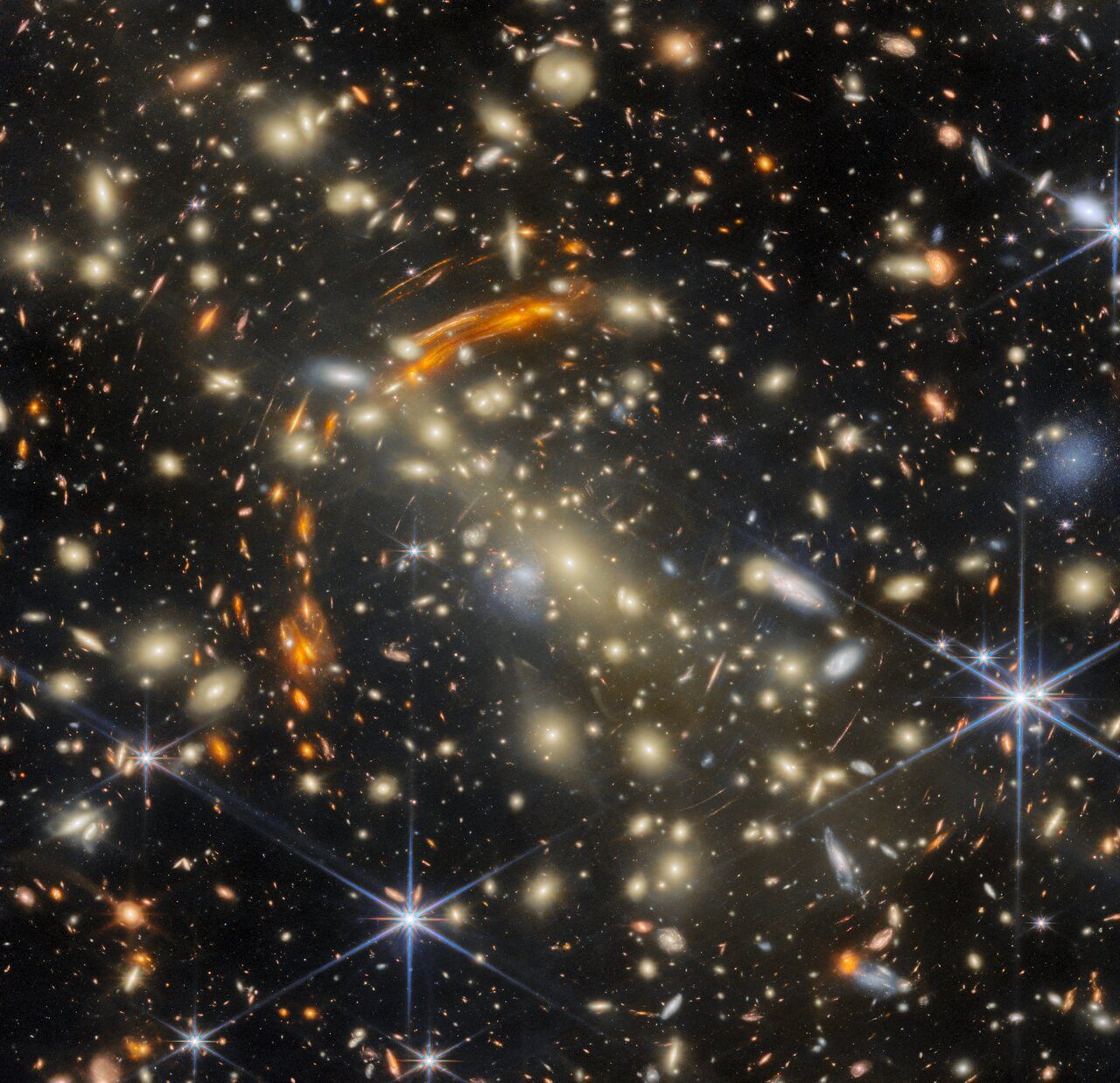
A pair of planet-forming discs reveals dust at work
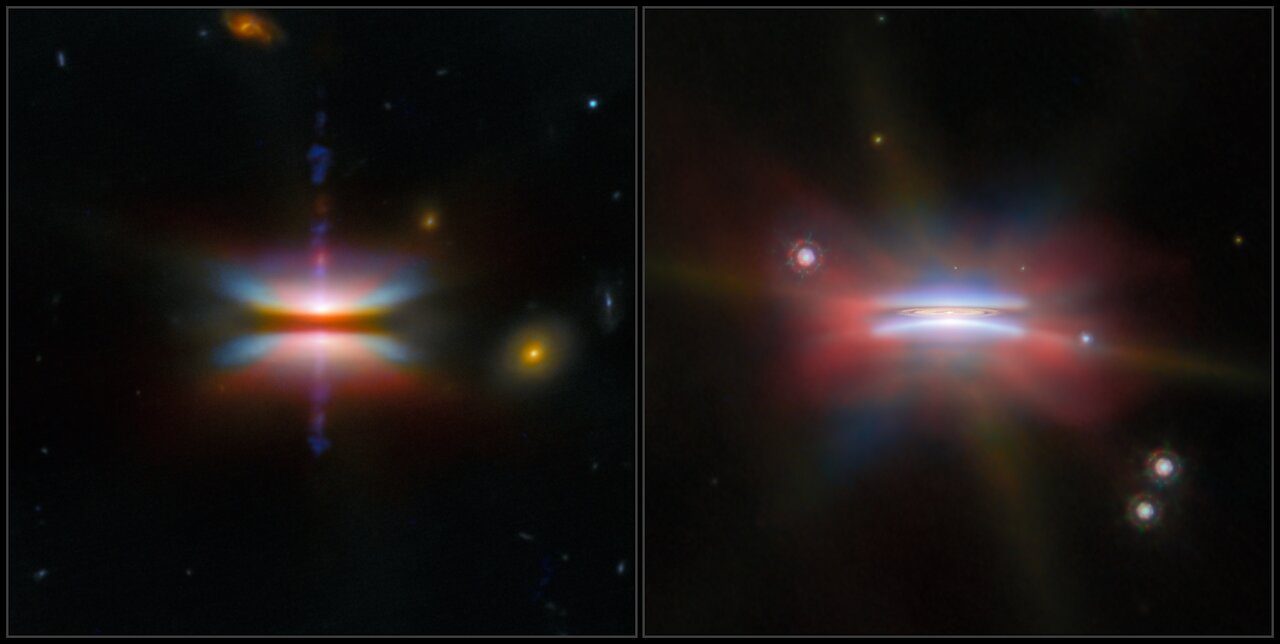
Two young stars hide behind their planet-forming discs. Webb’s infrared views reveal dust above and below them, offering clues to how planetary systems take shape.
| Active satellites | 16,661 |
| Catalogued objects | 32,064 |
| Starlink active | 9,898 |
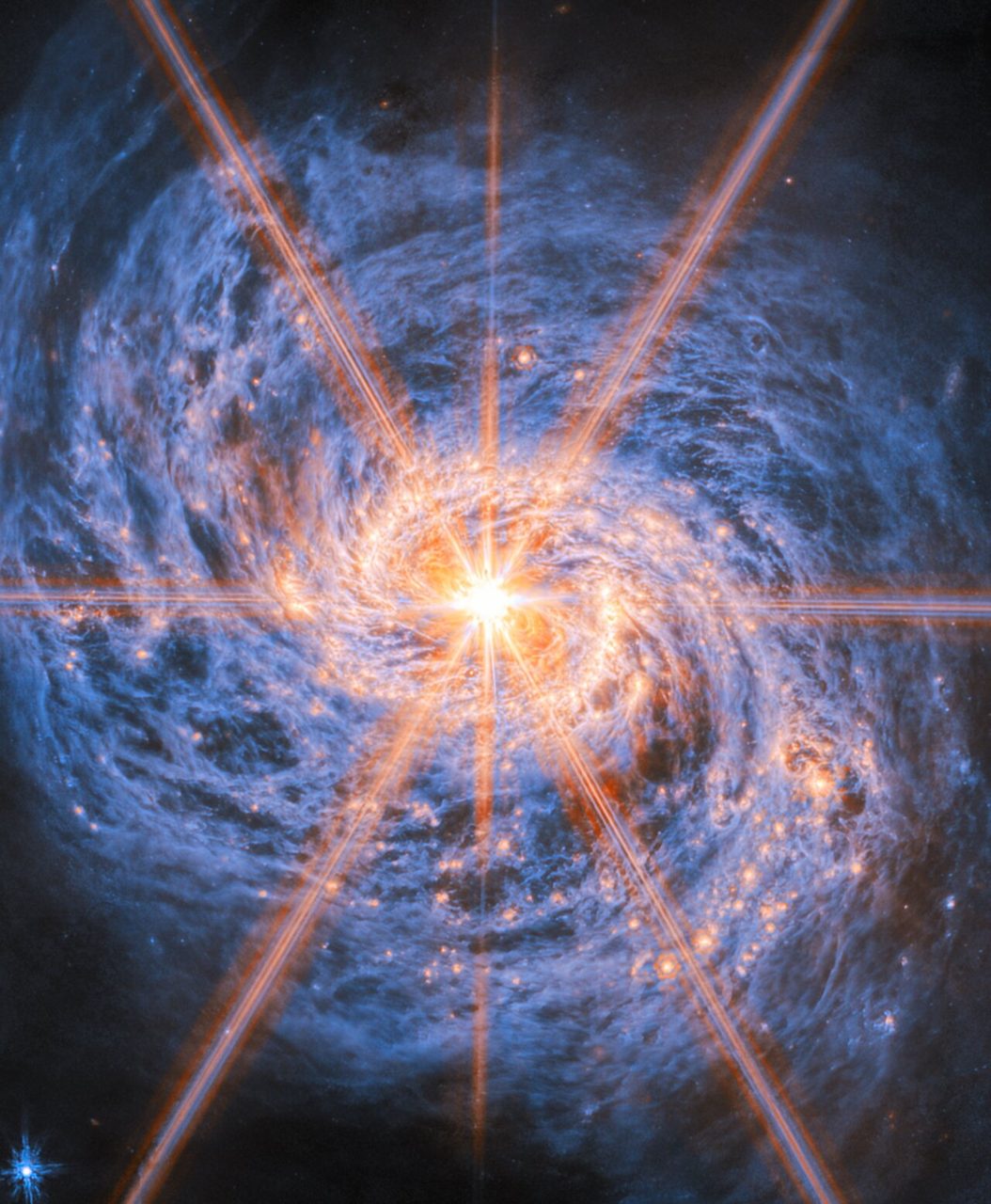
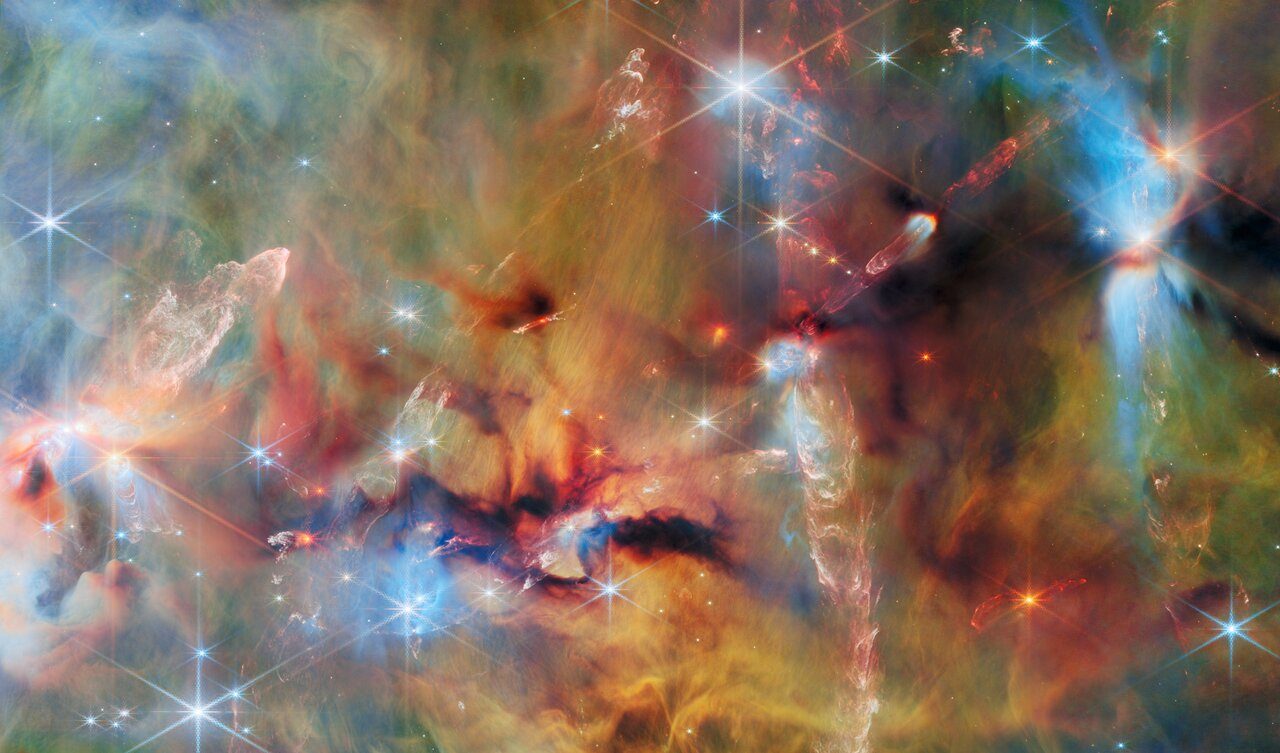
Two planet-forming discs seen edge-on let astronomers study material that would otherwise be overwhelmed by their young stars’ light. Tau 042021, on the left, lies about 450 light-years away in Taurus; Oph 163131, on the right, is about 480 light-years away in Ophiuchus.
In this ESA/Webb Picture of the Month, each disc blocks much of its central star’s glare. Fine dust above and below the disc scatters starlight towards us, creating the appearance of coloured spinning tops. These are protoplanetary discs (reservoirs of gas and dust surrounding newly formed stars), where grains can gather into planetesimals, the building blocks of planets.
Webb’s Near-Infrared Camera and Mid-Infrared Instrument trace different dust-grain sizes and molecular emission. The colours represent contributions from dust and molecules including hydrogen, carbon monoxide and polycyclic aromatic hydrocarbons (carbon-based molecules). Both views incorporate Hubble observations of reflected visible light; the Oph 163131 image also includes observations from the Atacama Large Millimeter/submillimeter Array.
From planet-building dust to objects in orbit
The distribution of dust within and above these discs helps determine where planets can form. Material that does not become a planet can survive as asteroids or comets, linking these distant systems to the history of our own Solar System.
Closer to home, orbital populations tell a different story: engineered spacecraft and their remnants, rather than planetary building blocks. Orbital Radar tracking data lists 16,661 active satellites as of 7 November 2026. The distinction matters: human-made orbital debris is not the same material or environment as a protoplanetary disc.
Orbital Radar’s live catalogue contains 32,064 objects, including debris, as of 7 November 2026. Readers can explore that near-Earth population through the Orbital Radar Debris Map, keeping the scale and origins of these very different orbiting systems in perspective.
Frequently Asked Questions
Where are the planet-forming discs Tau 042021 and Oph 163131?
Why do these Webb images show dark bands between bright clouds?
Cite this article
Pick a style, then copy it or download it for your reference manager.Orbital Radar. (2026, November 7). A pair of planet-forming discs reveals dust at work. Retrieved November 7, 2026, from https://orbitalradar.com/blog/cosmic-gallery-2026-11-07
“A pair of planet-forming discs reveals dust at work.” Orbital Radar, 7 Nov. 2026, orbitalradar.com/blog/cosmic-gallery-2026-11-07. Accessed 7 Nov. 2026.
Orbital Radar (2026) A pair of planet-forming discs reveals dust at work. Available at: https://orbitalradar.com/blog/cosmic-gallery-2026-11-07 (Accessed: 7 November 2026).
Orbital Radar. “A pair of planet-forming discs reveals dust at work.” Last modified November 7, 2026. https://orbitalradar.com/blog/cosmic-gallery-2026-11-07.
@misc{orbitalradar_blog_cosmic_gallery_2026_11_07,
  author       = {{Orbital Radar}},
  title        = {A pair of planet-forming discs reveals dust at work},
  year         = {2026},
  month        = nov,
  howpublished = {\url{https://orbitalradar.com/blog/cosmic-gallery-2026-11-07}},
  url          = {https://orbitalradar.com/blog/cosmic-gallery-2026-11-07},
  urldate      = {2026-11-07},
  note         = {Accessed 2026-11-07}
}
TY - ELEC AU - Orbital Radar, TI - A pair of planet-forming discs reveals dust at work PY - 2026 DA - 2026/11/07 PB - Orbital Radar UR - https://orbitalradar.com/blog/cosmic-gallery-2026-11-07 Y2 - 2026/11/07 LA - en ER -
Live figures change, so keep the date you accessed the page. How to cite Orbital Radar