How Do Rockets Steer? From Liftoff to Docking
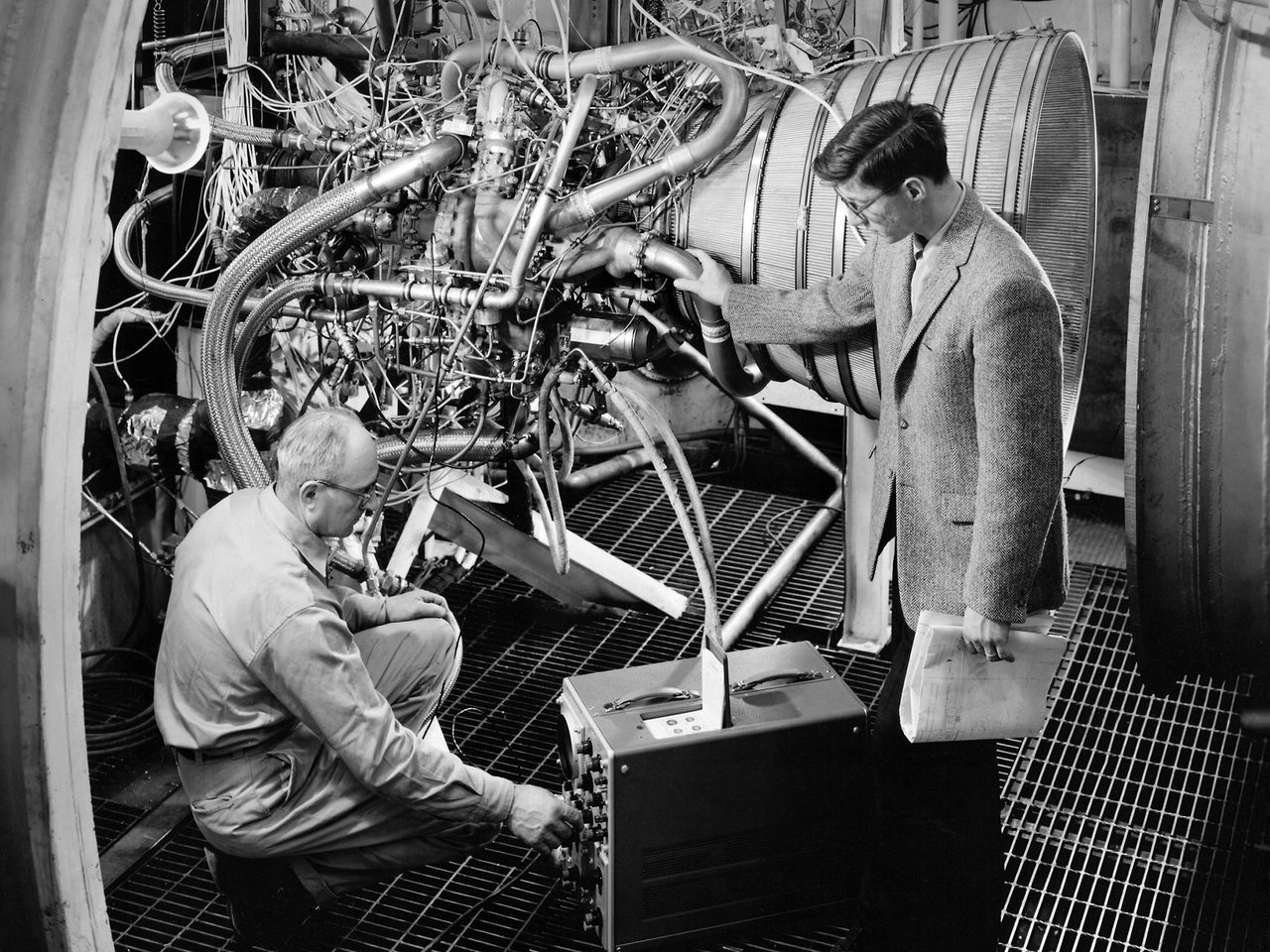
Rockets steer by redirecting thrust, using aerodynamic surfaces or exchanging angular momentum. The method changes between launch, landing and orbital flight.
| Active satellites | 16,726 |
| Starlink active | 9,715 |
| Catalogued objects | 32,155 |
| Active close approaches | 18 |
| People in space | 10 |
Rockets steer mainly by redirecting engine thrust; some also use aerodynamic surfaces while flying through the atmosphere. In space, thrusters and, on suitably equipped spacecraft, reaction wheels control orientation, while thrusters also change the flight path. Reaction wheels are spinning devices that turn a spacecraft by changing their speed.
The crucial distinction is between pointing somewhere and travelling there: turning a spacecraft does not automatically turn its velocity. A spacecraft can face sideways while continuing along essentially the same orbital path. Changing that path requires a force, usually supplied by firing thrusters.
Orbital Radar tracking data lists 16,726 active satellites as of 24 November 2026. Orbital Radar's live catalogue contains 32,155 objects, including debris, as of 24 November 2026. This guide follows steering from liftoff through booster recovery—supported by vessels listed in Orbital Radar's recovery fleet directory—to orbital manoeuvres and docking. These stages call for different techniques; no single vehicle necessarily uses every method described.
How does tilting a rocket engine change its direction?
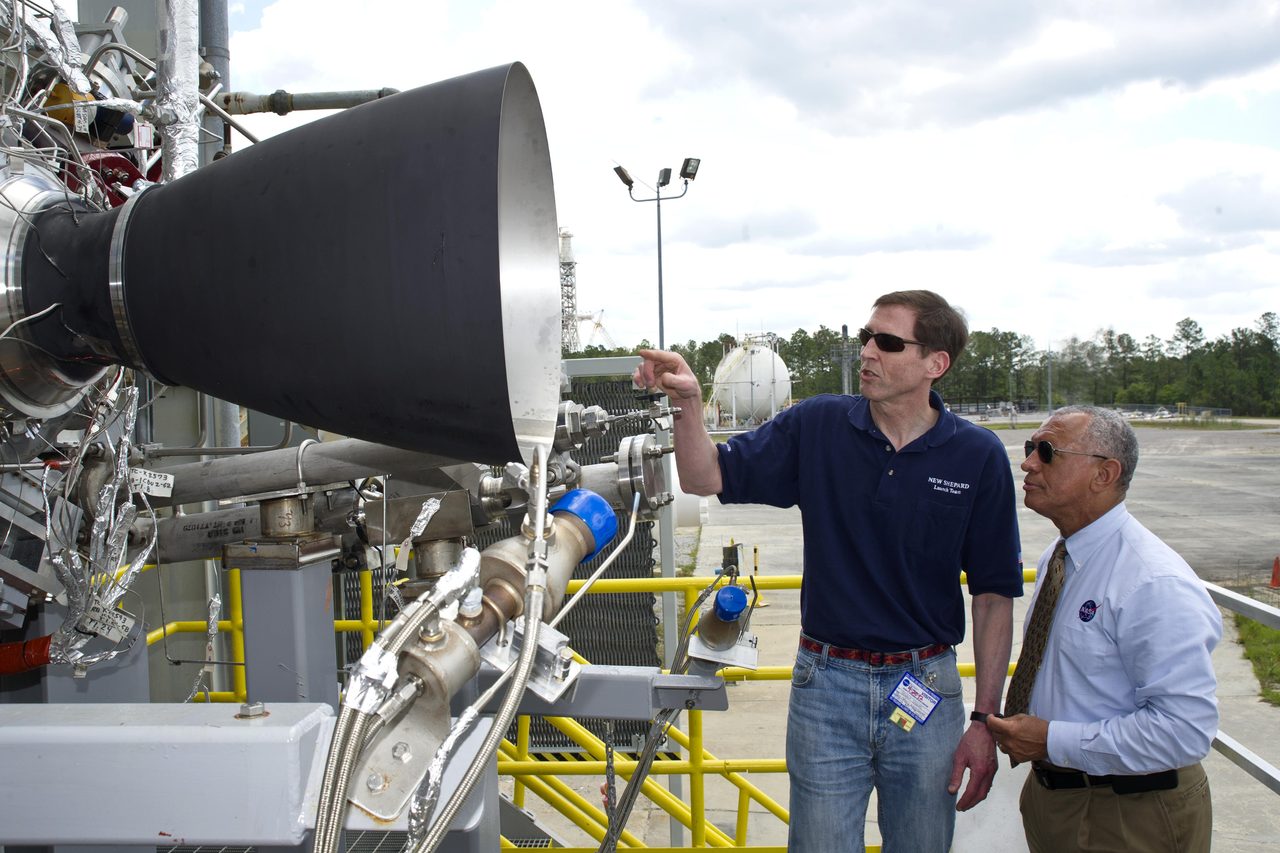
Tilting a rocket engine changes the direction of its push, allowing the rocket to turn while it accelerates. This is thrust vector control: steering by redirecting thrust (the force produced as exhaust leaves the engine). Gimbals are pivoting mounts that allow an engine to tilt relative to the rocket’s body.
When the thrust’s line of action passes through the centre of mass (the balance point of the rocket and its remaining propellant), it produces no turning effect. Tilt that line so it misses the centre of mass, and the force creates torque (a turning effect). The thrust therefore both accelerates the rocket and changes where it points; its flight path bends progressively rather than switching direction instantly.
Actuators (devices that produce controlled movement) reposition the engine in response to flight-computer commands. Depending on the design, these may use hydraulic pressure or electric motors; not every rocket uses the same hardware. Orbital Radar’s Falcon 9 page provides context for a vehicle that uses gimballed engines.
This works in a vacuum because exhaust carries momentum away, giving the rocket an opposite push. The engine needs no air to push against, so tilting its thrust remains effective beyond the atmosphere.
Orbital Radar tracking data records 16,726 active satellites as of 24 November 2026. Orbital Radar tracking data also lists 2,221 rocket bodies as of 24 November 2026; being catalogued in orbit does not mean a vehicle is still powered or steering.
How do rockets control pitch, yaw and roll?
Rockets control pitch and yaw by changing where their long axis points, and roll by rotating around that axis. Pitch tips the nose forwards or backwards relative to a chosen reference; yaw swings it sideways. Roll turns the vehicle around the line running from its nose to its tail.
A centrally mounted engine can control pitch and yaw by swivelling its nozzle so that thrust acts off-centre relative to the rocket’s centre of mass. This produces torque (a turning effect). But if the thrust stays in a plane containing the long axis, it produces no torque around that axis, so it cannot directly control roll.
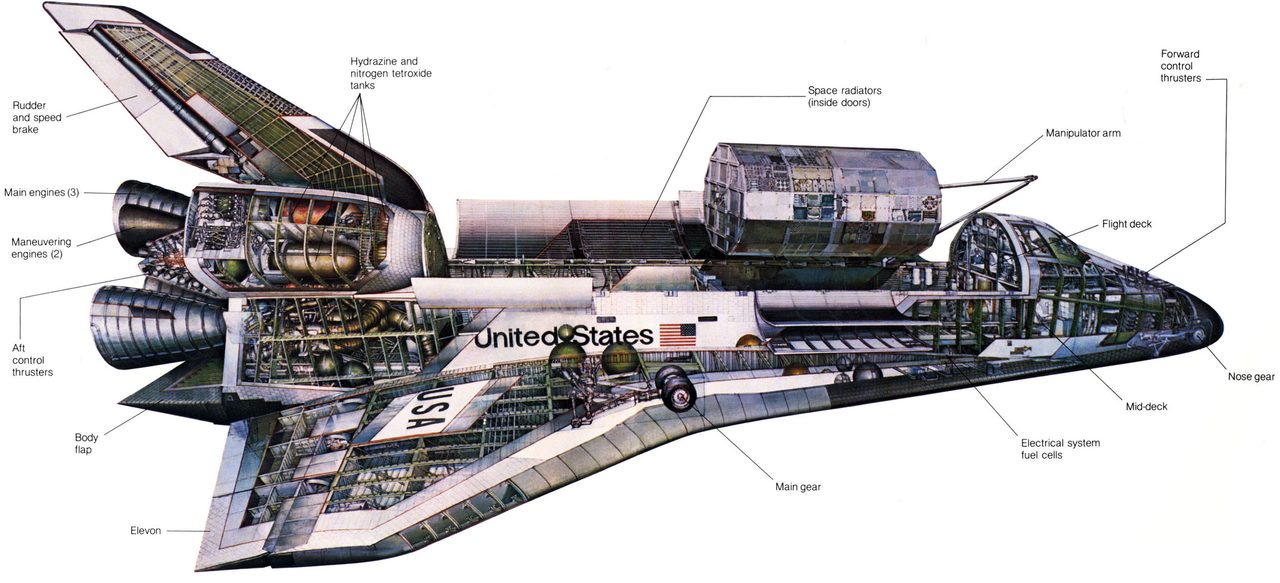
Multiple engines can provide roll control when their positions and steering directions allow their turning effects to combine around the long axis. Alternatively, a rocket can use small auxiliary thrusters, or aerodynamic surfaces that push against the air. The available method depends on the vehicle’s design and whether it is flying through an atmosphere.
These are forms of attitude control: control of orientation. Orbital Radar tracking data lists 16,726 active satellites on 24 November 2026. Orbital Radar tracking data also lists 2,221 rocket bodies on 24 November 2026. Being tracked in orbit does not itself mean an object retains attitude control.
How does a rocket know when to turn?
A rocket turns when its guidance system calls for a change, using navigation estimates to decide what correction is needed and control commands to carry it out. Guidance decides where to go; navigation estimates position, velocity and orientation; control commands the hardware to follow those instructions.
Gyroscopes measure rotation, while accelerometers measure acceleration caused by forces such as thrust. The navigation system combines these readings to estimate the rocket’s changing flight state. Suitably equipped vehicles can also incorporate satellite navigation or other measurements to limit errors that accumulate in inertial estimates.
The flight computer repeatedly compares that estimated state with the desired trajectory. Any difference feeds into a feedback loop: calculate a correction, command the steering hardware, measure the result and repeat. Orbital Radar’s attitude-control glossary entry explains how vehicles regulate their orientation.
After rising clear of the launch site, the rocket makes a planned pitch-over manoeuvre, tilting away from vertical. During the subsequent gravity turn, gravity bends the flight path towards the horizontal while thrust builds sideways speed. Reaching orbit requires this sideways motion, not simply climbing higher.
A wind gust can trigger corrections that keep the rocket near its intended trajectory; deliberately revising that trajectory changes the target the system follows. The distinction is between rejecting a disturbance and choosing a different path.
Orbital Radar tracking data lists 16,726 active satellites as of 24 November 2026. Orbital Radar tracking data also lists 2,221 rocket bodies as of 24 November 2026: reaching orbit does not necessarily mean a launch stage returns to Earth.
How do grid fins steer a returning booster?
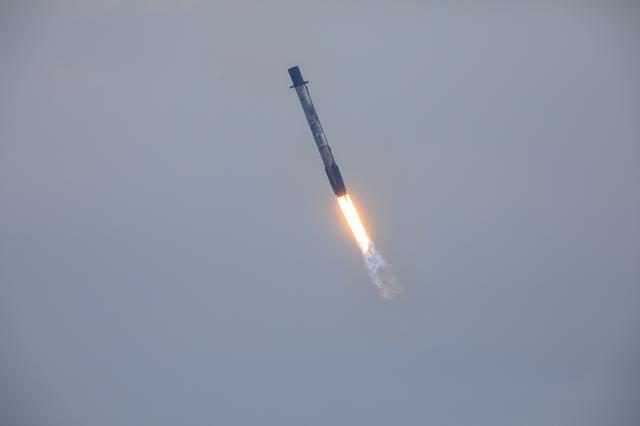
Grid fins steer a returning booster by turning airflow into forces that change its orientation and atmospheric path. These lattice-shaped aerodynamic control surfaces generate forces as air flows through and around them; rotating the fins changes those forces and helps guide the booster towards its landing area.
On Falcon 9, grid fins near the top of the first stage deploy for the return. Their forces act away from the booster's centre of mass, producing a turning effect. Guidance software commands fin movements to correct the descending trajectory towards a land-based landing zone or an offshore drone ship.
Unlike a swivelling engine, a grid fin does not redirect thrust. Unlike a thruster, it needs surrounding air: its steering authority depends on air density and speed, becoming ineffective in a vacuum. During atmospheric descent, the control system must account for changing airflow rather than expect the same fin movement to produce the same response throughout.
The fins guide the approach, but they cannot bring Falcon 9 gently to rest. The landing engine supplies the thrust needed to slow the final descent, with engine steering controlling the powered approach. Orbital Radar's recovery-fleet page provides context for the drone ships serving as offshore destinations.
Recovery also distinguishes returning boosters from hardware left in orbit. Orbital Radar tracking data lists 2,221 rocket bodies as of 24 November 2026. The broader tracked orbital population contains 32,144 objects as of 24 November 2026, according to Orbital Radar tracking data; grid fins are an atmospheric recovery tool, not a means of steering those objects in space.
How do thrusters turn a spacecraft in a vacuum?
Thrusters turn a spacecraft in a vacuum by expelling gas: the push on the spacecraft needs no surrounding air. A reaction control system (RCS) is a set of small thrusters used to control orientation and, where configured, position.
When a thruster’s line of thrust passes away from the centre of mass, it produces torque (a turning effect). A balanced pair firing in opposite directions on opposite sides of the craft can produce a turn while largely cancelling the overall push, giving little net translation (movement without rotation).
Cold-gas thrusters release stored pressurised gas through nozzles without combustion; chemical thrusters release energy by decomposing or reacting propellants. Their propellants, thrust and efficiency are not interchangeable: designers select a system to suit the spacecraft’s requirements.
Once a firing starts rotation, the spacecraft keeps turning unless another torque counters it; ending the firing does not stop the turn. The controller typically commands opposing thrusters to brake, part of the process explained in Orbital Radar’s attitude-control guide.
These systems keep upper stages pointed during coasting, manage orientation around separation and turn spacecraft during routine operations. Orbital Radar tracking data lists 2,221 rocket bodies in orbit on 24 November 2026. Orbital Radar tracking data lists 16,726 active satellites on 24 November 2026. Not every catalogued vehicle uses the same steering hardware, and spent rocket bodies may no longer have working control systems.
How do reaction wheels steer without firing thrusters?
Reaction wheels steer a spacecraft by changing the speed of motor-driven wheels inside it: accelerate a wheel in one direction and the spacecraft turns in the opposite direction. This conserves angular momentum (the quantity describing rotational motion), transferring it between the wheel and the spacecraft rather than requiring a thruster firing.
By carefully accelerating and braking the wheels, the control system can turn the spacecraft, then stop the turn at the required orientation. This makes reaction wheels useful for holding cameras, antennas and scientific instruments steadily on target without repeatedly consuming thruster propellant.
Reaction wheels change orientation, not the orbit of the spacecraft’s centre of mass. They are not a substitute for steering a launch engine: internal wheel forces cannot redirect the thrust carrying a rocket upwards.
Wheel saturation means reaching the system’s momentum-storage limit. Persistent external disturbances can force wheels to accumulate momentum until they cannot absorb more in the required direction; unloading uses an external torque (a turning force) from thrusters or, where available, magnetic devices interacting with a planet’s magnetic field.
Wheels are actuators, which produce motion, not sensors that measure orientation. Control moment gyroscopes work differently: they turn the axes of spinning rotors rather than primarily changing rotor speed. Orbital Radar’s attitude-control glossary entry explains this distinction between pointing hardware and measurement.
Orbital Radar tracking data lists 16,726 active satellites as of 24 November 2026. Orbital Radar’s live catalogue contains 32,155 objects, including debris, as of 24 November 2026; these totals do not specify which spacecraft carry reaction wheels.
Why does pointing a spacecraft not change its orbit?
Pointing changes a spacecraft’s attitude (its orientation), not necessarily its velocity (its speed and direction of travel). A coasting spacecraft can turn to face another way while continuing along essentially the same orbital path. Turning its nose does not redirect its motion as steering wheels redirect a car.
To change that path deliberately, the spacecraft usually makes a planned engine burn: firing an engine to change its velocity. The direction of thrust determines how the velocity changes, while the burn’s timing determines where along the orbit that change happens. Pointing prepares the engine to push in the required direction; the burn supplies the push.
Prograde means along the direction of travel; retrograde means opposite it. A prograde burn adds speed and can raise the opposite side of an orbit, while a retrograde burn removes speed and can lower it. Other thrust directions can change the orbital plane (the flat surface containing the orbit). Reaching a destination therefore requires planning a trajectory, not simply aiming at where the destination appears: both spacecraft and target keep moving under gravity.
16,726 satellites were active in orbit on 24 November 2026, according to Orbital Radar tracking data. Across that population, precise pointing serves tasks such as directing antennas or cameras, while deliberate orbital manoeuvres serve a separate purpose: changing the flight path. Orbital Radar’s attitude-control glossary entry explains the pointing side of that distinction.
How do spacecraft steer accurately enough to dock?
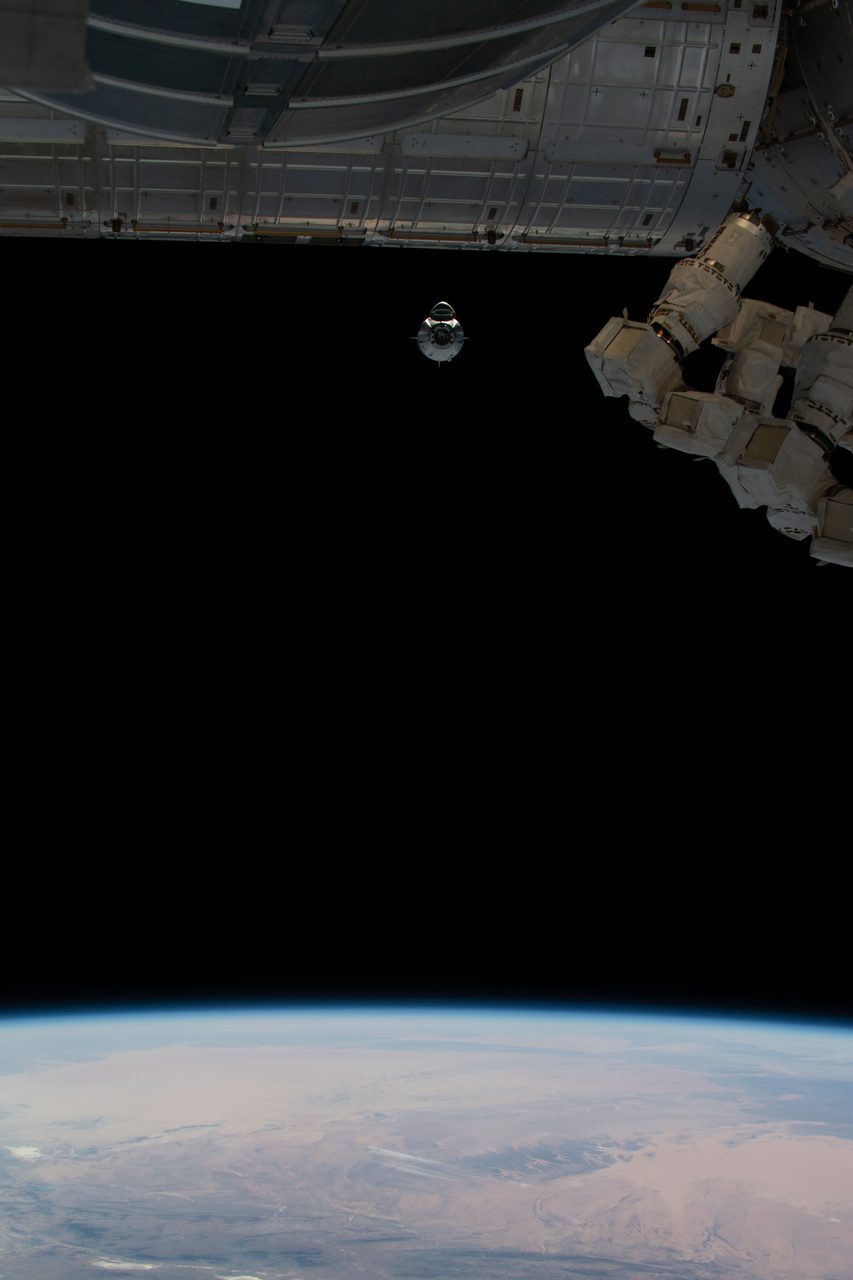
Spacecraft dock by matching the target’s orbit and motion, then controlling their relative position, orientation and closing speed. Rendezvous brings the vehicles together through planned orbital manoeuvres; the final approach begins only when their relative motion is suitable for a controlled arrival.
Rotational alignment means pointing the docking port in the required direction. Translation means moving towards, away from or sideways relative to the target. These are distinct tasks: a spacecraft can point correctly while still drifting sideways. Orbital Radar’s attitude-control glossary entry explains the orientation part of that distinction.
Relative-navigation sensors measure where the target is and how that relationship changes. Cameras can recognise docking features and estimate alignment; laser ranging equipment, on suitably equipped vehicles, measures distance. Guidance software uses these measurements to calculate corrections, while control software commands the thrusters.
Short thruster firings correct drift and keep closing speed within the approach limits. Controllers must also limit exhaust impingement: thruster plumes striking the other spacecraft can contaminate surfaces, apply unwanted forces or damage sensitive equipment. Thruster selection and approach geometry help manage those risks.
Planned hold points allow navigation and alignment checks before proceeding. Depending on the vehicle and situation, an unsafe approach can trigger a pause, retreat or departure manoeuvre; docking systems do not all follow an identical sequence.
Orbital Radar tracking data records 10 people in space on 24 November 2026. Orbital Radar tracking data also records 18 active close approaches on 24 November 2026. Those tracked encounters are not necessarily docking attempts: docking is a deliberately coordinated rendezvous.
How can you follow rocket steering on Orbital Radar?
Use Orbital Radar’s Falcon 9 page to identify the vehicle and connect each flight phase with its steering methods, then watch launch and landing footage for visible clues. The page is a reference guide, not live steering telemetry: it does not show the rocket’s individual control commands.
Use this observation checklist, remembering that coverage may omit parts of the flight:
- After ascent begins, look for pitch-over: the rocket gradually tilts away from vertical as it builds speed along its flight path.
- After separation, watch for booster reorientation as the returning stage changes which way it points.
- During atmospheric descent, look for grid-fin movement as these aerodynamic surfaces help guide the booster.
- During powered landing, watch the engine plume and the booster’s alignment, while recognising that small steering corrections may be difficult to distinguish.
Camera movement and perspective can make a steady flight path appear to turn, or conceal a real change in direction. Thruster firings may also be invisible, so footage alone cannot reveal every control command or reliably identify its cause.
9,715 Starlink satellites were active on 24 November 2026, according to Orbital Radar tracking data. Once deployed, those satellites perform their own attitude control (managing orientation) and orbit-control tasks, separately from the launch vehicle that delivered them. Following a Falcon 9 flight therefore shows only the launch-and-return part of a much longer steering story.
Key takeaways
- Rockets commonly steer during powered flight by tilting engine thrust to change both orientation and acceleration.
- Grid fins depend on airflow, while thrusters can control orientation in the vacuum of space.
- Reaction wheels turn suitably equipped spacecraft without firing thrusters, but cannot directly change their centre-of-mass orbit.
- Docking requires both accurate pointing and controlled relative motion, not simply aiming at another spacecraft.
Frequently Asked Questions
Can a rocket steer if its main engine fails?
Why do rockets sometimes look tilted just before landing?
Do astronauts steer spacecraft with a joystick?
Can ion engines be used to steer spacecraft?
What happens if a spacecraft loses attitude control?
Cite this article
Pick a style, then copy it or download it for your reference manager.Orbital Radar. (2026, November 24). How Do Rockets Steer? From Liftoff to Docking. Retrieved November 24, 2026, from https://orbitalradar.com/blog/how-do-rockets-steer
“How Do Rockets Steer? From Liftoff to Docking.” Orbital Radar, 24 Nov. 2026, orbitalradar.com/blog/how-do-rockets-steer. Accessed 24 Nov. 2026.
Orbital Radar (2026) How Do Rockets Steer? From Liftoff to Docking. Available at: https://orbitalradar.com/blog/how-do-rockets-steer (Accessed: 24 November 2026).
Orbital Radar. “How Do Rockets Steer? From Liftoff to Docking.” Last modified November 24, 2026. https://orbitalradar.com/blog/how-do-rockets-steer.
@misc{orbitalradar_blog_how_do_rockets_steer,
  author       = {{Orbital Radar}},
  title        = {How Do Rockets Steer? From Liftoff to Docking},
  year         = {2026},
  month        = nov,
  howpublished = {\url{https://orbitalradar.com/blog/how-do-rockets-steer}},
  url          = {https://orbitalradar.com/blog/how-do-rockets-steer},
  urldate      = {2026-11-24},
  note         = {Accessed 2026-11-24}
}
TY - ELEC AU - Orbital Radar, TI - How Do Rockets Steer? From Liftoff to Docking PY - 2026 DA - 2026/11/24 PB - Orbital Radar UR - https://orbitalradar.com/blog/how-do-rockets-steer Y2 - 2026/11/24 LA - en ER -
Live figures change, so keep the date you accessed the page. How to cite Orbital Radar