Inside the Lost Galaxy: Hubble Finds Young Star Clusters
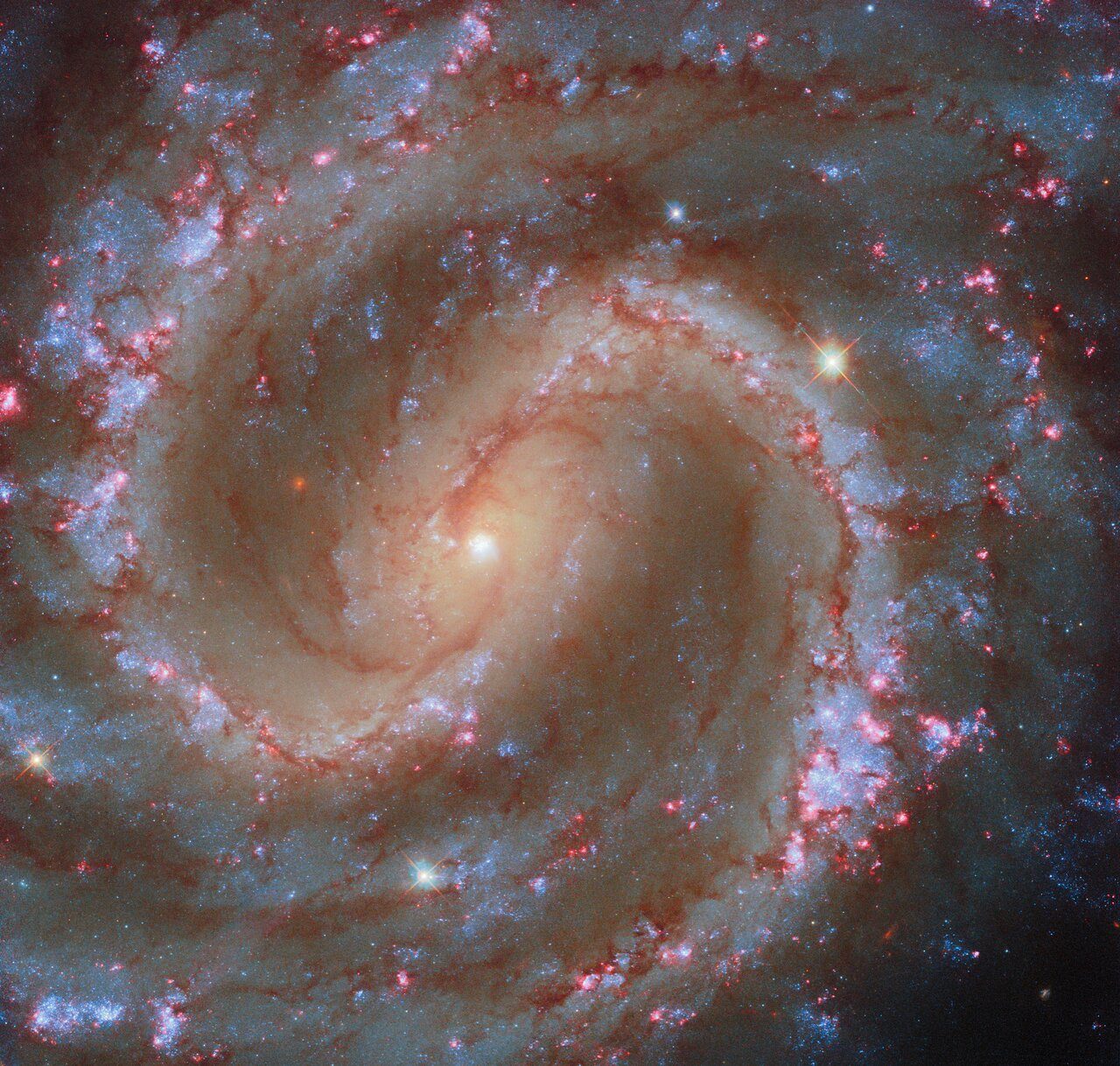
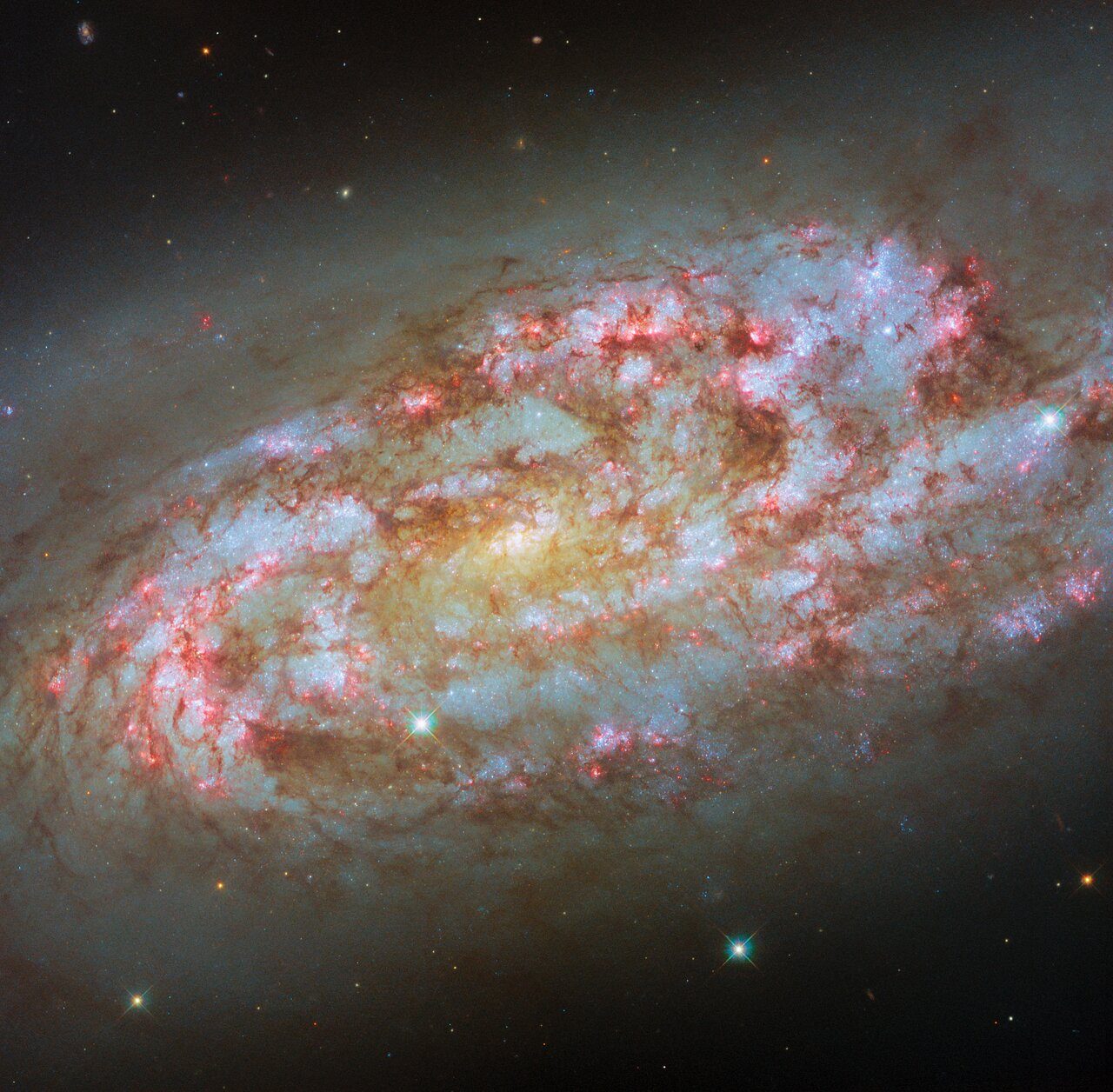
Hubble’s view of the Lost Galaxy reveals blue star clusters wrapped in glowing pink gas — evidence of massive young stars transforming their birthplaces.
| Active satellites | 16,722 |
| Catalogued objects | 32,133 |
| Starlink active | 9,715 |
Young star clusters illuminate the spiral arms of NGC 4535, a galaxy about 50 million light-years away in Virgo. In this ESA/Hubble image, bright blue groupings sit among pink-red clouds, while dark strands of dust trace the arms around a central bar of stars. Its nickname, the Lost Galaxy, reflects how faint it appears through a small telescope.
The pink clouds are H II regions (clouds of ionised hydrogen), where radiation from hot, massive stars makes surrounding gas glow. These stars do more than light up their birthplaces: their radiation and powerful stellar winds reshape the gas, and their eventual supernova explosions disturb it further. Hubble’s 2.4-metre mirror helps reveal these structures in a galaxy that can otherwise seem elusive.
From glowing gas to a changing galaxy
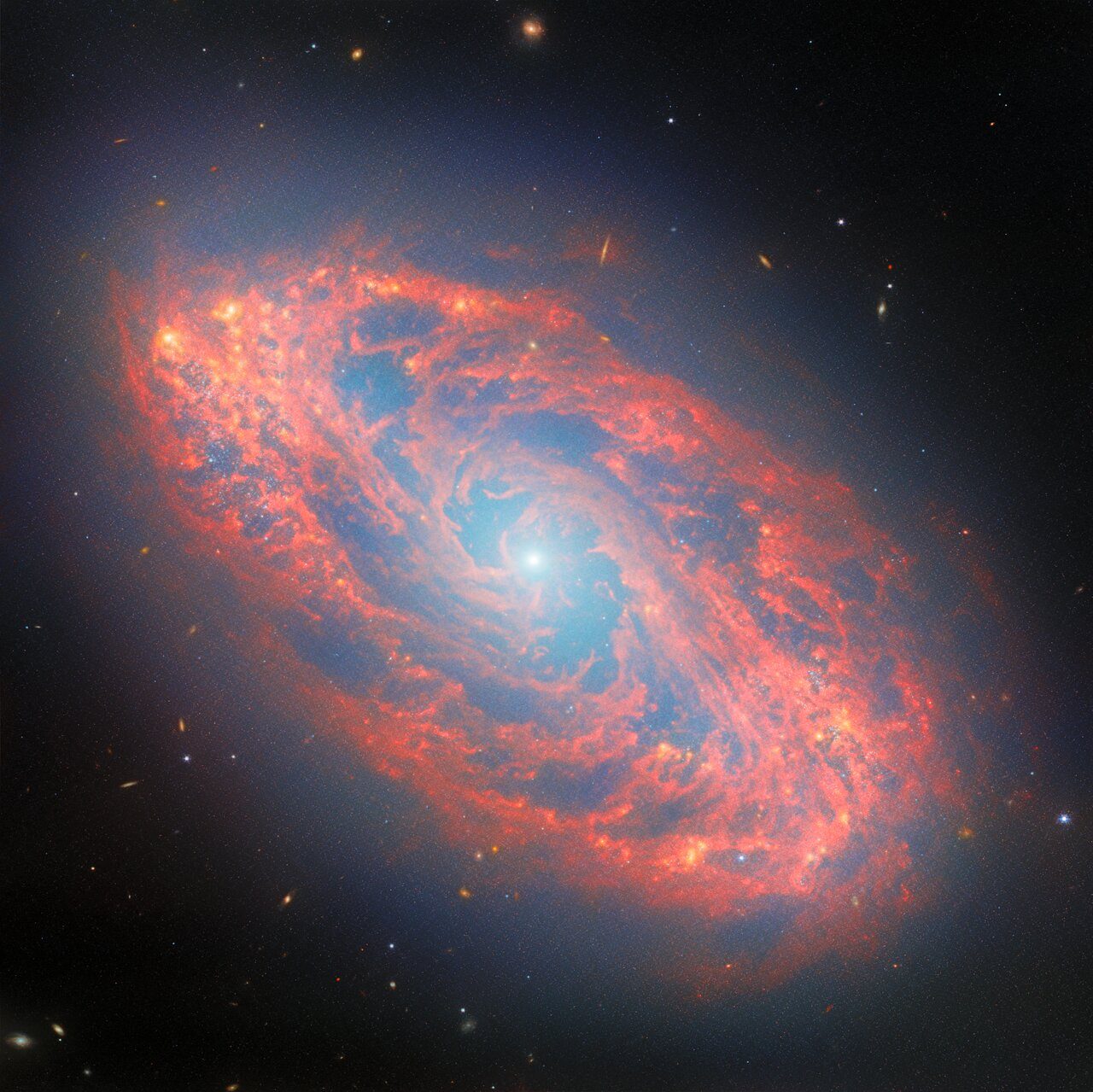
The observations contribute to PHANGS, a programme investigating the relationship between young stars and cold gas. An earlier image released in 2021 also used PHANGS observations; this view adds the red glow of nebulae surrounding massive stars during their first few million years. Together, the blue clusters, glowing gas and obscuring dust reveal different elements of the environment in which stars form.
Hubble’s distant view also offers a contrast with the increasingly populated orbital environment around Earth. Orbital Radar tracking data records 16,722 active satellites as of 24 November 2026. Orbital Radar’s live catalogue contains 32,133 objects, including debris, as of 24 November 2026. Readers can explore that nearby environment through Orbital Radar’s space situational awareness toolkit, while this image looks far beyond it to the processes shaping another galaxy.
Frequently Asked Questions
Why is NGC 4535 called the Lost Galaxy?
What are the pink clouds in Hubble’s Lost Galaxy image?
Cite this article
Pick a style, then copy it or download it for your reference manager.Orbital Radar. (2026, November 24). Inside the Lost Galaxy: Hubble Finds Young Star Clusters. Retrieved November 24, 2026, from https://orbitalradar.com/blog/cosmic-gallery-2026-11-24
“Inside the Lost Galaxy: Hubble Finds Young Star Clusters.” Orbital Radar, 24 Nov. 2026, orbitalradar.com/blog/cosmic-gallery-2026-11-24. Accessed 24 Nov. 2026.
Orbital Radar (2026) Inside the Lost Galaxy: Hubble Finds Young Star Clusters. Available at: https://orbitalradar.com/blog/cosmic-gallery-2026-11-24 (Accessed: 24 November 2026).
Orbital Radar. “Inside the Lost Galaxy: Hubble Finds Young Star Clusters.” Last modified November 24, 2026. https://orbitalradar.com/blog/cosmic-gallery-2026-11-24.
@misc{orbitalradar_blog_cosmic_gallery_2026_11_24,
  author       = {{Orbital Radar}},
  title        = {Inside the Lost Galaxy: Hubble Finds Young Star Clusters},
  year         = {2026},
  month        = nov,
  howpublished = {\url{https://orbitalradar.com/blog/cosmic-gallery-2026-11-24}},
  url          = {https://orbitalradar.com/blog/cosmic-gallery-2026-11-24},
  urldate      = {2026-11-24},
  note         = {Accessed 2026-11-24}
}
TY - ELEC AU - Orbital Radar, TI - Inside the Lost Galaxy: Hubble Finds Young Star Clusters PY - 2026 DA - 2026/11/24 PB - Orbital Radar UR - https://orbitalradar.com/blog/cosmic-gallery-2026-11-24 Y2 - 2026/11/24 LA - en ER -
Live figures change, so keep the date you accessed the page. How to cite Orbital Radar