Who Owns the Moon? Lunar Law and the Artemis Accords
No country owns the Moon, but ownership of extracted resources remains contested. Explore how lunar law shapes mining, exploration and competing international partnerships.
| Active satellites | 16,710 |
| Starlink active | 9,778 |
| Catalogued objects | 32,133 |
| Active close approaches | 16 |
| People in space | 10 |
No country owns the Moon. The 1967 Outer Space Treaty prohibits national appropriation — claiming the Moon as national territory — through sovereignty, occupation, use or any other means.
More than 110 nations are parties to the Outer Space Treaty of 1967. Ownership of lunar territory is distinct from ownership of spacecraft and equipment; rights to resources extracted from the surface raise another legal question. Landing a spacecraft does not turn the ground beneath it into national territory.
The US-led Artemis Accords have been signed by more than 45 nations. They set principles for responsible exploration, including transparency, compatible systems and resource use, building on the treaty rather than replacing it. The Accords and the Chinese-Russian International Lunar Research Station initiative organise cooperation, but neither partnership can award sovereignty over the Moon.
These legal distinctions have a physical setting: landing sites, lunar terrain and spacecraft overhead. Orbital Radar's Moon Globe provides that context, helping readers explore where competing activities could meet.
What does the Outer Space Treaty actually prohibit?
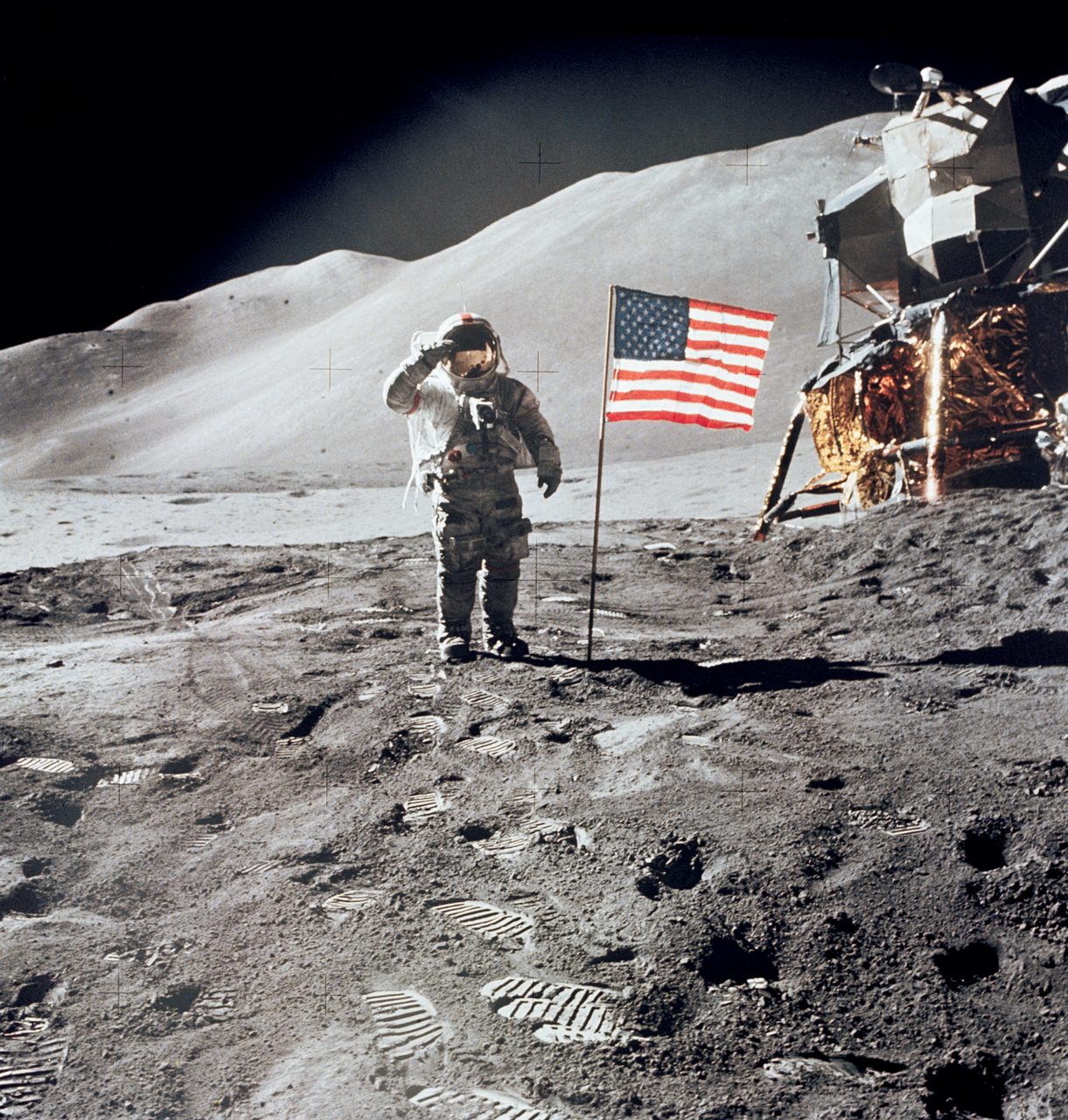
The 1967 Outer Space Treaty prohibits countries from claiming sovereignty over the Moon: planting a flag, landing a spacecraft or maintaining a base does not turn lunar ground into national territory. Its ban on national appropriation covers claims made through occupation, use or any other means.
More than 110 nations are parties to the 1967 Outer Space Treaty, making it the foundational legal framework for space activities, though participation is not universal. It protects freedom to explore and use the Moon, with access on a basis of equality. That freedom does not give a country the right to exclude other countries permanently from territory it has visited or developed.
The treaty says exploration and use should benefit all countries, regardless of their economic or scientific development. Describing outer space as the “province of all mankind” does not make the Moon the property of a world government, nor does it allocate every person a saleable share. The distinction is between a shared freedom to explore and a territorial ownership right.
The treaty also prohibits nuclear weapons in orbit and establishes state responsibility for national space activities, including private operations, alongside liability provisions. Orbital Radar’s Outer Space Treaty legal framework explains these obligations; its Moon Globe provides a geographical companion for understanding the lunar setting. Neither a mission’s arrival nor its continued presence establishes sovereignty.
Can companies own the resources they mine on the Moon?

Companies can have ownership of extracted lunar resources recognised under US law, but that is not an internationally settled entitlement. Owning water removed from lunar ice is legally distinct from owning the deposit, the surrounding land or part of the Moon itself.
The United States takes the position that extracting and using space resources need not constitute national appropriation (claiming territory as national property), which the 1967 Outer Space Treaty prohibits. Under this interpretation, a company could own water it collects without either the company or its government acquiring sovereignty over the extraction site.
US domestic law recognises rights to resources obtained by qualifying operators, but national legislation cannot by itself settle how other countries must treat those rights. The Artemis Accords reflect the US-led position that resource extraction can comply with the treaty; they do not establish a universally accepted ownership regime.
Critics question whether exclusive access to a scarce, valuable ice deposit could become appropriation in practice, particularly if an operator prevents others from reaching it. That concern does not make every extraction activity clearly unlawful: the dispute concerns how resource use can coexist with the treaty’s prohibition on appropriation and its provisions for free access.
The treaty provides neither a detailed international mining-licence system nor a complete mechanism for allocating competing resource claims. Water could potentially support crews and be split into oxygen and hydrogen for propellant, making these legal questions relevant to the emerging space economy, without implying that commercially viable lunar mining already exists.
Orbital Radar’s Moon Globe provides context for the lunar environment and its orbiters. Ownership of extracted material remains a separate question from ownership of the terrain beneath them.
What are the Artemis Accords, and are they binding law?
The Artemis Accords are US-led bilateral political commitments on responsible space exploration, not a legally binding treaty or a mechanism for owning the Moon. They build on the Outer Space Treaty rather than replacing it; legal obligations under that treaty remain binding independently of the Accords.
More than 45 nations had signed the Artemis Accords as of 21 November 2026. Signing does not mean that every country promises to send astronauts, fund a lunar mission or supply the same equipment: participants have different ambitions, resources and technical capabilities.
The principles translate into practical expectations. Transparency means sharing plans and scientific findings openly; interoperability (the ability of systems to work together) means designing equipment and procedures that different missions can use together. Emergency assistance means helping personnel in distress, while heritage protection means avoiding damage to historically important landing sites and artefacts.
On resources, the Accords take the position that extracting and using lunar materials can be compatible with the Outer Space Treaty’s ban on national appropriation. That interpretation is not universally accepted, and signing the Accords does not settle the wider legal debate or grant sovereignty over a mining site.
The Outer Space Treaty of 1967 has more than 110 states parties. Joining the Accords is a separate political step, not the process for becoming a party to that treaty. Orbital Radar’s Artemis Accords glossary entry explains the framework; the distinction is between shared exploration commitments and obligations under international law.
Do lunar safety zones amount to territorial claims?
Lunar safety zones are intended to coordinate activities and prevent harmful interference, not establish sovereign borders. Calling an area a safety zone does not confer ownership: the Outer Space Treaty of 1967 prohibits national appropriation of the Moon, and more than 110 nations are party to it.
The practical hazards are real. A lander’s exhaust can disturb lunar dust and propel particles towards nearby equipment; vehicles and excavation can also disrupt sensitive instruments. A safety zone should therefore describe where coordination is needed for particular activities, rather than automatically bar everyone else from entering.
Proportionality and duration are crucial distinctions. Precautions tied to a landing, equipment sensitivity or an active operation are different from indefinitely excluding others from valuable terrain. The justification should reflect the actual hazard, change when operations change and end when the relevant activity ceases. An indefinite exclusion zone around a promising resource deposit could raise appropriation concerns regardless of its name.
More than 45 nations have signed the Artemis Accords as of 21 November 2026. Their approach emphasises notification, consultation and transparent descriptions of activities so other operators can understand risks and coordinate access. Transparency does not itself settle legality: a safety label cannot make a territorial claim lawful. Orbital Radar’s Artemis Accords explainer provides context for these coordination principles.
How does the Chinese-Russian lunar plan differ from Artemis?
The International Lunar Research Station (ILRS) is a Chinese–Russian cooperation initiative for lunar research and exploration, whereas Artemis is a US-led exploration framework. Neither gives its participants ownership of the Moon recognised by international law: they organise exploration partnerships, not sovereign territory.
The ILRS envisages cooperating on scientific missions and lunar research infrastructure. The Artemis Accords are bilateral agreements with the United States setting shared principles, including transparency, interoperability (the ability of systems to work together), heritage protection and resource use. More than 45 nations have signed the Artemis Accords. Signing those principles is distinct from committing hardware, funding or astronauts to a particular mission.
These arrangements should not be treated as fixed geopolitical blocs. Participation does not, by itself, establish that a country rejects scientific or technical cooperation elsewhere; specific commitments and national restrictions matter. Nor should announced ILRS ambitions be mistaken for a completed, operating lunar station: proposed facilities, partnership announcements and deployed equipment are different measures of progress.
China, Russia and the United States remain bound by the 1967 Outer Space Treaty, irrespective of their preferred partners. More than 110 nations are parties to that treaty, whose prohibition on national appropriation applies to both exploration approaches. Orbital Radar’s Chinese space programme hub provides wider programme context, while its space agencies directory profiles the institutions involved. The central legal distinction is between organising activity on the Moon and claiming the Moon itself.
Can anyone buy a plot of land on the Moon?
You can buy a commercial lunar land certificate, but it does not establish internationally recognised ownership of a plot on the Moon. Such a document may be a souvenir; it is not a recognised title deed giving you enforceable rights to occupy, exclude others from or develop lunar territory.
The Outer Space Treaty of 1967 prohibits national appropriation of celestial bodies. Sellers sometimes argue that this restriction applies only to countries, leaving individuals free to claim land. That is a proposed loophole, not an established property right: a seller’s declaration does not itself create a legally recognised system of lunar land ownership.
Private operators are not simply outside the treaty framework. States bear international responsibility for their national space activities, including those undertaken by companies, and must authorise and continually supervise relevant private activities. Registering a business or issuing certificates does not bypass those obligations.
Land claims also differ from ownership of physical objects. A spacecraft or scientific instrument can remain someone’s property after reaching the Moon without conferring ownership of the ground beneath it. Returned samples raise separate questions about lawful collection, transfer and provenance—the documented history of an item. Orbital Radar’s Moon Globe provides geographical context for these distinctions, not a registry of property rights.
Who enforces the rules if a lunar dispute breaks out?
There is no universal lunar police force. Enforcement rests on national oversight, diplomacy, consultation and whatever dispute-resolution arrangements apply to the states or operators involved; no single court automatically hears every lunar dispute.
The Outer Space Treaty of 1967 makes states internationally responsible for their national space activities, including those conducted by private companies. As explained in Orbital Radar’s guide to the Outer Space Treaty, private activities require authorisation and continuing supervision by the appropriate state. Operating beyond national territory does not remove that obligation.
A national regulator can impose licence conditions, require reporting and corrective action, or suspend or revoke an authorisation where domestic law permits. Those powers can constrain a company’s lunar operations without giving its home country sovereignty over the site. Their practical effectiveness depends on national legislation and enforcement capacity.
Responsibility for compliance is distinct from liability for damage. An incident does not automatically create a right to compensation: the applicable legal rules, the damage, causation and, where required, fault must be established. States may seek consultation over potentially harmful interference; negotiation, arbitration or adjudication depends on the relevant arrangements and jurisdiction.
Orbital Radar tracking data recorded 16,710 active satellites in Earth orbit on 21 November 2026. That figure describes Earth-orbit activity, not lunar traffic, and illustrates the scale of national space oversight already required. It is not a measure of legal compliance.
How can I explore the Moon and its orbiters on Orbital Radar?
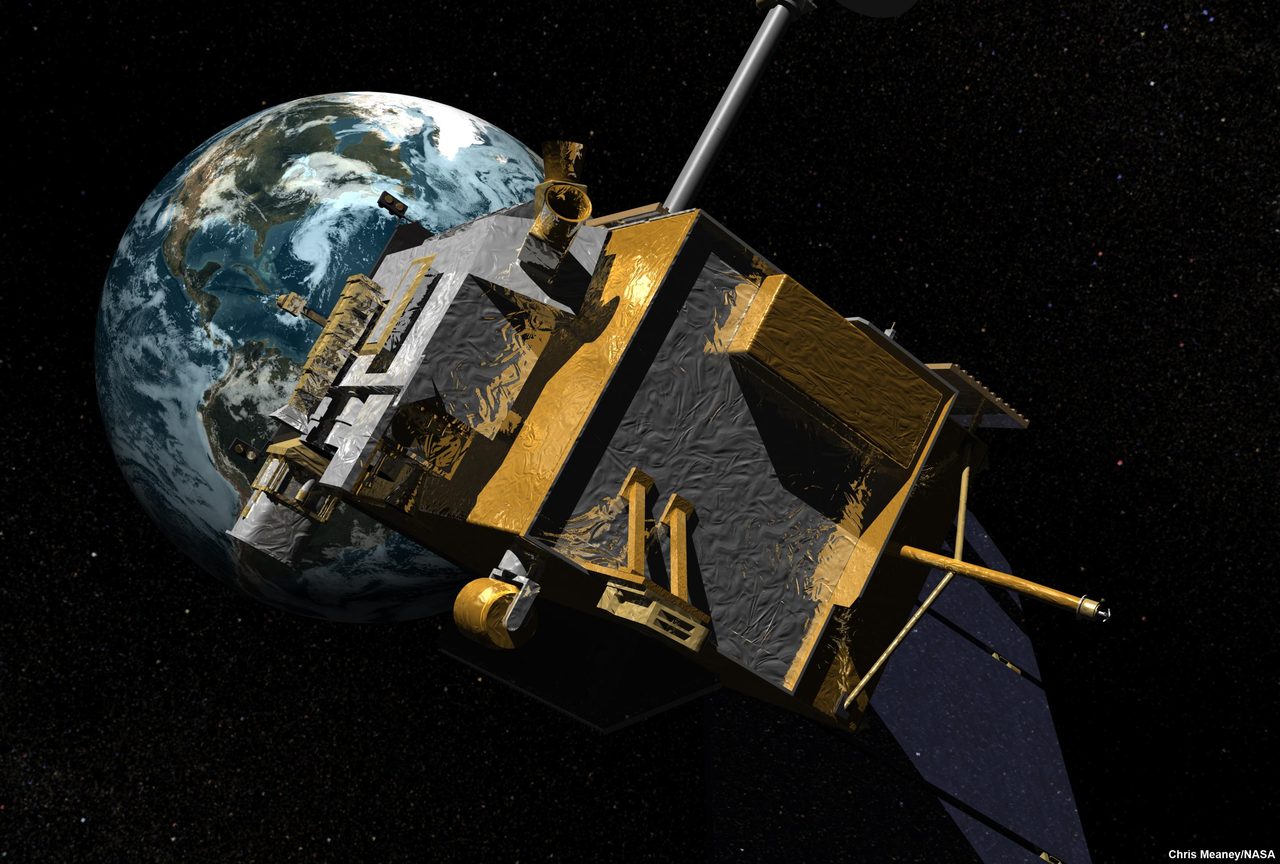
Open Orbital Radar’s Moon Globe to explore the lunar globe, see the Moon’s current position and phase, and view its orbiters. Use it to connect the places discussed in lunar exploration plans with the geography that makes them important.
Viewing craters, plains and polar terrain helps explain why landing areas, access routes and potential resource locations matter. A landing site’s surroundings can affect how equipment reaches a work area, while terrain can complicate travel between nearby locations. The globe provides geographical context for these questions; it is not a legal boundary map, and a feature displayed on it should not be read as a recognised property claim.
An orbiter’s presence does not establish ownership of the surface beneath it. The Outer Space Treaty of 1967 prohibits national appropriation of celestial bodies, and tracking data cannot adjudicate property rights. A spacecraft’s position tells you where it is, not who owns the ground below.
Orbital Radar’s live catalogue contained 32,133 objects, including debris, on 21 November 2026. That figure describes the wider Earth-orbit catalogue, not a count of lunar orbiters. The separate space debris map shows that Earth-orbit environment; use the Moon Globe for lunar context rather than treating the two views as interchangeable.
What rules are still missing for a busy lunar surface?
Lunar operations still lack widely accepted, detailed rules for sharing scarce sites, preventing interference and protecting the environment. Unresolved questions include who gets access to an ice deposit when operations conflict, how much dust or contamination is acceptable, and how long interference-prevention arrangements may last before they effectively exclude others.
The 1967 Outer Space Treaty has over 110 nations as parties. It requires activities to take account of other users, but does not provide a detailed operating code for neighbouring mines, landing pads or scientific instruments.
The Artemis Accords have been signed by more than 45 nations. Their principles support transparency, compatible equipment and heritage protection, but do not settle every dispute over resource access or establish rules binding countries outside those arrangements.
The Moon Agreement offers a separate approach: it describes lunar natural resources as the common heritage of humankind and envisages an international regime governing exploitation when that becomes feasible. Participation is limited, and these provisions must not be presented as obligations binding every Outer Space Treaty party.
Protecting historic equipment and footprints is also different from owning the surrounding terrain. Agreed precautions could reduce damage to landing sites without turning heritage protection into a territorial claim; Orbital Radar’s Moon Globe provides geographical context for lunar exploration.
Clearer rules could emerge through national licensing, operational agreements between neighbouring missions and multilateral negotiations, rather than inevitably through a new treaty. Those arrangements would need transparent boundaries, review procedures and end conditions. The central answer remains: under the Outer Space Treaty, neither reaching the Moon first nor building a permanent installation creates a lawful national ownership claim.
Key takeaways
- The 1967 Outer Space Treaty prohibits national appropriation of the Moon, including claims based on occupation or use.
- Ownership of extracted lunar resources is legally distinct from territorial sovereignty, but its international rules remain contested.
- The Artemis Accords set shared exploration principles rather than granting land rights, while the Chinese-Russian lunar initiative creates no exemption from treaty obligations.
- Orbital Radar's Moon Globe provides geographical and orbital context, not a registry of lunar ownership or legally recognised boundaries.
Frequently Asked Questions
Did the Apollo landings make the Moon American territory?
Does the United Nations own or govern the Moon?
Are military bases and nuclear weapons allowed on the Moon?
Can astronauts legally visit another country's lunar base?
Who owns the Moon rocks brought back by Apollo?
Cite this article
Pick a style, then copy it or download it for your reference manager.Orbital Radar. (2026, November 23). Who Owns the Moon? Lunar Law and the Artemis Accords. Retrieved November 23, 2026, from https://orbitalradar.com/blog/who-owns-the-moon
“Who Owns the Moon? Lunar Law and the Artemis Accords.” Orbital Radar, 23 Nov. 2026, orbitalradar.com/blog/who-owns-the-moon. Accessed 23 Nov. 2026.
Orbital Radar (2026) Who Owns the Moon? Lunar Law and the Artemis Accords. Available at: https://orbitalradar.com/blog/who-owns-the-moon (Accessed: 23 November 2026).
Orbital Radar. “Who Owns the Moon? Lunar Law and the Artemis Accords.” Last modified November 23, 2026. https://orbitalradar.com/blog/who-owns-the-moon.
@misc{orbitalradar_blog_who_owns_the_moon,
  author       = {{Orbital Radar}},
  title        = {Who Owns the Moon? Lunar Law and the Artemis Accords},
  year         = {2026},
  month        = nov,
  howpublished = {\url{https://orbitalradar.com/blog/who-owns-the-moon}},
  url          = {https://orbitalradar.com/blog/who-owns-the-moon},
  urldate      = {2026-11-23},
  note         = {Accessed 2026-11-23}
}
TY - ELEC AU - Orbital Radar, TI - Who Owns the Moon? Lunar Law and the Artemis Accords PY - 2026 DA - 2026/11/23 PB - Orbital Radar UR - https://orbitalradar.com/blog/who-owns-the-moon Y2 - 2026/11/23 LA - en ER -
Live figures change, so keep the date you accessed the page. How to cite Orbital Radar