Karman Line: Where Space Begins and Why It Matters
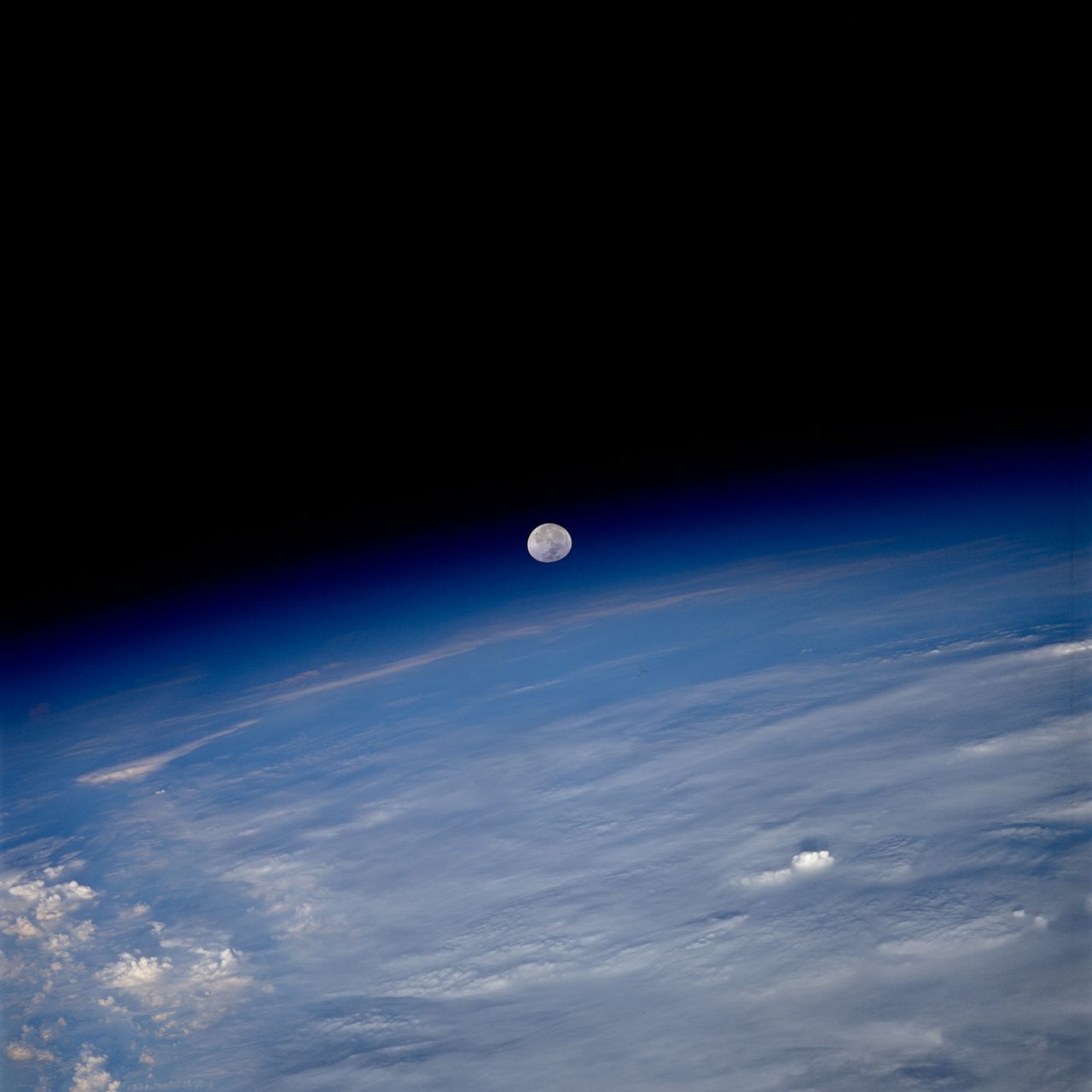
The Kármán line marks a widely used boundary of space at 100 km above Earth. But the atmosphere does not end there, and crossing it does not mean reaching orbit.
| Active satellites | 16,725 |
| Starlink active | 9,704 |
| Catalogued objects | 32,140 |
| Active close approaches | 23 |
| People in space | 13 |
The Kármán line is a widely recognised boundary of space, set at 100 km above Earth. The Fédération Aéronautique Internationale (FAI), the international body responsible for aviation and spaceflight records, uses that altitude to distinguish spaceflight from flight within the atmosphere.
It is a practical convention, not a physical edge: Earth's atmosphere thins gradually rather than stopping at a fixed height. Some US organisations instead recognise 50 miles, approximately 80 km, as the threshold of space.
Crossing either boundary does not automatically mean entering orbit. Reaching space is a question of altitude; remaining in orbit requires sufficient sideways speed to keep falling around Earth, while astronaut recognition depends on the criteria of the organisation awarding it.
Orbital Radar tracking data records 16,725 active satellites in orbit on 25 November 2026. Orbital Radar tracking data records 13 people in space on 25 November 2026. To understand what separates crossing a boundary from staying above Earth, Orbital Radar's orbit basics guide explains the underlying motion.
Why is the Kármán line set at 100 km?
The Kármán line is set at 100 km because the Fédération Aéronautique Internationale (FAI) adopted that rounded altitude as a practical boundary between aviation and spaceflight. It reflects the diminishing usefulness of wings as the atmosphere thins, rather than a precisely calculated height where the physics suddenly changes.
The boundary is named after aerodynamicist Theodore von Kármán, whose work connected atmospheric density with the limits of wing-supported flight. Wings generate lift by deflecting flowing air, producing a supporting force. As the gas becomes less dense, a wing must generally move faster to generate the same lift.
The conceptual crossover comes when the speed needed for aerodynamic support approaches that associated with orbital motion: travelling forwards fast enough to keep falling around Earth. Its altitude depends on assumptions about the vehicle and atmosphere, so 100 km is a convention, not a universal flight limit. Crossing it does not mean a vehicle must already be orbiting.
Orbital Radar’s Kármán Line glossary entry explains this distinction between a useful reference boundary and a physical discontinuity.
Orbital Radar tracking data listed 16,725 active satellites in orbit on 25 November 2026. Orbital Radar’s live catalogue contained 32,140 objects, including debris, on 25 November 2026. Those figures describe the orbital population, not a layer beginning at the boundary.
Does Earth's atmosphere end at the Kármán line?
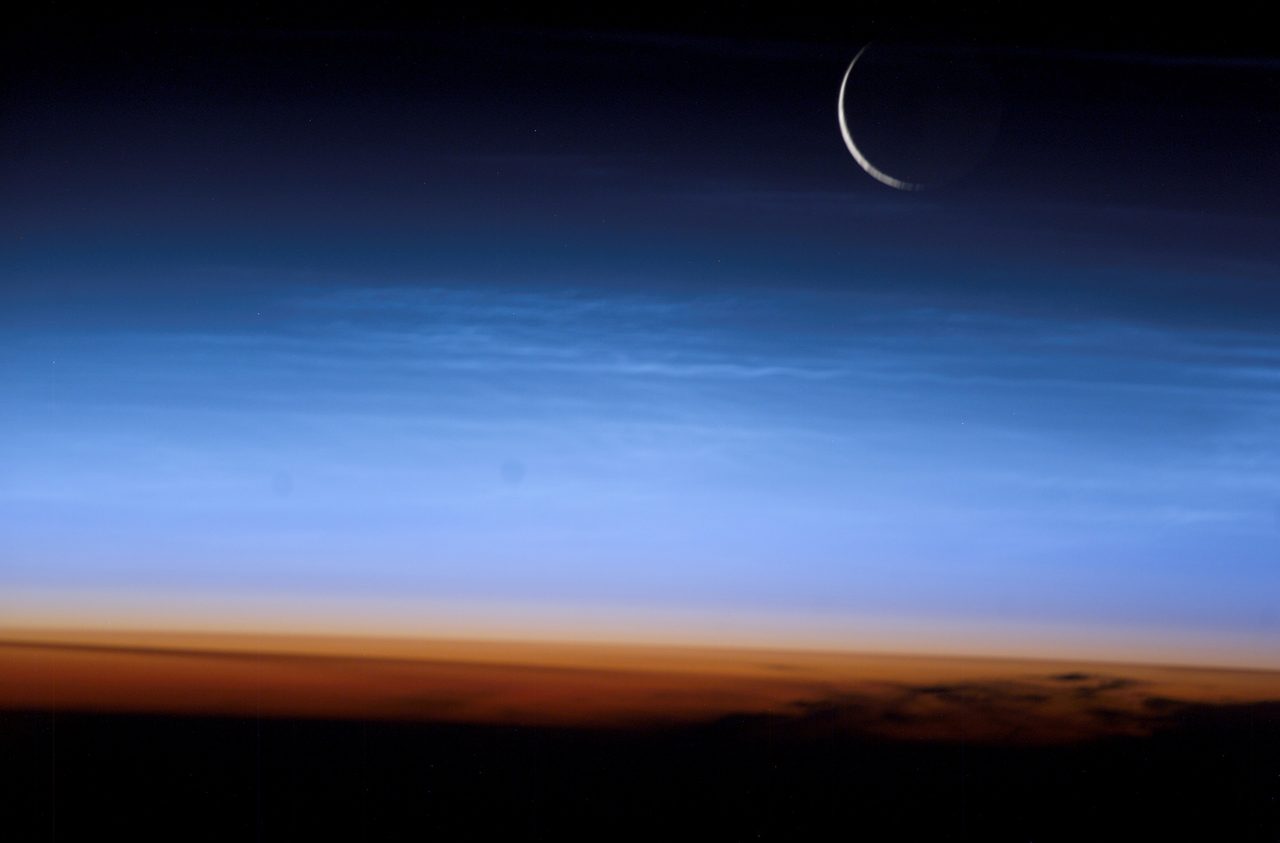
No: Earth’s atmosphere does not end at the Kármán line, 100 km above sea level. Atmospheric density declines gradually rather than dropping to zero at a boundary. The line lies within the thermosphere, a region of the upper atmosphere; extremely thin gas persists above it, extending into the outermost region, the exosphere.
The distinction matters because being in space does not mean travelling through a perfect vacuum. Atmospheric drag is resistance caused by collisions with gas particles, which transfer momentum and gradually slow a spacecraft. Orbital Radar tracking data lists 16,725 active satellites in orbit as of 25 November 2026.
Spacecraft in low Earth orbit can therefore experience drag while unquestionably being in space, well above the Kármán line. Over time, that resistance can lower their orbits, making occasional orbit-raising manoeuvres necessary to maintain altitude. Orbital Radar’s live catalogue contains 32,140 objects, including debris, as of 25 November 2026.
Drag also changes as conditions in the upper atmosphere change: solar activity can heat and expand this tenuous gas, increasing its density at a spacecraft’s altitude. Orbital Radar’s space weather guide explains the Sun’s influence on Earth’s upper atmosphere. The Kármán line is therefore a useful reference boundary, not a physical ceiling above which atmospheric effects disappear.
Why does the US also use an 80 km space boundary?
The US uses 50 miles, approximately 80 km, in some astronaut-recognition contexts because organisations can choose different thresholds for different purposes. The Fédération Aéronautique Internationale (FAI) uses the 100 km Kármán line for its spaceflight records; a US recognition programme need not use the same convention when deciding who qualifies for an award.
A flight can therefore exceed 50 miles without crossing the FAI’s 100 km boundary. Describing that flight as reaching space under the US threshold, but not under the FAI convention, does not mean either altitude measurement is wrong. The difference lies in the rule applied to the measurement.
Crossing an altitude threshold is not necessarily sufficient to receive astronaut recognition. An organisation may also apply eligibility requirements concerning a person’s role or activities during the flight. Orbital Radar’s astronaut guide provides wider context, while its space agencies directory helps distinguish the organisations administering human-spaceflight programmes.
Orbital Radar tracking data records 13 people in space as of 25 November 2026. Orbital Radar tracking data also records 16,725 active satellites in orbit on 25 November 2026. These are different populations: an astronaut-recognition threshold concerns people and their flights, not the classification of satellite activity.
Does crossing the Kármán line put a spacecraft in orbit?
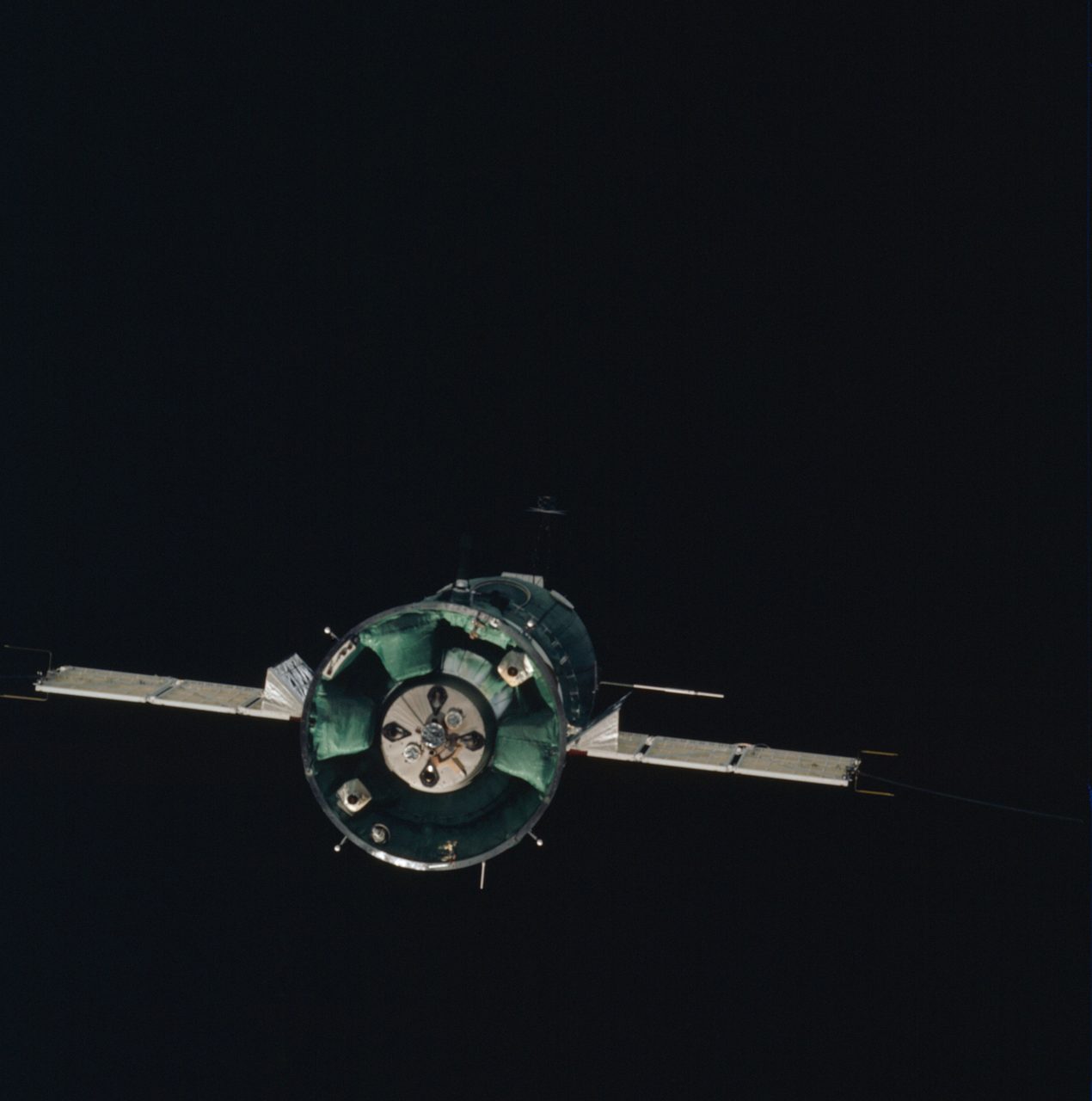
No. Crossing the Kármán line at 100 km does not put a spacecraft in orbit: altitude alone is not enough. A spacecraft also needs sufficient sideways velocity for its trajectory to carry it around Earth rather than back into the atmosphere.
An orbit is continuous free fall in which Earth’s surface curves away beneath the moving spacecraft. A rocket launched almost straight upwards can cross 100 km, shut down its engines and coast higher before falling back. It needs neither wings nor sustained engine thrust during that coast: its existing motion carries it upwards while gravity slows its ascent.
A suborbital flight is a journey that reaches space but follows a trajectory back into the atmosphere rather than completing an orbit. Even at the highest point, when its upward motion has stopped, a suborbital vehicle can briefly remain above the Kármán line before descending. Thin air prevents wings from providing useful lift there, but it does not mean that only an orbiting vehicle can be above the boundary.
Nor does a high point above 100 km make a trajectory suitable for a lasting satellite orbit. If the path repeatedly dips into dense atmosphere, drag (resistance from atmospheric gas) removes orbital energy, lowering the trajectory and eventually bringing the spacecraft down unless propulsion compensates. Orbital Radar’s guide to orbit basics explains this distinction between reaching a height and acquiring the sideways motion needed to stay in orbit.
How does the Kármán line affect space tourism?
The Kármán line helps space tourists distinguish a flight above 100 km from one that exceeds the US threshold of 50 miles (80 km), but neither description means passengers enter orbit. When comparing trips, ask which boundary the flight crosses and whether it is suborbital (returning to Earth without completing an orbit) or orbital.
A key figure is apogee, the highest point of a flight’s trajectory. On a suborbital trip, it tells passengers the maximum altitude reached and therefore which space boundary they cross. A flight whose apogee exceeds 80 km but remains below 100 km meets the US altitude threshold without crossing the internationally recognised Kármán line.
Weightlessness is a separate question. Passengers float when they and their vehicle are in free fall together, rather than because they have crossed a particular altitude. Free fall can occur below either recognised space boundary, so footage of floating passengers does not establish how high a flight travelled or whether it entered orbit.
Orbital Radar’s space tourism page provides context on different flight types. Compare the planned apogee, time spent in free fall and whether the itinerary actually includes orbit, rather than treating every flight marketed as a spaceflight as the same experience.
Is the Kármán line a legal border between airspace and space?
No. The Kármán line is not a universally agreed legal border between national airspace and outer space. The Fédération Aéronautique Internationale (FAI), the international air sports body, uses 100 km for record-setting purposes, but that convention does not establish a globally binding legal boundary.
International space law has not settled on a single altitude at which national airspace ends and outer space begins. Calling the Kármán line an internationally recognised reference therefore differs from saying that every country accepts it as a legal frontier.
The distinction matters because states exercise sovereignty over the airspace above their territory, while outer space is not subject to national appropriation. Satellites routinely pass above other countries without seeking the permissions normally associated with aircraft overflight. However, reaching 100 km does not automatically settle the legal status of a vehicle, its trajectory or its activities.
For commercial operators, launch and re-entry permissions, safety obligations, liability and applicable national laws remain relevant. A flight crossing the Kármán line cannot rely on altitude alone to resolve a dispute about overflight or regulatory responsibility; Orbital Radar’s glossary helps distinguish the terminology.
Orbital Radar tracking data listed 16,725 active satellites in orbit on 25 November 2026. That scale makes clear terminology useful for discussing orbital operations, but the satellite population does not resolve where the legal boundary lies.
How can you explore objects beyond the Kármán line on Orbital Radar?
Use Orbital Radar’s space debris map to explore the tracked orbital population, rather than looking for a visible line around Earth. The Kármán line is a reference boundary at 100 km altitude, not a physical band that satellites follow or a surface the map can reveal.
Orbital Radar’s live catalogue contained 32,140 objects, including debris, on 25 November 2026. That total includes functioning spacecraft and other tracked objects, so it is not a count of working satellites. Reading it as a satellite tally would confuse operational missions with the wider population of objects being followed in orbit.
Pair the map with Orbital Radar’s guide to orbit basics to understand orbital paths: the routes objects follow around Earth under gravity. A plotted position represents an object’s location along its orbit; it does not imply that the object sits on the space boundary. Use that distinction when interpreting the distribution of points around the planet.
The exercise makes the orbital environment easier to understand, but it has limits. Tracking data illustrates objects in orbit, not an atmospheric surface, and the catalogue is not a complete inventory of every small fragment. An apparently empty patch of the map should therefore not be read as proof that no material is present there. The useful question is which catalogued objects occupy orbital space, not where a visible edge of space can be found.
What happens when a spacecraft falls back below the Kármán line?
A spacecraft falling below the Kármán line encounters progressively denser air, not a sudden re-entry event triggered at 100 km. Atmospheric drag can affect an orbit well above that boundary, and crossing it says nothing by itself about whether a vehicle is safe.
Drag removes orbital energy, slowing a spacecraft and carrying it deeper into the atmosphere. At high speed, air piles up and is compressed ahead of the vehicle, forming a shock wave; the resulting hot gas transfers heat to its surface. Heating depends on speed, trajectory, shape and atmospheric density, rather than a boundary crossing.
Controlled crewed returns use carefully planned trajectories and heat shields to manage heating and deceleration before landing. Returning suborbital vehicles, which never reach a sustained orbit, generally encounter the atmosphere at lower speeds than orbital spacecraft, but still need appropriate thermal protection and flight control.
Orbital Radar tracking data recorded 13 people in space on 25 November 2026. Their safe return depends on trajectory planning, protection and reliable landing systems—not on treating the Kármán line as a safety threshold.
Uncontrolled debris re-enters without a guided landing trajectory. Many objects disintegrate or burn away, although some robust components can reach the ground. Orbital Radar’s explanation of discarded space objects describes this material; its composition, size and entry conditions—not crossing the boundary—help determine survival. The Space Academy provides further context on orbital motion and return.
Key takeaways
- The Kármán line is a widely used boundary of space at 100 km, not a physical edge where the atmosphere suddenly ends.
- Some US astronaut-recognition contexts use 50 miles, approximately 80 km, so definitions of reaching space can differ.
- Crossing the Kármán line does not establish an orbit, which also requires sufficient sideways velocity.
- Orbital Radar’s space debris map illustrates the tracked orbital population, not a visible or universally binding border around Earth.
Frequently Asked Questions
How do you pronounce Kármán line?
Can a weather balloon reach the Kármán line?
Can a conventional aeroplane reach 100 km?
Is the International Space Station above the Kármán line?
How long would it take a rocket to reach 100 km?
Cite this article
Pick a style, then copy it or download it for your reference manager.Orbital Radar. (2026, November 25). Karman Line: Where Space Begins and Why It Matters. Retrieved November 25, 2026, from https://orbitalradar.com/blog/karman-line-explainer
“Karman Line: Where Space Begins and Why It Matters.” Orbital Radar, 25 Nov. 2026, orbitalradar.com/blog/karman-line-explainer. Accessed 25 Nov. 2026.
Orbital Radar (2026) Karman Line: Where Space Begins and Why It Matters. Available at: https://orbitalradar.com/blog/karman-line-explainer (Accessed: 25 November 2026).
Orbital Radar. “Karman Line: Where Space Begins and Why It Matters.” Last modified November 25, 2026. https://orbitalradar.com/blog/karman-line-explainer.
@misc{orbitalradar_blog_karman_line_explainer,
  author       = {{Orbital Radar}},
  title        = {Karman Line: Where Space Begins and Why It Matters},
  year         = {2026},
  month        = nov,
  howpublished = {\url{https://orbitalradar.com/blog/karman-line-explainer}},
  url          = {https://orbitalradar.com/blog/karman-line-explainer},
  urldate      = {2026-11-25},
  note         = {Accessed 2026-11-25}
}
TY - ELEC AU - Orbital Radar, TI - Karman Line: Where Space Begins and Why It Matters PY - 2026 DA - 2026/11/25 PB - Orbital Radar UR - https://orbitalradar.com/blog/karman-line-explainer Y2 - 2026/11/25 LA - en ER -
Live figures change, so keep the date you accessed the page. How to cite Orbital Radar