Mira lives up to its name with a vast loop of stellar gas
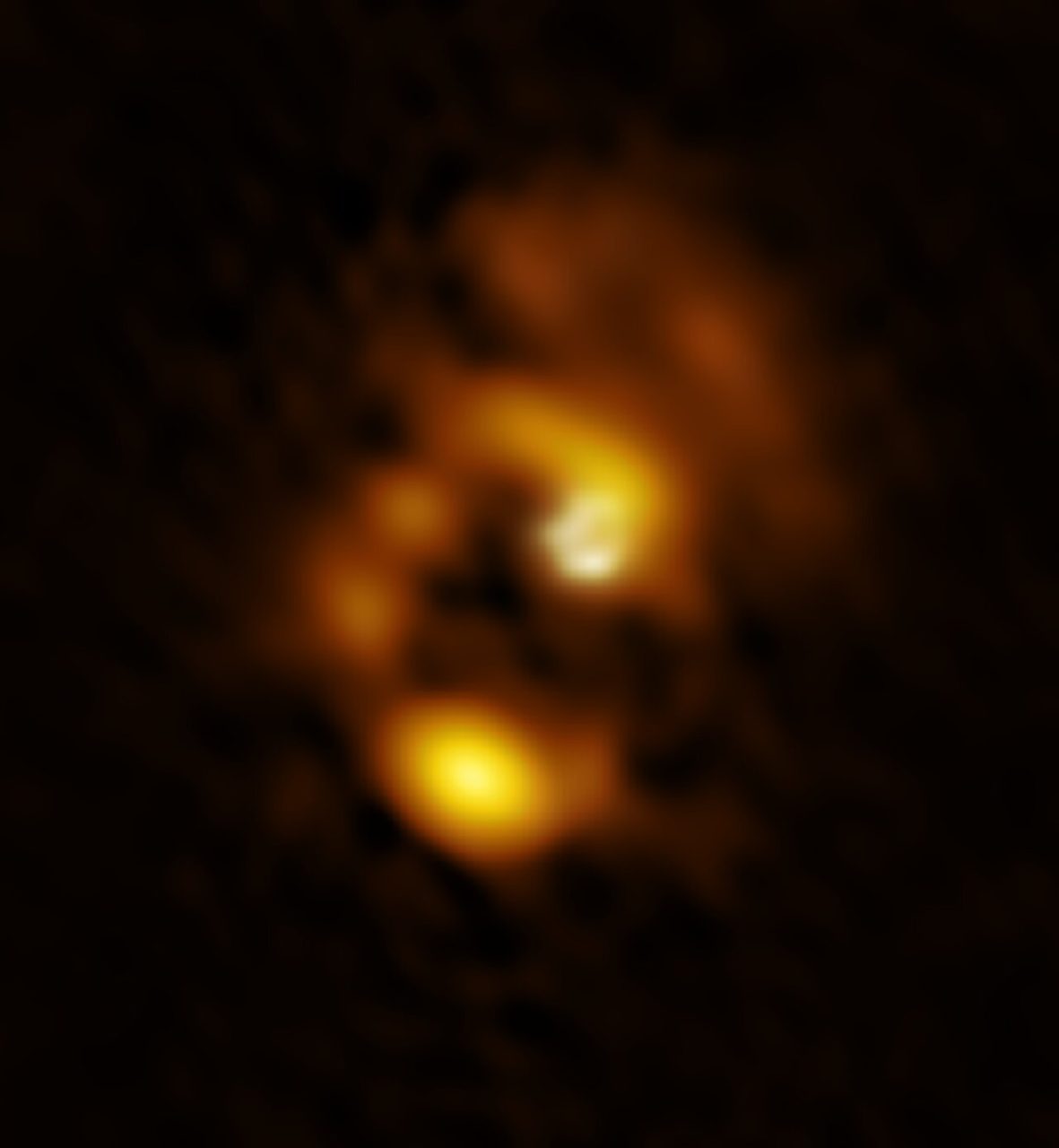
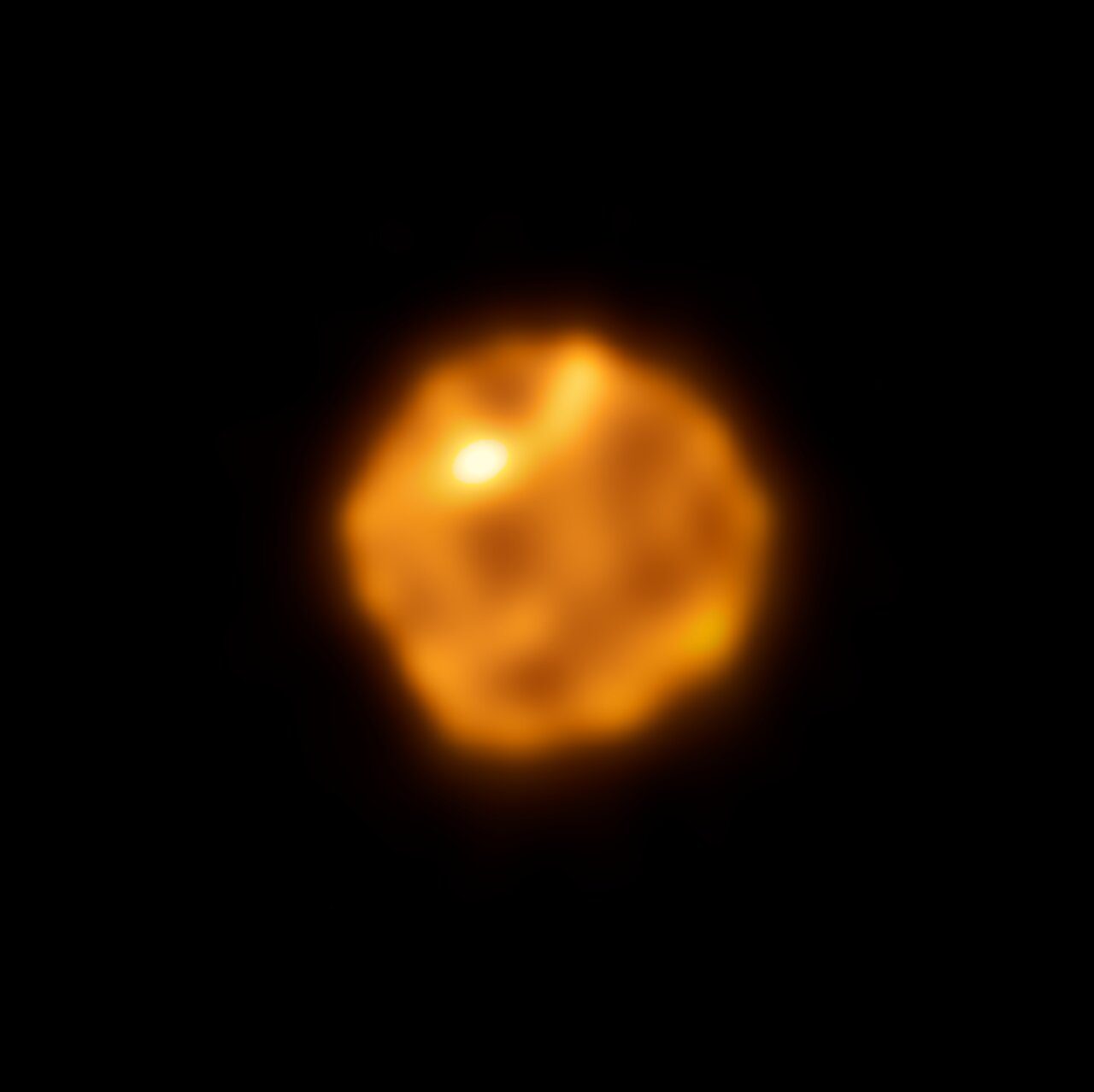
A vast loop of material extends from the red giant Mira A. ALMA’s view suggests magnetic eruptions could play a central role in stripping away its outer layers.
| Active satellites | 16,725 |
| Catalogued objects | 32,140 |
| Starlink active | 9,704 |
A giant loop of expelled material stretches away from Mira A, challenging the idea that ageing red giants shed their outer layers mainly through gentle winds. This ALMA image shows the star’s lumpy, glowing surface and an eruption reaching up to 10 astronomical units from it — roughly the distance between the Sun and Saturn.
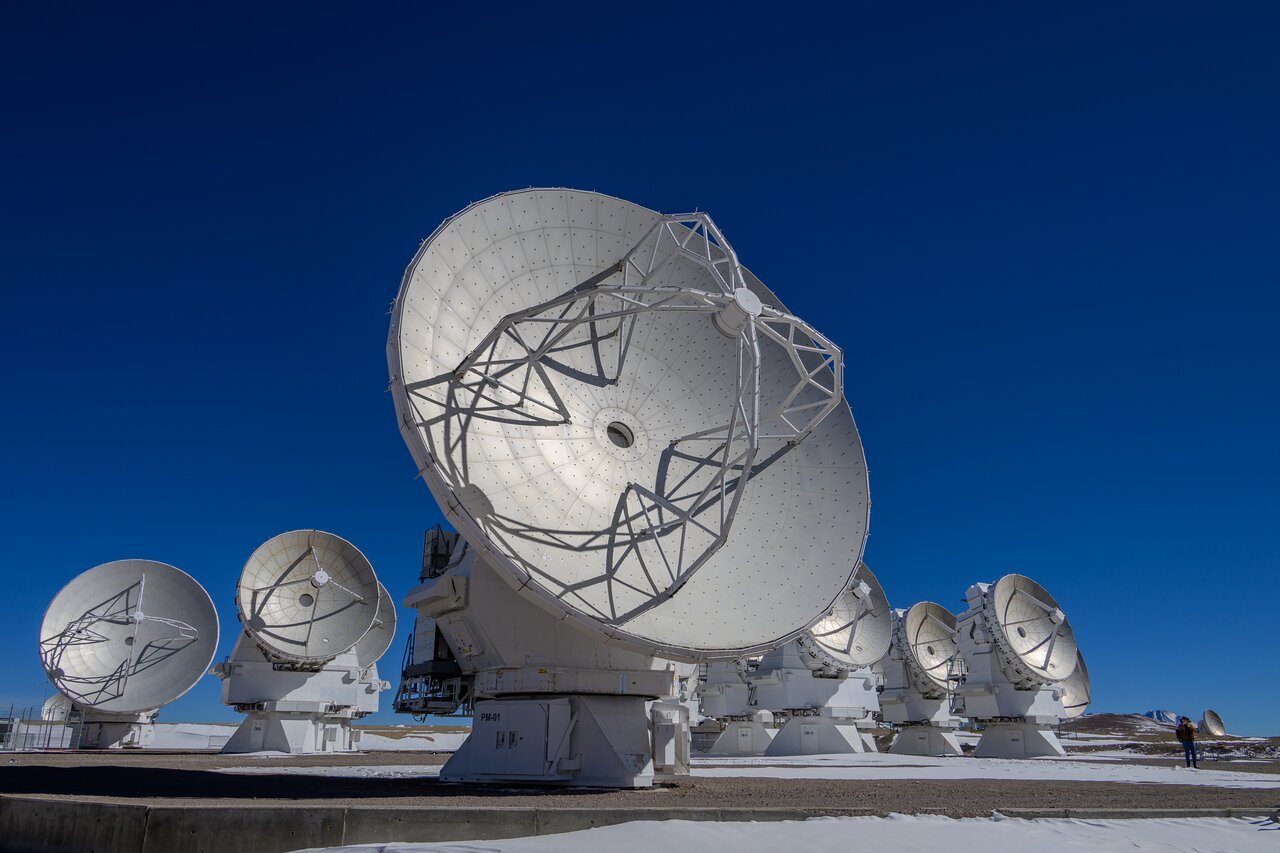
Mira A lies about 330 light-years away in Cetus. ALMA, the Atacama Large Millimeter/submillimeter Array, has resolved the shape of an eruption that would usually register on a distant star only as a brief change in brightness.
A magnetic route to stellar mass loss
The familiar explanation for red-giant winds involves starlight pushing on dust grains, gradually carrying material away. Mira A’s loop requires a more powerful mechanism: the researchers point to magnetic activity, supported by ALMA measurements of polarised light (light with a preferred orientation).
The loop can also be traced back to a bright hot spot observed on the surface two years earlier. Because such spots recur, the findings suggest magnetic outbursts could drive most of Mira A’s mass loss, rather than merely interrupting a steady wind.
The eruption resembles a solar coronal mass ejection (an expulsion of magnetised gas), but on a much larger scale. That resemblance offers a connection between activity on our Sun and the processes reshaping a star near the end of its life.
From stellar eruptions to Earth's orbital environment
Closer to home, understanding space also depends on distinguishing what observations actually reveal. In 2026, Orbital Radar tracking data lists 16,725 active satellites in Earth orbit. In 2026, Orbital Radar's live catalogue contains 32,140 objects, including debris.
Those are orbiting objects, not counterparts of Mira’s expelled gas. Orbital Radar’s Space Academy offers a starting point for exploring the physical processes behind these very different space environments.
Frequently Asked Questions
What does the ALMA image of Mira A show?
Why is Mira A’s eruption important?
Cite this article
Pick a style, then copy it or download it for your reference manager.Orbital Radar. (2026, November 25). Mira lives up to its name with a vast loop of stellar gas. Retrieved November 25, 2026, from https://orbitalradar.com/blog/cosmic-gallery-2026-11-25
“Mira lives up to its name with a vast loop of stellar gas.” Orbital Radar, 25 Nov. 2026, orbitalradar.com/blog/cosmic-gallery-2026-11-25. Accessed 25 Nov. 2026.
Orbital Radar (2026) Mira lives up to its name with a vast loop of stellar gas. Available at: https://orbitalradar.com/blog/cosmic-gallery-2026-11-25 (Accessed: 25 November 2026).
Orbital Radar. “Mira lives up to its name with a vast loop of stellar gas.” Last modified November 25, 2026. https://orbitalradar.com/blog/cosmic-gallery-2026-11-25.
@misc{orbitalradar_blog_cosmic_gallery_2026_11_25,
  author       = {{Orbital Radar}},
  title        = {Mira lives up to its name with a vast loop of stellar gas},
  year         = {2026},
  month        = nov,
  howpublished = {\url{https://orbitalradar.com/blog/cosmic-gallery-2026-11-25}},
  url          = {https://orbitalradar.com/blog/cosmic-gallery-2026-11-25},
  urldate      = {2026-11-25},
  note         = {Accessed 2026-11-25}
}
TY - ELEC AU - Orbital Radar, TI - Mira lives up to its name with a vast loop of stellar gas PY - 2026 DA - 2026/11/25 PB - Orbital Radar UR - https://orbitalradar.com/blog/cosmic-gallery-2026-11-25 Y2 - 2026/11/25 LA - en ER -
Live figures change, so keep the date you accessed the page. How to cite Orbital Radar