Three launches in a day: Orbital Briefing, 24 October 2026

China and Rocket Lab recorded three successful launches on Friday. Today's briefing also covers Artemis lander testing, close approaches and the next flight dates.
| Active satellites | 15,878 |
| Starlink active | 10,061 |
| Catalogued objects | 31,849 |
| Predicted re-entries | 8 |
| Active close approaches | 16 |
| People in space | 10 |
China and Rocket Lab recorded three successful launches on 23 October, sending Yaogan and HawkEye 360 missions into orbit. The sequence puts launch activity at the centre of Saturday's briefing, ahead of another Chinese flight scheduled for early Sunday.
Rocket Lab's Electron launched We're Not Hawking Around, carrying three HawkEye 360 satellites, at 07:11 UTC. A Long March 6A followed with Yaogan 50-03 at 10:15 UTC, before a Long March 4B launched the mission listed as Yaogan 53-07 to 09/56-19 to 21 at 19:25 UTC.
The completed flights can be followed through Orbital Radar's Launch Log, while the China in Space hub brings Chinese launch and fleet activity together.
A crowded orbital picture
Orbital Radar tracking data records 15,878 active satellites in orbit as of 24 October 2026. That operational population sits alongside inactive spacecraft, discarded rocket stages and debris, making proximity monitoring an essential part of daily operations.
Orbital Radar tracking data records 10,061 operational Starlink satellites as of 24 October 2026. Another 891 are raising their orbits and 192 are deorbiting (lowering their orbits towards atmospheric re-entry); these categories describe different stages of constellation deployment and retirement.
Orbital Radar tracking data lists 16 active close approaches as of 24 October 2026. Listed minimum separations include approximately 1.21 km for GRUS-3A and KITA-36, and 1.72 km for STARLINK-31374 and STARLINK-33826. A close approach is not itself a collision forecast: trajectory uncertainty and encounter geometry also matter.
Artemis turns to lander operations
NASA's Artemis III announcement centres on testing future Moon lander operations, alongside work with partners to accelerate lander development for 2028 lunar missions. The distinction matters: demonstrating how spacecraft work together is a separate milestone from carrying out a surface landing.
The programme's immediate focus therefore extends beyond rocket preparation to the interfaces and procedures needed for lunar missions. Orbital Radar's Spacecraft & Capsules directory provides background on Orion and other crew vehicles.
What to Watch
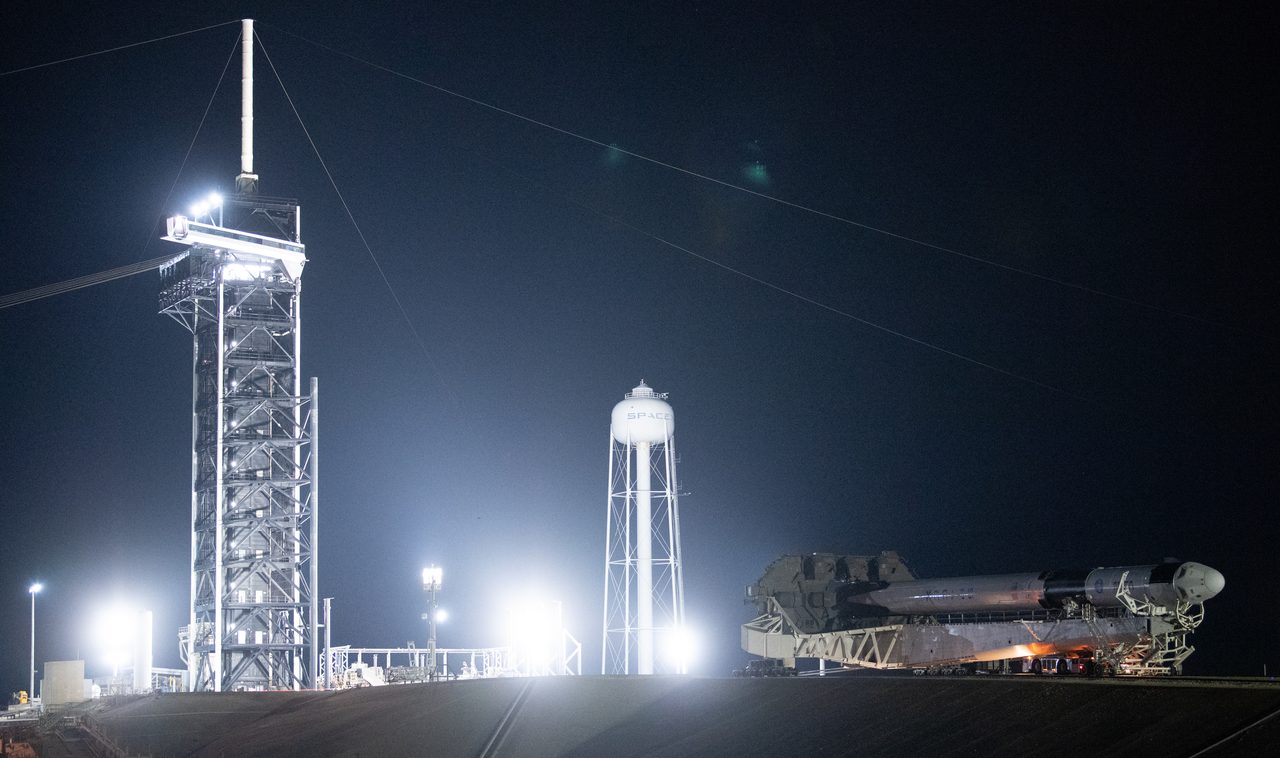
Long March 8A is scheduled to launch an unidentified payload on 25 October at 01:50 UTC. SpaceX's next listed flight is Falcon 9 Block 5 carrying Starlink Group 15-16 on 27 October at 04:45 UTC.
Further ahead, Starlink Group 15-18 is scheduled for 30 October at 04:02 UTC, followed by India's GSLV Mk II mission carrying IRNSS-1L (NVS-03) at 17:00 UTC, which remains to be confirmed. Orbital Radar's Launch Schedule distinguishes scheduled flights from missions still awaiting firm dates; launch times remain subject to change.
Frequently Asked Questions
Which rockets launched on 23 October 2026?
When is the next scheduled Starlink launch?
📎 Cite this article · data available
Orbital Radar Newsroom. (2026). Three launches in a day: Orbital Briefing, 24 October 2026. Orbital Radar. https://orbitalradar.com/blog/orbital-briefing-2026-10-24"Three launches in a day: Orbital Briefing, 24 October 2026." Orbital Radar, 24 October 2026, https://orbitalradar.com/blog/orbital-briefing-2026-10-24.@misc{orbitalradar_orbital_briefing_2026_10_24,
title = {Three launches in a day: Orbital Briefing, 24 October 2026},
author = {{Orbital Radar}},
year = {2026},
howpublished = {\url{https://orbitalradar.com/blog/orbital-briefing-2026-10-24}}
}