Artemis safety concerns: Orbital Briefing, 23 October 2026
NASA's safety panel raises concerns over Artemis IV and future access to low Earth orbit, while Dragon cargo reaches the ISS and satellite close approaches draw attention.
| Active satellites | 15,877 |
| Starlink active | 10,061 |
| Catalogued objects | 31,827 |
| Active close approaches | 17 |
| People in space | 10 |
NASA's safety advisory panel has raised concerns about Artemis IV and future access to low Earth orbit, bringing lunar exploration and the continuity of crewed orbital operations into the same safety discussion. The concerns are a warning about programme risks, not an announcement of a mission cancellation or a revised launch date.
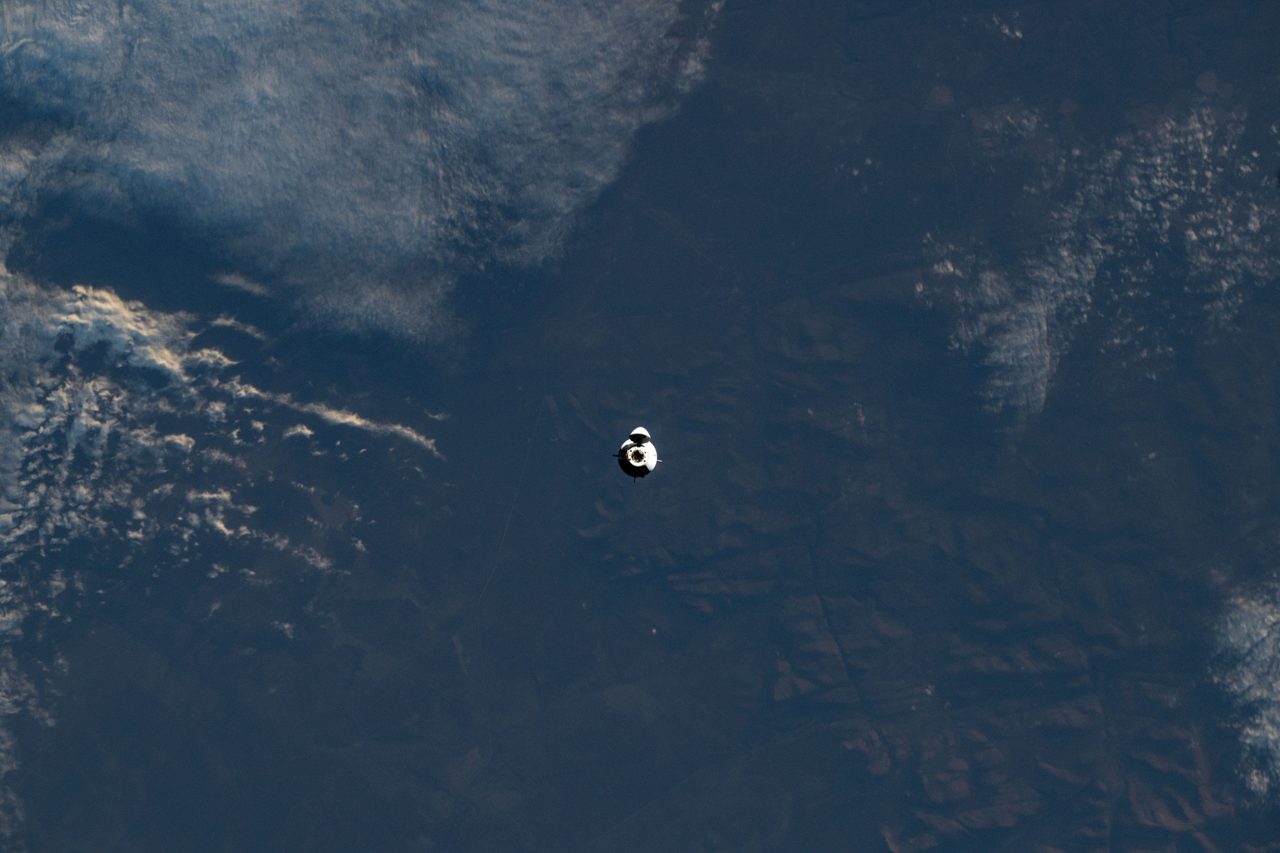
Meanwhile, the International Space Station (ISS) has received fresh cargo aboard Dragon as Crew-12 hands over to Crew-13. Resupply and crew transitions are routine necessities, but they also illustrate why dependable access to orbit matters beyond any individual mission. Orbital Radar's spacecraft directory provides context on the capsules serving these different roles.
Close approaches in a crowded orbit
Orbital Radar tracking data recorded 17 active satellite close approaches on 23 October 2026. Among the encounters being tracked, SATELIOT_6 and OBJECT BN have a reported minimum separation of approximately 0.75 km; ION SCV-026 and OBJECT CE have a reported minimum of approximately 1.52 km.
A close approach, also called a conjunction, is not a collision prediction. Assessing the danger requires more than the separation distance: uncertainty in the objects' positions and the geometry of their encounter also matter. These distances alone do not establish whether an avoidance manoeuvre is necessary.
Orbital Radar's live catalogue listed 15,877 active satellites on 23 October 2026. The Orbital Radar Debris Map offers a way to explore the wider population of tracked objects, while the space situational awareness toolkit helps explain how orbital traffic is monitored.
Starlink numbers and quiet space weather
Orbital Radar tracking data listed 10,061 operational Starlink satellites on 23 October 2026. A further 891 were raising their orbits and 193 were deorbiting, distinct phases that should not be confused with operational service. Their distribution can be explored through the Starlink Tracker.
Space weather is quiet by the current indicators: Kp, a measure of global geomagnetic disturbance, is 0, and the solar wind speed is 426 kilometres per second. Current risk indicators are green for low Earth orbit, geostationary orbit and the ISS, although those readings describe present conditions rather than guaranteeing what follows.
What to Watch
Rocket Lab's “We're Not Hawking Around” is scheduled for 23 October at 07:00 UTC. China's CASC also has launches scheduled for 10:15 UTC and 18:00 UTC that day. All are listed as go for launch, rather than confirmed successes; timings and status can be followed on the Orbital Radar Launch Schedule.
Further ahead, another CASC launch is scheduled for 25 October at 01:50 UTC, followed by SpaceX's Starlink (15-16) mission on 26 October at 05:00 UTC. Recent completed launches include Galactic Energy's Ceres-1S carrying Xiguang-4 01 on 21 October and SpaceX's Bandwagon 5 rideshare on 20 October, both bound for low Earth orbit.
Frequently Asked Questions
What concerns has NASA's safety panel raised about Artemis?
Which space launches are scheduled for 23 October 2026?
📎 Cite this article · data available
Orbital Radar Newsroom. (2026). Artemis safety concerns: Orbital Briefing, 23 October 2026. Orbital Radar. https://orbitalradar.com/blog/orbital-briefing-2026-10-23"Artemis safety concerns: Orbital Briefing, 23 October 2026." Orbital Radar, 23 October 2026, https://orbitalradar.com/blog/orbital-briefing-2026-10-23.@misc{orbitalradar_orbital_briefing_2026_10_23,
title = {Artemis safety concerns: Orbital Briefing, 23 October 2026},
author = {{Orbital Radar}},
year = {2026},
howpublished = {\url{https://orbitalradar.com/blog/orbital-briefing-2026-10-23}}
}