Lights in the sky: the Milky Way above Chile’s La Silla
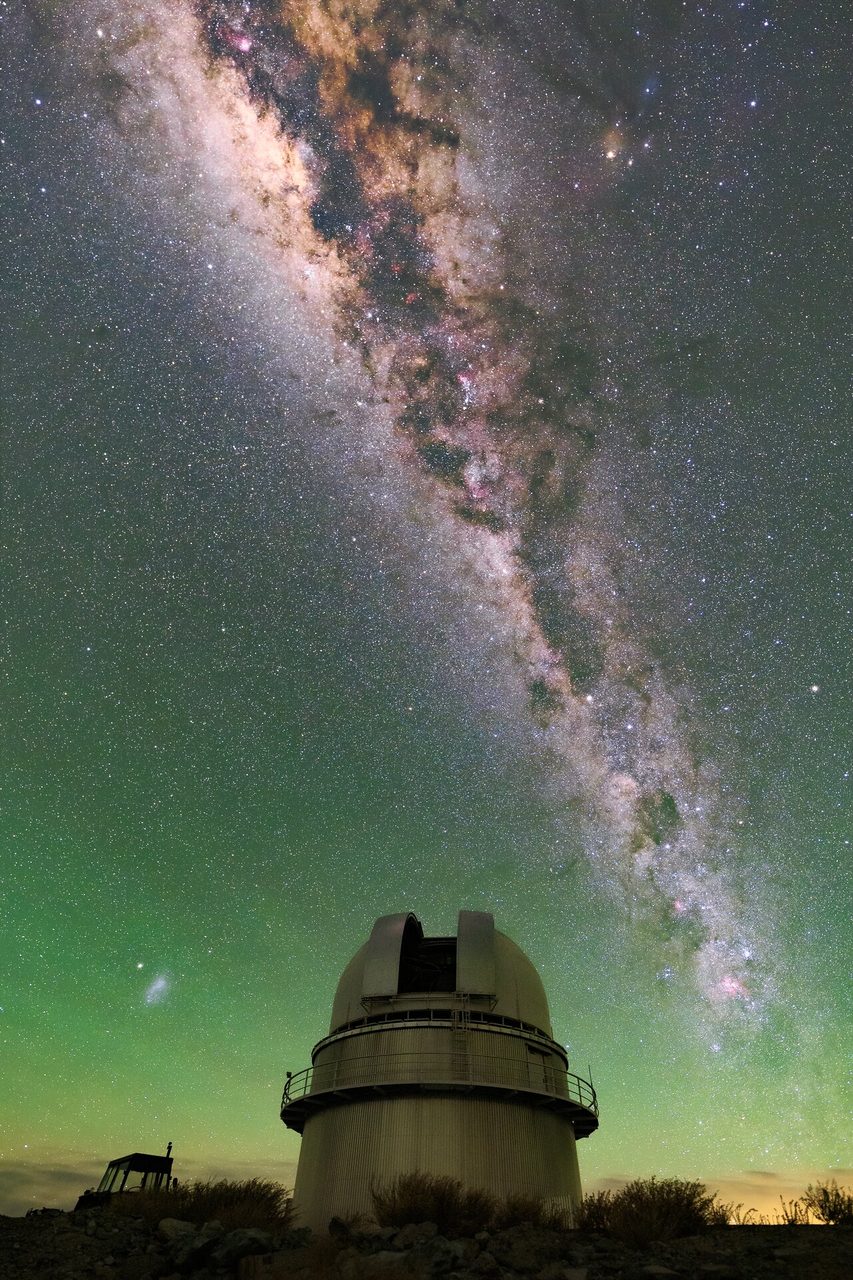
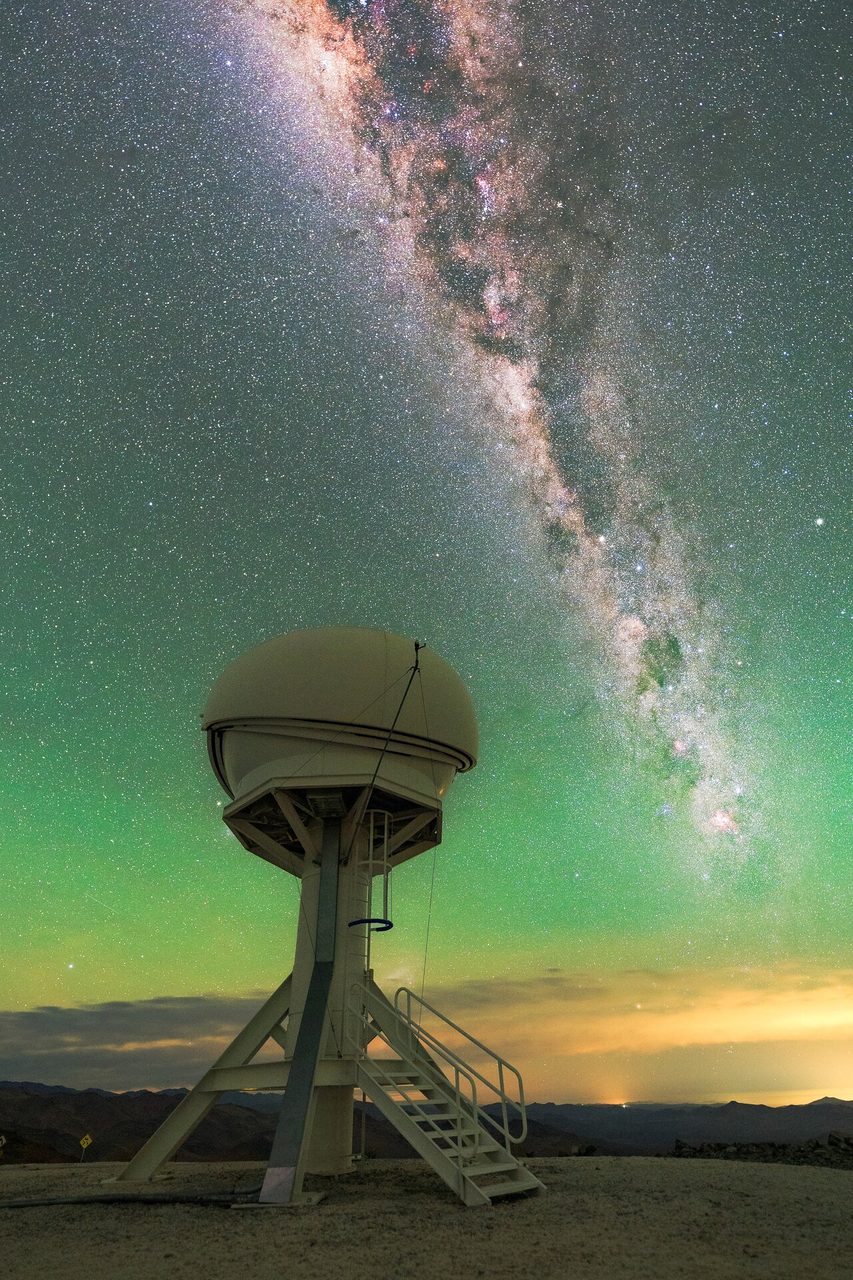
The Milky Way arches above the Danish telescope at La Silla, Chile. Pink nebulae, dark dust clouds and green airglow reveal different layers of the night sky.
| Active satellites | 16,690 |
| Catalogued objects | 32,110 |
| Starlink active | 9,849 |
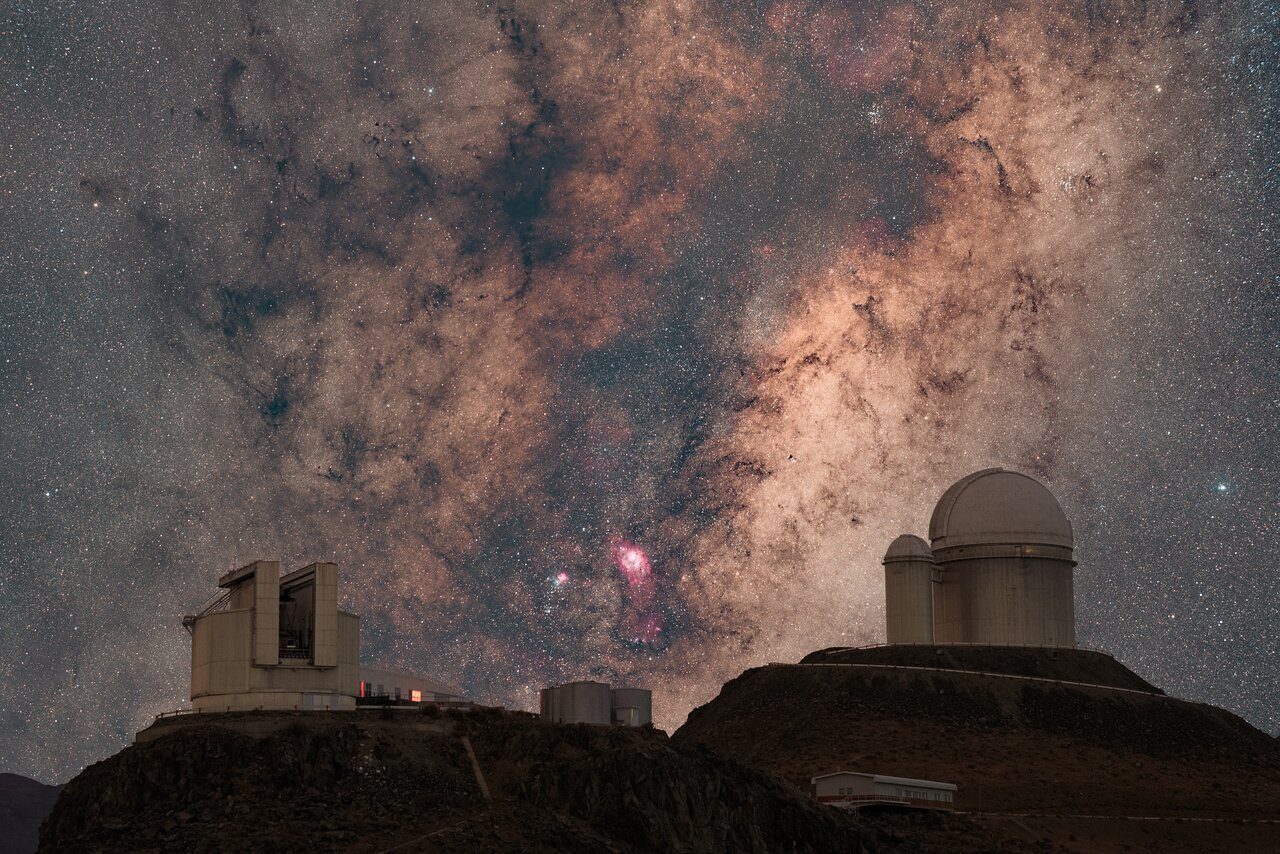
The Milky Way’s glowing band stretches across the Chilean sky above the Danish 1.54-metre telescope at ESO’s La Silla Observatory. Against that stellar backdrop, pink nebulae and dark clouds reveal a galaxy whose appearance depends as much on obscured light as on the stars themselves.
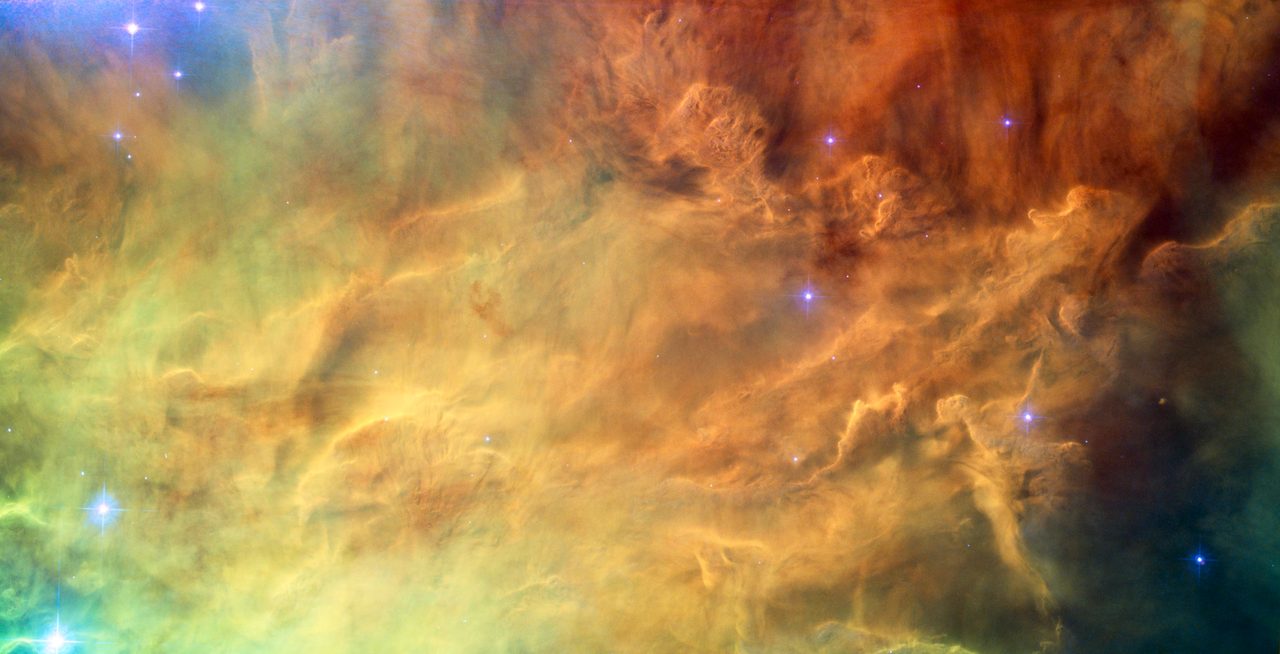
The Carina Nebula glitters pink towards the bottom of the band, while the bright, star-forming Lagoon Nebula appears near the top of the image. The Danish telescope has previously imaged these celestial regions. From La Silla’s southern-hemisphere location, the bright core of the Milky Way passes directly overhead.
The dark patches interrupting the glowing centre are clouds of interstellar dust and gas that absorb light travelling towards Earth. They are not empty gaps between the stars: they mark material standing between us and the luminous galactic background.
Atmospheric light, orbital traffic
The green glow belongs much closer to home. It is airglow (faint natural light produced in Earth’s atmosphere), caused by interactions between sunlight and atmospheric molecules. The publisher identifies it as a natural phenomenon rather than urban light pollution: too faint for the unaided eye, but visible in this photograph.
That distinction matters when interpreting a night-sky image: galactic light, atmospheric emission and artificial objects occupy very different distances. Orbital Radar tracking data records 16,690 active satellites in orbit as of 12 November 2026. Orbital Radar tracking data lists 9,849 active Starlink satellites as of 12 November 2026.
Those counts describe the wider orbital environment, not objects identified in this photograph. For your own observing session, the Orbital Radar Pass Predictor can help distinguish a predicted satellite passage from the celestial background. The photograph’s green glow, by contrast, is light generated within the atmosphere itself.
Frequently Asked Questions
What causes the green glow above La Silla Observatory?
Which nebulae appear in this Milky Way photograph?
Cite this article
Pick a style, then copy it or download it for your reference manager.Orbital Radar. (2026, November 12). Lights in the sky: the Milky Way above Chile’s La Silla. Retrieved November 12, 2026, from https://orbitalradar.com/blog/cosmic-gallery-2026-11-12
“Lights in the sky: the Milky Way above Chile’s La Silla.” Orbital Radar, 12 Nov. 2026, orbitalradar.com/blog/cosmic-gallery-2026-11-12. Accessed 12 Nov. 2026.
Orbital Radar (2026) Lights in the sky: the Milky Way above Chile’s La Silla. Available at: https://orbitalradar.com/blog/cosmic-gallery-2026-11-12 (Accessed: 12 November 2026).
Orbital Radar. “Lights in the sky: the Milky Way above Chile’s La Silla.” Last modified November 12, 2026. https://orbitalradar.com/blog/cosmic-gallery-2026-11-12.
@misc{orbitalradar_blog_cosmic_gallery_2026_11_12,
  author       = {{Orbital Radar}},
  title        = {Lights in the sky: the Milky Way above Chile’s La Silla},
  year         = {2026},
  month        = nov,
  howpublished = {\url{https://orbitalradar.com/blog/cosmic-gallery-2026-11-12}},
  url          = {https://orbitalradar.com/blog/cosmic-gallery-2026-11-12},
  urldate      = {2026-11-12},
  note         = {Accessed 2026-11-12}
}
TY - ELEC AU - Orbital Radar, TI - Lights in the sky: the Milky Way above Chile’s La Silla PY - 2026 DA - 2026/11/12 PB - Orbital Radar UR - https://orbitalradar.com/blog/cosmic-gallery-2026-11-12 Y2 - 2026/11/12 LA - en ER -
Live figures change, so keep the date you accessed the page. How to cite Orbital Radar