This Week in Orbit: Falcon 9 reaches 700 launches
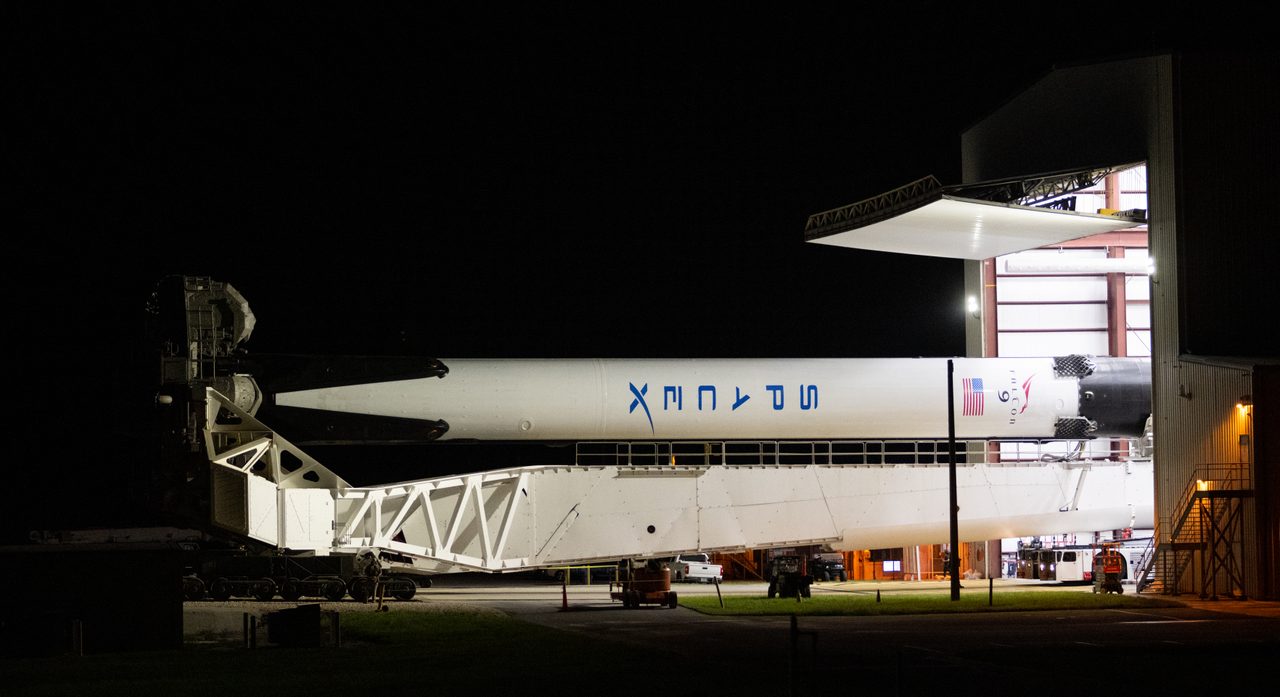
SpaceX closes October with a Falcon 9 milestone, India launches a navigation satellite, and close-approach tracking highlights why proximity alone does not establish collision risk.
| Active satellites | 15,954 |
| Starlink active | 9,929 |
| Catalogued objects | 31,933 |
| Active close approaches | 17 |
| People in space | 10 |
Week Overview
SpaceX closed October with its 700th Falcon 9 launch, marking the week's clearest launch milestone as Starlink deployments continued. India's successful navigation mission added another strand to a week that also brought developments in lunar planning, asteroid observations and research into ancient Mars.
Orbital Radar tracking data recorded 15,954 active satellites in orbit as of 1 November 2026. That expanding operational population provides the backdrop to the week's launches and conjunction monitoring: keeping spacecraft working increasingly means understanding their neighbours, not simply reaching orbit.
Beyond Earth orbit, ESA's Hera spacecraft distinguished its target asteroid pair separately for the first time, while studies of a rare Martian meteorite explored the planet's ancient crust and potentially warmer, wetter past. Civil-space spending also featured prominently, with reporting that government expenditure topped $42 billion in FY2026. Orbital Radar's Space Agencies directory at /space-agencies offers context on the organisations behind these programmes.
Launch Activity
Falcon 9 launched Starlink Group 15-18 successfully at 04:04 UTC on 31 October 2026, following the successful Starlink Group 15-16 mission at 07:25 UTC on 27 October. The missions sustained SpaceX's constellation deployment programme as October ended with the reported Falcon 9 milestone.
India's GSLV Mk II successfully launched IRNSS-1L, also designated NVS-03, at 18:21 UTC on 30 October. Navigation spacecraft support positioning and timing services, making this a different kind of infrastructure mission from the broadband deployments dominating SpaceX's activity.
SpaceX also completed three static fires in three days for Starship Flight 15. Static fires are engine tests conducted while the vehicle remains restrained on the ground; they are preparation milestones rather than launches or guarantees of an imminent flight. Completed missions can be explored through Orbital Radar's Launch Log at /satellite-launch-log, while the Launch Schedule at /launch-schedule separates upcoming opportunities from flights already recorded as successful.
Orbital Events
Orbital Radar tracking data showed 17 active close approaches under observation as of 1 November 2026. Among the listed encounters were TIANHUI 5A and TIANHUI 5B at approximately 0.68 km, TIANHUI 5C and TIANHUI 5D at approximately 0.72 km, and TERRA SAR X and TANDEM X at approximately 0.60 km.
These distances describe proximity, not collision probability. Assessing an encounter also requires the uncertainty in each orbit, relative motion and the operational relationship between the spacecraft; some satellites deliberately work close together. Entries involving generic names such as OBJECT A and OBJECT B are particularly unsuitable for confident conclusions based on distance alone.
INTELSAT 1002 and MEV-2 appeared with a separation rounded to approximately 0.00 km, illustrating why a near-zero catalogue value should not automatically be read as an impending impact. Orbital Radar's space situational awareness toolkit at /space-situational-awareness provides a broader setting for conjunction monitoring, alongside the Debris Map at /space-debris-map.
Space Weather
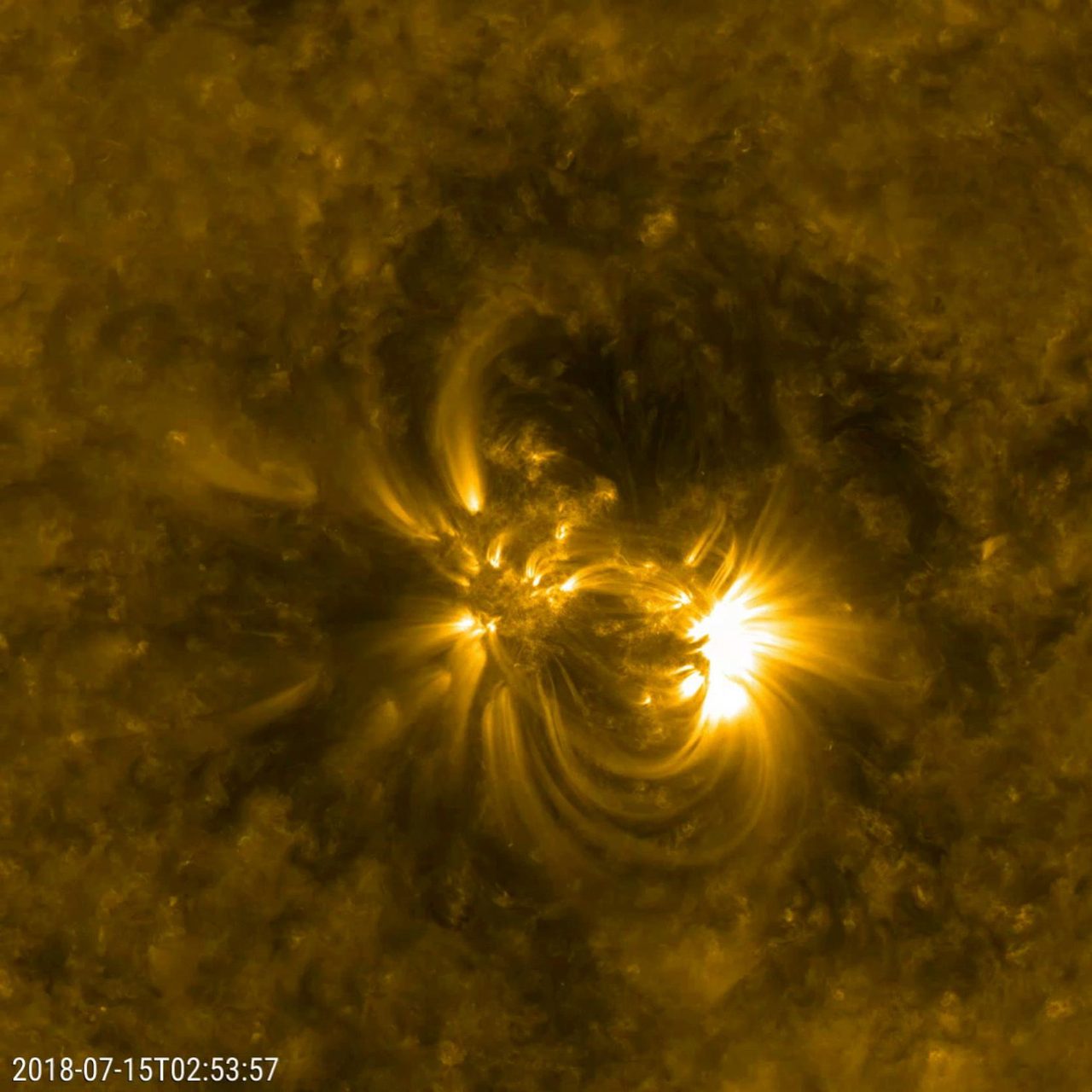
The latest space-weather readings indicated quiet geomagnetic conditions, with Kp at 0. Kp is an index of disturbances in Earth's magnetic field; a low reading generally points to limited geomagnetic disruption rather than an active storm.
Solar-wind speed was 488 kilometres per second, while Bz, the north–south component of the interplanetary magnetic field, was positive at 3.4 nanotesla. The direction of this field matters because a sustained southward orientation can favour stronger energy transfer into Earth's magnetic environment. No individual measurement, however, establishes how conditions will develop.
Risk indicators were green for low Earth orbit, geostationary orbit and the International Space Station. That is useful operational context, not a promise of uninterrupted communications or negligible atmospheric drag. Readers following how solar activity affects spacecraft can use Orbital Radar's Sun Globe at /sun and the explanations in its Space Academy at /academy.
Notable Satellites
Orbital Radar tracking data listed 9,929 operational Starlink satellites as of 1 November 2026. A further 1,035 were raising their orbits and 222 were deorbiting, underlining the distinction between spacecraft already delivering service and those moving into or out of their working orbits.
Those transitions matter when interpreting the constellation. Orbit raising changes a spacecraft's altitude after deployment, while deorbiting lowers its path towards atmospheric re-entry. Orbital Radar's Starlink Tracker at /starlink-tracker follows the network, and the Satellite Library at /library provides a route into individual spacecraft records.
NASA's Swift space telescope also drew attention over its eventual return to Earth. A re-entry location should not be treated as settled far in advance: changing atmospheric conditions and orbital evolution affect where a descending spacecraft will encounter the denser atmosphere. Orbital Radar's Re-entry Tracker at /satellite-reentry-tracker is the relevant place to follow that evolving orbital context.
Looking Ahead
Rocket Lab's Electron is scheduled to launch The Sea God Surveys, the iQPS Launch 9 mission, at 16:41 UTC on 2 November. Kinetica 2 follows on the schedule at 00:10 UTC on 3 November, with Falcon 9's USSF-432 mission listed for 01:42 UTC that day.
Later opportunities include Long March 2C at 16:00 UTC and Long March 12 at 21:15 UTC on 5 November, followed by Starlink Group 15-21 at 02:21 UTC on 6 November. Mir's demonstration flight and Ceres-2 remain marked to be confirmed. These are scheduled opportunities, not completed missions, and timings can change.
Beyond the launch calendar, Turkey's ambition for a Moon-orbiting mission in 2027 and discussion of Artemis III's multi-launch checkout sequence keep lunar operations in focus. Hera's developing asteroid observations also warrant attention: resolving separate bodies is a step towards examining their relationship more closely. Orbital Radar's Moon Globe at /moon and Near-Earth Objects page at /near-earth-objects provide complementary context.
Cite this article
Pick a style, then copy it or download it for your reference manager.Orbital Radar. (2026, November 4). This Week in Orbit: Falcon 9 reaches 700 launches. Retrieved November 4, 2026, from https://orbitalradar.com/blog/this-week-in-orbit-2026-11-01
“This Week in Orbit: Falcon 9 reaches 700 launches.” Orbital Radar, 4 Nov. 2026, orbitalradar.com/blog/this-week-in-orbit-2026-11-01. Accessed 4 Nov. 2026.
Orbital Radar (2026) This Week in Orbit: Falcon 9 reaches 700 launches. Available at: https://orbitalradar.com/blog/this-week-in-orbit-2026-11-01 (Accessed: 4 November 2026).
Orbital Radar. “This Week in Orbit: Falcon 9 reaches 700 launches.” Last modified November 4, 2026. https://orbitalradar.com/blog/this-week-in-orbit-2026-11-01.
@misc{orbitalradar_blog_this_week_in_orbit_2026_11_01,
  author       = {{Orbital Radar}},
  title        = {This Week in Orbit: Falcon 9 reaches 700 launches},
  year         = {2026},
  month        = nov,
  howpublished = {\url{https://orbitalradar.com/blog/this-week-in-orbit-2026-11-01}},
  url          = {https://orbitalradar.com/blog/this-week-in-orbit-2026-11-01},
  urldate      = {2026-11-04},
  note         = {Accessed 2026-11-04}
}
TY - ELEC AU - Orbital Radar, TI - This Week in Orbit: Falcon 9 reaches 700 launches PY - 2026 DA - 2026/11/04 PB - Orbital Radar UR - https://orbitalradar.com/blog/this-week-in-orbit-2026-11-01 Y2 - 2026/11/04 LA - en ER -
Live figures change, so keep the date you accessed the page. How to cite Orbital Radar