NASA seeks Hubble options: Orbital Briefing, 4 November
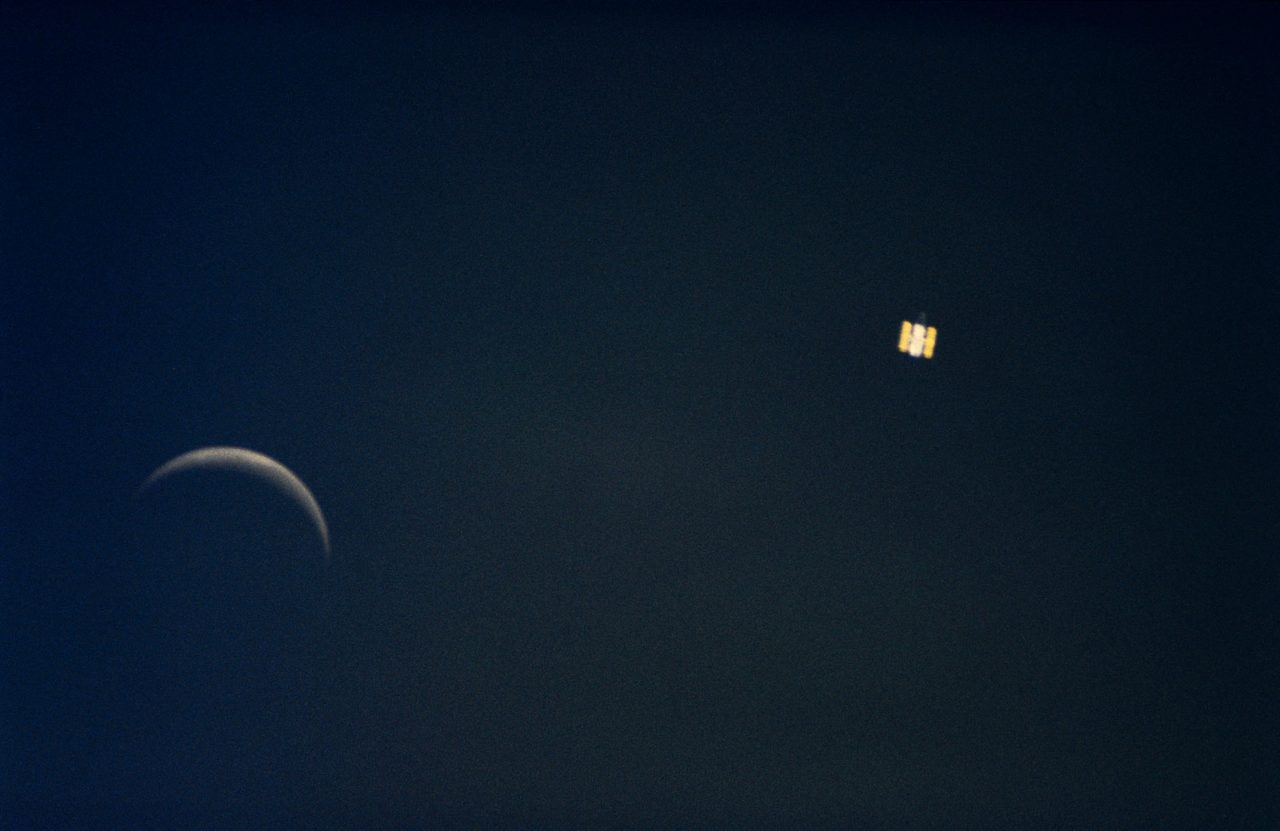
NASA is asking industry for ideas to save Hubble. Meanwhile, satellite close approaches remain under watch and Chinese launches lead the coming schedule.
| Active satellites | 16,613 |
| Starlink active | 9,903 |
| Catalogued objects | 31,992 |
| Active close approaches | 22 |
| People in space | 10 |
NASA is asking industry for ideas about saving the Hubble Space Telescope, putting the observatory’s future back in focus. The request is an exploratory step: seeking proposals is not the same as selecting a rescue mission, committing funding or establishing a flight schedule.
The central question is whether industry can offer a practical way to preserve Hubble’s scientific usefulness. Any eventual proposal would need to be judged on technical feasibility, risk and cost, rather than the appeal of extending a familiar mission. Orbital Radar’s space agencies directory provides context on NASA and the other organisations responsible for operating scientific spacecraft.
Close approaches demand context
Orbital Radar tracking data lists 22 active close approaches as of 4 November 2026. Among the encounters being followed, OBJECT A and OBJECT D have a listed minimum separation of approximately 0.97 km, while W-SERIES 8 and STARCATCHER-1 are listed at approximately 1.31 km. A close approach, also called a conjunction, means objects pass near each other in orbit; it does not by itself establish a collision threat.
Assessing the danger requires more than a separation figure: uncertainty in the objects’ positions and the geometry of their encounter matter too. Orbital Radar’s live catalogue records 16,613 active satellites as of 4 November 2026. The space situational awareness toolkit offers a way to explore this increasingly busy operating environment without treating every nearby passage as an impending collision.
Starlink scale, quiet space weather
Orbital Radar tracking data lists 9,903 operational Starlink satellites as of 4 November 2026. A further 1,062 are raising their orbits and 218 are deorbiting, meaning they are lowering their trajectories towards atmospheric re-entry. These categories describe different stages of fleet operations, rather than interchangeable measures of service capacity.
The Starlink Tracker places that constellation in its orbital context. Space weather is comparatively quiet: the Kp index, a measure of global geomagnetic disturbance, is 0, and the current risk indicators for low Earth orbit, geostationary orbit and the International Space Station are green. That is a description of present conditions, not a guarantee against later disruption.
What to Watch
The next scheduled launch is a Long March 2C carrying an unidentified payload on 5 November at 16:00 UTC, followed by Ceres-2 on 6 November at 23:35 UTC. Falcon 9’s USSF-432 mission follows on 7 November at 00:46 UTC. All are currently marked go for launch, though scheduled times remain subject to change; updates are listed on the Orbital Radar Launch Schedule.
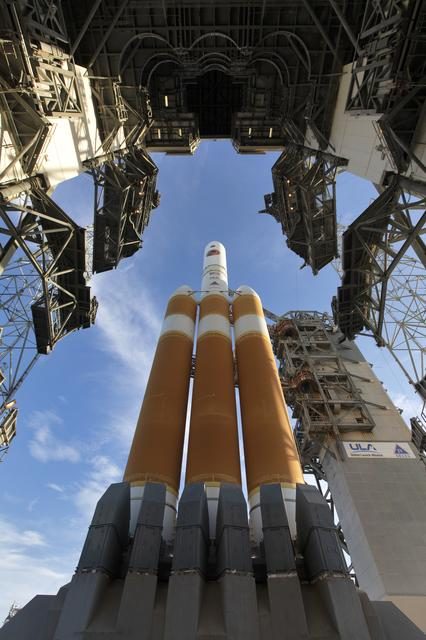
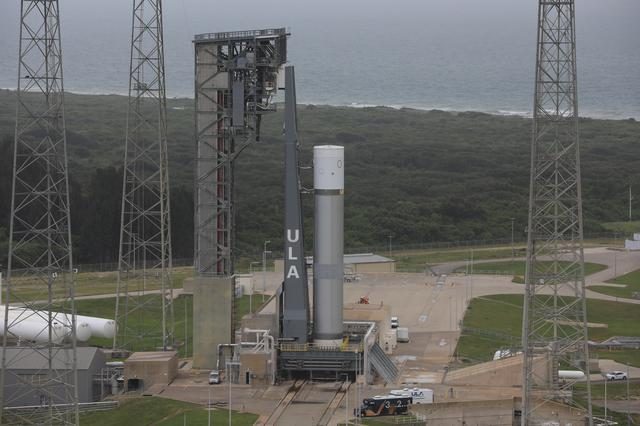
Further ahead, Vulcan’s Amazon Leo mission LV-01 is scheduled no earlier than 13 November, with a listed time of 17:54 UTC. Amazon Leo, formerly Project Kuiper, has placed 396 production satellites into orbit but has not opened consumer service. Amazon says initial service will begin before the end of 2026, making deployment progress a separate question from commercial availability.
Frequently Asked Questions
Has NASA approved a mission to save Hubble?
When is the next Amazon Leo satellite launch?
Cite this article
Pick a style, then copy it or download it for your reference manager.Orbital Radar. (2026, November 4). NASA seeks Hubble options: Orbital Briefing, 4 November. Retrieved November 4, 2026, from https://orbitalradar.com/blog/orbital-briefing-2026-11-04
“NASA seeks Hubble options: Orbital Briefing, 4 November.” Orbital Radar, 4 Nov. 2026, orbitalradar.com/blog/orbital-briefing-2026-11-04. Accessed 4 Nov. 2026.
Orbital Radar (2026) NASA seeks Hubble options: Orbital Briefing, 4 November. Available at: https://orbitalradar.com/blog/orbital-briefing-2026-11-04 (Accessed: 4 November 2026).
Orbital Radar. “NASA seeks Hubble options: Orbital Briefing, 4 November.” Last modified November 4, 2026. https://orbitalradar.com/blog/orbital-briefing-2026-11-04.
@misc{orbitalradar_blog_orbital_briefing_2026_11_04,
  author       = {{Orbital Radar}},
  title        = {NASA seeks Hubble options: Orbital Briefing, 4 November},
  year         = {2026},
  month        = nov,
  howpublished = {\url{https://orbitalradar.com/blog/orbital-briefing-2026-11-04}},
  url          = {https://orbitalradar.com/blog/orbital-briefing-2026-11-04},
  urldate      = {2026-11-04},
  note         = {Accessed 2026-11-04}
}
TY - ELEC AU - Orbital Radar, TI - NASA seeks Hubble options: Orbital Briefing, 4 November PY - 2026 DA - 2026/11/04 PB - Orbital Radar UR - https://orbitalradar.com/blog/orbital-briefing-2026-11-04 Y2 - 2026/11/04 LA - en ER -
Live figures change, so keep the date you accessed the page. How to cite Orbital Radar