Spiral in Sky After SpaceX Launch: What Causes It?
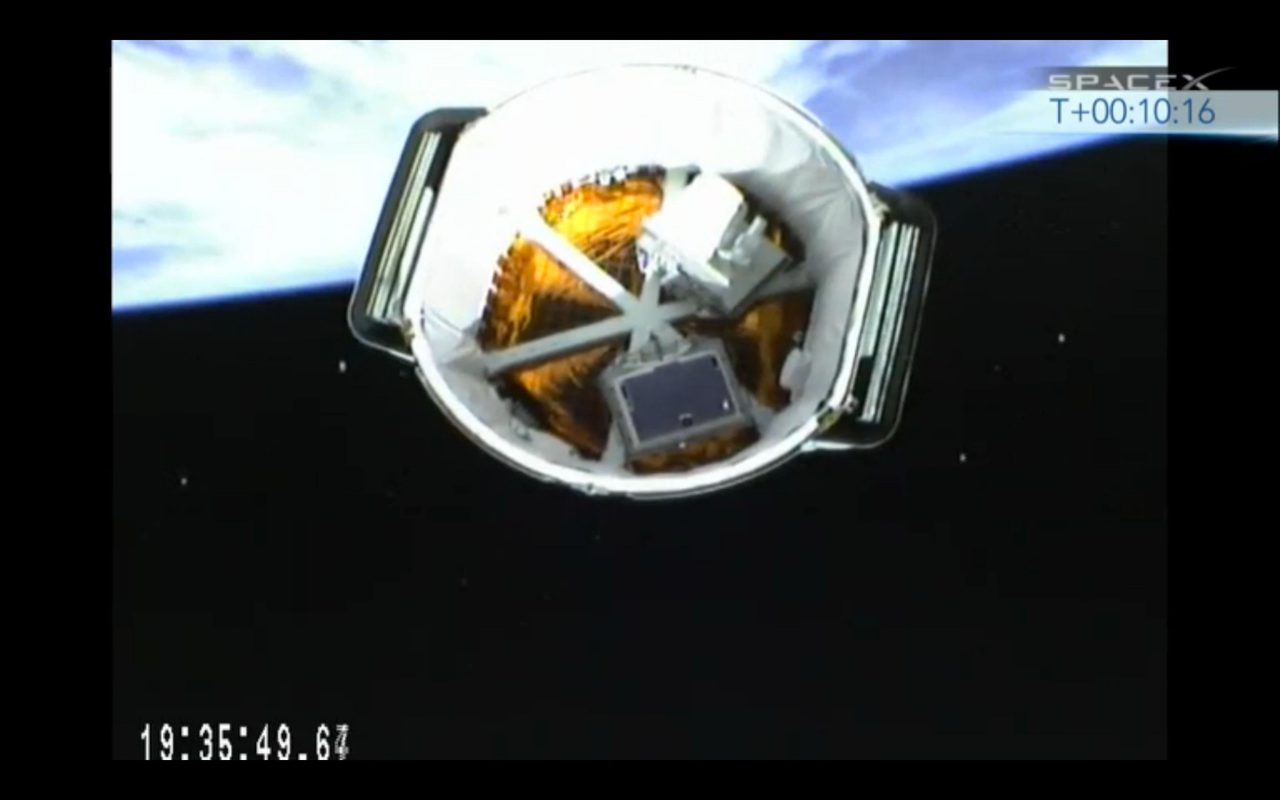
A luminous spiral after a SpaceX launch can be sunlight catching material released by a rocket’s upper stage. Its shape reflects how that material spreads as the stage moves and rotates.
| Active satellites | 16,751 |
| Starlink active | 9,589 |
| Catalogued objects | 32,123 |
| Active close approaches | 21 |
| People in space | 13 |
A spiral in the sky after a SpaceX launch is usually sunlight illuminating gas and particles released by the rocket’s upper stage (the section that delivers payloads into orbit). Rotation helps spread that material into a spiral, creating a luminous cloud rather than a solid object.
The release can accompany venting of leftover propellant or an engine firing to lower the stage’s orbit. The visible cloud alone does not establish which operation occurred, and a spiral is not, by itself, evidence of a rocket crashing.
Observers can be in darkness while the high-altitude cloud remains sunlit. Launch timing, viewing direction and the cloud’s changing appearance are the main identification clues; Orbital Radar’s launch schedule provides a starting point for matching a sighting to a launch.
Orbital Radar’s live catalogue includes 2223 rocket bodies as of 29 November 2026. The wider catalogue contains 32123 objects, including payloads and debris, as of 29 November 2026, according to Orbital Radar tracking data.
What makes a SpaceX rocket leave a spiral in the sky?
A spiral after a SpaceX launch can form when the Falcon 9 upper stage releases material while rotating, creating an expanding cloud that catches sunlight. The upper stage is the rocket section that continues towards orbit after separating from the reusable booster, as explained in Orbital Radar’s Falcon 9 guide.
Material can escape through venting: the release of residual propellant (fuel or oxidiser left in the stage’s tanks). This differs from engine exhaust, which is produced when propellant burns in the engine. Either process can release material that becomes visible in sunlight, but a spiral alone does not identify which occurred.
If the stage rotates during a release, the direction of the escaping material can sweep around. As successive streams expand into the surrounding near-vacuum, they can trace a spiral rather than a straight plume. Not every upper stage rotates during a release, and not every release produces this shape.
Orbital Radar tracking data lists 2,223 rocket bodies in orbit as of 29 November 2026. Those bodies are distinct from the dispersed material responsible for a luminous cloud.
Orbital Radar tracking data lists 32,123 catalogued objects, including debris, as of 29 November 2026. A visible spiral is not one solid object: it is an expanding cloud, and its precise appearance cannot by itself establish the stage’s operational sequence or prove that a particular manoeuvre took place.
Why does the spiral glow when the ground is dark?
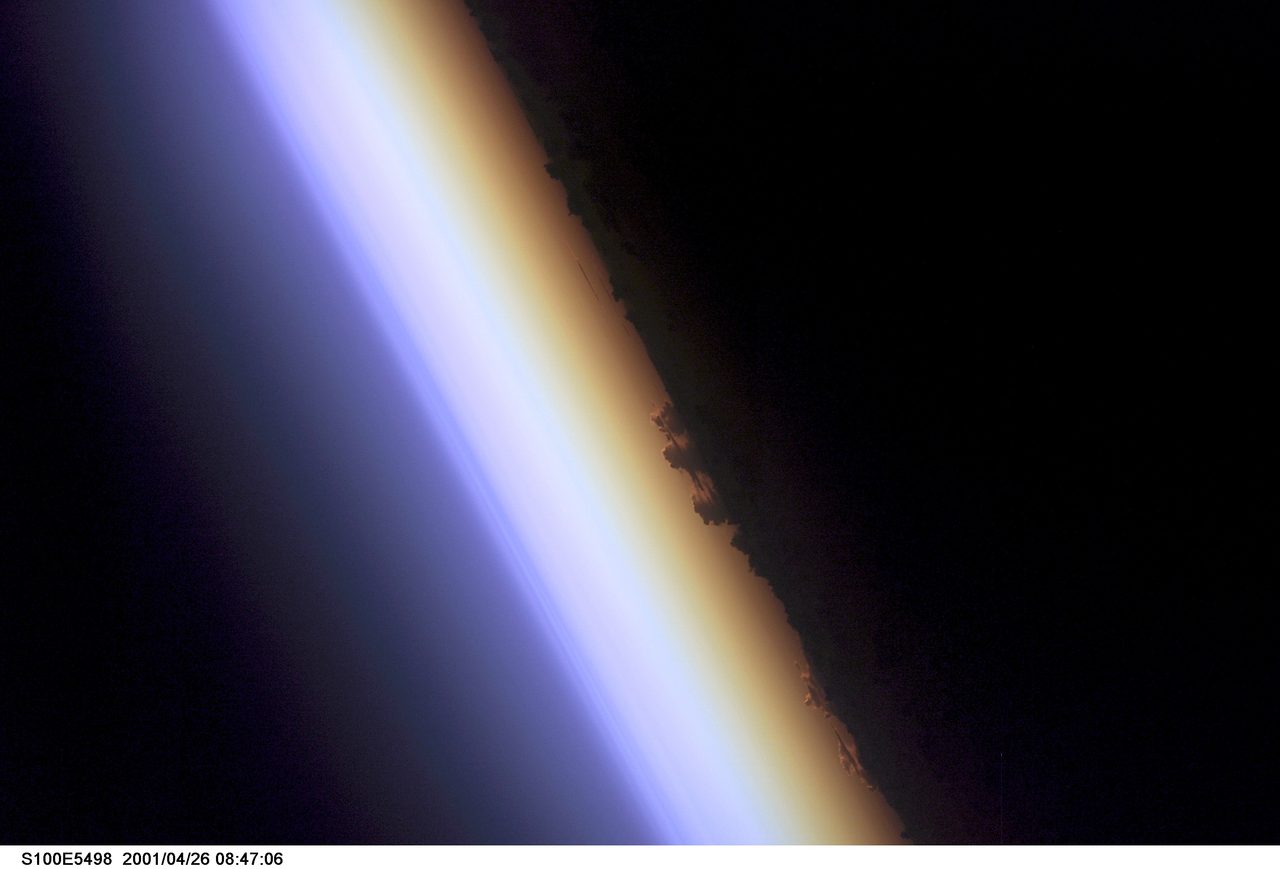
The spiral glows because its high-altitude cloud can remain in sunlight after the ground below has entered darkness. Material released by a rocket reflects and scatters that sunlight towards the observer, much as a high cloud can stay bright after sunset.
Earth’s shadow does not engulf everything overhead as soon as the Sun sets locally: altitude and viewing direction determine what remains illuminated. Twilight therefore offers favourable geometry—a sunlit cloud against a darkening sky—but spirals are not restricted to dusk or dawn.
The broad, illuminated cloud is distinct from the bright engine plume that may be visible while an engine fires. The whole spiral need not be actively burning; the distinction matters when interpreting sightings associated with a Falcon 9 launch.
Illumination angle affects how much scattered light reaches you, while expansion generally spreads that light over a larger area. Haze and background sky brightness can wash out the pattern, and sunlight’s path through the atmosphere can influence its apparent colour.
Orbital Radar tracking data lists 2,223 rocket bodies as of 29 November 2026. Orbital Radar’s live catalogue contains 32,123 tracked objects as of 29 November 2026. Those counts describe catalogued objects, not diffuse clouds: a visible spiral is illuminated material, rather than a solid structure.
When and where can you see a launch spiral?
You can see a launch spiral far from the spaceport if the upper stage’s flight path and release timing align with clear, dark viewing conditions. The upper stage can travel far beyond the launch site before releasing material, so proximity to the launch pad is not a reliable guide.
Orbital Radar tracking data lists 2,223 rocket bodies in orbit as of 29 November 2026. A launch time marks lift-off, not the later moment when an upper stage vents material or performs disposal operations. Those timings depend on the mission; there is no universal delay after lift-off to use as a viewing rule.
The release must remain sunlit while your sky is sufficiently dark for the cloud to stand out. Its position along the flight path must also place it above your horizon, with an unobstructed view towards that part of the sky. Cloud, haze, terrain and buildings can prevent a sighting.
A high-altitude cloud can be visible across a broad region, but that does not guarantee visibility from every location within it. Orbital Radar tracking data lists 32,123 catalogued objects as of 29 November 2026. Neither that catalogue nor an entry on the Orbital Radar launch schedule forecasts a spiral: the release, illumination and local viewing conditions must coincide.
Why does the spiral grow, drift and eventually disappear?
The spiral grows because released gas and particles spread out, distributing reflected sunlight across an increasingly large patch of sky. Its surface brightness (brightness per apparent area) therefore decreases, so a distinct spiral can become a broad, faint haze.
Expansion is separate from movement across the sky. The cloud inherits the upper stage’s orbital motion while its material spreads relative to that shared path; meanwhile, the observer’s line of sight changes as Earth turns and the cloud travels. Together, these effects can make the pattern grow, drift and change its apparent shape.
Disappearance does not mean the material has fallen to the ground. The cloud may become too diffuse to distinguish, or enter Earth’s shadow and lose the sunlight that made it visible. There is no universal visibility countdown: release conditions, illumination, viewing geometry, haze and local light pollution all affect how long it remains detectable.
Orbital Radar’s live catalogue contains 2,223 rocket bodies as of 29 November 2026. Orbital Radar tracking data lists 32,123 catalogued objects overall. Those counts are not counts of visible clouds; Orbital Radar’s launch schedule provides launch context, not a fixed lifetime for a spiral.
How can you tell a rocket spiral from other lights in the sky?
A rocket spiral looks like a diffuse, expanding swirl; a Starlink train appears as separate points of light moving along a similar track. Look for whether the glow spreads into a cloud or remains a procession of distinct dots.
Orbital Radar tracking data lists 9589 active Starlink satellites as of 29 November 2026. A recently deployed group can resemble a dotted line, but its individual lights do not unwind into a luminous spiral.
An aircraft contrail is usually a linear trail behind an aircraft, although wind can distort it. A meteor typically produces a brief, fast streak; any lingering luminous trail is different from the meteor itself. A re-entry can produce several bright fragments moving together, often with separate glowing trails, rather than a smooth, expanding cloud.
Orbital Radar's live catalogue includes 2223 rocket bodies as of 29 November 2026. That population is background context, not evidence that a particular sighting is a rocket body returning to Earth. Aurora more often forms broad curtains, bands or arcs, sometimes changing across a large area of sky.
Rocket plumes can also look like comets, fans or jellyfish without forming spirals. These shapes can share the same sunlight-scattering mechanism: material released high above Earth catches sunlight while the observer is in darkness.
Orbital Radar's guide to identifying lights in the sky offers broader comparisons. Shape alone cannot prove SpaceX was responsible: the sighting's time, location and direction must also fit a launch or rocket-stage operation. The Orbital Radar launch schedule provides context, not confirmation by itself.
How can you check a spiral sighting on Orbital Radar?
Check a spiral sighting by recording what you saw, then comparing its timing and position with launches and published mission activity on Orbital Radar. A useful report needs more than a photograph: preserve the details that allow someone else to reconstruct your view.
- Record the observation date and time, including the time zone; note whether the camera clock was accurate.
- Give your location, ideally with coordinates or a nearby town.
- Note your viewing direction and how high above the horizon the spiral appeared.
- Describe its apparent motion against stars or landmarks, including whether it expanded while its centre seemed stationary.
- Keep original photographs or video, with their metadata, rather than only edited copies or screenshots.
Start with Orbital Radar’s launch schedule to identify missions around the observation time, including launches before the sighting. Then use the historical launch database for mission context, checking the launch site, vehicle and destination orbit where available.
Compare the launch trajectory with your location and viewing direction, then look for published upper-stage activity (operations by the rocket section that places payloads in orbit). A launch on the same date is only a lead: the stage’s position and the timing of any reported venting must also fit.
Orbital Radar’s live catalogue listed 32,123 tracked objects as of 29 November 2026. That scale makes timing and viewing geometry more useful than guessing from a photograph.
These pages help investigate a report, but do not guarantee a live prediction or identification of a transient venting cloud.
Does a spiral mean the rocket is crashing or people are in danger?
No. A sunlit release at orbital altitude is not, by itself, evidence that a SpaceX rocket is crashing or that anything is descending towards you. The spiral shows material spreading through space and reflecting sunlight; its appearance alone does not establish whether the launch succeeded or failed.
The visible cloud is distinct from the rocket body that released it. It is also distinct from any solid fragments that might survive a later re-entry (a return through Earth's atmosphere). A cloud can appear enormous because dispersed material remains visible across a wide area: its apparent size does not measure the risk on the ground.
Orbital Radar tracking data counted 2,223 rocket bodies in its tracked-object catalogue as of 29 November 2026. That is a catalogue population, not a count of imminent re-entries, and it does not mean those objects pose an immediate threat.
A photograph cannot establish a stage's trajectory, disposal outcome or potential debris footprint—the area where surviving fragments might land. Assessing those questions requires tracking and mission information, not the cloud's shape or brightness. Orbital Radar's launch schedule provides mission context, but a launch listing alone cannot establish the outcome of a particular stage's disposal.
Is a fuel dump the same thing as a deorbit burn?
No. A fuel dump releases remaining propellant; a deorbit burn fires an engine to change a spacecraft’s trajectory towards atmospheric re-entry. Both can occur during a rocket stage’s disposal sequence, but they are not interchangeable.
Venting propellant can help remove stored energy from a spent stage, reducing the potential for a later rupture or explosion. A disposal burn instead changes the stage’s motion: the engine directs thrust to put it on a different trajectory. Seeing released material does not, by itself, establish that such a burn has happened.
Orbital Radar’s deorbit glossary entry explains deorbiting as deliberately lowering an orbit so that the object encounters denser atmosphere and atmospheric drag brings it into re-entry. Some disposal trajectories produce relatively prompt re-entry; other lowered orbits take longer to decay under drag.
Orbital Radar tracking data lists 2,223 rocket bodies among catalogued objects as of 29 November 2026. That category is distinct from satellites undergoing end-of-life disposal. Orbital Radar tracking data lists 258 Starlink satellites as deorbiting as of 29 November 2026. Neither catalogue figure determines what happened during an individual spiral sighting.
A spiral after a SpaceX launch therefore cannot establish whether a stage has completed a disposal burn, entered a slowly decaying orbit or begun a trajectory towards prompt re-entry. Its appearance alone cannot distinguish those outcomes. Confirmation requires mission-specific information about the stage’s operations and trajectory, not merely a familiar spiral shape.
Key takeaways
- A post-launch spiral is usually sunlight illuminating material released by an upper stage, with rotation helping create the pattern.
- Venting and deorbit burns are different operations, and the cloud’s appearance alone cannot identify which occurred.
- Visibility depends on the flight path, release timing and sunlight geometry, so a nearby launch is neither necessary nor sufficient.
- Record the sighting’s time, location and direction, then use Orbital Radar’s launch schedule and launch database to investigate a possible match.
Frequently Asked Questions
Can you see a SpaceX spiral from an aeroplane?
Why does a SpaceX spiral look brighter in phone photographs?
Can a SpaceX spiral make a sound on the ground?
Do rockets other than SpaceX Falcon 9 produce sky spirals?
Can the same SpaceX launch produce both a spiral and a Starlink train?
Cite this article
Pick a style, then copy it or download it for your reference manager.Orbital Radar. (2026, November 29). Spiral in Sky After SpaceX Launch: What Causes It? Retrieved November 29, 2026, from https://orbitalradar.com/blog/what-are-the-spirals-seen-in-the-night-sky-after-spacex-launches
“Spiral in Sky After SpaceX Launch: What Causes It?” Orbital Radar, 29 Nov. 2026, orbitalradar.com/blog/what-are-the-spirals-seen-in-the-night-sky-after-spacex-launches. Accessed 29 Nov. 2026.
Orbital Radar (2026) Spiral in Sky After SpaceX Launch: What Causes It? Available at: https://orbitalradar.com/blog/what-are-the-spirals-seen-in-the-night-sky-after-spacex-launches (Accessed: 29 November 2026).
Orbital Radar. “Spiral in Sky After SpaceX Launch: What Causes It?” Last modified November 29, 2026. https://orbitalradar.com/blog/what-are-the-spirals-seen-in-the-night-sky-after-spacex-launches.
@misc{orbitalradar_blog_what_are_the_spirals_seen_in_the_night_sky_after_spacex_launches,
  author       = {{Orbital Radar}},
  title        = {Spiral in Sky After SpaceX Launch: What Causes It?},
  year         = {2026},
  month        = nov,
  howpublished = {\url{https://orbitalradar.com/blog/what-are-the-spirals-seen-in-the-night-sky-after-spacex-launches}},
  url          = {https://orbitalradar.com/blog/what-are-the-spirals-seen-in-the-night-sky-after-spacex-launches},
  urldate      = {2026-11-29},
  note         = {Accessed 2026-11-29}
}
TY - ELEC AU - Orbital Radar, TI - Spiral in Sky After SpaceX Launch: What Causes It? PY - 2026 DA - 2026/11/29 PB - Orbital Radar UR - https://orbitalradar.com/blog/what-are-the-spirals-seen-in-the-night-sky-after-spacex-launches Y2 - 2026/11/29 LA - en ER -
Live figures change, so keep the date you accessed the page. How to cite Orbital Radar