Why Can You Only See Satellites at Night? Twilight Explained
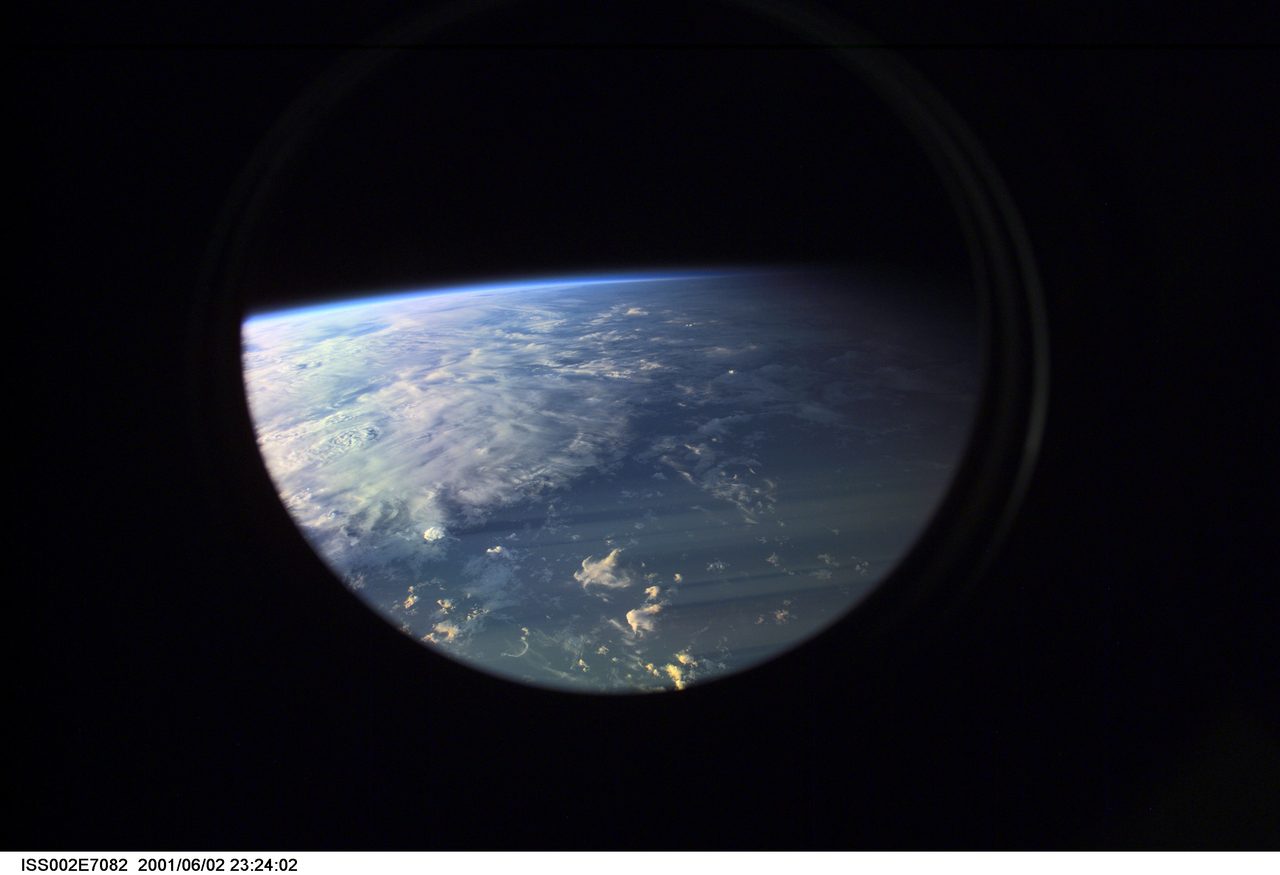
Satellites shine by reflected sunlight, not because night switches them on. The best views come when the ground is dark but the spacecraft overhead remains sunlit.
| Active satellites | 15,952 |
| Starlink active | 9,906 |
| Catalogued objects | 31,976 |
| Active close approaches | 23 |
| People in space | 10 |
You usually see satellites at night because a dark sky makes the sunlight they reflect easier to spot, especially around dawn and dusk. It is not an absolute rule: a satellite must be sunlit and bright enough to stand out against the sky above you.
Sunset on the ground does not necessarily mean sunset for a spacecraft overhead. While your surroundings grow dark, a satellite high above Earth can still catch sunlight, creating a window for viewing.
Orbital Radar tracking data lists 15,952 active satellites as of 3 November 2026. Of those, 9,906 are active Starlink satellites as of 3 November 2026, according to Orbital Radar tracking data.
Not all will be visible: satellites crossing Earth’s shadow, the cone of darkness cast away from the Sun, lose their direct sunlight. That geometry explains twilight viewing windows and passes that disappear halfway across the sky; the sections below explain both, then show how to find a visible pass with the Orbital Radar Pass Predictor.
Why can a satellite still catch sunlight after sunset?
A satellite can still catch sunlight after sunset because its altitude keeps it outside Earth’s shadow even when the ground beneath it has turned away from the Sun. Sunset marks the moment the Sun drops below your horizon; it does not mean everything above you has entered darkness.
Ordinary satellite spotting relies on reflected sunlight, not a spacecraft producing its own visible light. Sunlight strikes the spacecraft and some reflects towards your eyes, making it look like a moving point of light against the darker sky.
Side-on illustration, not to scale:
Sun → → → sunlight → → → illuminated satellite
Sun → → → Earth │ shadow extending away from the Sun
Dark observer on Earth’s evening edge ↗ clear view of satellite
The useful alignment is a dark observer, an illuminated spacecraft and a clear line of sight between them. Earth blocks direct sunlight from reaching the observer, while sunlight still passes above the planet’s curved edge to reach the satellite.
Orbital Radar tracking data lists 15,952 active satellites in orbit as of 3 November 2026. That population is not a count of objects visible from your location.
Orbital Radar tracking data lists 9,906 active Starlink satellites as of 3 November 2026. Whether an individual spacecraft is visible depends on the lighting geometry; Orbital Radar’s Pass Predictor helps identify suitable passes. Once a spacecraft enters Earth’s shadow, its ordinary reflected-sunlight appearance fades.
Why are dawn and dusk usually best for satellite spotting?
Dawn and dusk usually offer the best balance: the sky is dark enough to reveal a moving point of light, while satellites overhead can still catch sunlight. Twilight is the interval when the Sun is below the horizon but its scattered light still brightens the sky. The useful overlap is between darkness for the observer and sunlight at orbital altitude.
In the evening, the ground enters darkness while some satellites remain sunlit above it. As twilight fades, those satellites become easier to distinguish against the sky, until they enter Earth's shadow and lose their direct illumination. Orbital Radar tracking data lists 15,952 active satellites in orbit as of 3 November 2026.
At dawn, the sequence reverses: satellites can emerge from Earth's shadow into sunlight before the Sun rises for the observer. They may stand out against the still-dark sky, then become harder to detect as daylight spreads. Orbital Radar tracking data lists 9,906 active Starlink satellites as of 3 November 2026.
Neither total guarantees a visible pass, and there is no universal viewing window after sunset or before sunrise. Orbital altitude, season, latitude and the direction of the pass all change whether a satellite remains illuminated while crossing your sky; higher satellites can remain sunlit farther into the night. Orbital Radar's Pass Predictor helps identify that overlap for your location, rather than relying on a fixed twilight timetable.
What is Earth's shadow, and how does it hide satellites?
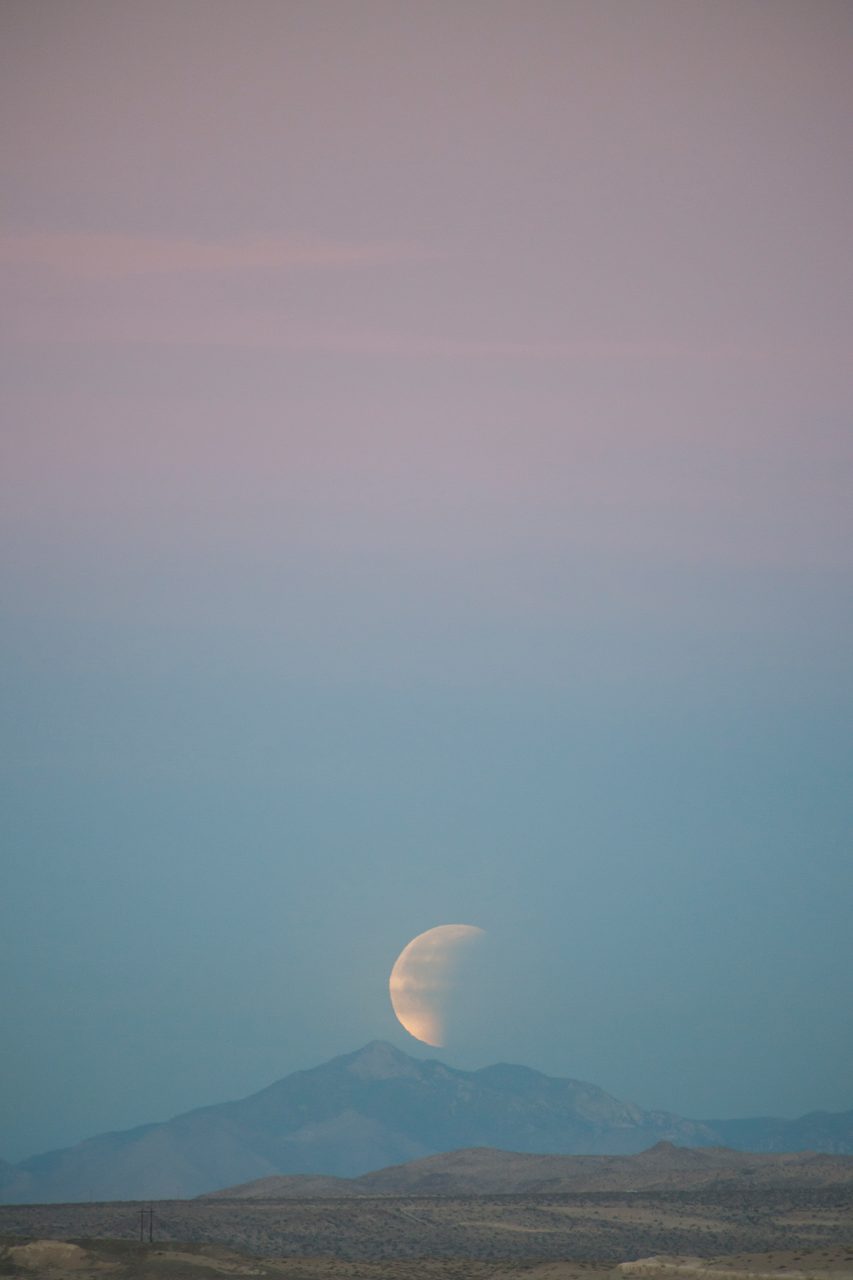
Earth's shadow is the region extending away from the Sun where Earth blocks sunlight. An ordinary satellite entering its fully shaded interior loses the direct sunlight that makes it visible, becoming effectively invisible to the unaided eye even though it continues along its orbit.
The shadow has two parts: the umbra (the fully shaded region) and the penumbra (the partially shaded region surrounding it). Inside the umbra, Earth hides the entire solar disc; in the penumbra, it hides only part of it. Orbital Radar's Earth's shadow glossary entry explains this geometry.
Orbital Radar tracking data lists 15,952 active satellites in orbit as of 3 November 2026. For ordinary satellite spotting, the important distinction is between a spacecraft being overhead and being illuminated: its continued presence does not guarantee that you can see it.
The same geometry produces lunar eclipses when the Moon passes through Earth's shadow. A penumbral eclipse involves partial shading, while the Moon's passage into the umbra produces the more conspicuous darkening associated with partial or total lunar eclipses.
Orbital Radar tracking data lists 9,906 active Starlink satellites as of 3 November 2026. Like other solar-powered spacecraft, they must operate without direct solar power during eclipse, drawing on batteries until sunlight returns. For observers, this shadow helps explain why visible satellite passes favour twilight, rather than simply any hour when the sky is dark.
Why do satellites disappear halfway across the sky?
A satellite can disappear halfway across the sky because it enters Earth's shadow while still well above your horizon. Once direct sunlight no longer reaches it, the reflected light that made it visible fades, even though the spacecraft continues along its orbit.
The pass therefore need not end at the skyline: a moving point may dim and vanish against an otherwise clear sky. During a morning pass, the reverse can happen: a spacecraft emerges from shadow into sunlight and becomes visible partway across the sky.
Not every fade marks shadow entry. Thin cloud can obscure a satellite, a changing reflection angle can send less sunlight towards you, and increasing distance can make it dimmer. The apparent track alone cannot distinguish all these possibilities.
A fading point is not evidence of a manoeuvre, engine shutdown or atmospheric re-entry. Spacecraft routinely continue operating on batteries inside Earth's shadow; disappearing from view does not mean they have stopped working or left orbit.
Orbital Radar tracking data lists 15,952 active satellites as of 3 November 2026. Orbital Radar tracking data lists 9,906 active Starlink satellites as of 3 November 2026. Neither count indicates how many are visible from your location: use the Orbital Radar pass predictor to check an identified spacecraft's predicted visible pass against what you observed.
Can you see satellites in daylight or in the middle of the night?
Yes: satellites can sometimes be seen in daylight, and some remain visible deep into the night. “Only at night” is too restrictive: what matters is whether a satellite receives sunlight and whether its reflection stands out against the observer’s sky.
In daylight, scattered sunlight normally overwhelms satellite reflections. An exceptionally bright reflection can occasionally be visible, while specialised telescopes and tracking techniques can detect satellites against a daytime sky. These are exceptions, not conditions in which a casual observer should expect to spot a passing spacecraft.
At midnight, the answer depends on orbital altitude, latitude and season. Higher satellites can remain outside Earth’s shadow (the dark region extending away from the Sun) when lower spacecraft would be eclipsed. Depending on the geometry, a satellite may therefore remain sunlit long after the ground below has entered darkness.
Summer at higher latitudes can extend these illumination opportunities because the Sun stays relatively close to the horizon through the local night. Yet lingering twilight also makes faint objects harder to distinguish: more sunlight reaching satellites does not necessarily mean better viewing.
Orbital Radar tracking data lists 15,952 active satellites as of 3 November 2026. Orbital Radar’s live catalogue contains 31,976 objects, including debris, as of 3 November 2026. Neither total is a count of objects visible from your location.
A sunlit satellite is not automatically detectable, and an overhead satellite is not automatically sunlit. The Orbital Radar pass predictor helps identify visible opportunities rather than simply treating every passage above the horizon as a sighting.
Why are some satellites bright while others are invisible?

A satellite’s apparent brightness depends on its distance, size, reflective surfaces and orientation, as well as whether sunlight reaches it. A large, nearby spacecraft can look bright against a dark sky, while a small or distant satellite may remain invisible to the naked eye even when fully sunlit.
Distance matters because reflected light spreads out as it travels towards you. Size matters because a larger illuminated area can intercept and reflect more sunlight, although a large spacecraft is not automatically brighter than a smaller one. Dark coatings, surface materials and the angle between the Sun, satellite and observer all affect how much light reaches your eyes.
Solar panels, antenna surfaces or other relatively smooth parts can briefly reflect sunlight towards an observer, producing a flare: a temporary increase in brightness. The satellite is not emitting that visible light; it is redirecting sunlight. As the spacecraft moves or changes orientation, the favourable reflection angle passes, and it fades again. Turning surfaces can also cause repeated variations in brightness.
Orbital Radar tracking data lists 15,952 active satellites in orbit as of 3 November 2026. That population is not a count of naked-eye targets: many are too small, distant or faint, or are not suitably illuminated for your location. Orbital Radar’s satellite library provides individual spacecraft context to help explain why different objects offer very different viewing prospects.
How can I check which satellite passes are visible tonight?
Use Orbital Radar’s Pass Predictor with your observing location and local date to find satellite passes visible tonight. Your location determines which tracks cross your sky; the local date identifies the evening or morning you mean, particularly around midnight.
Orbital Radar tracking data lists 15,952 active satellites in orbit as of 3 November 2026. That population is not a list of objects you can see: a satellite passing above your horizon must also have suitable illumination against a sufficiently dark sky.
Read each predicted track for its start time, direction of travel and maximum elevation (height above the horizon, measured as an angle). Use the compass directions to identify where to look first and where the satellite will move. A higher pass generally clears more nearby obstructions; a low pass may remain hidden behind buildings or trees. Check the time convention shown rather than assuming every displayed time is local.
Orbital Radar’s live catalogue contains 31,976 objects, including debris, as of 3 November 2026. A predicted crossing by a catalogued object is therefore not automatically an optically visible pass: look for visibility information, not simply a track above the horizon.
Predicted visibility cannot guarantee clear skies or an unobstructed view. Cloud, haze and changing spacecraft orientation can reduce brightness or hide a satellite altogether.
If you watch a satellite fade, compare the timing with predicted illumination information where available. Entry into Earth’s shadow removes direct sunlight, but a mid-sky disappearance alone does not prove shadow entry: cloud or a change in reflected light can produce a similar impression.
Why can I see Starlink on some evenings but not others?
You can see Starlink on some evenings but not others because a satellite’s path, sunlight, sky brightness and local weather must line up. Even a large constellation does not guarantee a visible pass from your particular location.
Orbital Radar tracking data lists 9,906 active Starlink satellites as of 3 November 2026. Those spacecraft are distributed around Earth, rather than gathered above your horizon, and their tracks do not produce equally favourable viewing opportunities every evening.
A satellite must catch sunlight while your sky is dark enough for its reflected light to stand out. If it crosses Earth’s shadow (the region of darkness cast away from the Sun), it stops reflecting direct sunlight and can disappear from view. Clouds, haze and bright twilight can hide an otherwise suitable pass.
The closely spaced groups sometimes seen after launches are a temporary arrangement, not the appearance of every Starlink pass. As spacecraft move towards their assigned positions, they spread around their operational orbits; you may see an individual moving point rather than a conspicuous train.
Orbital height changes viewing distance and illumination geometry, while spacecraft orientation changes how sunlight reflects towards you. A striking sighting is therefore not a reliable guide to the brightness of later passes, even under clear skies.
Orbital Radar’s guide to seeing Starlink tonight explains how to plan a focused search. The same sunlight-and-shadow principles apply: having satellites overhead is not enough to make them visible.
Key takeaways
- Visible satellite passes usually require a sunlit spacecraft above an observer whose sky is dark enough to reveal reflected sunlight.
- Dawn and dusk often provide that alignment, but visible passes are not restricted to twilight.
- A satellite can disappear in mid-sky when it enters Earth's shadow, although clouds and changing reflection angles can also cause fading.
- Orbital Radar's Pass Predictor helps identify observing opportunities, but local weather and sky conditions still determine what you can see.
Frequently Asked Questions
How can I tell the International Space Station from an aircraft?
Can I photograph a satellite with a smartphone?
Do I need binoculars to see the International Space Station?
Is a flashing moving light a Starlink satellite or an aircraft?
Can the International Space Station pass in front of the Moon?
Cite this article
Pick a style, then copy it or download it for your reference manager.Orbital Radar. (2026, November 3). Why Can You Only See Satellites at Night? Twilight Explained. Retrieved November 3, 2026, from https://orbitalradar.com/blog/why-satellites-are-only-visible-at-dawn-and-dusk
“Why Can You Only See Satellites at Night? Twilight Explained.” Orbital Radar, 3 Nov. 2026, orbitalradar.com/blog/why-satellites-are-only-visible-at-dawn-and-dusk. Accessed 3 Nov. 2026.
Orbital Radar (2026) Why Can You Only See Satellites at Night? Twilight Explained. Available at: https://orbitalradar.com/blog/why-satellites-are-only-visible-at-dawn-and-dusk (Accessed: 3 November 2026).
Orbital Radar. “Why Can You Only See Satellites at Night? Twilight Explained.” Last modified November 3, 2026. https://orbitalradar.com/blog/why-satellites-are-only-visible-at-dawn-and-dusk.
@misc{orbitalradar_blog_why_satellites_are_only_visible_at_dawn_and_dusk,
  author       = {{Orbital Radar}},
  title        = {Why Can You Only See Satellites at Night? Twilight Explained},
  year         = {2026},
  month        = nov,
  howpublished = {\url{https://orbitalradar.com/blog/why-satellites-are-only-visible-at-dawn-and-dusk}},
  url          = {https://orbitalradar.com/blog/why-satellites-are-only-visible-at-dawn-and-dusk},
  urldate      = {2026-11-03},
  note         = {Accessed 2026-11-03}
}
TY - ELEC AU - Orbital Radar, TI - Why Can You Only See Satellites at Night? Twilight Explained PY - 2026 DA - 2026/11/03 PB - Orbital Radar UR - https://orbitalradar.com/blog/why-satellites-are-only-visible-at-dawn-and-dusk Y2 - 2026/11/03 LA - en ER -
Live figures change, so keep the date you accessed the page. How to cite Orbital Radar