Unveiling the Statue of Liberty Nebula: A Stellar Birthplace
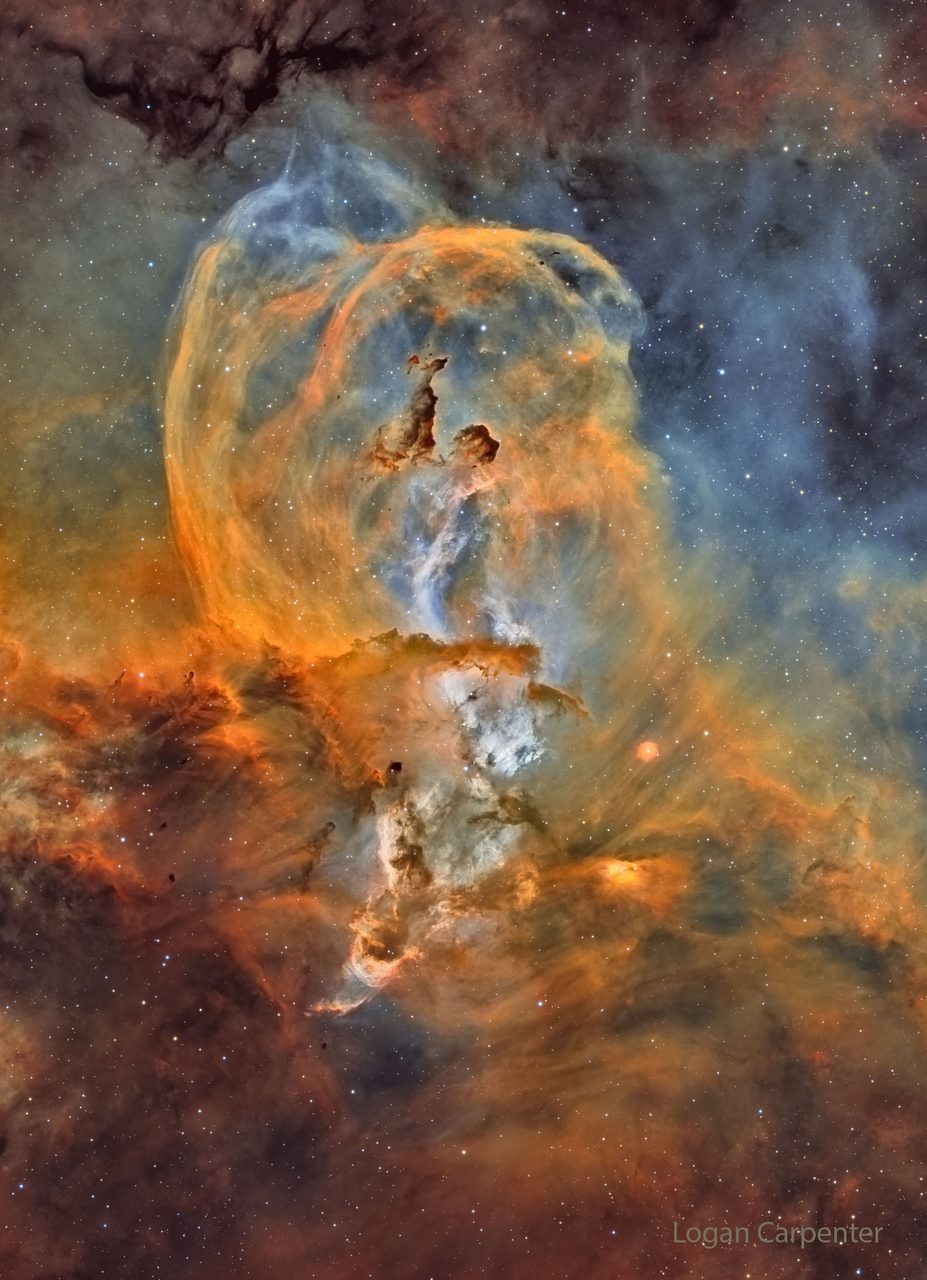
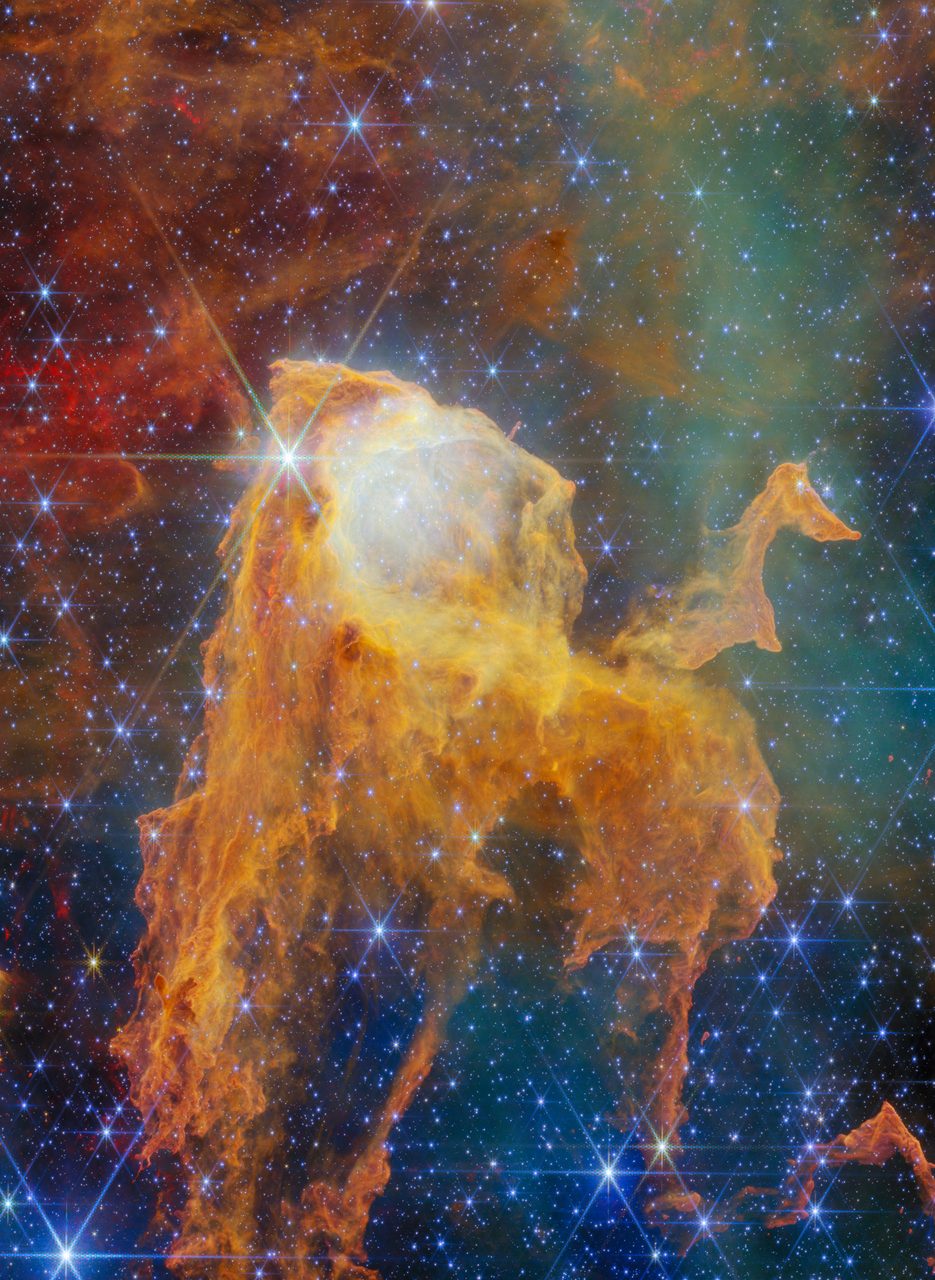
NGC 3576, known as the Statue of Liberty Nebula, is a star-forming region rich in massive stars and complex molecules.
NGC 3576, often referred to as the Statue of Liberty Nebula, is a fascinating region of space where stars are born and complex molecules form. Located within the RCW 57 star-forming region, this nebula is a vibrant tapestry of dark interstellar dust, glowing hydrogen gas, and loops of gas from dying stars. Notably, astronomers have identified at least 33 massive stars nearing the end of their formation process within this nebula. The presence of polycyclic aromatic hydrocarbons (PAHs), complex carbon molecules, suggests that similar processes may have been crucial in the early solar nebula, potentially influencing the development of life on Earth.
The Broader Context of Star Formation
Star-forming regions like NGC 3576 offer a window into the processes that govern stellar birth and evolution. These nebulae are essential for understanding how stars and planetary systems, including our own, come into existence. The study of PAHs within such regions provides insights into the chemical pathways that may lead to life-supporting environments. As of now, there are 28,858 active satellites orbiting Earth, many of which contribute to our understanding of such cosmic phenomena. For those interested in tracking satellites, the Orbital Radar pass predictor offers a useful tool for observing these objects.
Observing the Nebula
While NGC 3576 is not visible to the naked eye, amateur astronomers equipped with telescopes can attempt to capture its faint glow. The nebula is best observed from the Southern Hemisphere, where it appears in the constellation Carina. For those keen on observing the night sky, the Orbital Radar Moon Globe provides real-time lunar positions and phases, aiding in planning optimal viewing times.
Frequently Asked Questions
What is the Statue of Liberty Nebula?
Why are polycyclic aromatic hydrocarbons (PAHs) important?
📎 Cite this article
Orbital Radar Newsroom. (2026). Unveiling the Statue of Liberty Nebula: A Stellar Birthplace. Orbital Radar. https://orbitalradar.com/blog/cosmic-gallery-2026-05-08"Unveiling the Statue of Liberty Nebula: A Stellar Birthplace." Orbital Radar, 8 May 2026, https://orbitalradar.com/blog/cosmic-gallery-2026-05-08.@misc{orbitalradar_cosmic_gallery_2026_05_08,
title = {Unveiling the Statue of Liberty Nebula: A Stellar Birthplace},
author = {{Orbital Radar}},
year = {2026},
howpublished = {\url{https://orbitalradar.com/blog/cosmic-gallery-2026-05-08}}
}