Zodiacal Light: A Celestial Glow from Interplanetary Dust
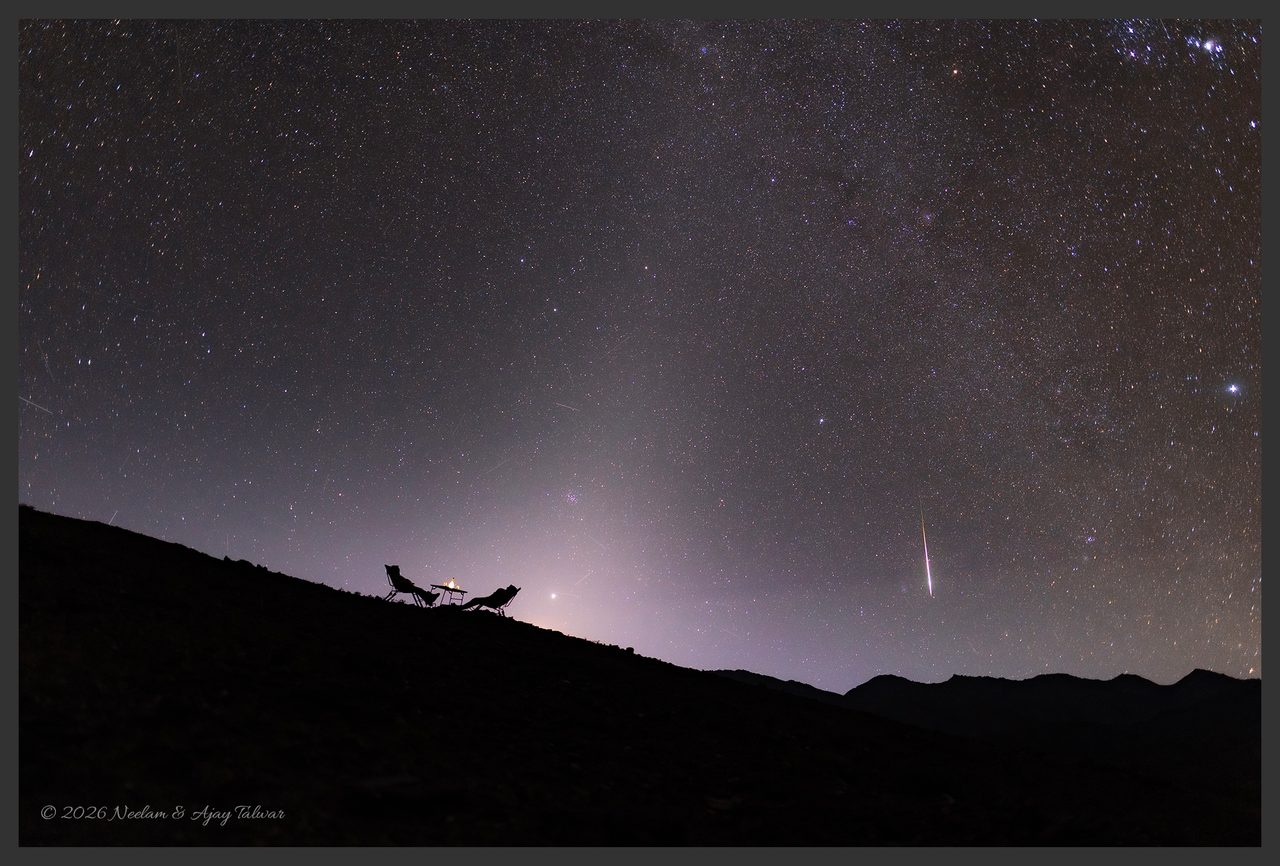
The zodiacal light, a celestial glow from interplanetary dust, is beautifully captured at Hanle Dark Sky Reserve, revealing Mars' role in this phenomenon.
| Active satellites | 15,733 |
| Catalogued objects | 31,428 |
| Starlink active | 9,835 |
In the serene darkness of the Hanle Dark Sky Reserve in Ladakh, India, a luminous band known as the zodiacal light graces the night sky. This phenomenon, often mistaken for the false dawn, is a diffuse glow resulting from sunlight scattering off interplanetary dust particles. The image captures this ethereal light just before astronomical twilight, with Jupiter and Mars adding their celestial presence to the scene. The altitude of 4,500 meters offers a pristine view, making it a favoured spot for astrophotographers and stargazers.
The zodiacal light is not merely a visual spectacle; it is a window into the cosmic dust environment of our solar system. Recent data from NASA's Juno spacecraft suggest that Mars might be a significant source of this dust. As the red planet's surface is constantly bombarded by meteoroids, it releases dust into space, which then scatters sunlight, creating the zodiacal glow visible from Earth. This discovery highlights the interconnected nature of celestial bodies and the dynamic processes shaping our solar system.
Observing the Zodiacal Light
For those interested in witnessing the zodiacal light, the best time is during the months of March and September, just after sunset or before sunrise. A location with minimal light pollution, such as a dark sky reserve, offers the best chance to see this faint glow. To enhance your stargazing experience, you can use the Orbital Radar pass predictor to find optimal times for satellite visibility in your area, adding another layer of wonder to your night under the stars.
Frequently Asked Questions
What causes the zodiacal light?
When is the best time to see the zodiacal light?
📎 Cite this article · data available
Orbital Radar Newsroom. (2026). Zodiacal Light: A Celestial Glow from Interplanetary Dust. Orbital Radar. https://orbitalradar.com/blog/cosmic-gallery-2026-09-20"Zodiacal Light: A Celestial Glow from Interplanetary Dust." Orbital Radar, 20 September 2026, https://orbitalradar.com/blog/cosmic-gallery-2026-09-20.@misc{orbitalradar_cosmic_gallery_2026_09_20,
title = {Zodiacal Light: A Celestial Glow from Interplanetary Dust},
author = {{Orbital Radar}},
year = {2026},
howpublished = {\url{https://orbitalradar.com/blog/cosmic-gallery-2026-09-20}}
}