Galileo FOC: Europe's Navigation Constellation
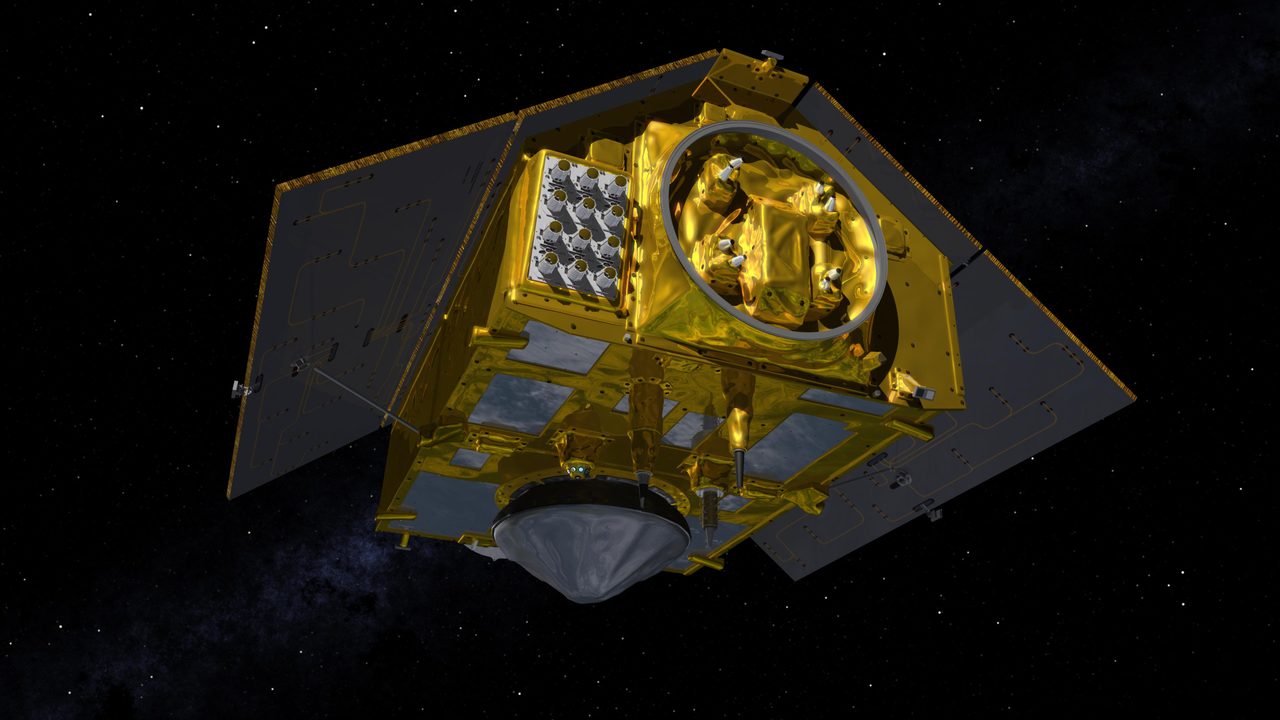
Galileo FOC (Full Operational Capability) is the European Union's global navigation satellite system, designed to provide highly accurate positioning services worldwide. It is Europe's answer to the American GPS, Russian GLONASS, and Chinese BeiDou systems.
| Active satellites | 15,729 |
| Catalogued objects | 31,474 |
| Starlink active | 9,853 |
What is Galileo FOC?
Galileo FOC (Full Operational Capability) is the European Union's global navigation satellite system, designed to provide highly accurate positioning services worldwide. It is Europe's answer to the American GPS, Russian GLONASS, and Chinese BeiDou systems. The Galileo programme is managed by the European Space Agency (ESA) and the European Union Agency for the Space Programme (EUSPA). As of now, the constellation comprises 22 operational satellites, with plans to expand to a total of 30 satellites, ensuring global coverage and redundancy.
Mission and Purpose
The primary mission of Galileo is to provide a high-precision positioning service that is independent of other global navigation satellite systems. It aims to offer improved accuracy and reliability for both civilian and military users. Galileo's services are crucial for applications such as transportation, telecommunications, agriculture, and emergency response. The system also provides a Public Regulated Service (PRS) for government-authorised users, offering encrypted signals for enhanced security.
Orbital Characteristics
Galileo satellites are positioned in Medium Earth Orbit (MEO) at an altitude of approximately 23,222 kilometres, with an inclination of 56 degrees. Each satellite completes an orbit in about 14 hours. The constellation is arranged in three orbital planes, each containing a number of satellites to ensure global coverage. Specific satellites, such as Galileo FOC FM23, can be tracked using their NORAD ID 43056, with detailed orbital parameters available in the Orbital Radar Satellite Library.
Significance and Legacy
Galileo represents a significant milestone for Europe, marking its independence in satellite navigation capabilities. The system not only enhances the accuracy of positioning services but also ensures that Europe is not reliant on non-European systems, which could be restricted in times of conflict. Galileo's legacy is further cemented by its contributions to scientific research, environmental monitoring, and the development of new technologies. Its high-precision services have been particularly beneficial for industries requiring precise timing and navigation.
Current Status
As of now, 22 Galileo satellites are operational, with additional satellites planned for launch to complete the constellation. The system is fully operational and provides services to millions of users worldwide. According to Orbital Radar tracking data, 15,729 satellites are currently active in orbit, with Galileo making up a vital part of this network. The system continues to evolve, with upgrades and new satellites being developed to enhance its capabilities and resilience.
📎 Cite this article · data available
Orbital Radar Newsroom. (2026). Galileo FOC: Europe's Navigation Constellation. Orbital Radar. https://orbitalradar.com/blog/galileo-foc-navigation-constellation"Galileo FOC: Europe's Navigation Constellation." Orbital Radar, 22 September 2026, https://orbitalradar.com/blog/galileo-foc-navigation-constellation.@misc{orbitalradar_galileo_foc_navigation_constellation,
title = {Galileo FOC: Europe's Navigation Constellation},
author = {{Orbital Radar}},
year = {2026},
howpublished = {\url{https://orbitalradar.com/blog/galileo-foc-navigation-constellation}}
}