How Cold Is Space? Why Sunlight and Shade Change the Answer
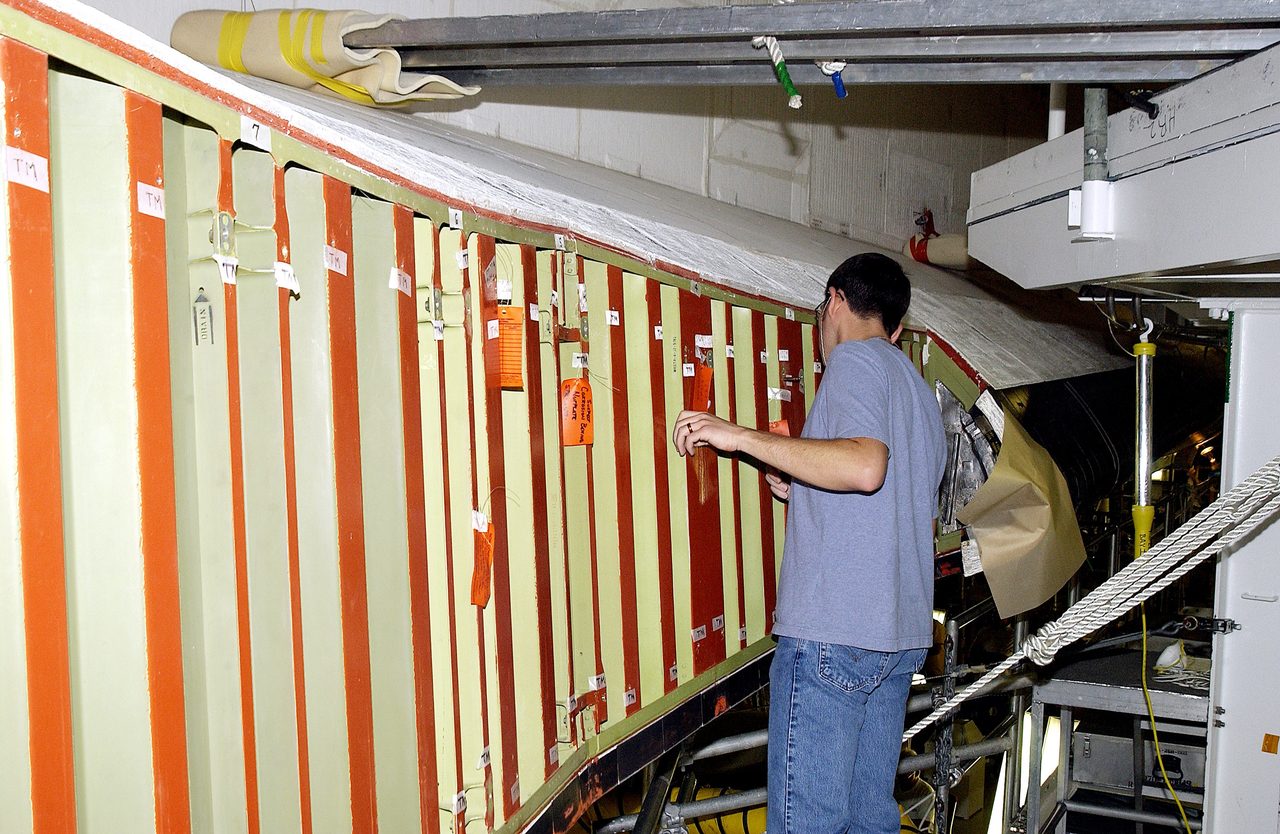
Deep space has a background temperature of about −270°C, but spacecraft do not simply cool to that temperature. Sunlight, shade and onboard heat change the answer.
| Active satellites | 16,752 |
| Starlink active | 9,646 |
| Catalogued objects | 32,120 |
| Active close approaches | 23 |
| People in space | 13 |
Space has no single temperature: the background radiation of deep space is about 2.7 kelvin, or −270°C, but objects in sunlight can become hot. Around Earth, a spacecraft’s temperature depends on sunlight, shade, radiation from Earth and heat produced onboard.
The near-vacuum contains too little matter to heat or cool an object as air does around a person on Earth. Instead, spacecraft gain and lose heat mainly through radiation (energy carried by electromagnetic waves), so a cold radiation background does not guarantee cold equipment.
There were 16,752 active satellites in orbit on 27 November 2026, according to Orbital Radar tracking data. For the spacecraft listed in Orbital Radar’s satellite library, managing heat is an everyday engineering requirement, not merely protection against cold.
This guide separates the temperature of radiation from that of sparse particles and physical objects. Examples from the International Space Station (ISS), satellites and spacesuits explain why sunlight and shade matter—and why “how cold is space?” needs more than one answer.
How cold is deep space away from stars?
Deep space away from stars has a background radiation temperature of about 2.7 kelvin, approximately −270°C. This is the temperature of the cosmic microwave background: faint radiation left over from the early universe, now stretched to microwave wavelengths as the universe expands.
Kelvin measures temperature from absolute zero, −273.15°C, rather than from the freezing point of water. A temperature of 2.7 kelvin is therefore very close to that lower limit, but it is not absolute zero.
Crucially, this is a radiation background, not a universal thermometer reading for every object, cloud of gas or dust grain. Even far from stars, matter need not share the background’s temperature.
A passive object’s equilibrium temperature—the point at which its temperature stops changing—depends on all the energy it absorbs and emits. Starlight and other radiation can warm it above the microwave background; its surface properties affect how efficiently it absorbs and radiates energy. Orbital Radar’s deep-space guide provides wider context.
Near Earth, this distinction matters for the objects in Orbital Radar’s Satellite Library. Orbital Radar tracking data lists 16,752 active satellites in orbit as of 27 November 2026. Orbital Radar’s live catalogue contains 32,120 objects, including debris, as of 27 November 2026. None can be assigned a temperature from the cosmic microwave background alone.
Why does space not cool you like freezing air?
Space does not cool you like freezing air because its near-vacuum contains too little matter to carry much heat away. Around an orbiting spacecraft, external conduction and convection are largely absent, but radiation continues to transfer energy.
Conduction is heat transfer through contact: a cold handrail draws heat from your hand. Convection is heat carried by a moving fluid, such as air or water. Cold air receives heat from your skin, and moving air carries that warmed air away, allowing cooler air to replace it.
Radiation is energy carried by electromagnetic waves. Unlike conduction and convection, it needs no material medium: sunlight crosses a vacuum, while warm objects emit infrared radiation. A spacecraft must therefore radiate most of its waste heat rather than shed it into surrounding air.
A sparse population of particles can have a high temperature yet transfer little heat to an object. Temperature describes their average random kinetic energy (energy of motion), not how many particles strike a surface. With very few collisions, even energetic particles may deliver little heating.
Orbital Radar tracking data records 16,752 active satellites on 27 November 2026. Orbital Radar tracking data also records 13 people in space on 27 November 2026. Both spacecraft and their occupants depend on managing heat without an atmosphere outside to carry it away. Orbital Radar’s Space Academy explains the physical principles behind that distinction.
How hot or cold does the ISS get in sunlight and shade?
The ISS has no single temperature: exterior surfaces can become hot in sunlight and cold in shade, while its inhabited cabin remains temperature-controlled. A quoted hot-and-cold pair cannot describe every part of the station.
Sun-facing surfaces absorb direct sunlight, but that is only part of their heat balance. Earth-reflected sunlight also warms exposed structures, while Earth’s infrared radiation (energy emitted as thermal radiation) reaches surfaces facing the planet, including during orbital night.
When Earth blocks direct sunlight, that source of heating disappears, but the station does not stop producing heat. Electronics, life-support equipment and people continue releasing it, while exterior surfaces continue radiating energy into space. Temperatures change over time rather than switching instantly between extremes.
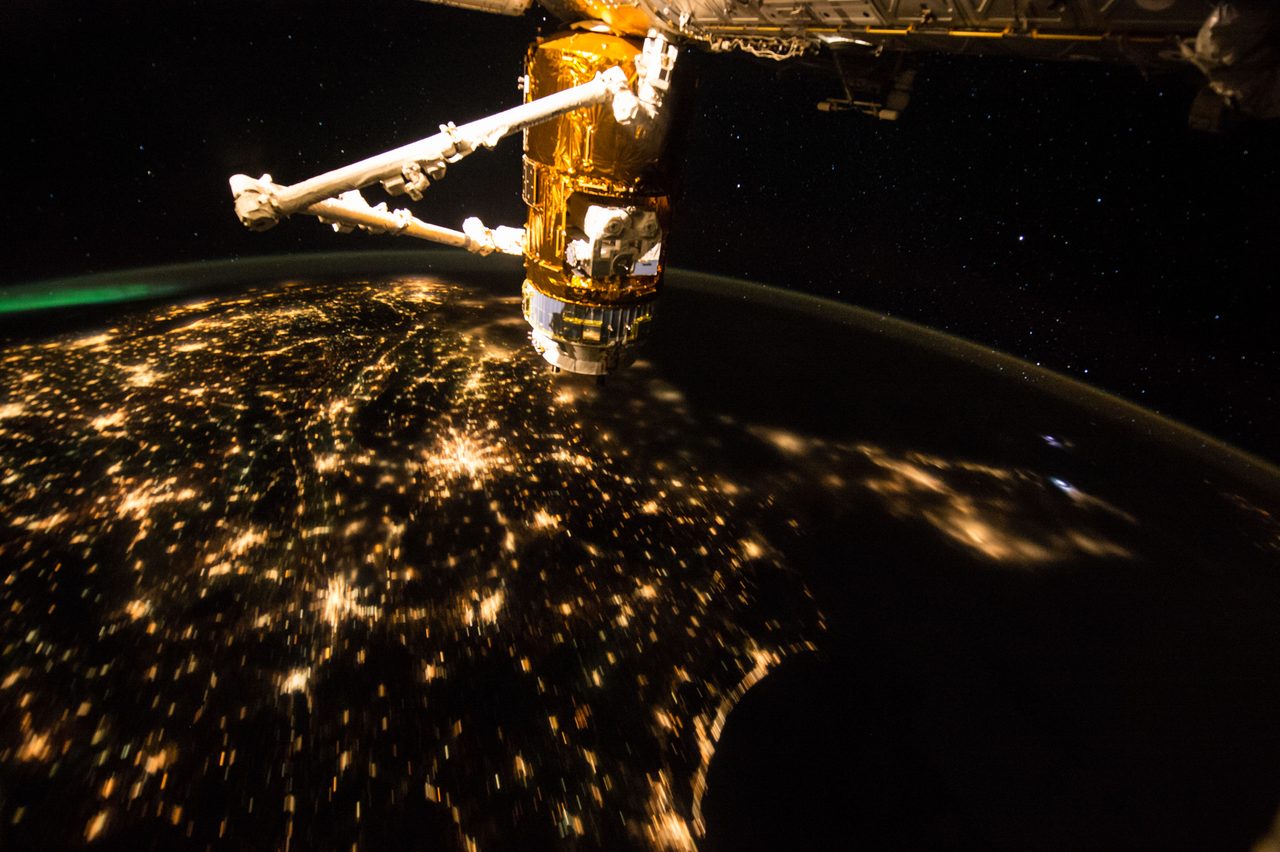
An exterior photograph shows structures with different thermal roles: broad solar arrays convert sunlight into electricity; cylindrical habitation modules enclose controlled living and working spaces; radiator panels release heat carried out from inside. Their temperatures need not match, even when they share the same lighting conditions.
Material and surface finish determine how readily each structure absorbs sunlight and emits infrared radiation. Orientation, insulation and time spent in shadow also matter. Orbital Radar’s ISS tracker provides orbital context, not a surface-temperature measurement.
Orbital Radar tracking data records 13 people in space on 27 November 2026; that is not an ISS-only crew count. Orbital Radar’s live catalogue lists 16,752 active satellites on 27 November 2026. Like the ISS, each spacecraft has a thermal environment shaped by its construction and exposure.
Why can a satellite overheat in cold space?
A satellite can overheat in cold space because its powered equipment generates heat faster than the spacecraft can radiate it away. Computers, batteries and communications equipment produce waste heat even in shadow; losing direct sunlight does not switch off that internal heat source.
Thermal balance is the relationship between absorbed energy, internally generated heat and emitted radiation. If incoming energy and internal heating exceed the energy radiated away, the spacecraft warms; if the losses exceed those inputs, it cools. Earth can also supply absorbed energy through reflected sunlight and infrared radiation (heat emitted by the planet).
Surface coatings influence how readily a satellite absorbs sunlight and emits heat. Orientation determines which surfaces face the Sun, Earth or open space, while radiator area helps determine how much heat can escape. The resulting balance can leave equipment too hot or too cold.
Repeated warming and cooling expand and contract materials, potentially stressing joints and electrical connections. Those cycles depend on orbit, orientation and operations: not every satellite enters shadow regularly or experiences the same temperature swings.
Orbital Radar tracking data lists 16,752 active satellites on 27 November 2026. Starlink accounts for 9,646 active satellites on 27 November 2026, according to Orbital Radar tracking data. Spacecraft examples in the Orbital Radar satellite library provide context for these varied operating environments.
How do spacecraft keep their equipment at safe temperatures?
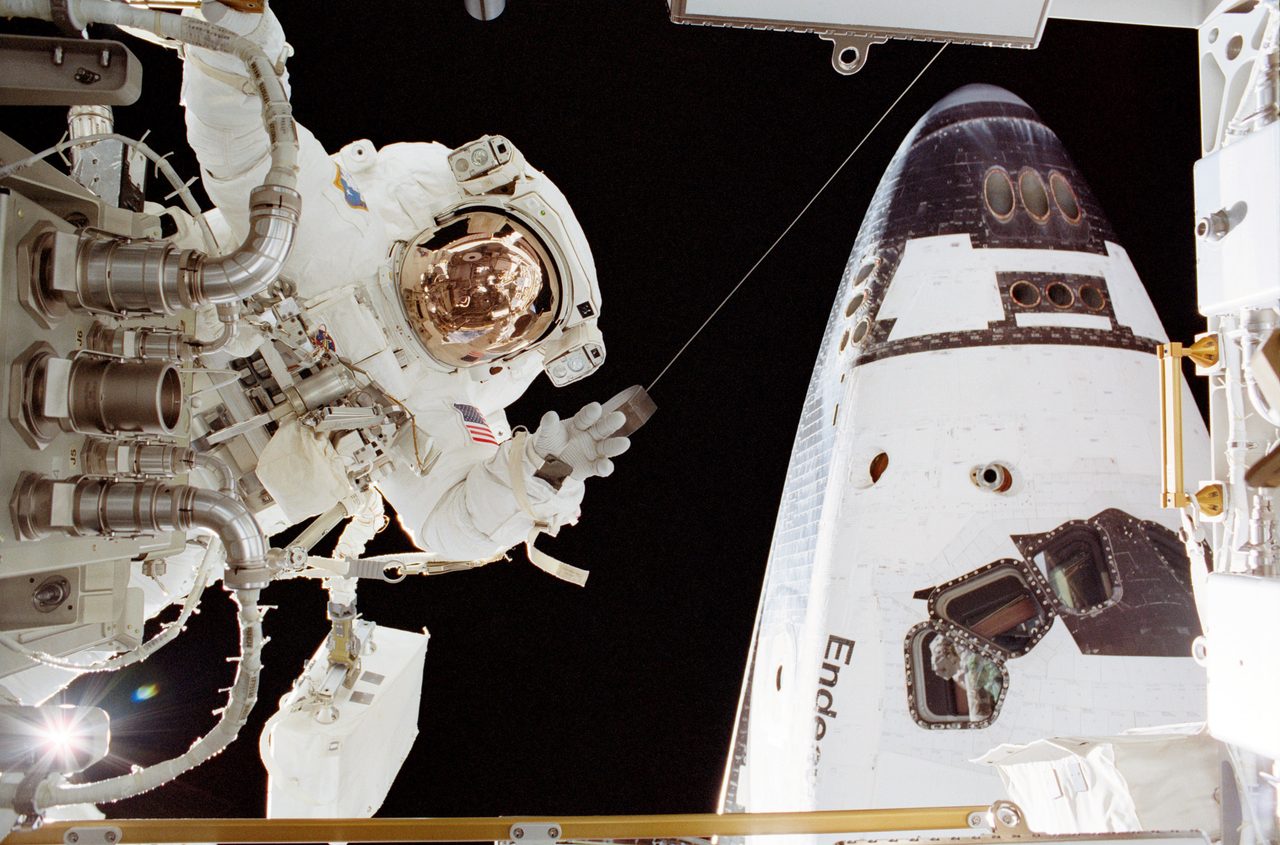
Spacecraft keep equipment at safe temperatures by controlling where heat enters, how it moves and where it escapes. Passive thermal control uses materials and design; active thermal control uses powered equipment, such as electrical heaters and coolant pumps.
Passive measures include reflective coatings, sunshields and multilayer insulation: the shiny blankets wrapped around many spacecraft. These blankets contain thin, reflective layers that reduce radiative heat transfer (energy exchanged as electromagnetic radiation). They limit unwanted heat gain and heat loss; they do not actively refrigerate anything.
Orbital Radar tracking data lists 16,752 active satellites on 27 November 2026. Their thermal-control systems differ: a small satellite might rely largely on coatings, insulation and heaters, while a larger spacecraft may need pumped cooling.
Temperature sensors monitor components so controllers can switch heaters on when batteries or instruments become too cold. Some spacecraft use passive heat pipes, sealed devices in which fluid evaporates and condenses to carry heat from warmer equipment towards a radiator. Others use powered pumps to circulate coolant through pipes and heat exchangers.
Orbital Radar tracking data records 13 people in space on 27 November 2026. Crewed spacecraft must manage heat from occupants as well as electronics and other equipment.
The International Space Station continuously distributes and rejects heat, using internal water loops and external ammonia loops to transfer it to radiators. Those radiators emit infrared radiation into space, while insulation controls unwanted heat exchange elsewhere. Orbital Radar’s satellite library provides context on the spacecraft operating in this environment.
How do spacesuits protect astronauts from heat and cold?

A spacesuit protects an astronaut with insulating layers and active cooling, while also providing oxygen and the pressure needed to keep the body functioning. It is a wearable life-support system, not simply a thick winter coat: retaining warmth is only part of its job.
Reflective outer materials limit the sunlight a suit absorbs, while multiple insulating layers slow heat transfer between the astronaut and the surroundings. A pressure-retaining inner layer maintains a breathable environment around the body. Together, these components help protect the wearer through changes between sunlight and shade, but insulation alone cannot keep a working astronaut comfortable.
Under the suit, an astronaut wears a liquid-cooling garment threaded with narrow tubes that carry circulating water. The water absorbs body heat and carries it to the suit’s life-support equipment, where heat can be released to space. Physical exertion generates substantial heat, and near-vacuum provides no surrounding air to carry it away by convection (heat transfer through moving gas or liquid). An astronaut can therefore overheat during demanding work even while facing dark space.
There were 13 people in space on 27 November 2026, according to Orbital Radar tracking data. That figure counts everyone in space, not people conducting spacewalks; astronauts inside spacecraft rely on the cabin’s environmental systems rather than a spacesuit. Orbital Radar’s guide to how spacesuits work explains how cooling, pressure and life support function together when an astronaut leaves that protected cabin.
Would you freeze instantly if exposed to space?
No: a person exposed to space would not instantly turn into ice. A vacuum contains too little matter to carry heat away as freezing water or cold wind does, so whole-body cooling is not instantaneous. The body still loses heat through radiation and evaporation, while sunlight can add heat.
Lack of oxygen and loss of pressure are more immediate dangers than freezing. Without a pressurised oxygen supply, the brain and other organs cannot function normally. Unprotected exposure to a vacuum is a medical emergency, regardless of whether the person is in sunlight or shade.
Low pressure also changes what happens to exposed moisture. Saliva and the moist surfaces of the eyes can lose water rapidly through evaporation; at sufficiently low pressure, exposed liquid water can boil at body temperature. Evaporation removes heat locally, but this does not mean that the entire body instantly freezes or boils. Skin and surrounding tissues constrain fluids inside the body, although dangerous swelling and other pressure-related injuries can occur.
Orbital Radar’s spacesuits guide explains the protective systems that maintain pressure, supply oxygen and control temperature. Those functions address distinct hazards: insulation alone cannot make exposure to space safe.
Is space colder farther from the Sun?
Generally, yes: otherwise comparable passive objects become colder farther from the Sun because they receive less sunlight. Their equilibrium temperature (the temperature at which absorbed and emitted energy balance) falls as solar heating weakens.
Sunlight follows the inverse-square law: doubling the distance spreads the same sunlight over four times the area, leaving each square metre receiving a quarter as much energy. That does not mean the object's temperature falls to a quarter; heat radiation depends on temperature in a different way.
Distance alone cannot predict a spacecraft's temperature. Surface coatings control how readily it absorbs sunlight and emits infrared radiation; orientation, internal electrical power and radiation from nearby planets or moons also affect the balance. Orbital Radar tracking data lists 16,752 active satellites on 27 November 2026. Orbital Radar's live catalogue contains 32,120 objects on 27 November 2026; the satellite library provides context for this varied spacecraft population.
Weaker sunlight in deep space does not rule out locally hot gas or sun-warmed surfaces. Sparse gas particles can have high temperatures yet transfer little heat because so few strike an object. Orbital Radar's deep-space guide connects the background radiation temperature with actual spacecraft environments: that background is a baseline, not a universal thermometer reading for every object.
How can I follow the ISS and explore its thermal environment?
Follow the International Space Station (ISS), NORAD catalogue number 25544, on Orbital Radar’s ISS tracker to see its changing position around Earth. Its ground track (the path directly beneath it on Earth’s surface) helps you follow its movement, but that line alone does not establish whether the station is in sunlight.
To determine illumination, you also need the station’s position relative to the Sun and Earth’s shadow. A map location is therefore a starting point for exploring its thermal environment, not evidence that a particular surface is heating or cooling at that moment.
Orbital tracking is not a live measurement of hull temperature, cabin temperature or an astronaut’s suit temperature. Those temperatures depend on different conditions, including surface orientation, materials, internal heat and thermal-control systems; they cannot be read from an orbital position.
Orbital Radar’s live catalogue contained 32,120 tracked objects, including debris, on 27 November 2026. These catalogue entries describe tracked objects rather than a network of temperature sensors: knowing where something is does not tell you how warm it is.
For viewing advice, use Orbital Radar’s guide to seeing the ISS tonight. An illuminated station can remain in sunlight above an observer whose sky is already dark, reflecting sunlight towards the ground. That contrast makes a pass visible, without revealing the temperature of the station or its occupants.
Key takeaways
- Deep space has a radiation background of about 2.7 kelvin, or −270°C, but that is not the temperature of every object in space.
- Sunlight, Earth’s radiation, surface materials and onboard heat determine how hot or cold an orbiting spacecraft becomes.
- Spacecraft use insulation, radiators and, where needed, heaters or cooling systems because vacuum prevents ordinary external convective cooling.
- Spacesuits manage both heat and cold while providing pressure and oxygen, the loss of which poses a more immediate danger than freezing.
Frequently Asked Questions
What is the temperature of space in Fahrenheit?
Has any part of space reached absolute zero?
Why is the Sun’s corona hot if space is cold?
Would a glass of water freeze or boil in space?
Is the Moon colder than the space around Earth?
Cite this article
Pick a style, then copy it or download it for your reference manager.Orbital Radar. (2026, November 27). How Cold Is Space? Why Sunlight and Shade Change the Answer. Retrieved November 27, 2026, from https://orbitalradar.com/blog/how-cold-is-space
“How Cold Is Space? Why Sunlight and Shade Change the Answer.” Orbital Radar, 27 Nov. 2026, orbitalradar.com/blog/how-cold-is-space. Accessed 27 Nov. 2026.
Orbital Radar (2026) How Cold Is Space? Why Sunlight and Shade Change the Answer. Available at: https://orbitalradar.com/blog/how-cold-is-space (Accessed: 27 November 2026).
Orbital Radar. “How Cold Is Space? Why Sunlight and Shade Change the Answer.” Last modified November 27, 2026. https://orbitalradar.com/blog/how-cold-is-space.
@misc{orbitalradar_blog_how_cold_is_space,
  author       = {{Orbital Radar}},
  title        = {How Cold Is Space? Why Sunlight and Shade Change the Answer},
  year         = {2026},
  month        = nov,
  howpublished = {\url{https://orbitalradar.com/blog/how-cold-is-space}},
  url          = {https://orbitalradar.com/blog/how-cold-is-space},
  urldate      = {2026-11-27},
  note         = {Accessed 2026-11-27}
}
TY - ELEC AU - Orbital Radar, TI - How Cold Is Space? Why Sunlight and Shade Change the Answer PY - 2026 DA - 2026/11/27 PB - Orbital Radar UR - https://orbitalradar.com/blog/how-cold-is-space Y2 - 2026/11/27 LA - en ER -
Live figures change, so keep the date you accessed the page. How to cite Orbital Radar