This Week in Orbit

This week, the space community was abuzz with a mix of scientific discoveries and technical challenges. Notably, Blue Origin identified an engine issue that led to the New Glenn rocket explosion, marking a significant step in addressing the setback.
Week Overview
This week, the space community was abuzz with a mix of scientific discoveries and technical challenges. Notably, Blue Origin identified an engine issue that led to the New Glenn rocket explosion, marking a significant step in addressing the setback. Meanwhile, astronomers observed a distant exoplanet's atmosphere shrinking, providing fresh insights into planetary evolution. The Milky Way Mapper survey released its latest all-sky spectra, contributing to our understanding of the galaxy's structure. In addition, NASA astronauts undertook a 6.5-hour spacewalk to prepare the International Space Station for a solar array upgrade, a crucial step in maintaining the station's energy capabilities.
Launch Activity
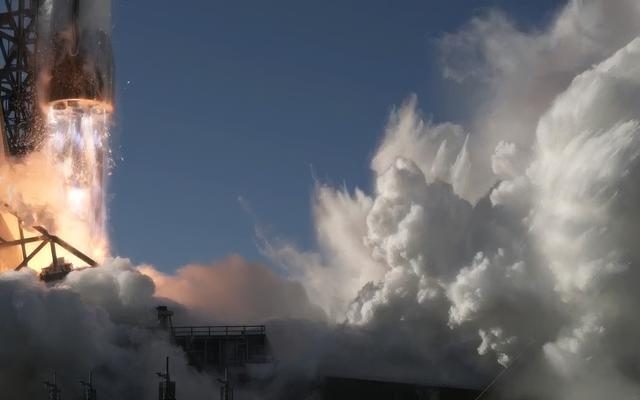
In a rare occurrence, no orbital launches were recorded this week. This pause in activity offers a moment to reflect on the current state of space exploration and the challenges faced by launch providers. Blue Origin's recent engine issue with the New Glenn rocket underscores the complexities of developing reliable launch systems. For those interested in upcoming launches, the Orbital Radar Launch Schedule provides a comprehensive overview of future missions.
Orbital Events
Several close approaches were tracked this week, highlighting the congested nature of Earth's orbit. Notable among these was the near-collision between PRC Test Spacecraft 4 and Object H, with a minimum distance of 0.00 km, indicating a potential contact. Other significant close approaches included Tianhui 5C and Tianhui 5D, which came within 0.44 km of each other. These events emphasize the importance of monitoring space traffic to prevent collisions. The Orbital Radar Debris Map offers a detailed view of the current debris environment.
Space Weather
Space weather data was unavailable this week, leaving a gap in our understanding of solar activity and its effects on satellite operations. Typically, space weather can influence satellite communications and navigation systems. For real-time updates, the Orbital Radar Space Weather page is a valuable resource.
Notable Satellites
The active satellite count remains high, with 18,535 satellites currently in orbit. Among these, Starlink continues to dominate with 10,896 active satellites, including 9,697 operational units. The Starlink Tracker on Orbital Radar provides detailed information on these satellites' status and orbits. This week also saw significant activity from the Tianhui series, with several close approaches recorded.
Looking Ahead
As we look to the future, the space community anticipates the resolution of Blue Origin's technical challenges and the continuation of the ISS solar array upgrades. Additionally, the ongoing analysis of the Milky Way Mapper survey data promises to enhance our understanding of galactic structures. For those interested in the future of space exploration, the Orbital Radar Space Academy offers educational resources on these topics.
📎 Cite this article
Orbital Radar Newsroom. (2026). This Week in Orbit. Orbital Radar. https://orbitalradar.com/blog/this-week-in-orbit-2026-05-10"This Week in Orbit." Orbital Radar, 16 May 2026, https://orbitalradar.com/blog/this-week-in-orbit-2026-05-10.@misc{orbitalradar_this_week_in_orbit_2026_05_10,
title = {This Week in Orbit},
author = {{Orbital Radar}},
year = {2026},
howpublished = {\url{https://orbitalradar.com/blog/this-week-in-orbit-2026-05-10}}
}