Saturn's Enigmatic Dance: Moons, Rings, and Shadows
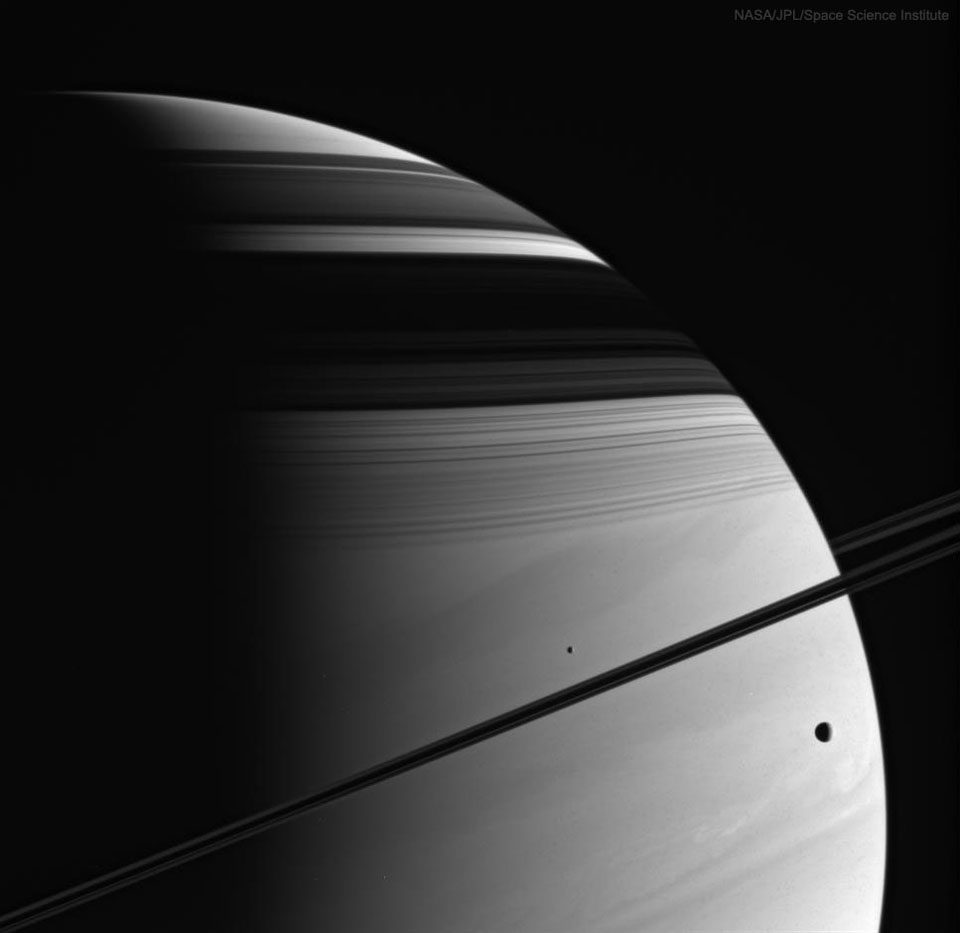
Cassini's 2005 image showcases Saturn's rings, moons Mimas and Tethys, and the planet's cloud textures.
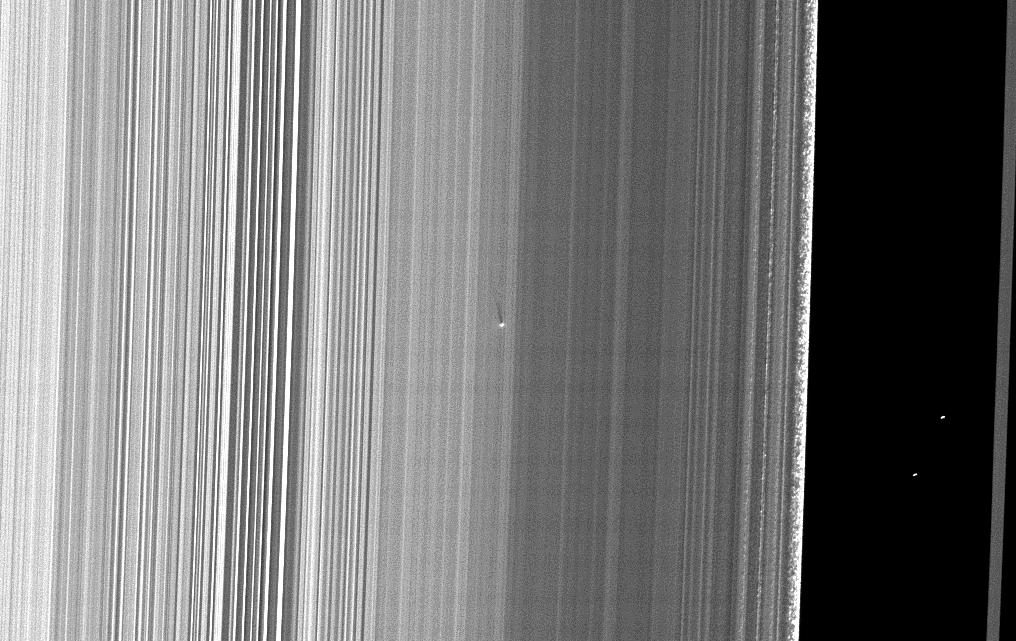
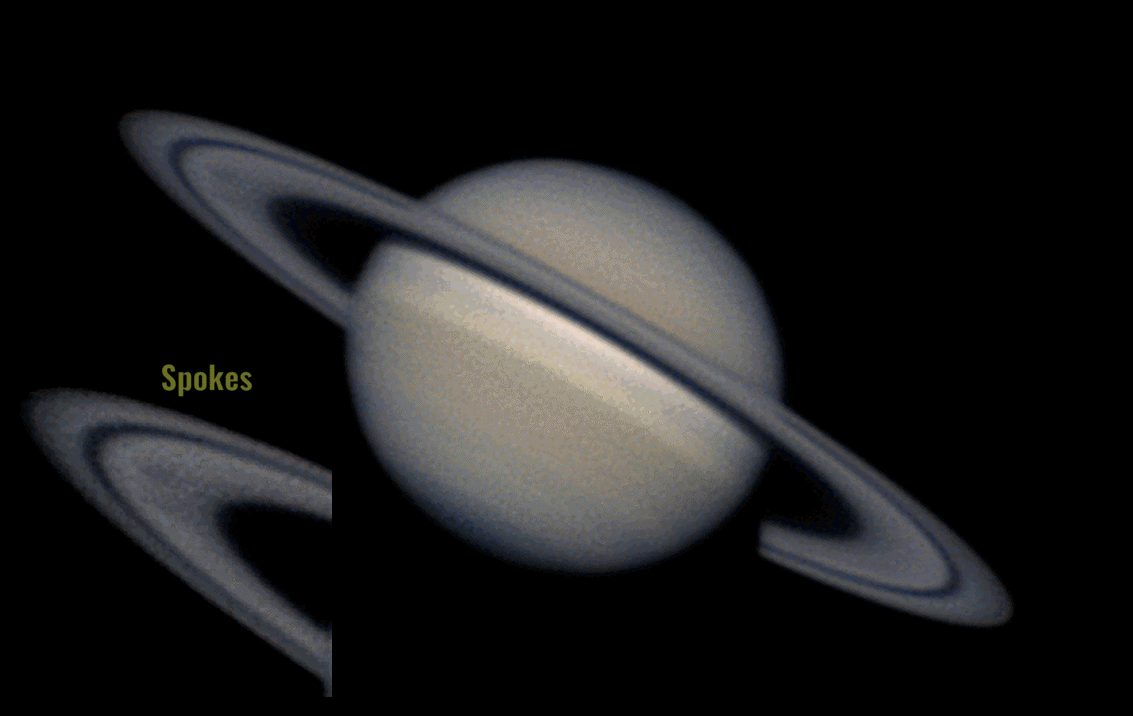
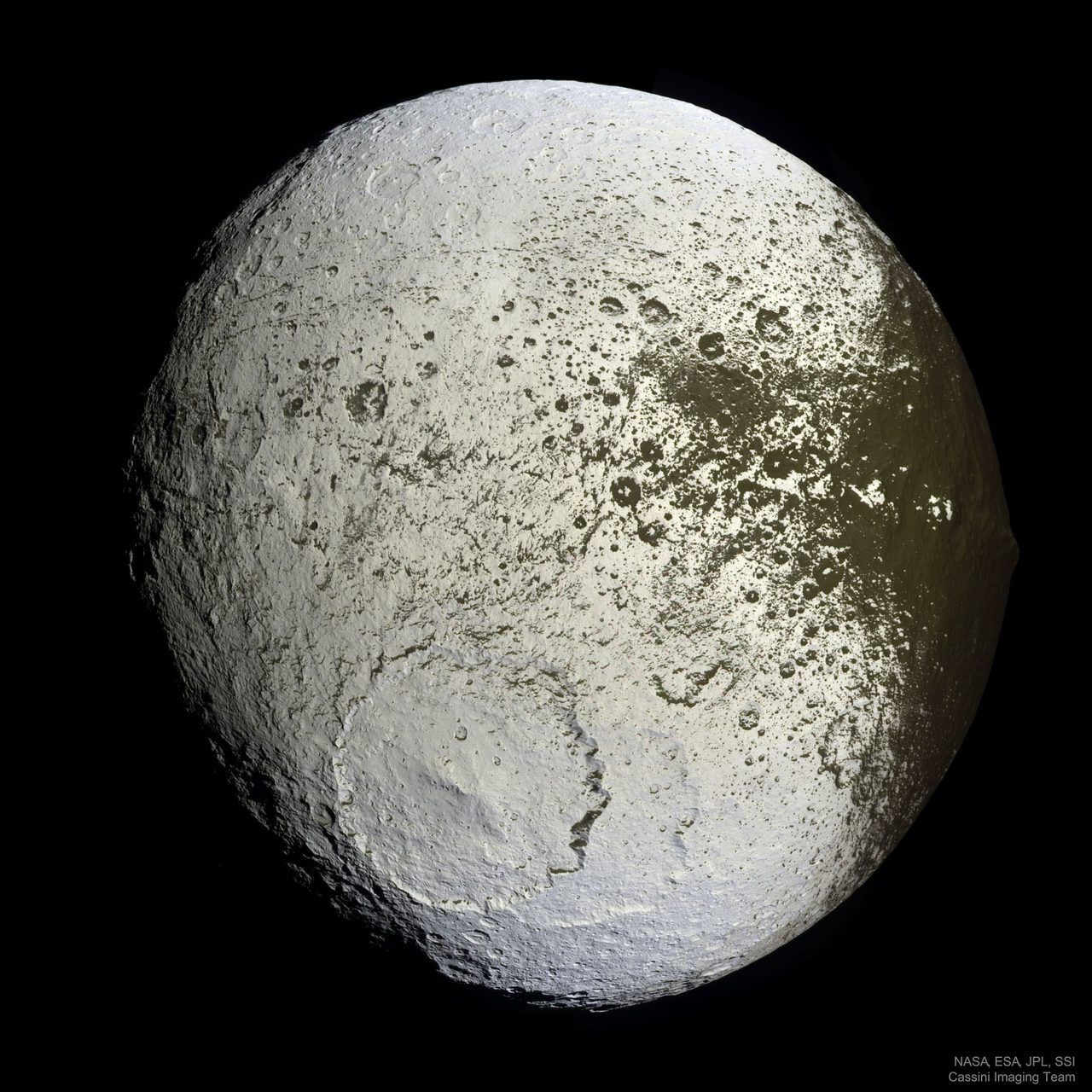
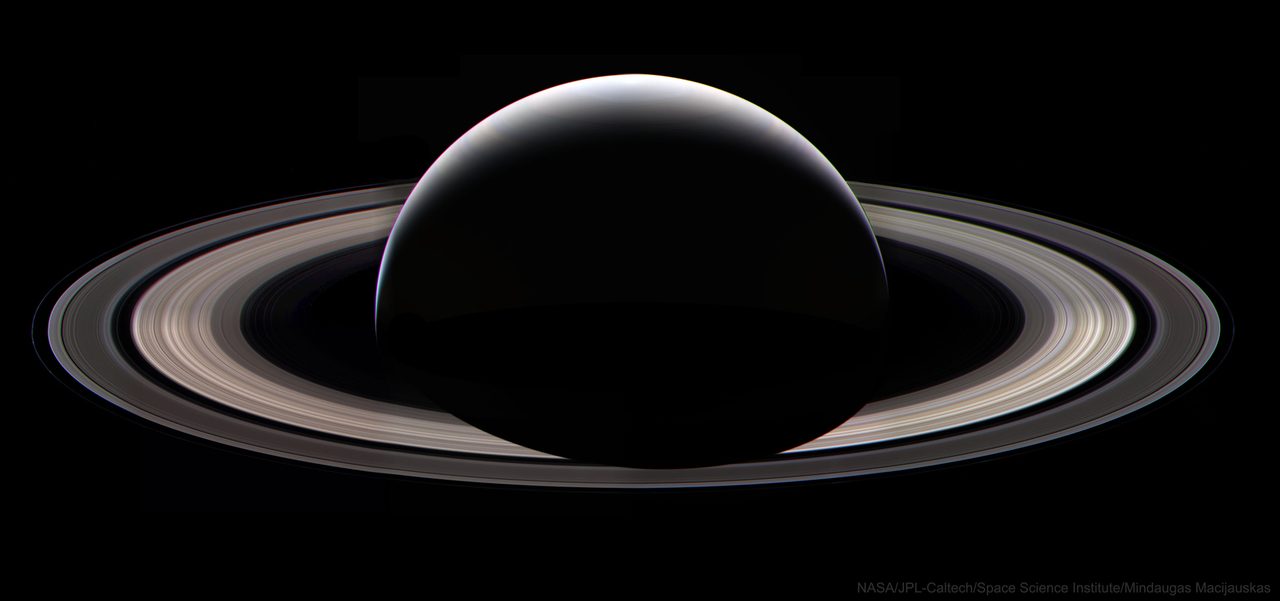
The image of Saturn captured by the Cassini spacecraft in 2005 offers a captivating glimpse into the planet's intricate beauty. Saturn's rings, seen nearly edge-on, are flanked by its moons Mimas and Tethys. The violet-light image highlights the shadows cast by the rings across Saturn's cloud-covered surface, revealing the planet's atmospheric complexity. Cassini, which orbited Saturn from 2004 to 2017, provided invaluable insights into the ringed planet before its intentional plunge into Saturn to avoid contaminating its moons.
Saturn's rings and moons present a dynamic system that continues to intrigue scientists. The gravitational interactions between the rings and moons like Mimas and Tethys are key to understanding not only Saturn's environment but also the formation and evolution of planetary systems. Cassini's mission has been instrumental in advancing our knowledge of these celestial mechanics, offering data that scientists continue to analyse today.
For those interested in tracking current missions or observing celestial phenomena, tools like the Orbital Radar pass predictor can provide real-time data on visible satellite passes. Although Cassini is no longer operational, its legacy endures through the wealth of data it collected.
Frequently Asked Questions
What did the Cassini spacecraft discover about Saturn?
Why was the Cassini mission ended?
📎 Cite this article
Orbital Radar Newsroom. (2026). Saturn's Enigmatic Dance: Moons, Rings, and Shadows. Orbital Radar. https://orbitalradar.com/blog/cosmic-gallery-2026-06-16"Saturn's Enigmatic Dance: Moons, Rings, and Shadows." Orbital Radar, 16 June 2026, https://orbitalradar.com/blog/cosmic-gallery-2026-06-16.@misc{orbitalradar_cosmic_gallery_2026_06_16,
title = {Saturn's Enigmatic Dance: Moons, Rings, and Shadows},
author = {{Orbital Radar}},
year = {2026},
howpublished = {\url{https://orbitalradar.com/blog/cosmic-gallery-2026-06-16}}
}