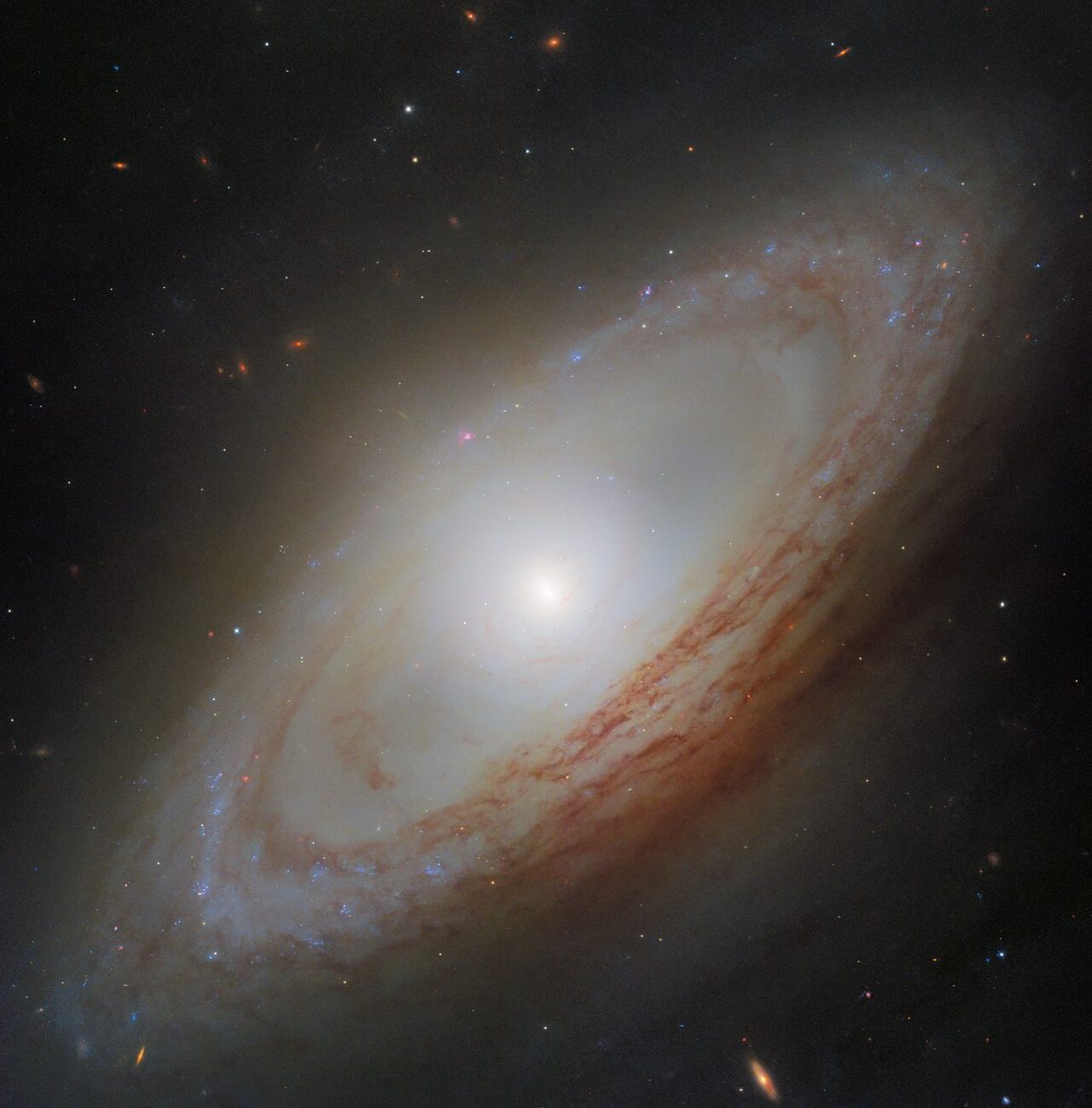
Galactic gas makes a getaway from spiral galaxy NGC 4388
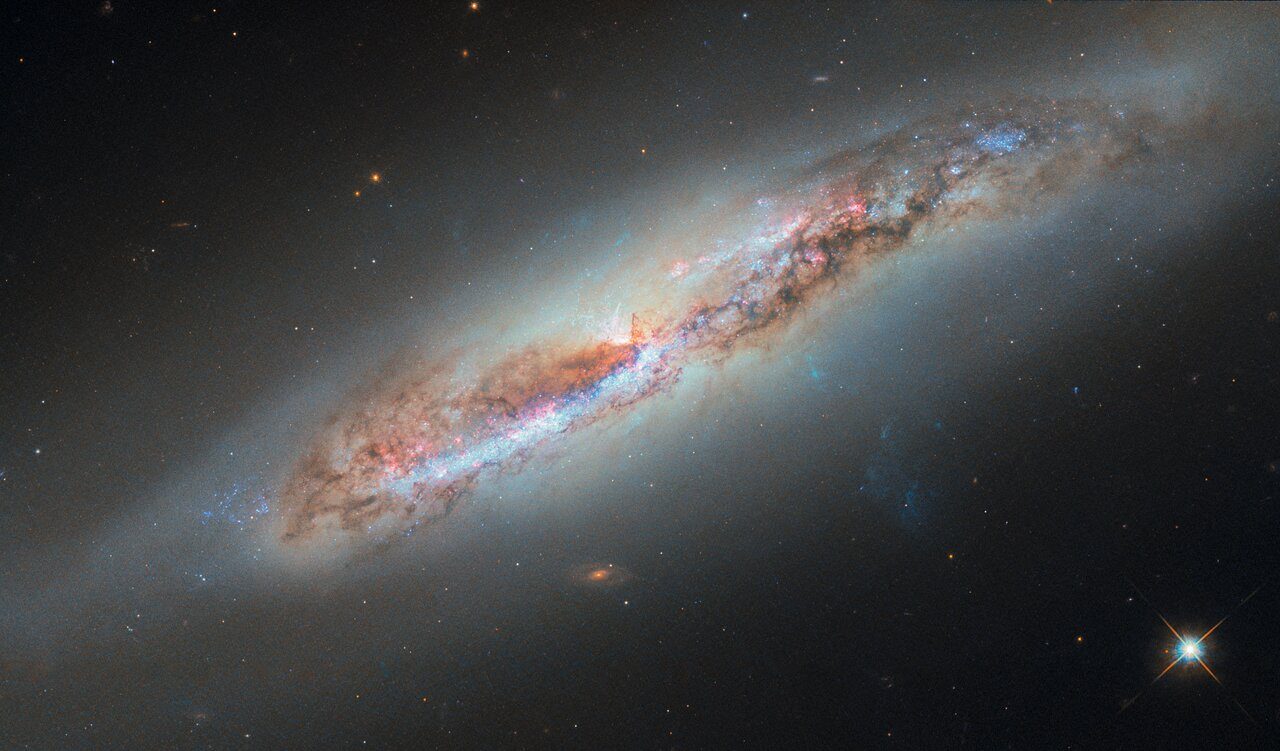
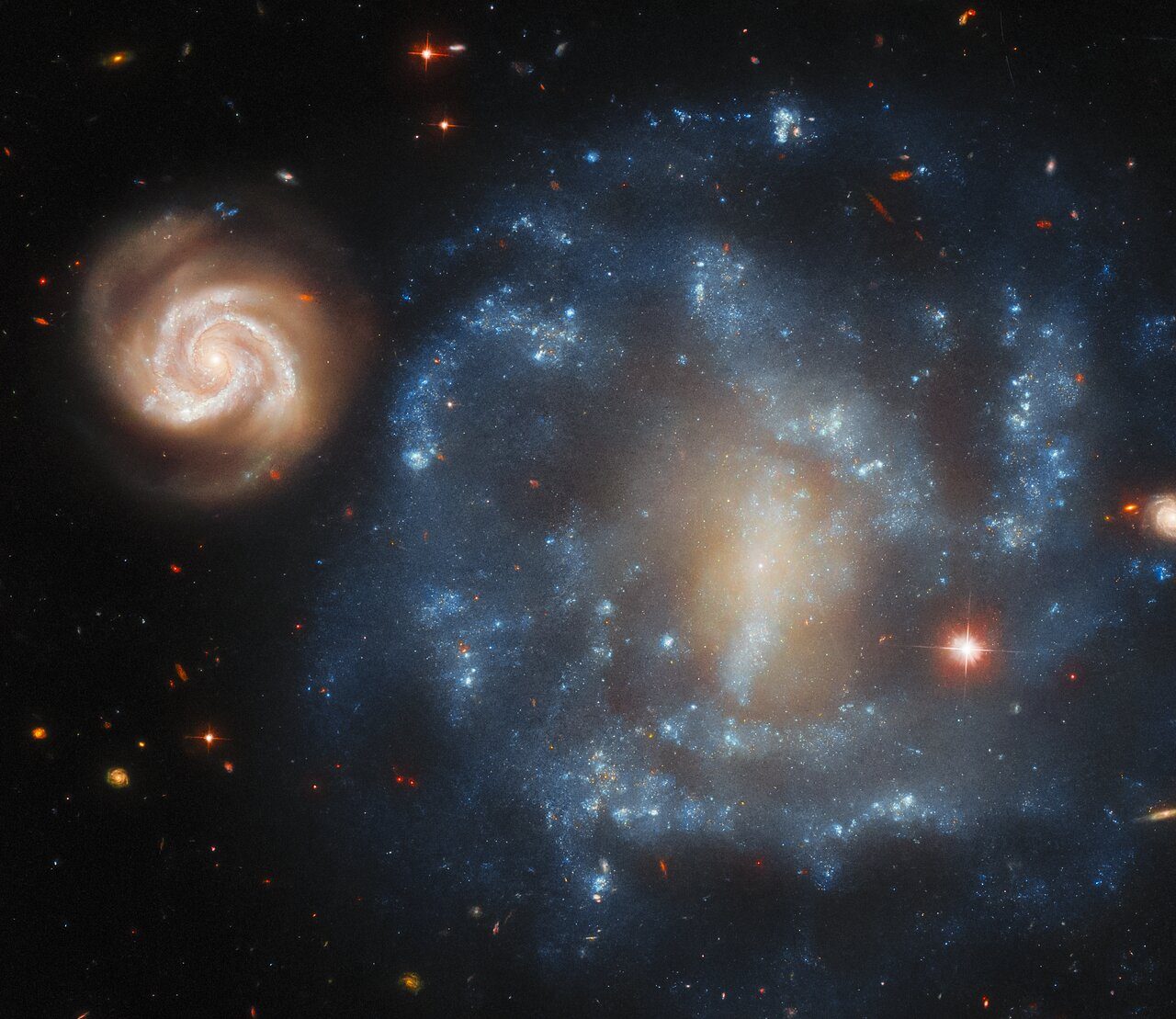
A glowing plume extends from NGC 4388 as it travels through the Virgo cluster. Hubble’s view reveals how the space between galaxies can reshape them.
| Active satellites | 15,887 |
| Catalogued objects | 31,833 |
| Starlink active | 9,996 |
A bluish plume of gas streams towards the lower-right of this Hubble image of NGC 4388, a spiral galaxy about 60 million light-years away in Virgo. Seen nearly edge-on, its disc is threaded with dark dust clouds, red star-forming nebulae and blue clusters of hot stars. A faint halo surrounds the galaxy, but the escaping gas tells the more consequential story.
NGC 4388 belongs to the Virgo cluster, home to more than a thousand galaxies. The apparently empty space between them contains the intracluster medium (hot, diffuse gas filling the cluster). As the galaxy moves through this material, the resulting pressure strips gas from its disc and leaves it trailing behind.
The plume was not visible in the previous Hubble image released in 2016. This image incorporates additional wavelengths of light that reveal the glowing gas, rather than demonstrating that the plume has only recently appeared.
What makes the escaping gas glow?
Stripping explains how gas can leave the disc, but its glow raises another question. Researchers suspect radiation from a superheated disc around NGC 4388’s central supermassive black hole helps ionise nearby gas (remove electrons from its atoms). Farther out, shock waves may supply the energy; the relative contributions remain uncertain.
The image brings together observations from programmes investigating galaxies with active central black holes. It illustrates how a galaxy’s surroundings and its central engine can jointly influence material far beyond its bright stellar disc.
The observatories studying these distant systems share Earth’s orbital environment with a growing satellite population. Orbital Radar tracking data lists 15,887 active satellites as of 27 October 2026.
Orbital Radar’s live catalogue contains 31,833 objects, including debris, as of 27 October 2026. Closer to home than Hubble’s galactic subject, this environment can be explored through Orbital Radar’s space situational awareness toolkit.
Frequently Asked Questions
Why is NGC 4388 losing gas?
What makes the gas plume in NGC 4388 glow?
📎 Cite this article · data available
Orbital Radar Newsroom. (2026). Galactic gas makes a getaway from spiral galaxy NGC 4388. Orbital Radar. https://orbitalradar.com/blog/cosmic-gallery-2026-10-27"Galactic gas makes a getaway from spiral galaxy NGC 4388." Orbital Radar, 27 October 2026, https://orbitalradar.com/blog/cosmic-gallery-2026-10-27.@misc{orbitalradar_cosmic_gallery_2026_10_27,
title = {Galactic gas makes a getaway from spiral galaxy NGC 4388},
author = {{Orbital Radar}},
year = {2026},
howpublished = {\url{https://orbitalradar.com/blog/cosmic-gallery-2026-10-27}}
}