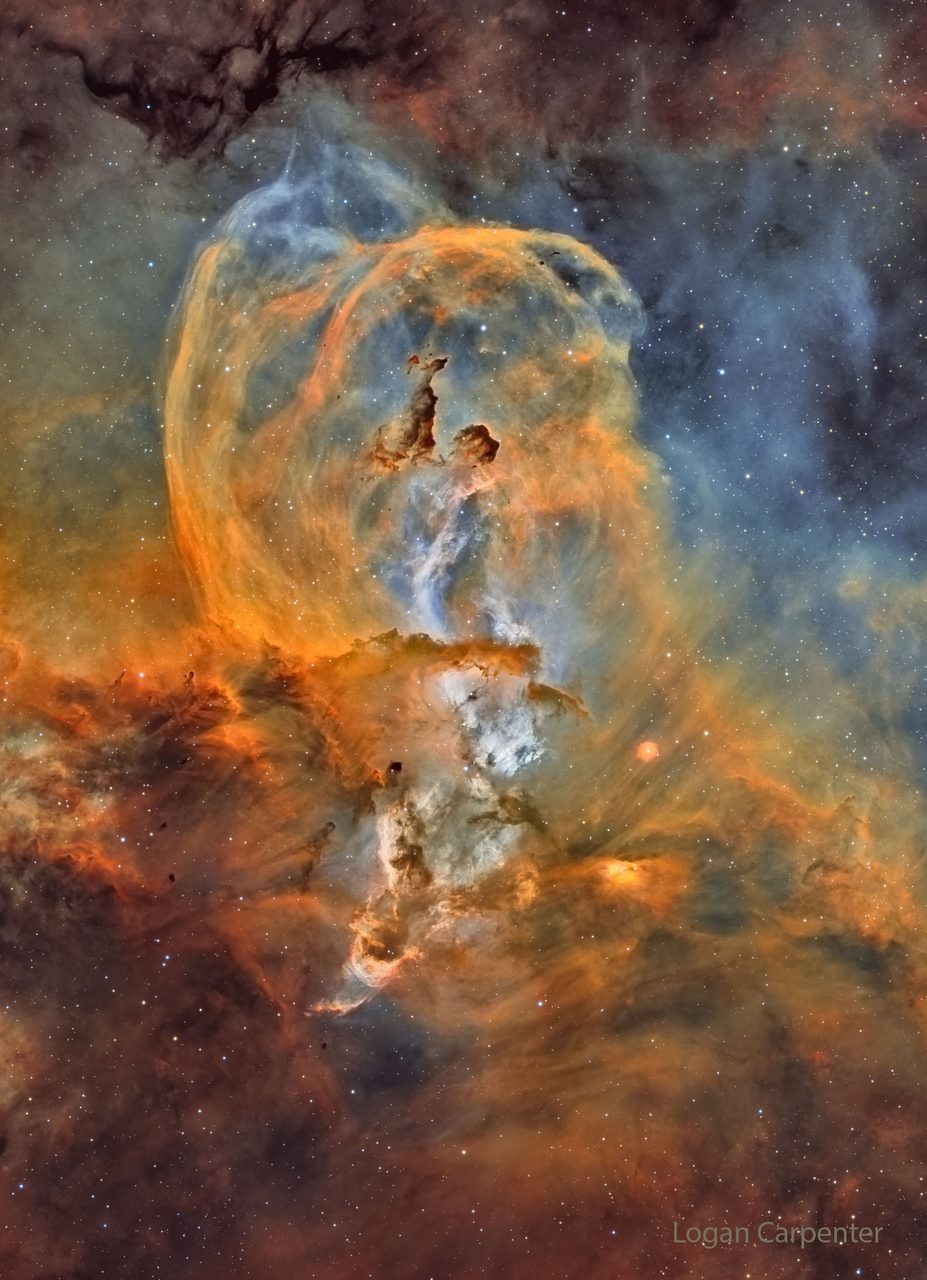
Exploring the Elephant's Trunk: A Celestial Marvel in Cepheus
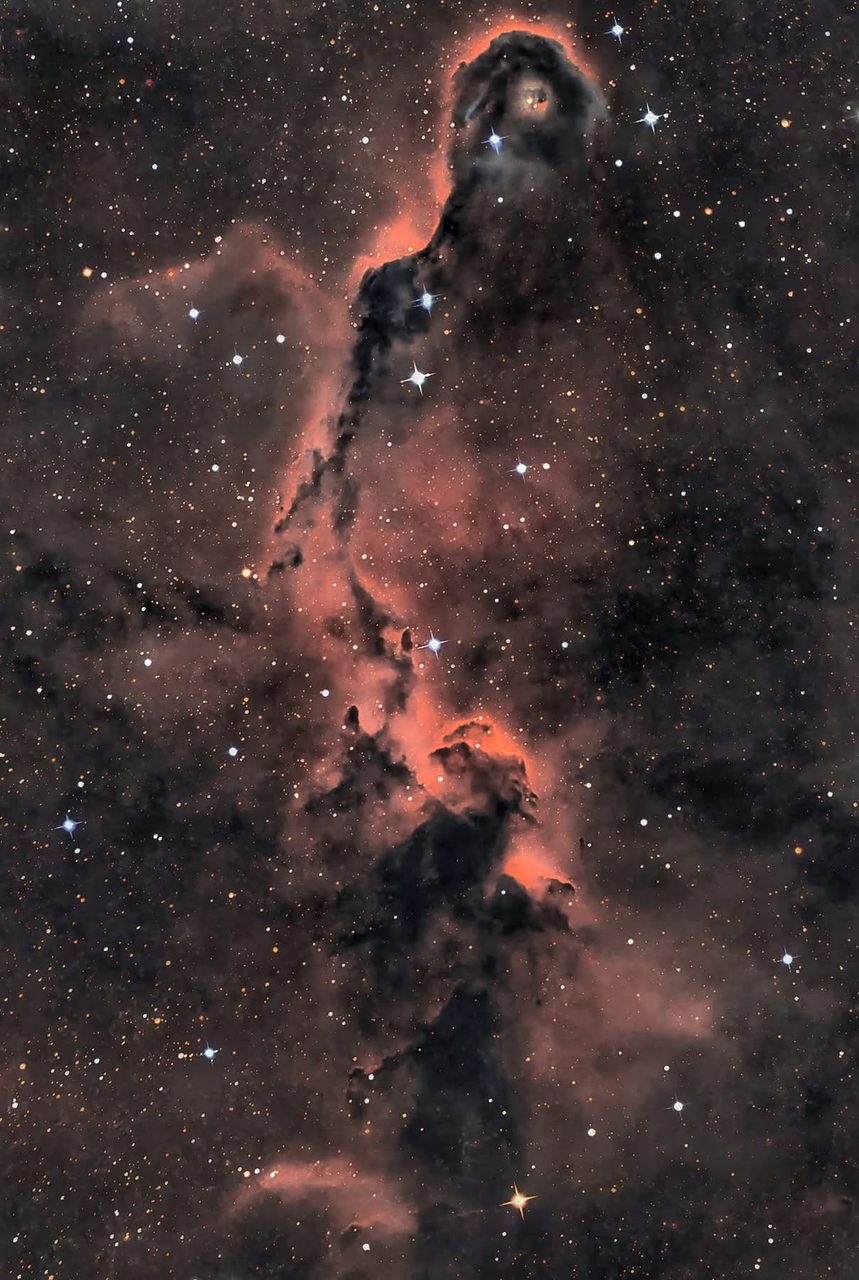
The Elephant's Trunk Nebula, a star-forming region in Cepheus, stretches over 20 light-years, revealing cosmic dust and hidden protostars.
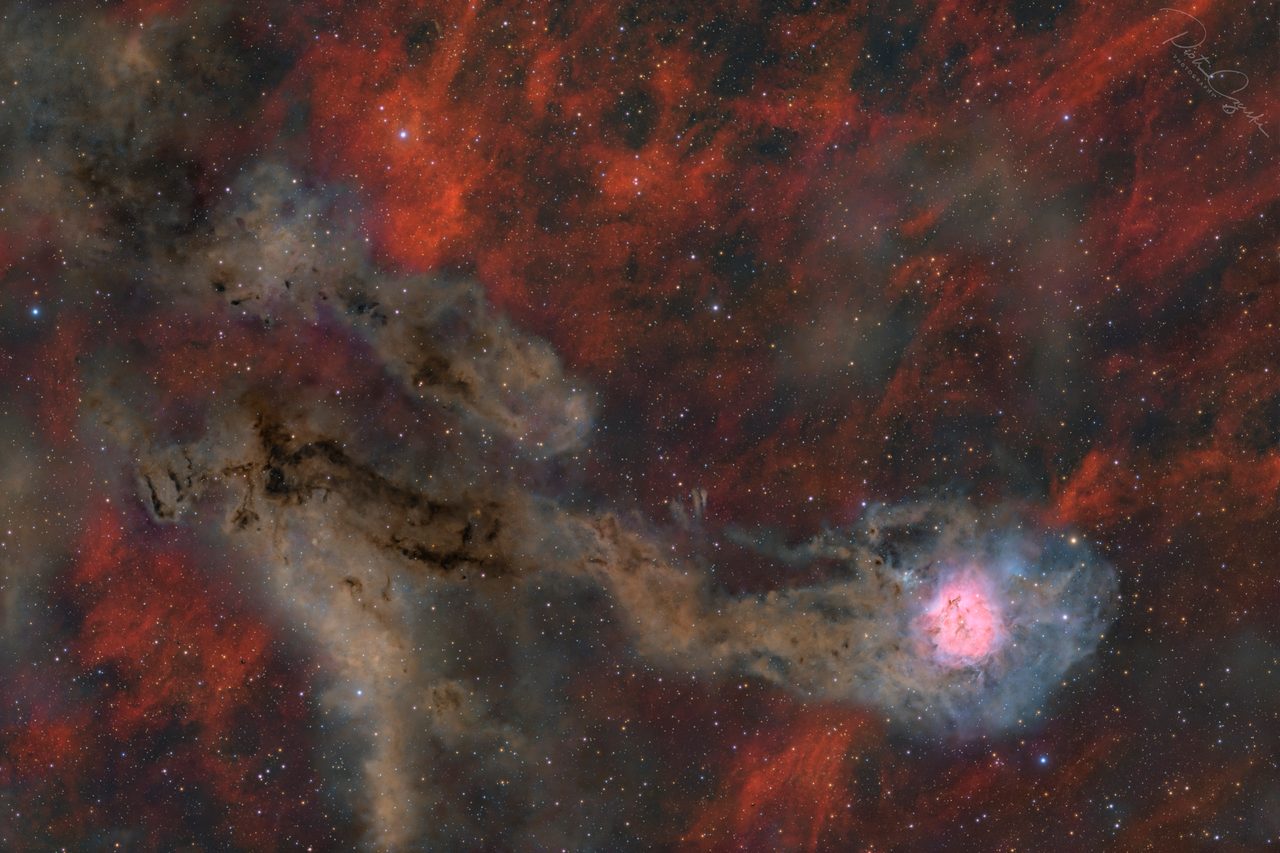
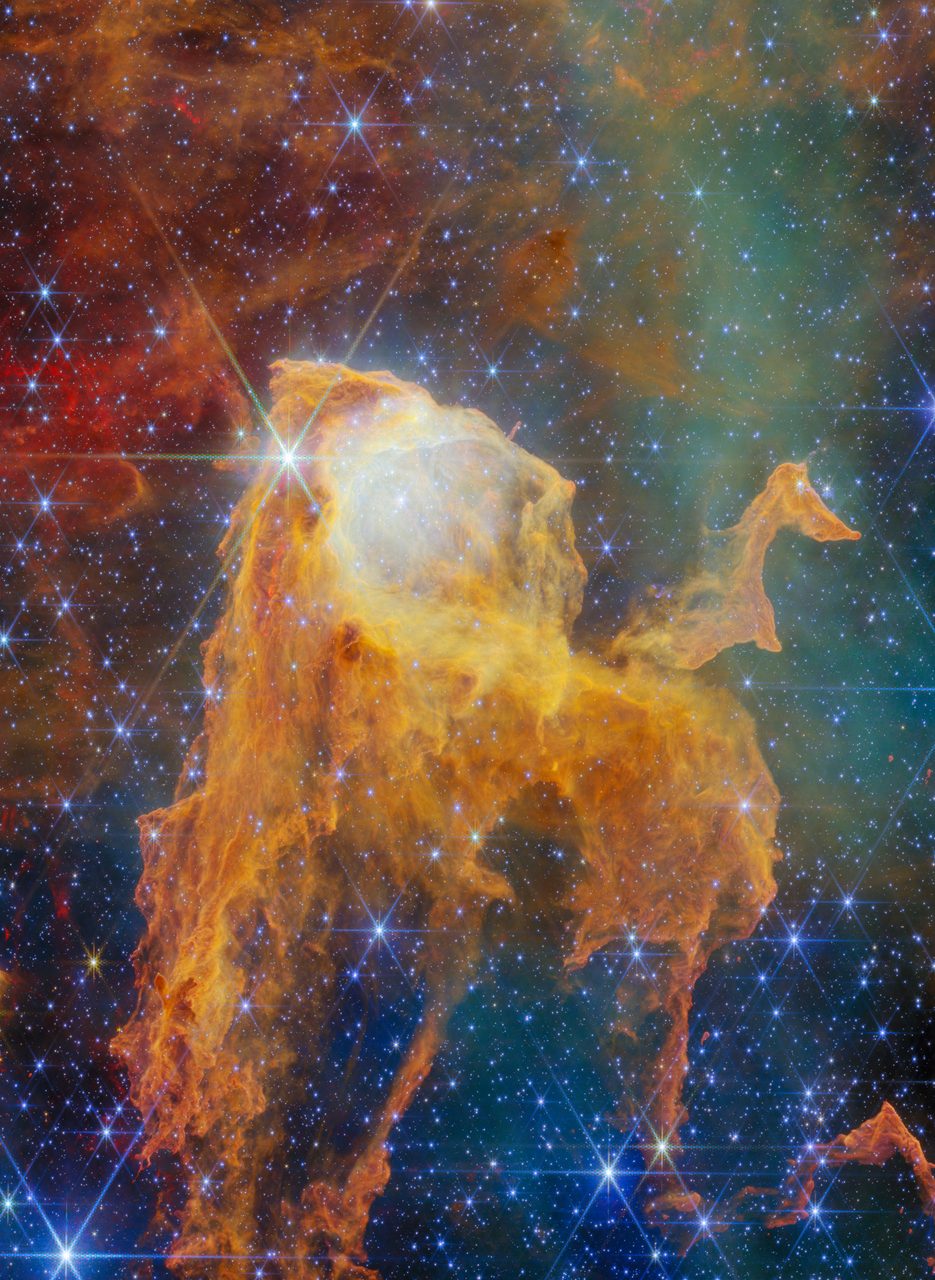
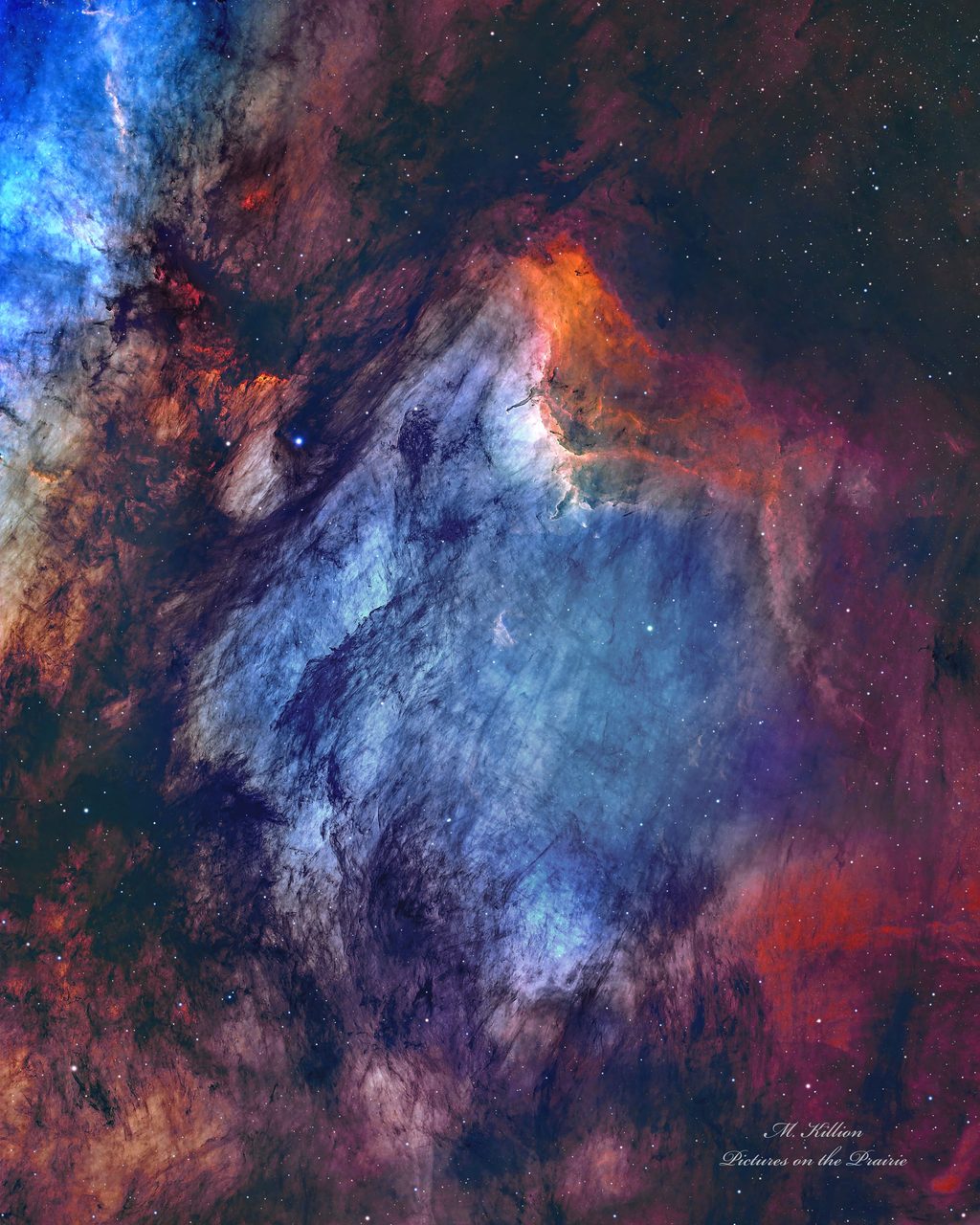
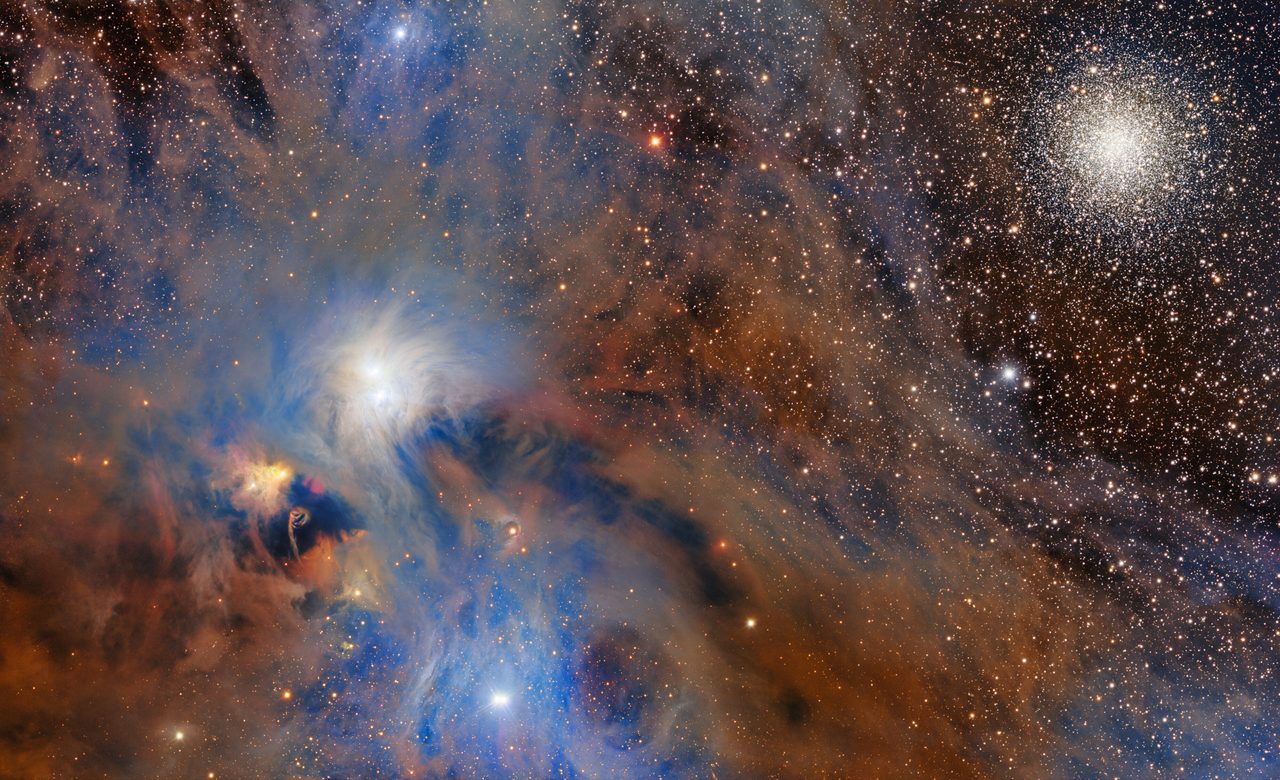
The Elephant's Trunk Nebula, also known as vdB 142, is a striking feature within the emission region and young star cluster complex IC 1396, located in the constellation of Cepheus. This cosmic structure, resembling an elephant's trunk, spans over 20 light-years and is a hub of star formation activity. The nebula's intricate details, captured in telescopic images, highlight bright ridges and dark clouds of interstellar dust and gas. These dark tendrils contain the raw materials for star formation, concealing nascent protostars within their depths. Situated nearly 3,000 light-years from Earth, IC 1396 covers an area on the sky larger than 5 degrees, with the Elephant's Trunk itself extending across a field of view comparable to the angular size of two full moons.
The Science Behind the Nebula
The Elephant's Trunk Nebula is a prime example of a star-forming region, where the interplay of gravity and radiation pressure shapes the cosmic landscape. The bright ridges are illuminated by the radiation from nearby massive stars, which also sculpt the surrounding gas and dust into intricate forms. These regions are critical to our understanding of stellar evolution as they offer a glimpse into the early stages of star formation. Observations of such nebulae help astronomers refine models of how stars and planetary systems develop from clouds of interstellar material. For those interested in tracking the movement of satellites that might pass through this region of the sky, the Orbital Radar pass predictor provides detailed visibility schedules.
Frequently Asked Questions
What is the Elephant's Trunk Nebula?
How long is the Elephant's Trunk Nebula?
📎 Cite this article
Orbital Radar Newsroom. (2026). Exploring the Elephant's Trunk: A Celestial Marvel in Cepheus. Orbital Radar. https://orbitalradar.com/blog/cosmic-gallery-2026-08-20"Exploring the Elephant's Trunk: A Celestial Marvel in Cepheus." Orbital Radar, 21 August 2026, https://orbitalradar.com/blog/cosmic-gallery-2026-08-20.@misc{orbitalradar_cosmic_gallery_2026_08_20,
title = {Exploring the Elephant's Trunk: A Celestial Marvel in Cepheus},
author = {{Orbital Radar}},
year = {2026},
howpublished = {\url{https://orbitalradar.com/blog/cosmic-gallery-2026-08-20}}
}