How Long to Get to Jupiter? Real Mission Travel Times
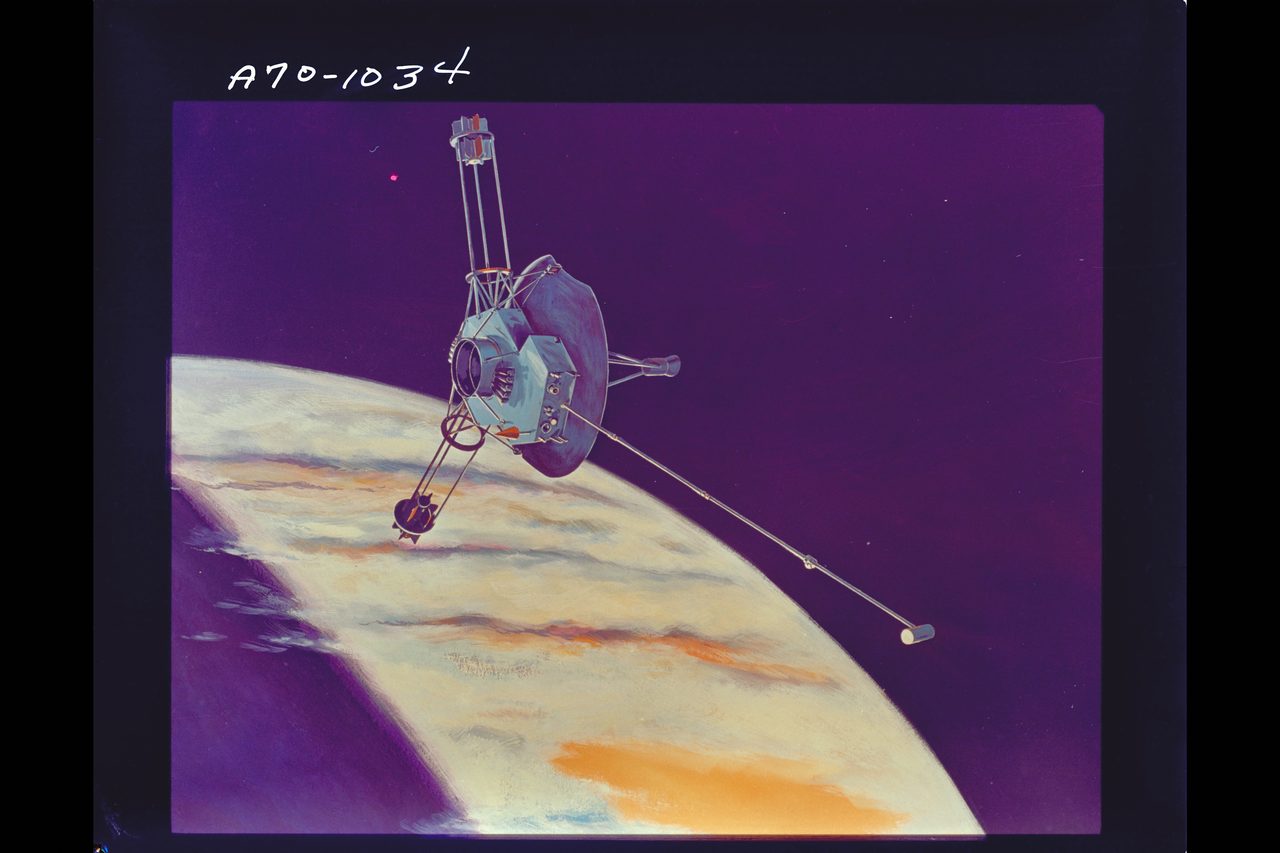
Reaching Jupiter can take less than two years or around eight. Real missions show why a quick flyby and a spacecraft built to stay need very different routes.
| Active satellites | 16,753 |
| Starlink active | 9,619 |
| Catalogued objects | 32,120 |
| Active close approaches | 19 |
| People in space | 10 |
Getting to Jupiter has taken roughly 13 months to five years for spacecraft that have already arrived. Europa Clipper and Juice are following routes scheduled to take about six and eight years respectively, so there is no single answer to how long the journey takes.
The comparison here measures launch-to-Jupiter travel time, separating completed journeys from scheduled arrivals. Reaching Jupiter also does not mean reaching a particular moon: later encounters belong to a different mission milestone.
Travel time depends on launch energy, planetary alignment and whether a spacecraft flies past Jupiter or must slow down enough to remain in orbit. Orbital Radar’s Europa Clipper page provides context for that mission; the worlds hub puts planetary destinations in perspective.
Deep-space journeys sit beyond a much busier near-Earth environment. Orbital Radar tracking data lists 16,753 active satellites in Earth orbit as of 28 November 2026. Orbital Radar’s live catalogue contains 32,120 objects, including debris, as of 28 November 2026.
What is the shortest time a spacecraft has taken to reach Jupiter?
New Horizons made the fastest journey to Jupiter so far: launched in January 2006, it passed the planet in February 2007, roughly 13 months later, on its way to Pluto. That was a flyby, not an arrival into orbit.
New Horizons used Jupiter for a gravity assist (a planetary encounter that changes a spacecraft’s speed and direction), gaining speed for its onward journey. It did not attempt the substantial braking manoeuvre needed to become a Jupiter orbiter.
The distinction matters when comparing mission travel times:
MissionLaunchJupiter encounter or arrivalApproximate elapsed timeMission type at JupiterNew HorizonsJanuary 2006February 200713 monthsFlybyVoyager 1September 1977March 197918 monthsFlybyJunoAugust 2011July 2016About five yearsOrbital mission
New Horizons’ roughly 13-month flight is a historical benchmark, not a universal minimum or a promise for future spacecraft. Travel time depends on launch energy, planetary alignment, spacecraft mass and whether the destination requires a brief encounter or capture into orbit.
A faster approach can also mean more demanding braking at the destination. Orbital Radar’s interactive planetary globes provide context for the worlds involved, but a mission’s planned trajectory—not distance alone—determines its journey time.
How long did Pioneer 10 and Pioneer 11 take to reach Jupiter?
Pioneer 10 took about 21 months to reach Jupiter, launching in March 1972 and flying past the planet in December 1973. Pioneer 11 followed with a journey of about 20 months, from its April 1973 launch to its December 1974 Jupiter flyby.
Both spacecraft followed relatively direct outbound trajectories and flew past Jupiter rather than entering orbit. They did not need to slow down enough for Jupiter’s gravity to capture them, an important distinction when comparing their journeys with those of heavier modern orbiters.
The Pioneers were reconnaissance missions: they returned close-range observations and investigated Jupiter’s magnetic field, charged particles and intense radiation environment. Their measurements helped establish the hazards later spacecraft would face. Their travel times therefore describe fast encounters, not a standard timetable for missions designed to remain at Jupiter and study it over many years.
These historic deep-space journeys are distinct from the Earth-orbiting population: Orbital Radar tracking data lists 16,753 active satellites as of 28 November 2026. Orbital Radar’s live catalogue contains 32,120 objects, including debris, as of 28 November 2026. For broader planetary context, Orbital Radar’s Worlds hub provides access to its interactive globes.
How long did Voyager 1 and Voyager 2 take to get there?
Voyager 1 took roughly 18 months to reach Jupiter, from its September 1977 launch to its March 1979 flyby. Voyager 2 took roughly 23 months, launching in August 1977 and reaching Jupiter in July 1979. Voyager 1 arrived first despite launching later because the spacecraft followed different trajectories, not because launch order dictated arrival order.
Neither spacecraft needed to slow down enough for Jupiter’s gravity to capture it into orbit. Instead, each swept past the planet, collecting observations of its atmosphere, moons, rings and magnetic environment before continuing outwards. These were travelling encounters, rather than the beginning of an extended stay.
Jupiter also provided a gravity assist: an encounter that changes a spacecraft’s speed and direction relative to the Sun through interaction with a moving planet. That made Jupiter both a scientific destination and a gravitational stepping stone towards later encounters. Both Voyagers subsequently reached Saturn; Voyager 2 continued to Uranus and Neptune.
These journeys differ from the Earth-orbiting population: Orbital Radar tracking data lists 16,753 active satellites as of 28 November 2026. Orbital Radar’s live catalogue contains 32,120 objects, including debris, as of 28 November 2026. For the planetary setting of the Voyager encounters, Orbital Radar’s Worlds page provides a complementary view.
Why did Juno take about five years to reach Jupiter?
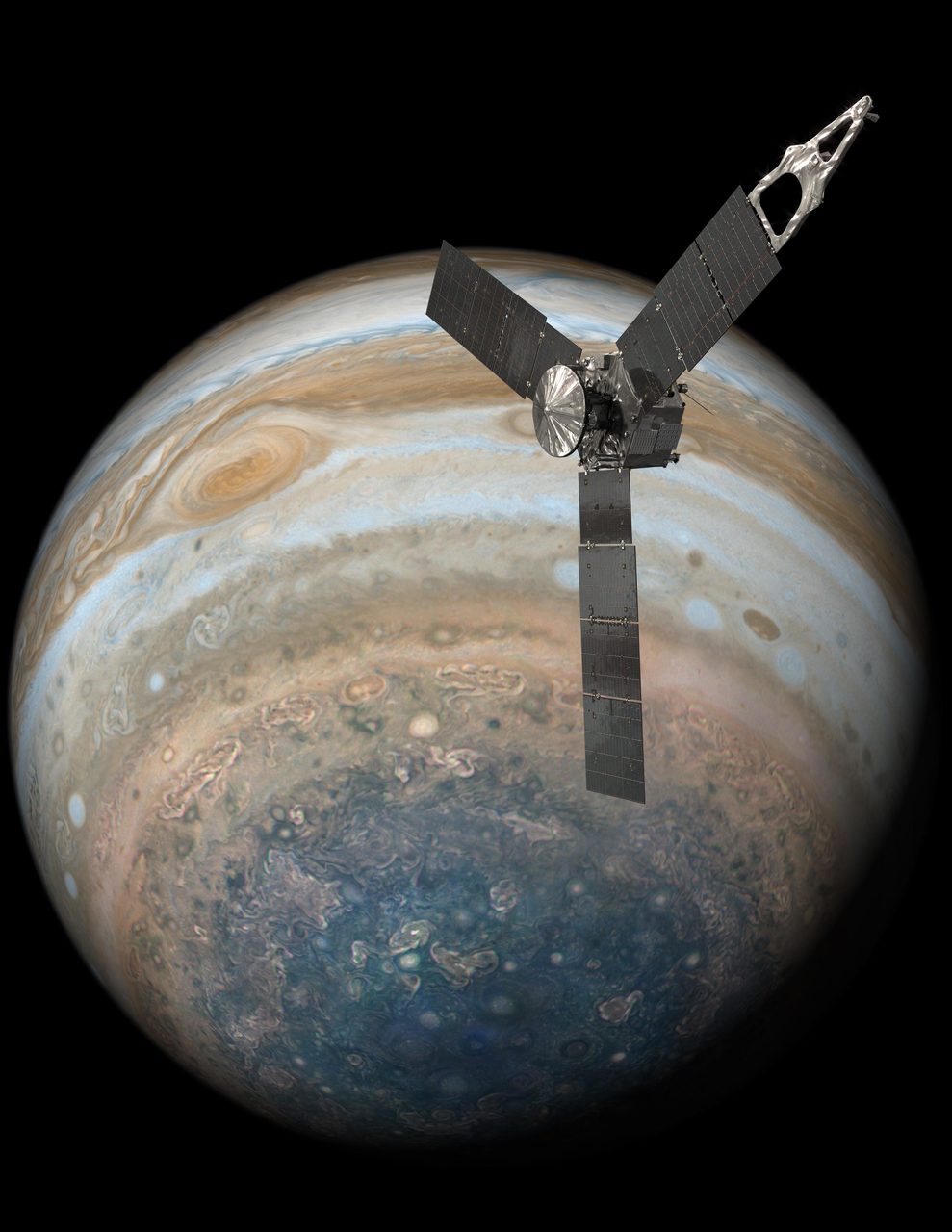
Juno took about five years to reach Jupiter because its route included a return to Earth for a gravity assist, followed by an approach designed for entering orbit rather than simply racing past. Juno launched in August 2011 and entered orbit around Jupiter in July 2016.
Juno flew past Earth in October 2013, using our planet’s gravity to reshape its trajectory. The spacecraft first travelled away from the Sun before returning to Earth’s vicinity. Passing a moving planet can transfer a small amount of the planet’s orbital energy to a spacecraft: Juno gained heliocentric energy, meaning energy in its orbit around the Sun. That encounter helped send it onwards to Jupiter without requiring the launch rocket to supply all the necessary energy.
Reaching Jupiter quickly and becoming its satellite are different engineering problems. A fast flyby spacecraft can continue outwards after its encounter; an orbiter must reduce its speed relative to Jupiter enough for the planet’s gravity to retain it. Juno’s route therefore had to deliver an arrival that its available propellant and main engine could turn into a captured orbit.
The launch, Earth flyby and arrival milestones can be followed on Orbital Radar’s Juno mission page. Those dates describe its completed journey to Jupiter, not its current operational status: the July 2016 milestone marks orbital arrival, not the end of the mission.
How long will Europa Clipper take to reach Jupiter?
Europa Clipper launched in October 2024 and is scheduled to arrive at Jupiter in April 2030, a cruise of about five and a half years. That arrival marks the start of its time at Jupiter, not the completion of its investigation of Europa.
Its route uses a Mars gravity assist followed by an Earth gravity assist. A gravity assist is a planetary fly-by that changes a spacecraft’s speed and direction relative to the Sun by exchanging energy with the moving planet. The encounters reshape Clipper’s orbit around the Sun, building the trajectory needed to reach Jupiter rather than sending it straight there.
At its destination, Europa Clipper will orbit Jupiter and repeatedly fly past Europa, rather than enter orbit around the moon itself. These encounters will let its instruments examine Europa’s icy surface and investigate the ocean beneath it. Spending much of each orbit away from Europa also limits exposure to the intense radiation around the moon.
The scheduled April 2030 arrival is therefore distinct from the subsequent science campaign. Follow the route and milestones on Orbital Radar’s Europa Clipper page, with planetary context in its Worlds globes.
By contrast, Earth’s orbital population is already substantial: Orbital Radar tracking data lists 16753 active satellites as of 28 November 2026. Orbital Radar’s live catalogue lists 32120 objects, including debris, as of 28 November 2026.
Why is Juice taking about eight years to reach Jupiter?
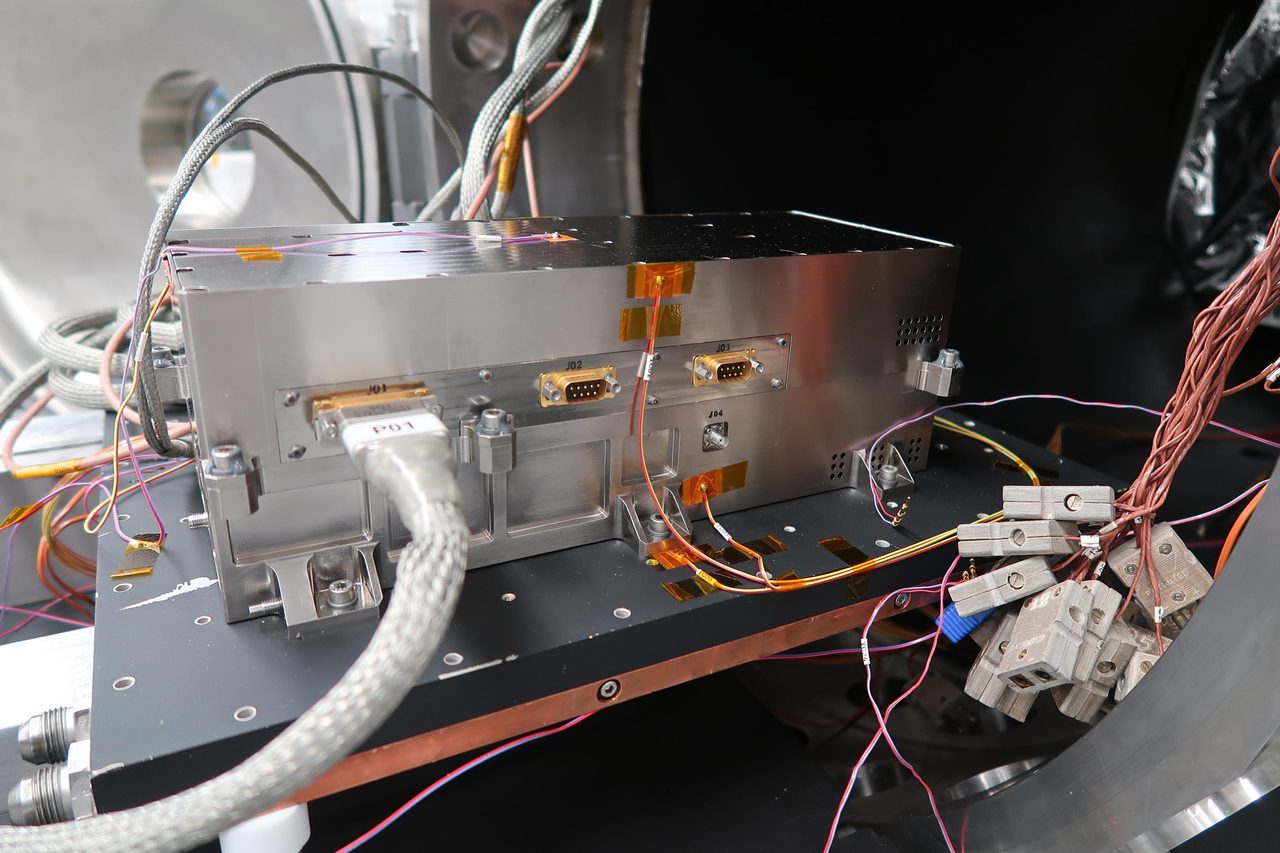
Juice is taking about eight years to reach Jupiter because its route uses repeated planetary encounters to build the speed and reshape the trajectory needed for the journey. The European Space Agency’s Jupiter Icy Moons Explorer launched in April 2023 and is scheduled to arrive at Jupiter in July 2031.
Rather than heading directly outwards, Juice follows a looping path through the inner Solar System. It completed an Earth–Moon flyby in August 2024, passing the Moon and then Earth, followed by a Venus flyby in August 2025. Its route also includes Earth encounters in September 2026 and January 2029; the final Earth return remains ahead before the outward journey to Jupiter.
These encounters provide gravity assists (changes in a spacecraft’s speed and direction through an encounter with a moving planet or moon). By exchanging a tiny amount of energy with those bodies, Juice can gain energy without supplying the equivalent change entirely through engine burns. The longer cruise therefore makes the journey possible within its chosen launch and propulsion budget; a faster route would require a different balance of launch capability, propellant and spacecraft mass.
Arrival at Jupiter is not arrival in orbit around Ganymede. Juice must first tour the Jupiter system, studying its icy moons, before its later planned entry into orbit around Ganymede. Orbital Radar’s Juice mission overview separates these milestones, which answer different questions about when the spacecraft reaches its destinations.
Why not launch straight at Jupiter and get there faster?
Launching straight towards Jupiter does not guarantee a faster journey: a spacecraft must follow an orbit around the Sun that meets the moving planet. It inherits Earth’s motion around the Sun, so its departure burn reshapes that existing solar orbit rather than sending it along a straight line. Navigators target Jupiter’s future position, not where it appears today.
Launch energy describes the energy per unit mass available for departure from Earth; higher launch energy permits faster outbound trajectories. Delta-v is the change in velocity a spacecraft can produce using its propulsion system. With a given rocket, sending more payload generally leaves less capacity for a high-energy departure, while carrying extra propellant adds mass that must itself be accelerated.
A gravity assist (a planetary flyby that changes a spacecraft’s velocity relative to the Sun) can make the route longer while reducing propulsion requirements. Exchanging energy with a moving planet can make a mission practical without a larger launcher or an unaffordable propellant load.
Faster arrival also creates a problem for orbiters: they must shed enough speed to become bound to Jupiter. A quicker cruise can therefore demand more braking propellant, reducing the mass available for instruments.
Orbital Radar tracking data recorded 16,753 active satellites in Earth orbit on 28 November 2026. Launching into Earth orbit and departing into interplanetary cruise are distinct flight regimes; that satellite count describes a different operating environment and cannot estimate Jupiter travel time. Orbital Radar’s planetary globes provide context for the destinations beyond Earth orbit.
How long would it take humans to travel to Jupiter?
No human has travelled to Jupiter, and no operational crewed Jupiter transport provides a demonstrated journey time. A credible estimate would require a specified propulsion system, trajectory and destination—not simply a distance divided by a spacecraft’s speed.
New Horizons’ roughly 13-month journey to its Jupiter flyby and Juno’s five-year cruise, documented on Orbital Radar, are robotic reference points, not predictions for a crewed spacecraft. Flying past Jupiter and slowing down to enter orbit require different mission designs.
Orbital Radar tracking data records 10 people in space as of 28 November 2026. Supporting astronauts on a Jupiter expedition would require life support, food, water and medical provision throughout the journey, alongside equipment reliable enough to operate far from help.
Orbital Radar tracking data records 16,753 active satellites in orbit on that date. That orbital population does not demonstrate readiness for crewed Jupiter travel: radiation protection and life-support equipment would add mass, changing propulsion requirements, while a return journey would require additional resources and careful trajectory planning.
Jupiter has no solid surface on which a crew could land. A human expedition would therefore need a defined destination: a flyby, orbit around Jupiter or one of its moons. Until those choices are specified, assigning a precise future travel time would imply certainty that does not exist.
How can I check Jupiter mission journeys on Orbital Radar?
Start with Orbital Radar’s Europa Clipper mission page and read the journey as a sequence of milestones, not a single travel-time figure. Distinguish the completed launch from gravity-assist encounters (planetary flybys that change a spacecraft’s speed and direction), the scheduled Jupiter arrival and later science milestones.
Check whether each milestone is recorded as completed or remains scheduled. Arrival at Jupiter and the start of particular observations are different events: a planned science campaign should not be read as something already achieved, or as the endpoint used to calculate launch-to-arrival travel time.
For comparison, use the Juno mission page at /deep-space/juno for a completed Jupiter arrival, and the Juice mission page for a longer cruise still under way. Treat Juice’s future encounters and arrival as plans, rather than completed events.
An arrival countdown measures time remaining until the scheduled milestone; it is not an estimate based on constant speed. Spacecraft change speed along curved trajectories, especially during planetary encounters. Likewise, any displayed distance needs a reference point: distance from Earth is not distance remaining to Jupiter, nor the total route still to be flown.
Orbital Radar’s live catalogue contained 32,120 objects, including debris, on 28 November 2026. That total is not a count of Jupiter-bound spacecraft: keep Earth-orbit catalogue information separate from the deep-space mission timelines when comparing journeys.
Key takeaways
- Jupiter travel times depend on the mission: New Horizons reached its flyby in roughly 13 months, while Juno took about five years to enter orbit.
- Pioneer and Voyager reached Jupiter in roughly 18–23 months, but their flybys did not require braking into Jupiter orbit.
- Europa Clipper is scheduled to arrive in 2030 and Juice in 2031, following routes that use planetary gravity assists.
- A longer journey can make a spacecraft's mass, propulsion and arrival requirements achievable rather than indicate an inferior route.
Frequently Asked Questions
How far away is Jupiter from Earth?
How long does a radio signal take to travel from Jupiter to Earth?
How often do launch opportunities to Jupiter occur?
Could nuclear propulsion shorten a journey to Jupiter?
Does a spacecraft keep its engines running all the way to Jupiter?
Cite this article
Pick a style, then copy it or download it for your reference manager.Orbital Radar. (2026, November 28). How Long to Get to Jupiter? Real Mission Travel Times. Retrieved November 28, 2026, from https://orbitalradar.com/blog/how-long-does-it-take-to-get-to-jupiter
“How Long to Get to Jupiter? Real Mission Travel Times.” Orbital Radar, 28 Nov. 2026, orbitalradar.com/blog/how-long-does-it-take-to-get-to-jupiter. Accessed 28 Nov. 2026.
Orbital Radar (2026) How Long to Get to Jupiter? Real Mission Travel Times. Available at: https://orbitalradar.com/blog/how-long-does-it-take-to-get-to-jupiter (Accessed: 28 November 2026).
Orbital Radar. “How Long to Get to Jupiter? Real Mission Travel Times.” Last modified November 28, 2026. https://orbitalradar.com/blog/how-long-does-it-take-to-get-to-jupiter.
@misc{orbitalradar_blog_how_long_does_it_take_to_get_to_jupiter,
  author       = {{Orbital Radar}},
  title        = {How Long to Get to Jupiter? Real Mission Travel Times},
  year         = {2026},
  month        = nov,
  howpublished = {\url{https://orbitalradar.com/blog/how-long-does-it-take-to-get-to-jupiter}},
  url          = {https://orbitalradar.com/blog/how-long-does-it-take-to-get-to-jupiter},
  urldate      = {2026-11-28},
  note         = {Accessed 2026-11-28}
}
TY - ELEC AU - Orbital Radar, TI - How Long to Get to Jupiter? Real Mission Travel Times PY - 2026 DA - 2026/11/28 PB - Orbital Radar UR - https://orbitalradar.com/blog/how-long-does-it-take-to-get-to-jupiter Y2 - 2026/11/28 LA - en ER -
Live figures change, so keep the date you accessed the page. How to cite Orbital Radar