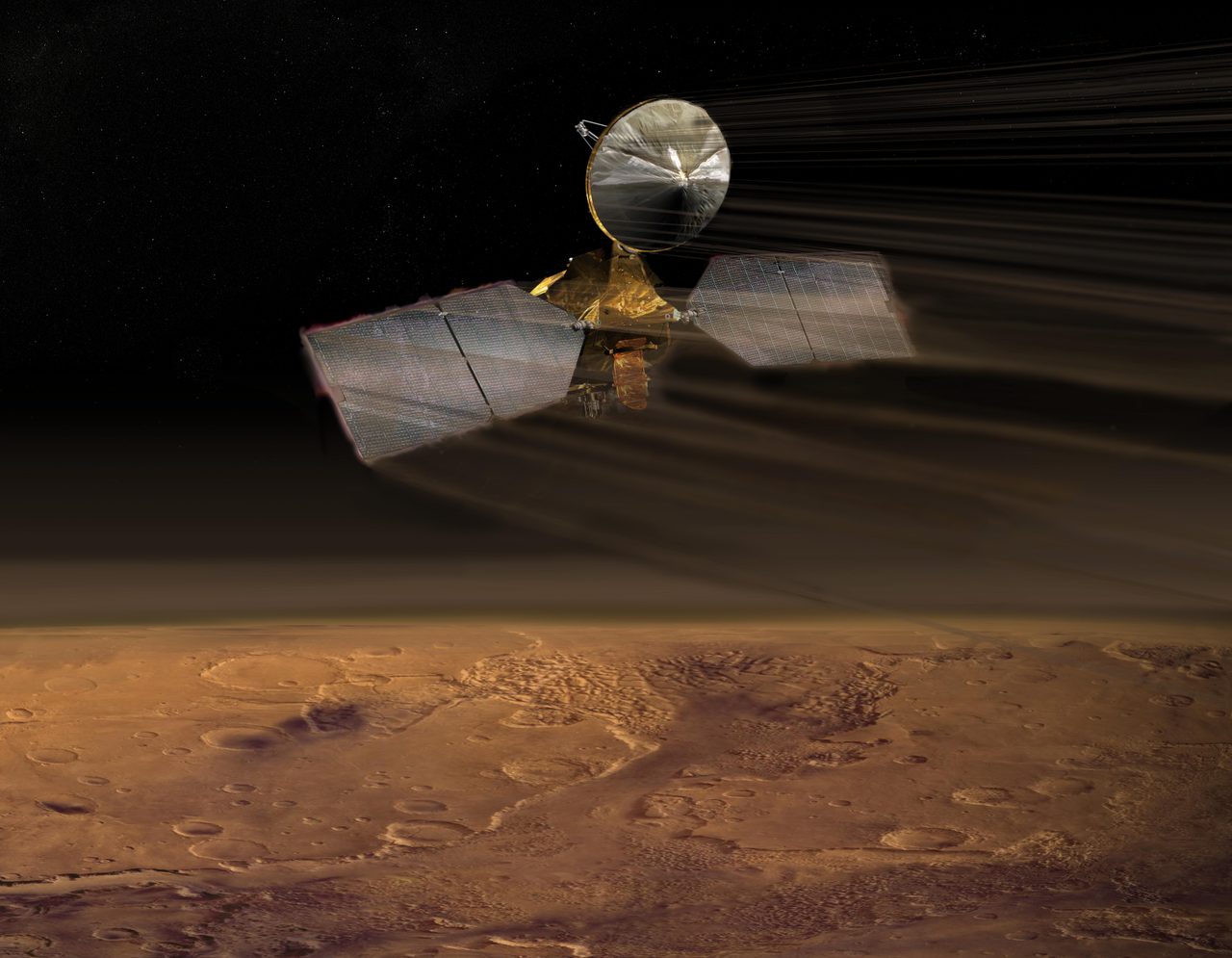
NASA vs ESA vs CNSA: How the Space Agencies Compare

NASA, ESA and CNSA represent different ways of organising space exploration. Their budgets, responsibilities and partnerships matter more than a simple ranking.
NASA is a United States federal agency, while ESA is an intergovernmental organisation through which European member states pool space programmes and expertise. Comparing NASA vs ESA therefore means comparing different responsibilities, funding arrangements and relationships with industry—not simply deciding which has greater capabilities.
China National Space Administration (CNSA) adds another distinction: it does not oversee every part of China’s space programme, including management of human spaceflight. Budgets, missions, human spaceflight and institutional responsibilities provide a more useful framework than declaring an overall winner.
Orbital Radar tracking data records 15,874 active satellites in orbit as of 21 October 2026. Orbital Radar tracking data records 10 people in space as of 21 October 2026. Those figures describe the wider space environment, not assets or activities controlled solely by these agencies.
Orbital Radar’s space agency directory introduces the organisations and their individual profiles. It provides a starting point for distinguishing what an agency funds, manages or commissions from the broader space capabilities of a country or group of countries.
Are NASA, ESA and CNSA responsible for the same things?
No. NASA, ESA and CNSA overlap in civilian space science and exploration, but they have different jurisdictions and do not control all space activity in their territories. Comparing them as equivalent organisations obscures who funds, operates and builds missions.
The National Aeronautics and Space Administration (NASA) is a US federal civilian agency, also responsible for aeronautics research. The European Space Agency (ESA) is an intergovernmental organisation, not an agency of the European Union: ESA programmes are distinct from EU-owned programmes such as Galileo and Copernicus, although ESA helps deliver them, and from national European space activities.
The China National Space Administration (CNSA) coordinates civilian space policy and international cooperation, rather than overseeing every Chinese mission. The China Manned Space Agency manages human spaceflight; the Chinese Academy of Sciences leads scientific activities; industrial contractors develop and build hardware.
Agency and jurisdictionCore responsibilitiesFundingAstronaut arrangementsIndustry relationshipNASA: United StatesCivilian science, exploration, aeronauticsFederal appropriationsOwn astronaut corpsProcures hardware and commercial servicesESA: member statesJoint science, exploration and applicationsMandatory and optional member contributions; partner agreementsOwn astronaut corpsContracts distributed under programme procurement rulesCNSA: ChinaCivilian policy and programme coordinationState fundingSeparate human-spaceflight administrationWorks with industrial contractors, predominantly state-owned
Orbital Radar’s agency profiles help distinguish these institutional roles. Orbital Radar tracking data records 15,874 active satellites on 21 October 2026. Orbital Radar tracking data records 10 people in space on 21 October 2026. Neither total belongs solely to these three agencies.
How do NASA, ESA and CNSA budgets really compare?
NASA, ESA and CNSA budgets are not directly comparable: an agency allocation, national civil-space spending and total government space expenditure measure different things. Civil spending supports science, exploration and civilian services; total government expenditure also includes military space programmes, which should be shown separately.
NASA receives congressional appropriations: funding enacted by the US Congress for a specified fiscal year. Its budget is not the whole US civil-space budget, because other departments fund civilian satellite programmes, nor does it include the separate defence-space budget.
ESA combines mandatory contributions, broadly assessed according to member states’ national income, with optional programmes that participating states choose to support. Its budget is not Europe’s total: national agencies and European Union programmes also finance space activity, with transfers requiring care to avoid double-counting.
Chinese spending is distributed across ministries, research institutions, military organisations and other bodies. A figure labelled a “CNSA budget” should therefore not automatically be read as China’s civil-space budget or total government space expenditure.
Orbital Radar tracking data records 15,874 active satellites as of 21 October 2026. Fleet size is not a proxy for public spending, particularly where commercial operators dominate. Orbital Radar tracking data records an estimated orbital mass of 15,800 tonnes as of 21 October 2026. Mass likewise cannot establish what an agency spends.
For a meaningful comparison, align fiscal-year dates, distinguish enacted funding from requests and actual expenditure, and identify programme coverage. State currencies and exchange-rate assumptions; purchasing-power adjustments reflect domestic buying power but not necessarily imported hardware costs. Orbital Radar’s government space budgets page is the natural follow-on for comparing those measures.
How do their human spaceflight programmes differ?
NASA runs an astronaut programme and buys crew transport services; ESA provides astronauts and station hardware but relies on partner-operated spacecraft to reach orbit. China operates its own crewed spacecraft and station, but these belong to the China Manned Space Agency’s programme, not to CNSA.
NASA astronauts reach the International Space Station (ISS) aboard SpaceX’s Crew Dragon, a commercially operated spacecraft contracted by NASA, and Russia’s Soyuz through seat-exchange arrangements. NASA shares responsibility for the ISS with international partners rather than owning the entire station. Its astronauts train for scientific experiments, maintenance, spacewalks and emergencies, alongside the operational demands of long-duration missions.
ESA’s astronaut corps undertakes similar training and work, but ESA does not operate a crew transport vehicle. European astronauts fly through partner arrangements, while ESA supplies infrastructure including the Columbus laboratory and supports experiments and station operations from ground centres. Providing astronauts, supplying a laboratory and operating a spacecraft are distinct capabilities: none automatically implies the others.
China’s Shenzhou spacecraft carry crews to Tiangong, where astronauts conduct research, maintain equipment and perform spacewalks under the China Manned Space Agency’s programme. Orbital Radar tracking data records 10 people in space across all programmes as of 21 October 2026. Orbital Radar’s space station guide provides wider context on the ISS and Tiangong, including the distinction between station infrastructure, transport and everyday operations.
How do their Moon and Mars programmes compare?
NASA combines Apollo’s crewed lunar heritage with Artemis and robotic Mars exploration; ESA contributes spacecraft systems and planetary science, while China has demonstrated lunar sample return and a Mars rover landing. These are different capabilities, not interchangeable measures of leadership.
Apollo landed astronauts on the Moon; Artemis seeks renewed crewed exploration. ESA’s European Service Module supplies Orion with propulsion, power, water and oxygen: a substantial lunar contribution, but ESA is a mission partner, not Artemis’s lead operator. NASA leads the programme; ESA supplies an essential spacecraft element.
On Mars, NASA’s Perseverance rover explores the surface and collects samples for possible return to Earth; collecting them is not the same as returning them. ESA’s Mars Express studies the planet from orbit. An orbiter circles its destination, a lander operates at a landing site, and a rover travels across the surface; a sample-return mission brings material back to Earth.
China’s Chang’e programme has demonstrated lunar landings, rover operations and sample return, including material from the Moon’s far side through Chang’e 6. Tianwen 1 delivered a Mars orbiter and the Zhurong rover. Proposed Chinese Mars sample-return missions remain plans, not completed achievements.
Orbital Radar tracking data records 10 people in space as of 21 October 2026. Orbital Radar tracking data records 15,874 active satellites in orbit as of 21 October 2026. Neither figure measures planetary exploration capability; Orbital Radar’s space agency directory provides context for comparing each organisation’s responsibilities and missions.
Is ESA mainly focused on Earth observation?
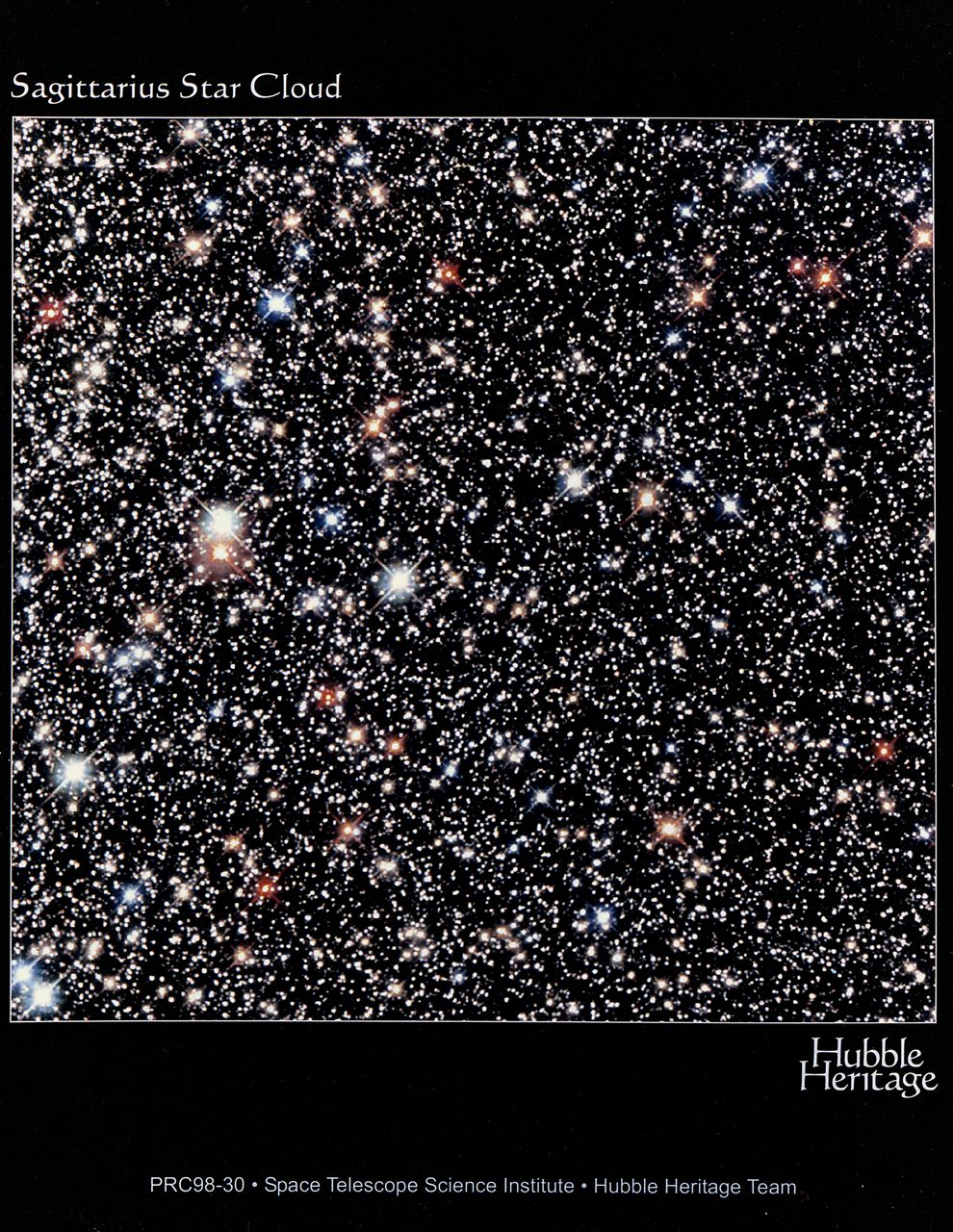
No. ESA conducts astronomy and planetary exploration as well as Earth observation; NASA works across those same fields, and China’s activities also span them. The NASA-versus-ESA comparison is therefore about responsibilities and priorities, not exploration versus observation.
ESA develops Copernicus Sentinel missions, but Copernicus is the European Union’s Earth-observation programme, not an ESA-owned programme. The European Commission manages it; ESA coordinates the space component, while operational partners including EUMETSAT, Europe’s meteorological satellite organisation, operate missions and deliver data. Orbital Radar tracking data records 15,874 active satellites across all operators as of 21 October 2026; that total is not a count of Earth-observation spacecraft.
International observatories also resist single-agency labels. Hubble is a NASA–ESA partnership, while the James Webb Space Telescope brings together NASA, ESA and the Canadian Space Agency. Solar Orbiter is ESA-led with NASA participation: instruments, spacecraft systems and scientific work can involve different partners.
These disciplines address different public needs. Climate observations support adaptation and environmental monitoring; solar research helps explain disturbances affecting satellites, navigation and electricity networks; planetary science investigates how worlds form and whether habitable environments exist elsewhere. Orbital Radar’s live catalogue contains 31,817 objects, including debris, as of 21 October 2026; solar activity can affect orbital motion by changing atmospheric drag. For the effects on spacecraft and their operations, see Orbital Radar’s space weather guide.
Who builds and launches each agency's spacecraft?
NASA, ESA and CNSA rely on industrial suppliers to build and launch spacecraft; an agency logo does not mean the agency manufactured every component. Funding, construction, launch procurement and operations are distinct responsibilities, often divided among different organisations.
NASA sets mission requirements and buys hardware or services from contractors, including SpaceX. For station transport, it purchases services; elsewhere, it commissions spacecraft and manages missions through NASA centres and contractors. Commercial provision still depends on government procurement, infrastructure and oversight.
SpaceX had 10,081 operational Starlink satellites as of 21 October 2026, according to Orbital Radar tracking data. SpaceX had launched 12,943 Starlink satellites in total as of 21 October 2026, according to Orbital Radar tracking data. That company-operated constellation should not be counted as a NASA programme merely because SpaceX also supplies NASA.
ESA commissions spacecraft from European industry, including Airbus Defence and Space and Thales Alenia Space. Its industrial-return policy links contract distribution to participating states' contributions. ESA is distinct from national agencies such as France's CNES and from Arianespace, which markets and operates Ariane launch services rather than setting ESA's science priorities.
In China, state-owned aerospace groups such as CASC build spacecraft and launch vehicles, alongside a growing commercial launch sector. CNSA is not the operator of every Chinese launch. The useful comparison is how procurement supports mission delivery, industrial capacity and strategic autonomy—not an unsupported launcher ranking; Orbital Radar's space agency directory provides context on each institution's remit.
Why do some agencies collaborate more closely than others?
Agencies collaborate most closely when political trust, legal permissions and complementary capabilities align. NASA–ESA cooperation combines instruments, spacecraft hardware, launch services and scientific teams, while agreements assign each partner distinct responsibilities rather than creating a single agency.
The International Space Station illustrates shared infrastructure: ESA supplied the Columbus laboratory, while NASA provides major operational and transport capabilities. Orbital Radar tracking data records 10 people in space on 21 October 2026; that total is not an ISS crew count.
James Webb is NASA-led, not exclusively NASA-built: ESA contributed the Ariane launch service, the NIRSpec spectrograph and part of the MIRI instrument, while Canada supplied guidance hardware and another instrument. Contributions come with defined operational responsibilities and scientific access.
US appropriations restrictions commonly called the Wolf Amendment constrain bilateral NASA cooperation with China unless specified authorisation or certification requirements are met. They are not a blanket ban on every scientific contact or all multinational cooperation involving Chinese researchers.
The Artemis Accords set out principles for civil space exploration; Artemis is NASA's exploration programme; a mission partnership allocates specific work. Signing the Accords does not automatically secure a spacecraft role, and contributing hardware does not make an organisation an Accords signatory.
China also pursues international partnerships, including its Russian-backed International Lunar Research Station initiative. National policy, CNSA agreements and individual research collaborations have different authority and scope: none automatically establishes the others.
Orbital Radar tracking data records 15,874 active satellites on 21 October 2026, but catalogue totals cannot establish partnership rights. Orbital Radar's space agency directory helps distinguish the institutions behind those agreements.
How do space debris and orbital safety affect all of them?
Space debris makes orbital safety a shared responsibility for NASA, ESA and CNSA: fragments cross national boundaries, and no agency controls the orbital environment. Orbital Radar's live catalogue contained 31,817 objects, including debris, as of 21 October 2026.
A catalogue is not a count of working satellites: it also includes inactive spacecraft, spent rocket bodies and fragments. On that date, Orbital Radar tracking data listed 15,874 active satellites in orbit. Tracked debris is only part of the hazard because smaller fragments can evade routine detection yet still damage spacecraft at orbital speeds; our space debris explainer sets out the distinction.
Space situational awareness means monitoring objects and conditions in space. A predicted close approach means orbital forecasts place objects near each other, not that a collision has happened or will happen. Tracking uncertainty and changing orbits affect assessments, so warnings require interpretation rather than automatic manoeuvres.
NASA, ESA and CNSA develop safety practices and manage risks within their programmes; none controls every object associated with its region. Spacecraft operators assess warnings and decide whether to manoeuvre, tracking organisations maintain orbital estimates, and regulators set applicable licensing and disposal requirements. Responsibilities vary by jurisdiction and mission. Orbital Radar's space debris map places these institutional differences in the shared environment where their spacecraft operate.
How can you explore the comparison live on Orbital Radar?
Start with Orbital Radar’s agency profiles at /space-agencies/nasa, /space-agencies/esa and /space-agencies/cnsa to explore NASA, ESA and CNSA responsibilities and mission context. Then use the tracking tools to place their activities within the wider orbital environment, rather than treating satellite counts as a league table.
Orbital Radar tracking data recorded 15,874 active satellites in orbit as of 21 October 2026. Open the space debris map to examine that shared environment; this global satellite total does not measure any individual agency’s capability.
When reading mission information, distinguish four roles: the agency sets or funds a programme; the operator controls the spacecraft; the manufacturer builds it; and the launching state has a legal relationship to its launch. These roles can involve different organisations and countries. A national association alone does not establish NASA, ESA or CNSA ownership.
For a useful NASA vs ESA comparison, choose the question before choosing the measure. Compare scientific objectives if you want to understand research priorities, crew access if you are interested in human spaceflight, or exploration roles to distinguish leadership from contributions to shared missions. For public spending, compare budgets with attention to what each institution funds: the result should answer your question, not declare a universal winner.
Key takeaways
- NASA, ESA and CNSA are not equivalent organisations, so a useful comparison begins with their responsibilities rather than a league table.
- Budget comparisons are meaningful only when they distinguish agency spending from wider national programmes and account for differences in scope.
- NASA and ESA combine independent capabilities with extensive partnerships, while China's space activities extend beyond CNSA's remit.
- Orbital Radar's agency profiles and debris map connect institutional differences with mission context and the orbital environment they share.
Frequently Asked Questions
Can a European citizen apply to become a NASA astronaut?
Is the UK still a member of ESA after Brexit?
Is SpaceX part of NASA?
Does ESA have its own mission control centre?
Where do NASA, ESA and CNSA have their headquarters?
Cite this article
Pick a style, then copy it or download it for your reference manager.Orbital Radar. (2026, May 31). NASA vs ESA vs CNSA: How the Space Agencies Compare. Retrieved November 29, 2026, from https://orbitalradar.com/blog/nasa-vs-esa-vs-cnsa-compared
“NASA vs ESA vs CNSA: How the Space Agencies Compare.” Orbital Radar, 31 May 2026, orbitalradar.com/blog/nasa-vs-esa-vs-cnsa-compared. Accessed 29 Nov. 2026.
Orbital Radar (2026) NASA vs ESA vs CNSA: How the Space Agencies Compare. Available at: https://orbitalradar.com/blog/nasa-vs-esa-vs-cnsa-compared (Accessed: 29 November 2026).
Orbital Radar. “NASA vs ESA vs CNSA: How the Space Agencies Compare.” Last modified May 31, 2026. https://orbitalradar.com/blog/nasa-vs-esa-vs-cnsa-compared.
@misc{orbitalradar_blog_nasa_vs_esa_vs_cnsa_compared,
  author       = {{Orbital Radar}},
  title        = {NASA vs ESA vs CNSA: How the Space Agencies Compare},
  year         = {2026},
  month        = may,
  howpublished = {\url{https://orbitalradar.com/blog/nasa-vs-esa-vs-cnsa-compared}},
  url          = {https://orbitalradar.com/blog/nasa-vs-esa-vs-cnsa-compared},
  urldate      = {2026-11-29},
  note         = {Accessed 2026-11-29}
}
TY - ELEC AU - Orbital Radar, TI - NASA vs ESA vs CNSA: How the Space Agencies Compare PY - 2026 DA - 2026/05/31 PB - Orbital Radar UR - https://orbitalradar.com/blog/nasa-vs-esa-vs-cnsa-compared Y2 - 2026/11/29 LA - en ER -
Live figures change, so keep the date you accessed the page. How to cite Orbital Radar