China plans lunar rendezvous: Orbital Briefing, 3 November
China’s planned crewed Moon landing relies on separate launches and a lunar rendezvous. Meanwhile, close approaches and a busy launch schedule draw attention closer to Earth.
| Active satellites | 15,951 |
| Starlink active | 9,906 |
| Catalogued objects | 31,955 |
| Active close approaches | 24 |
| People in space | 10 |
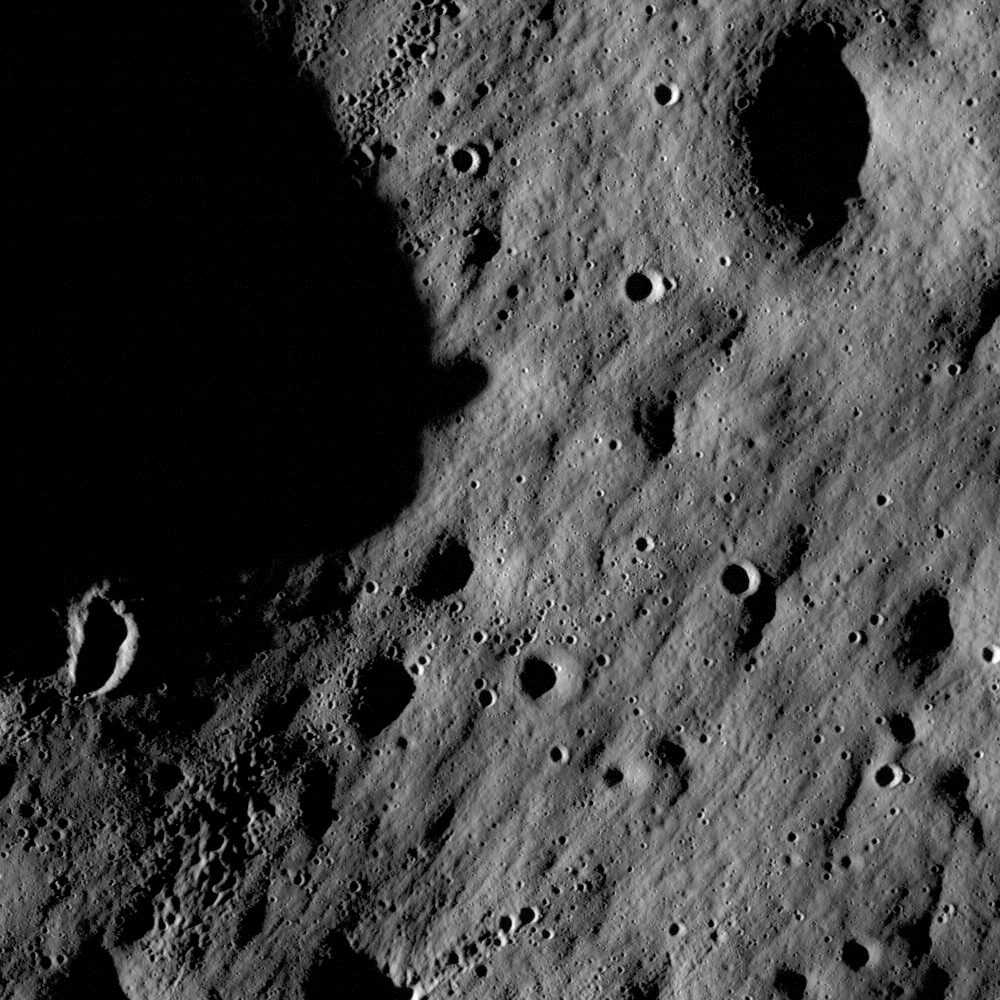
China’s planned crewed Moon landing will use separate launches and a rendezvous in lunar orbit, according to a SpacePolicyOnline report. The approach makes joining spacecraft around the Moon a central step in delivering taikonauts — Chinese astronauts — to the surface.
A lunar-orbit rendezvous means spacecraft meet while circling the Moon, rather than sending the entire landing mission as a single assembled vehicle. It places particular importance on navigation, docking and coordinating the separately launched spacecraft; the report describes a plan, not a completed flight demonstration.
Close approaches need context
Orbital Radar tracking data lists 24 active close approaches on 3 November 2026. Among the encounters being tracked are HOTSAT-3 and FLOCK 4J-10, with a minimum separation of approximately 1.44 km, and TIANHUI 5C and TIANHUI 5D, at approximately 1.19 km.
PROBA-3 CSC and PROBA-3 OSC also appear, with a minimum separation of approximately 1.01 km. Distance alone is not a collision probability: assessing danger also requires the uncertainty in each predicted position and the geometry of the encounter, while spacecraft deliberately operating together need different interpretation from unrelated traffic.
Orbital Radar’s space situational awareness toolkit provides context for monitoring objects and their orbital relationships. A close-approach listing should not, by itself, be read as evidence that an avoidance manoeuvre is required.
Starlink scale and Amazon’s next step
Starlink has 9,906 operational satellites as of 3 November 2026, according to Orbital Radar tracking data. Its separate orbit-raising and deorbiting populations underline why a constellation’s operational count is different from its cumulative launch total; the Starlink Tracker follows the fleet.
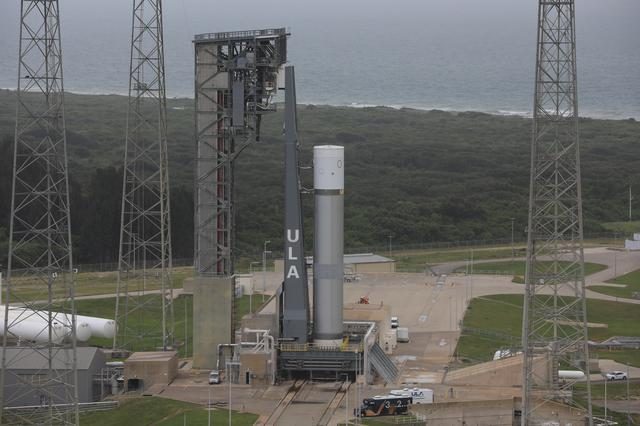
Amazon Leo, formerly Project Kuiper, has launched 396 satellites across 14 production missions. Its next scheduled mission, LV-01 aboard Vulcan Centaur, is no earlier than 13 November 2026, while consumer service has not yet opened.
Amazon says initial service will begin before the end of 2026 in the US, UK, France, Germany and Canada. The company’s conditional regulatory waiver keeps its licence in force, with all 3,232 first-generation satellites still due by 30 July 2029.
What to Watch
The Mir demonstration flight is listed for 4 November at 05:00 UTC, with timing still to be confirmed. China’s next listed missions are Long March 2C on 5 November at 16:00 UTC and Long March 12 at 21:15 UTC; the latter is provisionally associated with a SatNet low Earth orbit internet deployment.
Ceres-2 follows on 6 November at 23:35 UTC, ahead of Falcon 9’s USSF-432 mission on 7 November at 00:46 UTC. These remain scheduled events rather than completed launches; changes can be followed on Orbital Radar’s Launch Schedule.
Space weather is comparatively quiet: the Kp index, a measure of global geomagnetic disturbance, stands at 3. Current regional risk indicators are green for low Earth orbit, geostationary orbit and the International Space Station.
Frequently Asked Questions
How does China plan to land astronauts on the Moon?
When is the next Amazon Leo launch?
📎 Cite this article · data available
Orbital Radar Newsroom. (2026). China plans lunar rendezvous: Orbital Briefing, 3 November. Orbital Radar. https://orbitalradar.com/blog/orbital-briefing-2026-11-03"China plans lunar rendezvous: Orbital Briefing, 3 November." Orbital Radar, 3 November 2026, https://orbitalradar.com/blog/orbital-briefing-2026-11-03.@misc{orbitalradar_orbital_briefing_2026_11_03,
title = {China plans lunar rendezvous: Orbital Briefing, 3 November},
author = {{Orbital Radar}},
year = {2026},
howpublished = {\url{https://orbitalradar.com/blog/orbital-briefing-2026-11-03}}
}