Electron targets iQPS launch: Orbital Briefing, 2 November
Rocket Lab targets an Electron launch for iQPS today, while close-approach tracking and questions over NASA's Swift telescope put orbital safety in focus.
| Active satellites | 15,954 |
| Starlink active | 9,916 |
| Catalogued objects | 31,932 |
| Active close approaches | 20 |
| People in space | 10 |
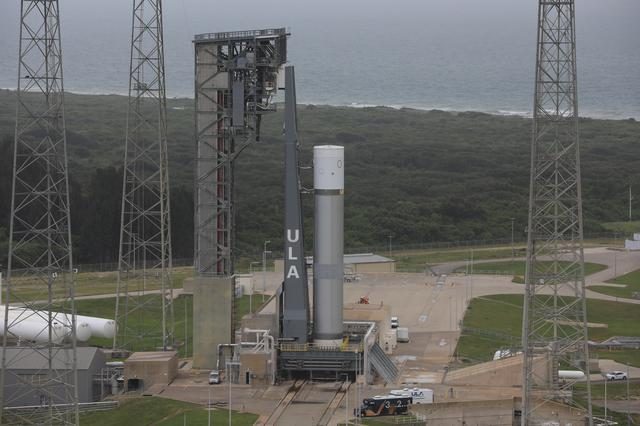
Rocket Lab's Electron is scheduled to launch The Sea God Surveys mission for iQPS at 16:41 UTC on 2 November 2026, according to Orbital Radar tracking data. The mission, also designated iQPS Launch 9, is listed as go for launch and bound for low Earth orbit (the region of space relatively close to Earth).
The flight follows successful launches of SpaceX's Starlink Group 15-18 on 31 October and the Indian Space Research Organisation's IRNSS-1L, also designated NVS-03, on 30 October. Today's attention shifts from those completed missions to whether Electron can carry the next iQPS payload into orbit.
Close approaches need context
Orbital Radar tracking data lists 20 active close approaches on 2 November 2026. Among the highlighted encounters, PROBA-3 CSC and PROBA-3 OSC have a listed minimum separation of approximately 1.50 km, while TIANHUI 2-01A and TIANHUI 2-01B are listed at approximately 1.55 km.
A close approach is not itself a collision prediction. Assessing danger requires more than distance: orbital uncertainty, relative velocity and whether spacecraft are deliberately operating near one another all matter. These separations alone do not establish that an avoidance manoeuvre is needed.
Orbital Radar's live catalogue lists 31,932 objects, including debris, on 2 November 2026. The space situational awareness toolkit provides a route into monitoring that crowded environment, while the Debris Map puts tracked objects in orbital context.
Swift raises re-entry questions
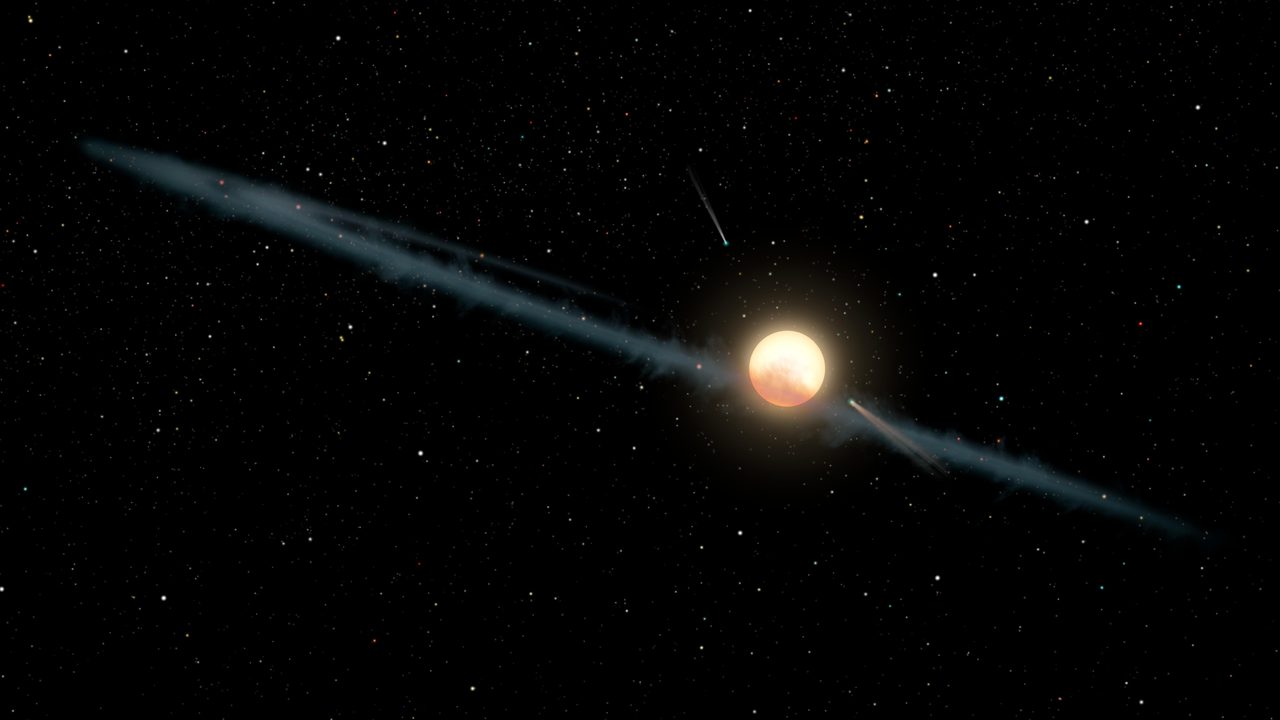
NASA's Swift space telescope is drawing attention over its eventual atmospheric re-entry, but a precise fall location should not be treated as settled. Re-entry forecasts change as atmospheric drag (the resistance exerted by the thin upper atmosphere) alters a spacecraft's orbit; a projected ground track is not a confirmed impact site.
Orbital Radar's Re-entry Tracker is the relevant page for following evolving predictions. The wider planetary-defence discussion is also in focus, with attention on how civil and military satellites observe fireballs and help researchers investigate incoming space rocks.
For spacecraft operators, today's space-weather indicators are comparatively quiet: the Kp index, a measure of global geomagnetic disturbance, stands at 0. The low Earth orbit, geostationary orbit and International Space Station risk indicators are all green, although this does not remove ordinary operational hazards.
What to Watch
After Electron, CAS Space's Kinetica 2 is scheduled for 00:10 UTC on 3 November, targeting polar orbit (an orbit passing over or near Earth's poles). Its SpaceSail group designation remains tentative. SpaceX's Falcon 9 mission USSF-432 follows at 01:28 UTC on 4 November, with low Earth orbit listed as its destination.
China's schedule then includes Long March 2C at 16:00 UTC and Long March 12 at 21:15 UTC on 5 November. The latter's SatNet group designation is tentative; readers can follow timing and status changes on Orbital Radar's Launch Schedule. Scheduled times remain targets rather than guarantees.
Frequently Asked Questions
When is Rocket Lab's next iQPS launch?
Does the PROBA-3 close approach mean a collision is likely?
📎 Cite this article · data available
Orbital Radar Newsroom. (2026). Electron targets iQPS launch: Orbital Briefing, 2 November. Orbital Radar. https://orbitalradar.com/blog/orbital-briefing-2026-11-02"Electron targets iQPS launch: Orbital Briefing, 2 November." Orbital Radar, 2 November 2026, https://orbitalradar.com/blog/orbital-briefing-2026-11-02.@misc{orbitalradar_orbital_briefing_2026_11_02,
title = {Electron targets iQPS launch: Orbital Briefing, 2 November},
author = {{Orbital Radar}},
year = {2026},
howpublished = {\url{https://orbitalradar.com/blog/orbital-briefing-2026-11-02}}
}