This Week in Orbit: Starship Flight 15 returns to Earth
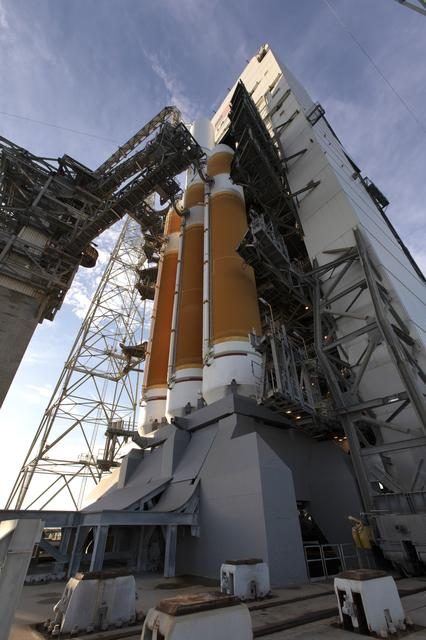
Starship's first upper-stage tower catch led the week's spaceflight developments, alongside successful launches, close-approach tracking and preparations for further constellation deployments.
| Active satellites | 16,682 |
| Starlink active | 9,815 |
| Catalogued objects | 32,110 |
| Active close approaches | 16 |
| People in space | 10 |
Week Overview
SpaceX caught a Starship upper stage returning from orbit for the first time this week, bringing a central element of its reusable launch system into operational testing. Flight 15 also exposed the distinction between recovering the spacecraft and recovering its booster: the upper-stage catch succeeded, while the booster abandoned its own planned tower catch for safety reasons.
Orbital Radar tracking data recorded 16,682 active satellites in orbit as of 15 November 2026. That growing population provides the backdrop to both the week's launch activity and the continuing work of identifying close approaches between spacecraft, rocket bodies and debris.
Beyond launch operations, astronomy coverage ranged from the James Webb Space Telescope's identification of ice older than the star it surrounds to deep radio observations by LOFAR, a radio telescope array. The practical business of operating spacecraft remained equally prominent, with conjunction monitoring and constellation expansion both visible across Orbital Radar's space situational awareness hub at /space-situational-awareness.
Launch Activity
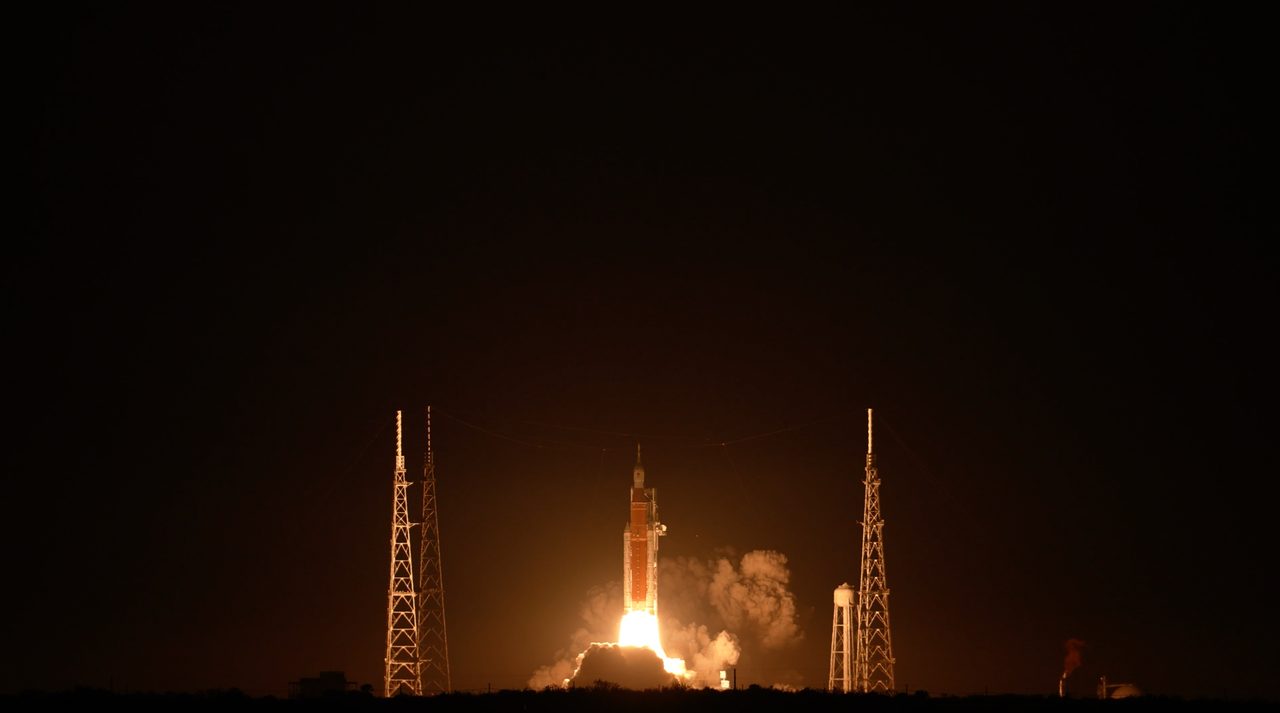
Starship Flight 15, designated Starlink Group 31-2, launched successfully at 22:47 UTC on 13 November 2026. Its upper-stage recovery was the week's principal launch-system development, but SpaceX was still investigating why the booster aborted its planned catch. A successful spacecraft return does not, by itself, establish that the entire vehicle can yet be recovered reliably and prepared for another flight.
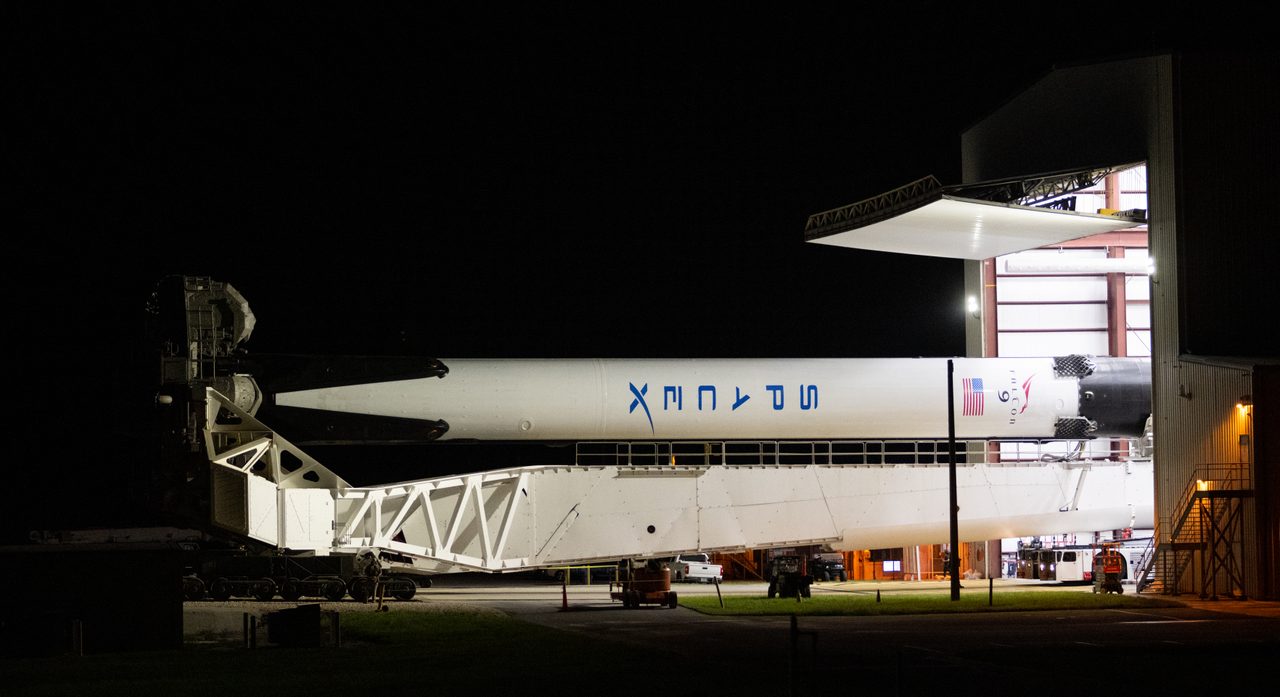
Other successful departures included Falcon 9's USSF-627 mission at 04:36 UTC on 12 November and a Soyuz 2.1b/Fregat-M carrying MKA Kinosputnik, KOEN and other payloads at 01:16 UTC on 14 November. Rocket Lab's Electron followed at 05:30 UTC that day with The Mountain God Rises, also designated iQPS Launch 10.
Together, these missions illustrated the breadth of current launch demand, spanning constellation deployment, US military missions and smaller satellite payloads. Orbital Radar's Launch Log at /satellite-launch-log offers the historical context, while the Launch Vehicles pages at /launch-vehicles/ explain the different rockets involved.
Orbital Events
Orbital Radar tracking data showed 16 active close approaches being tracked as of 15 November 2026. A close approach, or conjunction, means that objects are predicted to pass near one another; it is not a prediction that they will collide. Interpreting an encounter requires attention to orbital uncertainty and whether the spacecraft are deliberately operating together.
The listed encounters included SL-24 debris passing STARLINK-33692 at approximately 1.48 km and COSMOS 1695 passing COSMOS 2091 at approximately 1.46 km. Several paired spacecraft appeared at smaller separations, including TERRA SAR X and TANDEM X at approximately 0.33 km, and SUPERVIEW NEO-2 03 and SUPERVIEW NEO-2 04 at approximately 0.37 km.
Near-zero rounded separations for INTELSAT 1002 and MEV-2 should not be read as evidence of an impact: those spacecraft are associated with satellite servicing. Formation flying and servicing make proximity alone an unreliable measure of danger. Orbital Radar's Debris Map at /space-debris-map helps place these encounters within the wider tracked population.
Space Weather
Conditions at the end of the week were quiet, with Kp at 1. Kp is an index describing disturbances in Earth's magnetic field, and the reported risk indicators were green for low Earth orbit, geostationary orbit and the International Space Station. These conditions provide a relatively benign operating environment, rather than a guarantee against spacecraft faults or local radiation effects.
The Dst index, another measure of geomagnetic disturbance, stood at −6. Both indicators pointed away from a substantial geomagnetic storm at the time of reporting. They describe current conditions, however, not an uninterrupted record of the entire week or a promise about the days ahead.
Space weather matters operationally because disturbances can affect communications, navigation and atmospheric drag on low-orbiting satellites. Orbital Radar's Space Academy at /academy explains those mechanisms, while the Sun Globe at /sun provides a complementary view of the star driving them.
Notable Satellites
Starlink accounted for 9,815 operational satellites as of 15 November 2026, according to Orbital Radar tracking data. Its wider deployment pipeline included 1,188 satellites raising their orbits and 185 deorbiting. These categories represent different operational stages and should not be treated as interchangeable measures of available broadband capacity.
Amazon Leo, the name used for the former Project Kuiper since November 2025, remained an emerging competitor rather than an open consumer service. It had placed 396 production satellites into orbit across 14 missions since 28 April 2025. Amazon says initial service will begin before the end of 2026 in the US, UK, France, Germany and Canada.
Amazon's regulatory timetable remains important: a conditional waiver preserved its licence after it missed the interim deployment milestone, while all 3,232 first-generation satellites remain due by 30 July 2029. Readers can follow Starlink's orbital distribution through /starlink-tracker and explore individual spacecraft through Orbital Radar's Satellite Library at /library.
Looking Ahead
The next scheduled missions include Falcon 9 carrying USSF-317 at 03:14 UTC on 18 November and Long March 2D carrying an unidentified payload at 22:50 UTC that day. Long March 8A's proposed SatNet mission on 20 November remains to be confirmed, while Falcon 9's NROL-136 mission is listed for 12:30 UTC on 21 November.
Amazon Leo's next scheduled launch is LE-04 aboard Ariane 64, no earlier than 23 November 2026. Separate reporting this week described a delayed Vulcan mission carrying 40 Amazon Leo satellites; launch plans remain subject to revision. Orbital Radar's Launch Schedule at /launch-schedule is the relevant place to follow changes without confusing a planned departure with a completed deployment.
For observers on the ground, Jupiter and Mars make a close apparent approach overnight on 15–16 November. That is a line-of-sight alignment in the sky, not a physical encounter between the planets. For artificial satellites crossing the same evening skies, location-specific viewing opportunities are available through Orbital Radar's Pass Predictor at /satellite-pass-predictions.
Cite this article
Pick a style, then copy it or download it for your reference manager.Orbital Radar. (2026, November 17). This Week in Orbit: Starship Flight 15 returns to Earth. Retrieved November 17, 2026, from https://orbitalradar.com/blog/this-week-in-orbit-2026-11-15
“This Week in Orbit: Starship Flight 15 returns to Earth.” Orbital Radar, 17 Nov. 2026, orbitalradar.com/blog/this-week-in-orbit-2026-11-15. Accessed 17 Nov. 2026.
Orbital Radar (2026) This Week in Orbit: Starship Flight 15 returns to Earth. Available at: https://orbitalradar.com/blog/this-week-in-orbit-2026-11-15 (Accessed: 17 November 2026).
Orbital Radar. “This Week in Orbit: Starship Flight 15 returns to Earth.” Last modified November 17, 2026. https://orbitalradar.com/blog/this-week-in-orbit-2026-11-15.
@misc{orbitalradar_blog_this_week_in_orbit_2026_11_15,
  author       = {{Orbital Radar}},
  title        = {This Week in Orbit: Starship Flight 15 returns to Earth},
  year         = {2026},
  month        = nov,
  howpublished = {\url{https://orbitalradar.com/blog/this-week-in-orbit-2026-11-15}},
  url          = {https://orbitalradar.com/blog/this-week-in-orbit-2026-11-15},
  urldate      = {2026-11-17},
  note         = {Accessed 2026-11-17}
}
TY - ELEC AU - Orbital Radar, TI - This Week in Orbit: Starship Flight 15 returns to Earth PY - 2026 DA - 2026/11/17 PB - Orbital Radar UR - https://orbitalradar.com/blog/this-week-in-orbit-2026-11-15 Y2 - 2026/11/17 LA - en ER -
Live figures change, so keep the date you accessed the page. How to cite Orbital Radar