Understanding the Torino and Palermo Scales for Asteroid Impact Risk
The Torino and Palermo scales quantify the risk of asteroid impacts, providing a framework for assessing potential threats from near-Earth objects.
| Active satellites | 15,749 |
| Starlink active | 10,056 |
| Catalogued objects | 31,469 |
| Active close approaches | 20 |
| People in space | 14 |
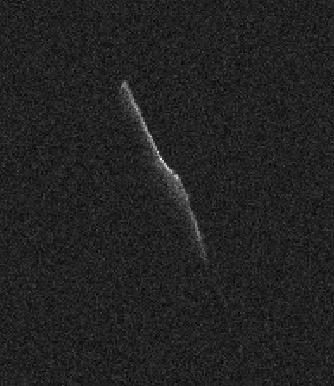
The Torino Scale is a method for categorising the impact hazard associated with near-Earth objects (NEOs), such as asteroids and comets. It ranges from 0 to 10, with 0 indicating a negligible chance of collision and 10 representing a certain impact with global consequences. Developed in 1999 by Professor Richard P. Binzel, the scale is intended to communicate the risk level to the public and policymakers.
How Does the Torino Scale Work?
The Torino Scale combines two key factors: the probability of an impact and the potential consequences of such an event. A score of 0 signifies no risk, while scores 1 to 4 indicate a low probability of impact with minor consequences. Scores of 5 to 7 suggest a higher probability of significant regional damage, and scores 8 to 10 indicate a high probability of global catastrophe. The scale is logarithmic, meaning each increase in number represents a tenfold increase in risk.
Why the Torino Scale Matters
The Torino Scale is crucial for assessing the potential threat posed by NEOs and for prioritising observation and mitigation efforts. With over 31,469 catalogued objects in orbit, according to Orbital Radar's live catalogue, understanding which pose a potential threat is vital. The scale helps scientists and policymakers allocate resources effectively to monitor and, if necessary, deflect hazardous objects.
The Palermo Technical Impact Hazard Scale
The Palermo Scale is a more complex tool used by scientists to assess the risk of NEO impacts. It considers the probability of impact, the potential energy of the impact, and the time until the potential impact. Unlike the Torino Scale, which is more public-facing, the Palermo Scale is primarily used by researchers for detailed risk analysis. A Palermo Scale value of 0 indicates an impact risk equal to the background risk, while positive values indicate higher risks and negative values indicate lower risks.
Torino Scale vs Palermo Scale
While both scales assess asteroid impact risks, they serve different audiences and purposes. The Torino Scale is designed for public communication, providing a simplified overview of risk levels. In contrast, the Palermo Scale offers a more detailed and technical analysis, useful for scientific research and risk assessment. Both scales are essential for comprehensive space situational awareness, a key component of which is tracked on Orbital Radar's Near-Earth Objects page.
Key Takeaways
The Torino and Palermo scales are vital tools for assessing the risk of asteroid impacts. The Torino Scale provides a straightforward method for communicating potential threat levels to the public, while the Palermo Scale offers a more detailed analysis for scientific purposes. Understanding these scales is crucial for effective space situational awareness and planetary defence strategies.
Frequently Asked Questions
What is the Torino Scale used for?
How is the Palermo Scale different from the Torino Scale?
What does a Torino Scale rating of 5 mean?
How often is the Torino Scale updated?
Where can I find current asteroid impact risks?
📎 Cite this article · data available
Orbital Radar Newsroom. (2026). Understanding the Torino and Palermo Scales for Asteroid Impact Risk. Orbital Radar. https://orbitalradar.com/blog/torino-palermo-scales-explainer"Understanding the Torino and Palermo Scales for Asteroid Impact Risk." Orbital Radar, 5 October 2026, https://orbitalradar.com/blog/torino-palermo-scales-explainer.@misc{orbitalradar_torino_palermo_scales_explainer,
title = {Understanding the Torino and Palermo Scales for Asteroid Impact Risk},
author = {{Orbital Radar}},
year = {2026},
howpublished = {\url{https://orbitalradar.com/blog/torino-palermo-scales-explainer}}
}