Celestial Symphony: The Milky Way Over Yellowstone's Silex Spring
Discover the breathtaking view of the Milky Way arching over Yellowstone's Silex Spring, a unique blend of terrestrial and celestial wonders.
The photograph this article describes is by Dave Lane and isn’t shown here. View the original photograph
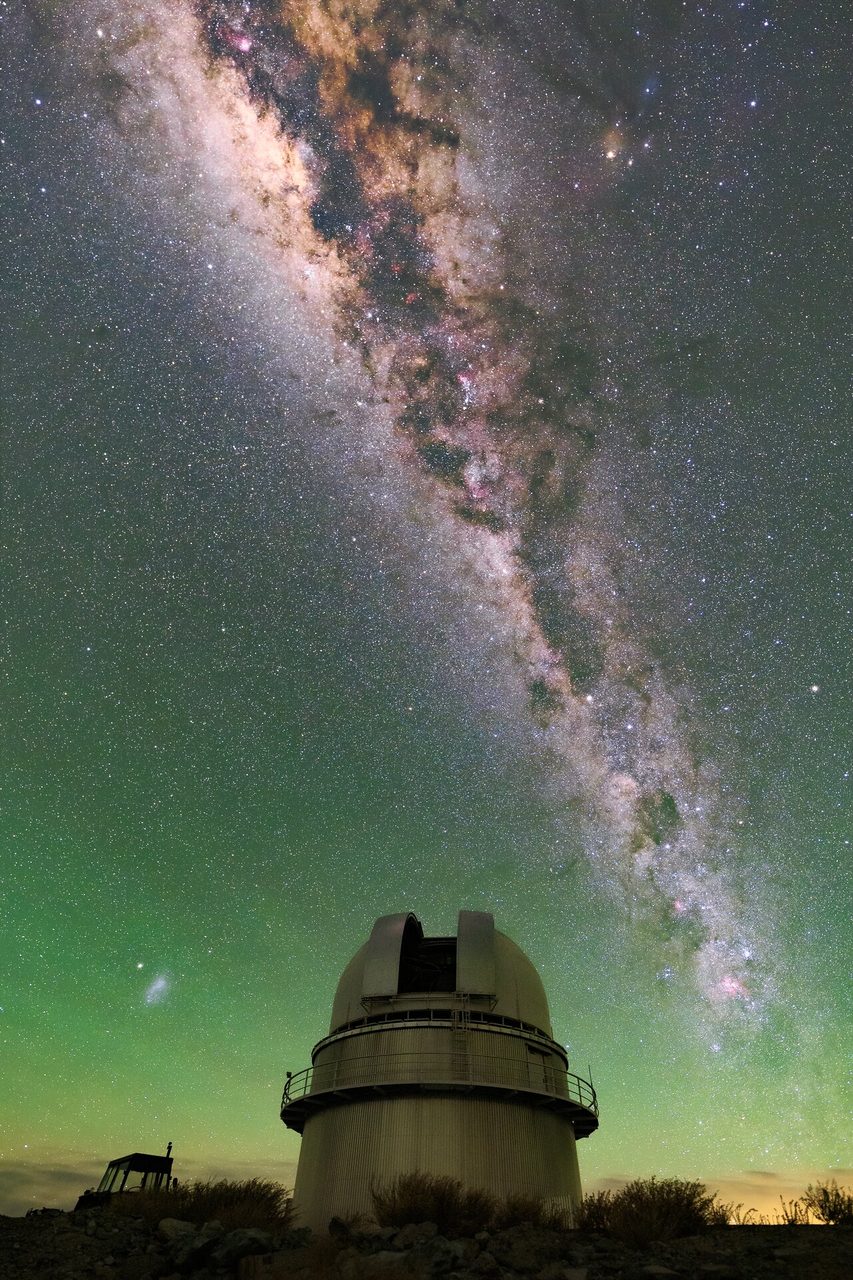
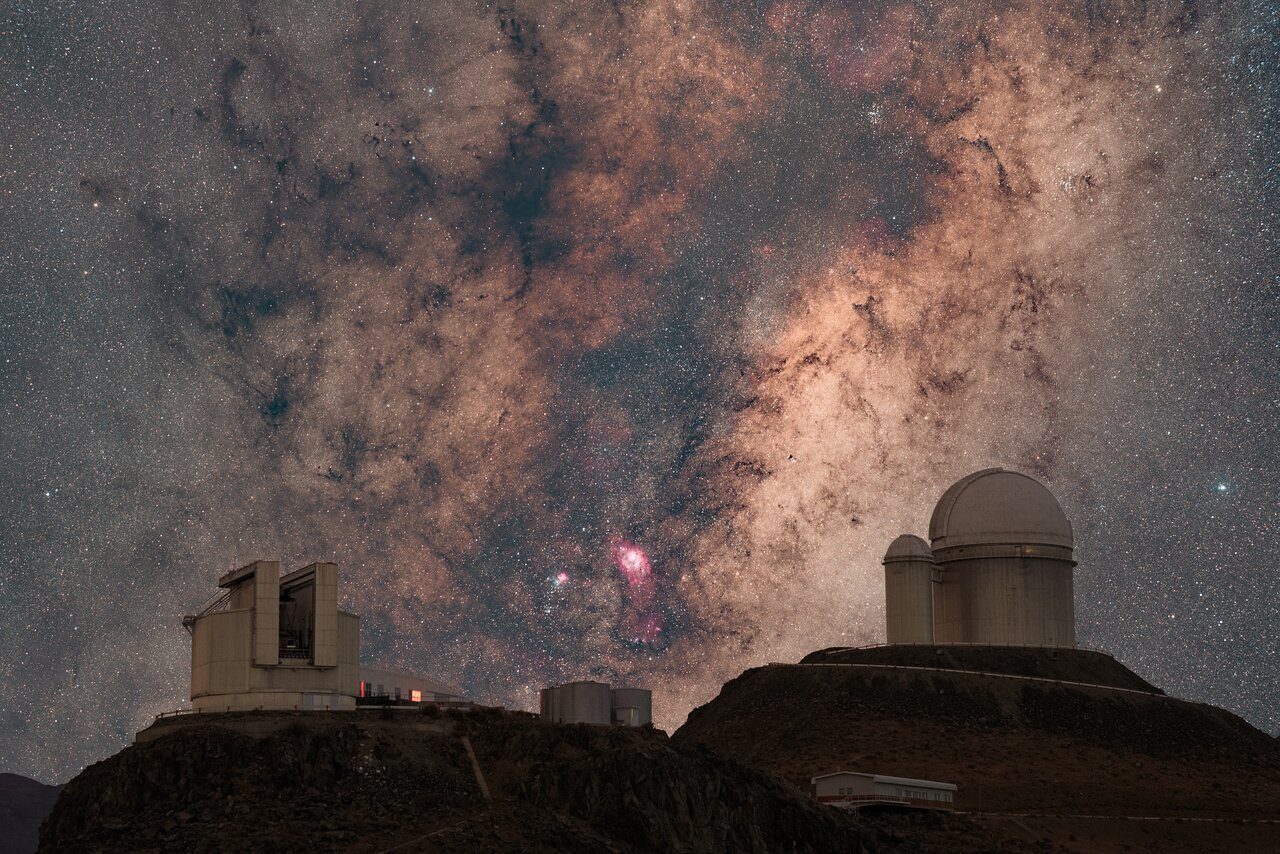
In this captivating image, the Milky Way galaxy stretches across the night sky above Yellowstone National Park's Silex Spring. The spring itself, a vibrant pool of water approximately 10 metres across, is illuminated by artificial light, highlighting the colourful bacteria thriving in its hot waters. This natural wonder is heated by the geothermal activity of the Yellowstone Hotspot, a reminder of the Earth's dynamic interior. Above, the central band of the Milky Way, composed of billions of stars, forms a stunning celestial arch, captured in a 16-image panorama taken in 2014.
A Cosmic Perspective
The juxtaposition of Silex Spring's geothermal activity and the distant Milky Way provides a unique perspective on the forces shaping our planet and the universe. While the spring's heat emanates from magma beneath the Earth's crust, the light from the Milky Way has travelled thousands of light-years to reach us. This image serves as a reminder of the interconnectedness of cosmic and terrestrial processes. The potential for another supervolcanic eruption from the Yellowstone Hotspot, last occurring 640,000 years ago, underscores the power of geological forces that can impact a large part of North America.
Observing the Night Sky
For those inspired to observe the Milky Way themselves, finding a location far from city lights is essential. Yellowstone National Park, with its expansive dark skies, is an ideal spot for stargazing. To plan your own celestial observations, the Orbital Radar pass predictor can help identify the best times for satellite visibility, enhancing your night sky experience. Additionally, keeping track of current missions and satellite activity can enrich your understanding of the dynamic environment above.
Frequently Asked Questions
What causes the colours in Yellowstone's hot springs?
How can I see the Milky Way?
Cite this article
Pick a style, then copy it or download it for your reference manager.Orbital Radar. (2026, August 17). Celestial Symphony: The Milky Way Over Yellowstone's Silex Spring. Retrieved November 15, 2026, from https://orbitalradar.com/blog/cosmic-gallery-2026-08-16
“Celestial Symphony: The Milky Way Over Yellowstone's Silex Spring.” Orbital Radar, 17 Aug. 2026, orbitalradar.com/blog/cosmic-gallery-2026-08-16. Accessed 15 Nov. 2026.
Orbital Radar (2026) Celestial Symphony: The Milky Way Over Yellowstone's Silex Spring. Available at: https://orbitalradar.com/blog/cosmic-gallery-2026-08-16 (Accessed: 15 November 2026).
Orbital Radar. “Celestial Symphony: The Milky Way Over Yellowstone's Silex Spring.” Last modified August 17, 2026. https://orbitalradar.com/blog/cosmic-gallery-2026-08-16.
@misc{orbitalradar_blog_cosmic_gallery_2026_08_16,
  author       = {{Orbital Radar}},
  title        = {Celestial Symphony: The Milky Way Over Yellowstone's Silex Spring},
  year         = {2026},
  month        = aug,
  howpublished = {\url{https://orbitalradar.com/blog/cosmic-gallery-2026-08-16}},
  url          = {https://orbitalradar.com/blog/cosmic-gallery-2026-08-16},
  urldate      = {2026-11-15},
  note         = {Accessed 2026-11-15}
}
TY - ELEC AU - Orbital Radar, TI - Celestial Symphony: The Milky Way Over Yellowstone's Silex Spring PY - 2026 DA - 2026/08/17 PB - Orbital Radar UR - https://orbitalradar.com/blog/cosmic-gallery-2026-08-16 Y2 - 2026/11/15 LA - en ER -
Live figures change, so keep the date you accessed the page. How to cite Orbital Radar