Witnessing the Dance of Shadows: A Total Solar Eclipse Over Greenland
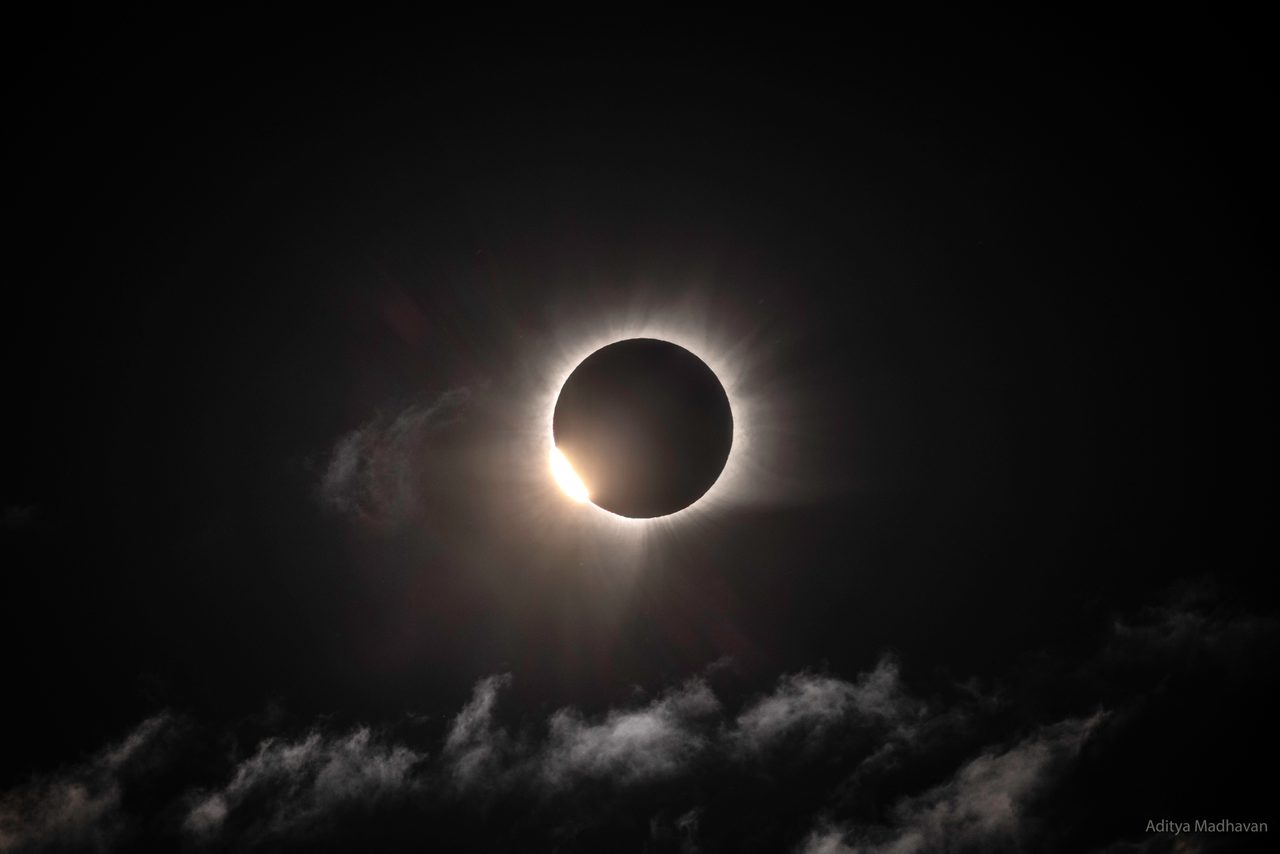
A total solar eclipse graced Greenland, capturing the Sun's corona and diamond ring effect. Discover the science behind this celestial event.
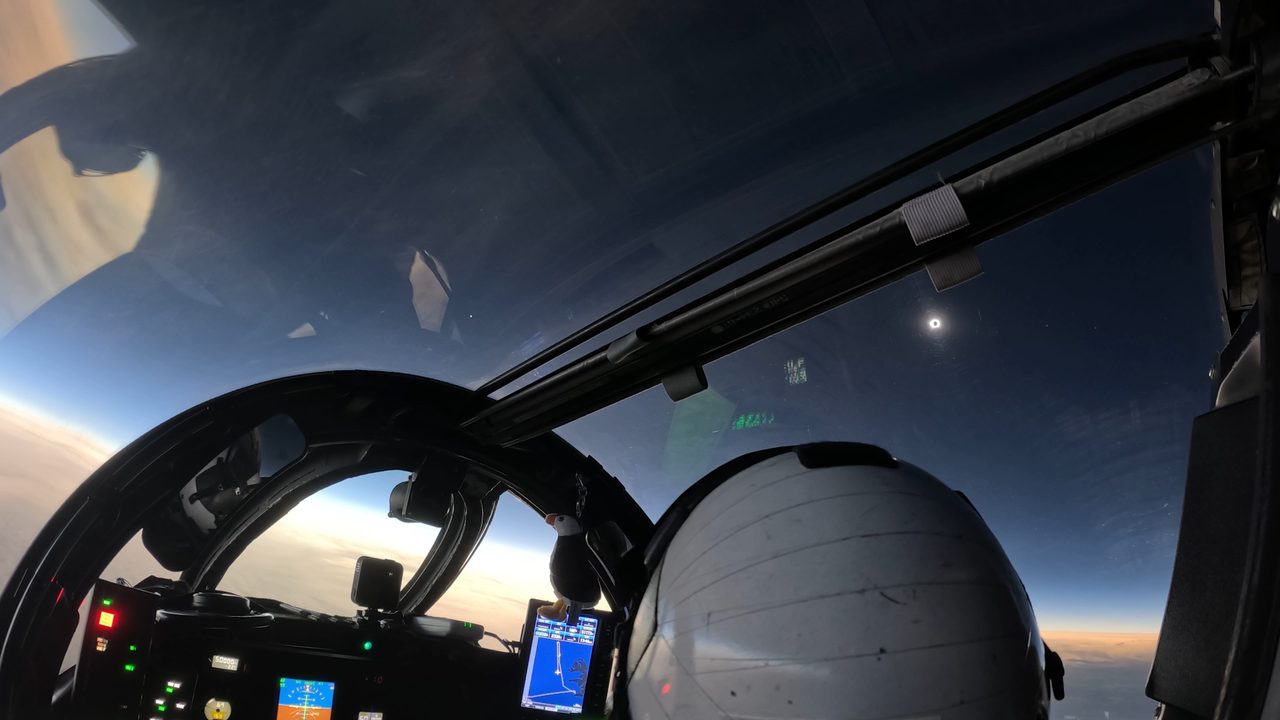
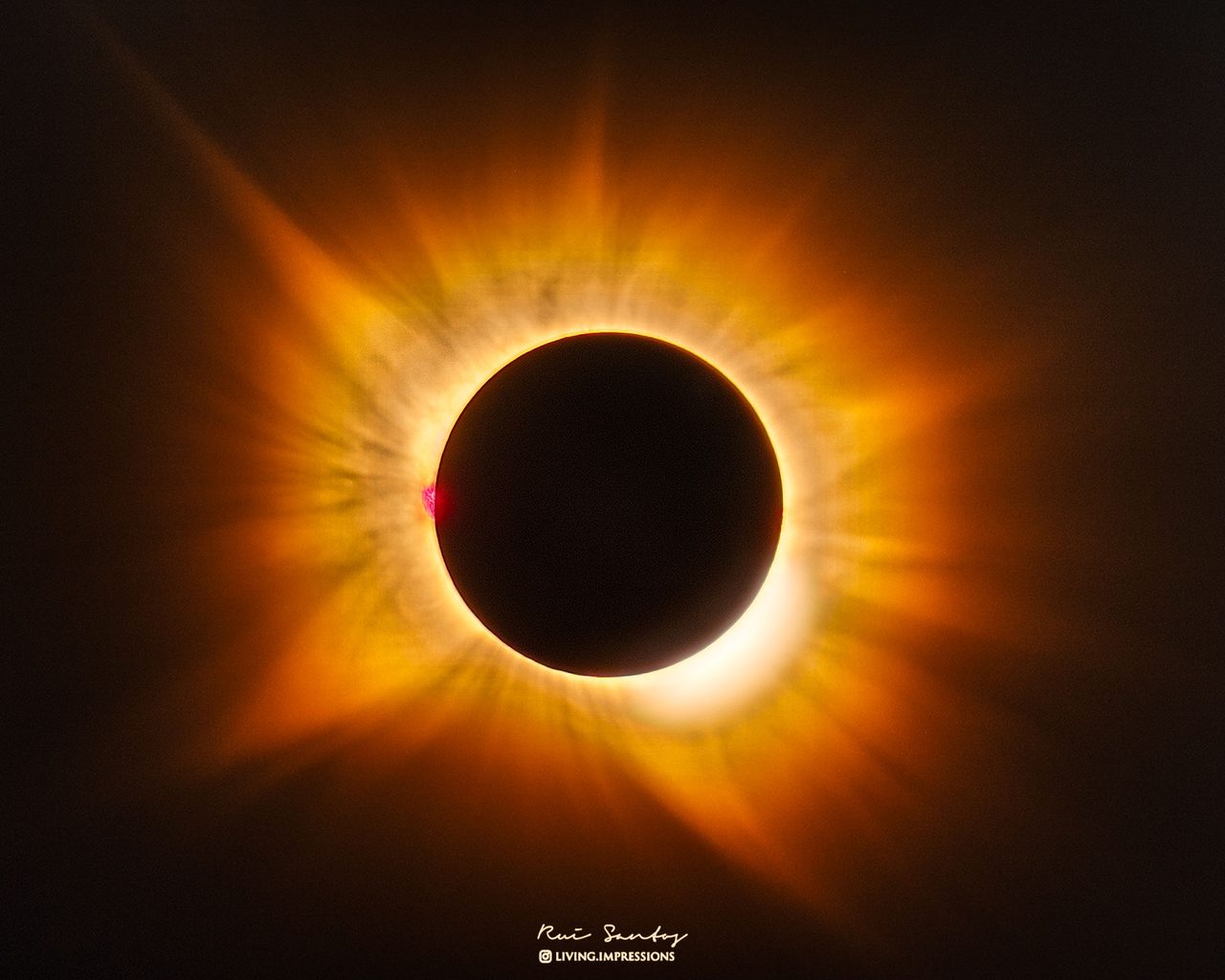
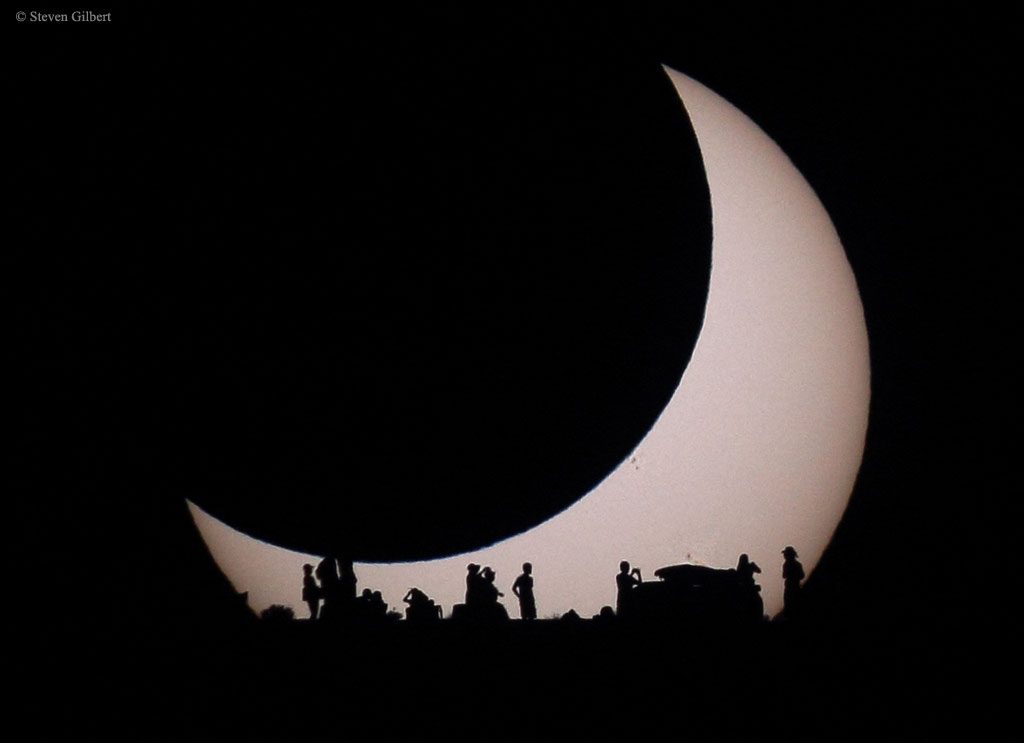
On August 12, 2026, a total solar eclipse cast its shadow over parts of Greenland, Iceland, and beyond, offering a rare spectacle of celestial mechanics. The image captured from Rype Fjord in Greenland provides a breathtaking view of the Sun's corona—a halo of plasma that is usually obscured by the Sun's bright surface. This phenomenon occurs when the Moon perfectly aligns with the Sun, blocking its light and allowing observers to glimpse the corona and the fleeting 'diamond ring' effect, where a single point of sunlight shines through lunar valleys.
The Science of Eclipses and Orbital Dynamics
Solar eclipses are a testament to the precision of celestial mechanics. The Moon's orbit around Earth is tilted relative to Earth's orbit around the Sun, making total eclipses rare events. The path of totality, where the eclipse is visible, is a narrow band, as seen in this eclipse's journey across the northern hemisphere. Understanding these dynamics is crucial for predicting future eclipses and other celestial events. For those interested in tracking such phenomena, the Orbital Radar pass predictor offers insights into visible satellite passes and astronomical events.
Observing Eclipses: Tips and Tools
To safely observe a solar eclipse, it is essential to use proper eye protection, such as eclipse glasses or a pinhole projector. Planning is key, as weather conditions can obscure the view. The next opportunity to witness a total solar eclipse will be on August 12, 2026, with paths of totality available on the Orbital Radar launch schedule. This tool can help enthusiasts plan their viewing locations well in advance.
Frequently Asked Questions
What is a total solar eclipse?
How often do total solar eclipses occur?
📎 Cite this article
Orbital Radar Newsroom. (2026). Witnessing the Dance of Shadows: A Total Solar Eclipse Over Greenland. Orbital Radar. https://orbitalradar.com/blog/cosmic-gallery-2026-08-14"Witnessing the Dance of Shadows: A Total Solar Eclipse Over Greenland." Orbital Radar, 15 August 2026, https://orbitalradar.com/blog/cosmic-gallery-2026-08-14.@misc{orbitalradar_cosmic_gallery_2026_08_14,
title = {Witnessing the Dance of Shadows: A Total Solar Eclipse Over Greenland},
author = {{Orbital Radar}},
year = {2026},
howpublished = {\url{https://orbitalradar.com/blog/cosmic-gallery-2026-08-14}}
}