Perseids Radiance: A Celestial Dance in the Night Sky
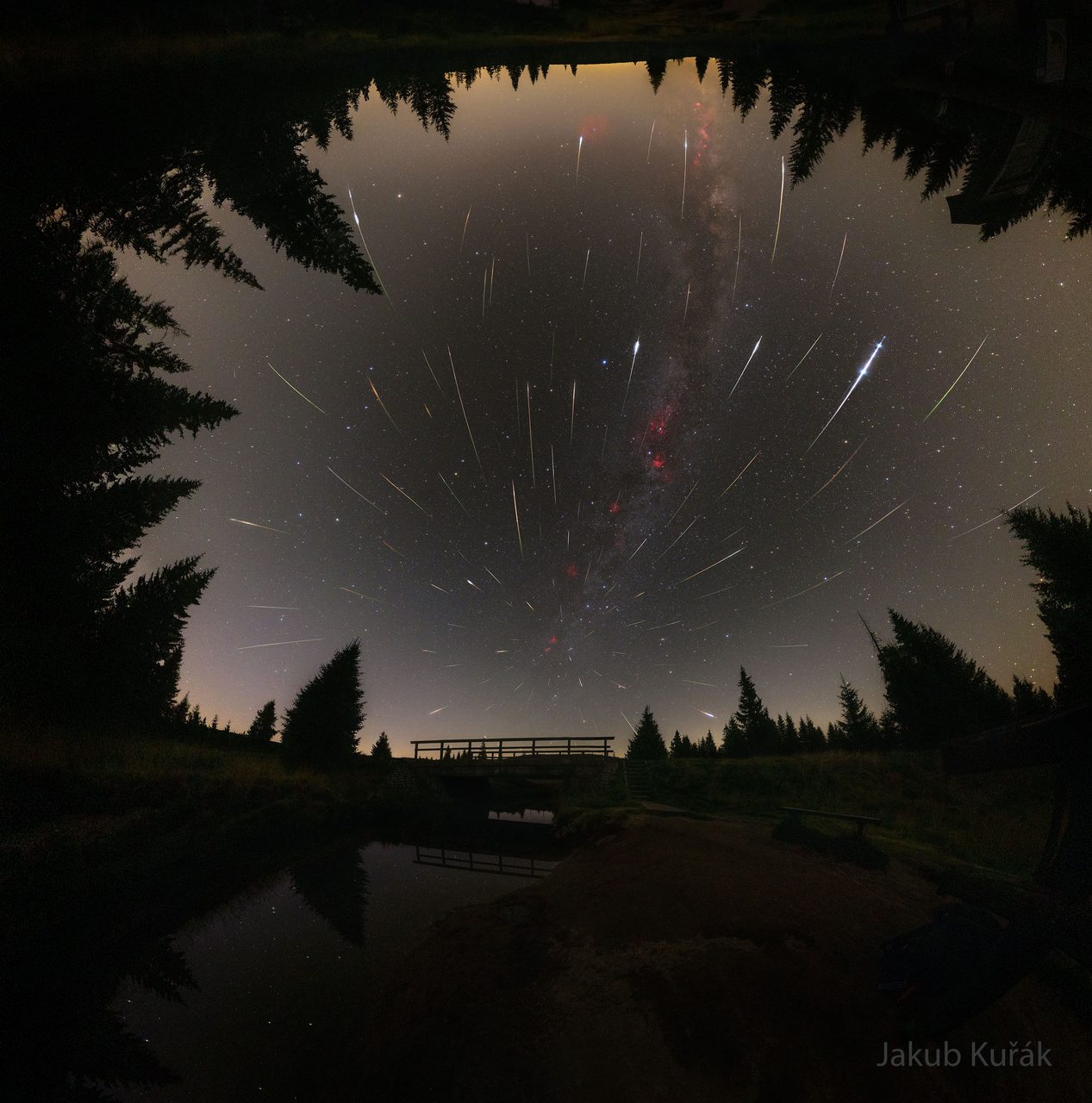
The Perseids meteor shower, enhanced by a solar eclipse, dazzled observers with its radiant in Perseus. Learn the science behind this celestial event.
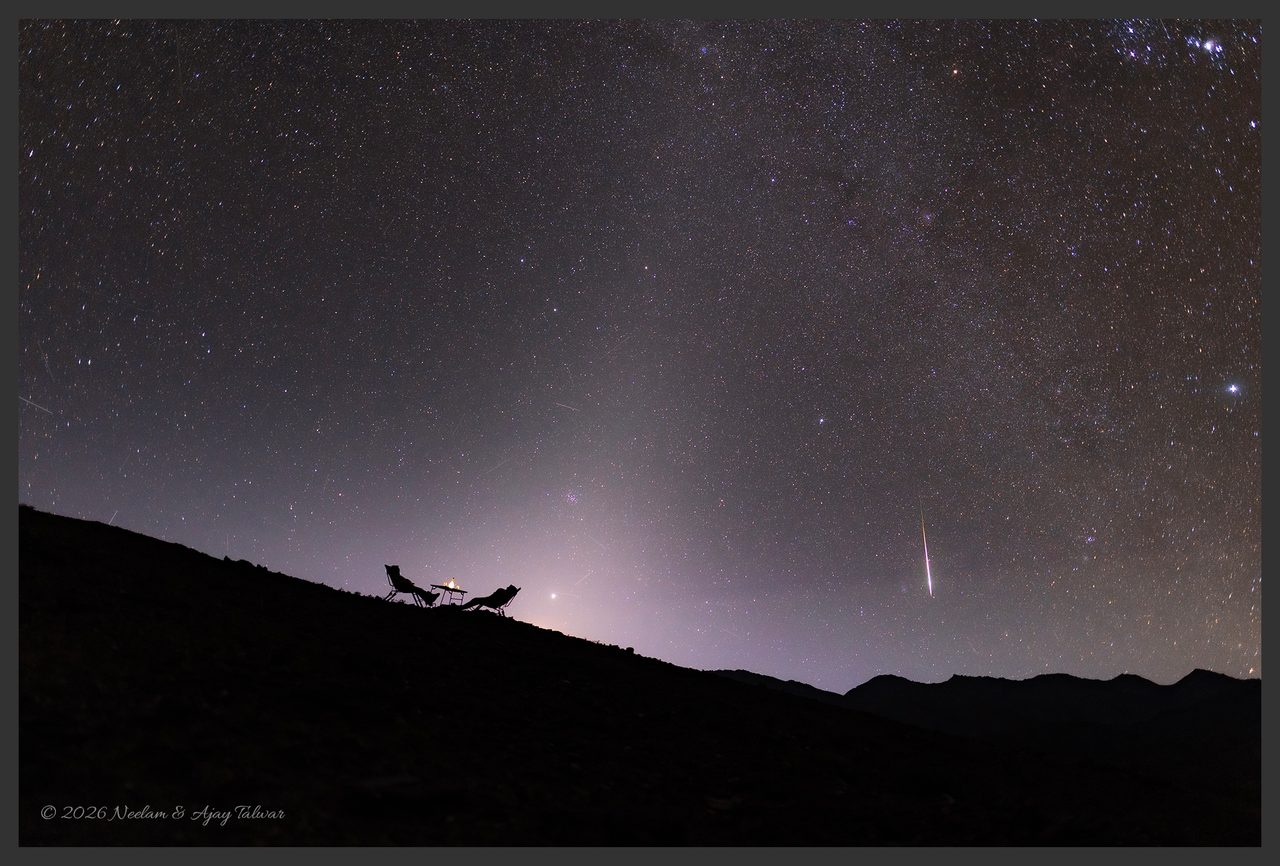
The Perseids meteor shower is an annual celestial event that captivates skywatchers around the globe. This year, the absence of the Moon's light interference allowed for an exceptional viewing experience. The Moon, engaged in creating a total solar eclipse visible from Greenland and Spain, left the night sky dark enough to reveal the bright streaks of the Perseids. These meteors, originating from debris left by Comet Swift-Tuttle, appear to radiate from the constellation Perseus, offering a stunning display.
The science behind the Perseids is as fascinating as the spectacle itself. As Earth passes through the debris stream of Comet Swift-Tuttle, tiny particles, often no larger than grains of sand, enter our atmosphere at high speeds. This rapid entry causes them to burn up, creating the bright streaks known as meteors. The direction of Swift-Tuttle's orbit, partially opposing Earth's motion, contributes to the meteors' brightness and speed, making the Perseids one of the most anticipated meteor showers each year.
Astronomical Context and Observing Tips
The Perseids offer more than just a visual treat; they provide insights into the dynamics of our solar system. The interaction between Earth's orbit and the comet's debris stream is a vivid demonstration of orbital mechanics, a fundamental aspect of space science. This phenomenon is part of a broader tapestry of celestial events that include solar eclipses and planetary alignments, each governed by the same gravitational forces.
For those eager to witness such events, timing and location are crucial. The absence of moonlight during this year's peak was a fortunate coincidence, enhancing visibility. Observers are encouraged to find dark, open spaces away from city lights for the best experience. To plan future observations, consider using the Orbital Radar pass predictor to track satellite movements and optimise your stargazing sessions.
Frequently Asked Questions
What causes the Perseids meteor shower?
When is the best time to view the Perseids?
📎 Cite this article
Orbital Radar Newsroom. (2026). Perseids Radiance: A Celestial Dance in the Night Sky. Orbital Radar. https://orbitalradar.com/blog/cosmic-gallery-2026-08-18"Perseids Radiance: A Celestial Dance in the Night Sky." Orbital Radar, 19 August 2026, https://orbitalradar.com/blog/cosmic-gallery-2026-08-18.@misc{orbitalradar_cosmic_gallery_2026_08_18,
title = {Perseids Radiance: A Celestial Dance in the Night Sky},
author = {{Orbital Radar}},
year = {2026},
howpublished = {\url{https://orbitalradar.com/blog/cosmic-gallery-2026-08-18}}
}