Unveiling the Mysteries of a Fire Rainbow Over West Virginia
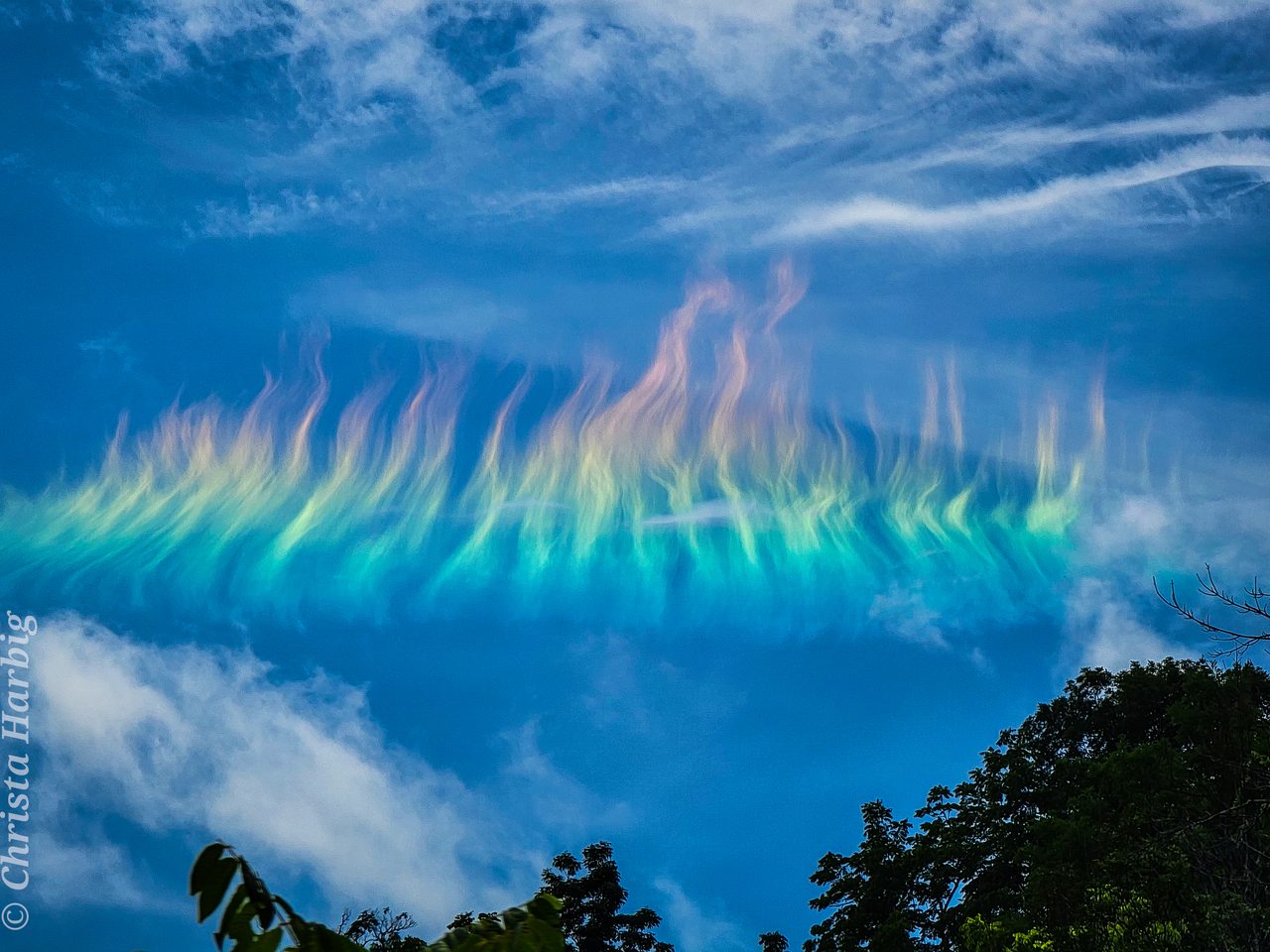
Explore the captivating fire rainbow over West Virginia, a rare atmospheric phenomenon caused by ice crystals in cirrus clouds refracting sunlight.
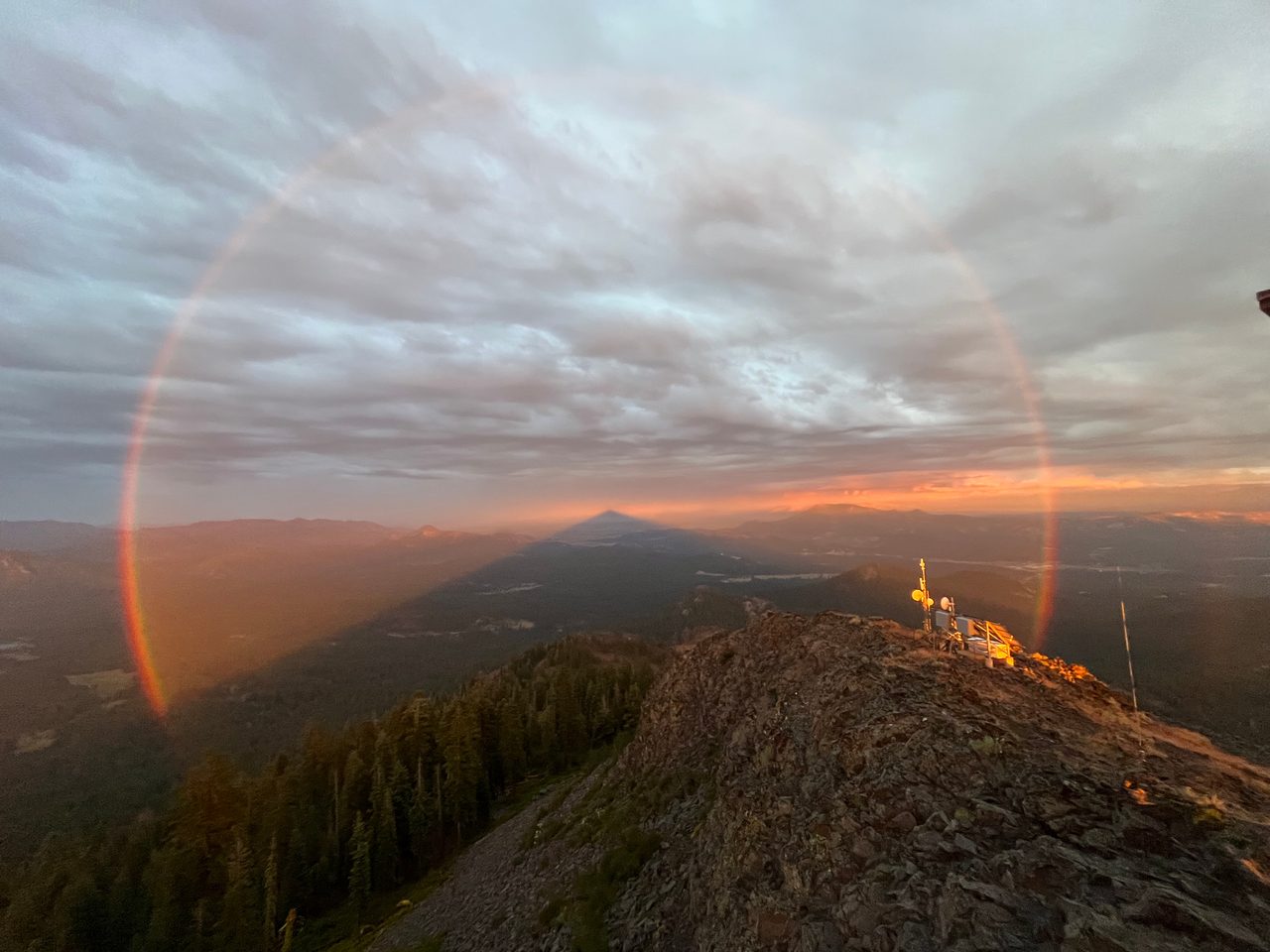
The image of the day captures a fire rainbow, a rare atmospheric phenomenon observed near North Fork Mountain in West Virginia. This vibrant display, technically known as a circumhorizon arc, occurs when sunlight refracts through hexagonal ice crystals in cirrus clouds. For this spectacle to manifest, the Sun must be at least 58 degrees above the horizon, illuminating the sky with a spectrum of colours that resemble flames.
Circumhorizon arcs are not commonly seen due to the specific atmospheric conditions required. The cirrus clouds, composed of numerous, flat ice crystals, must align horizontally to refract sunlight uniformly. This alignment, combined with the Sun's high position, creates the vivid, rainbow-like effect that graces the sky, offering a glimpse into the complex interplay of light and atmospheric elements.
The Science Behind the Spectacle
The phenomenon of fire rainbows highlights the intricate dynamics of atmospheric optics, where light interacts with ice crystals to produce stunning visual effects. This event is a reminder of the delicate balance within Earth's atmosphere, where even minor changes in cloud composition or solar position can lead to extraordinary displays.
While the fire rainbow is a terrestrial event, similar principles of light refraction and reflection apply to various celestial observations. For instance, the study of light scattering in planetary atmospheres can inform our understanding of weather patterns on other planets, such as Venus, where a single day lasts longer than a year. These insights are crucial for missions exploring planetary atmospheres, as detailed in our Space Agencies directory.
Observing Atmospheric Phenomena
For those interested in observing atmospheric phenomena like fire rainbows, it is essential to understand the conditions that favour their appearance. Monitoring weather forecasts for cirrus cloud formations and noting the Sun's position can increase the chances of witnessing such events.
Orbital Radar's Pass Predictor can be a valuable tool for enthusiasts looking to track satellite passes and other celestial events, offering insights into the best times and locations for skywatching.