Dark clouds and a starry night reveal the Milky Way’s heart
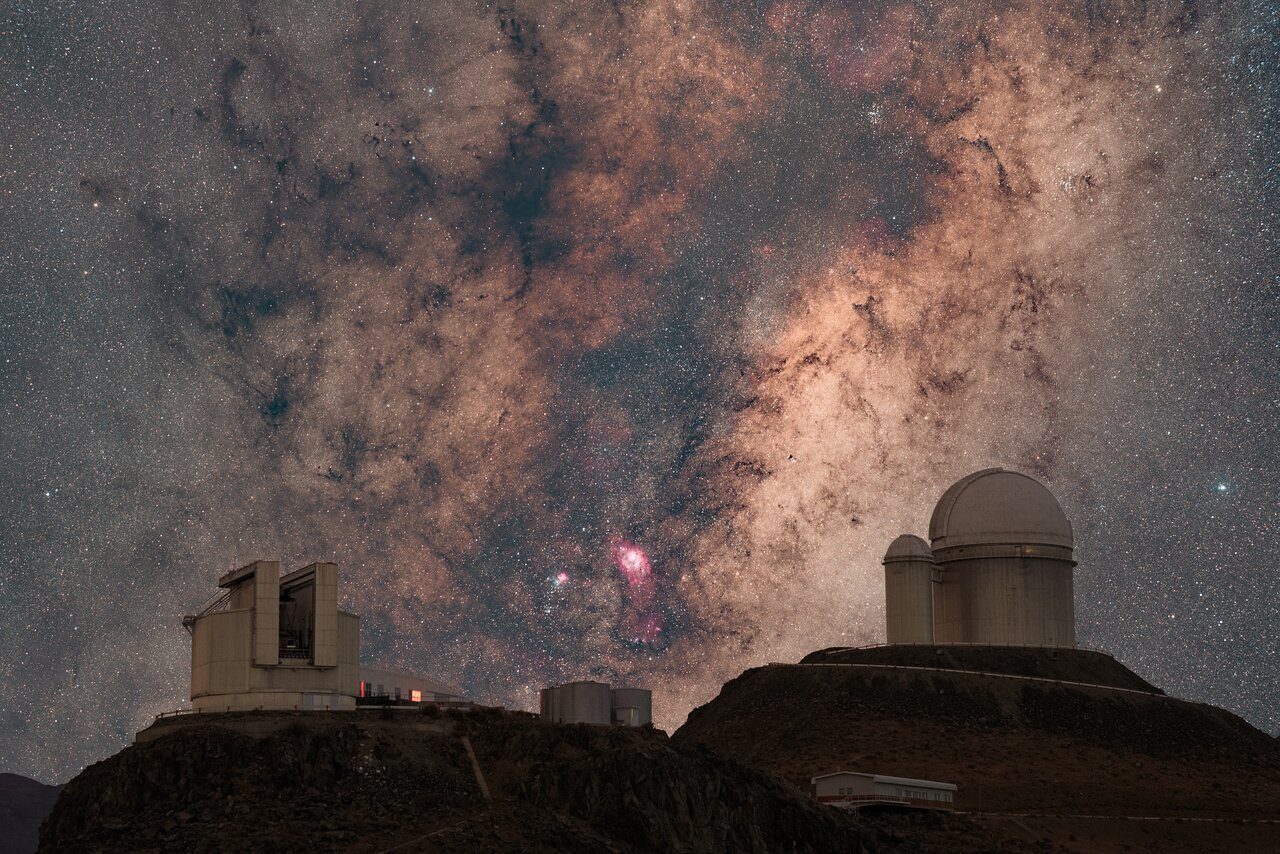
The Milky Way’s centre emerges between telescopes at La Silla Observatory, where glowing hydrogen and dark dust reveal contrasting faces of stellar nurseries.
| Active satellites | 15,887 |
| Catalogued objects | 31,833 |
| Starlink active | 9,996 |
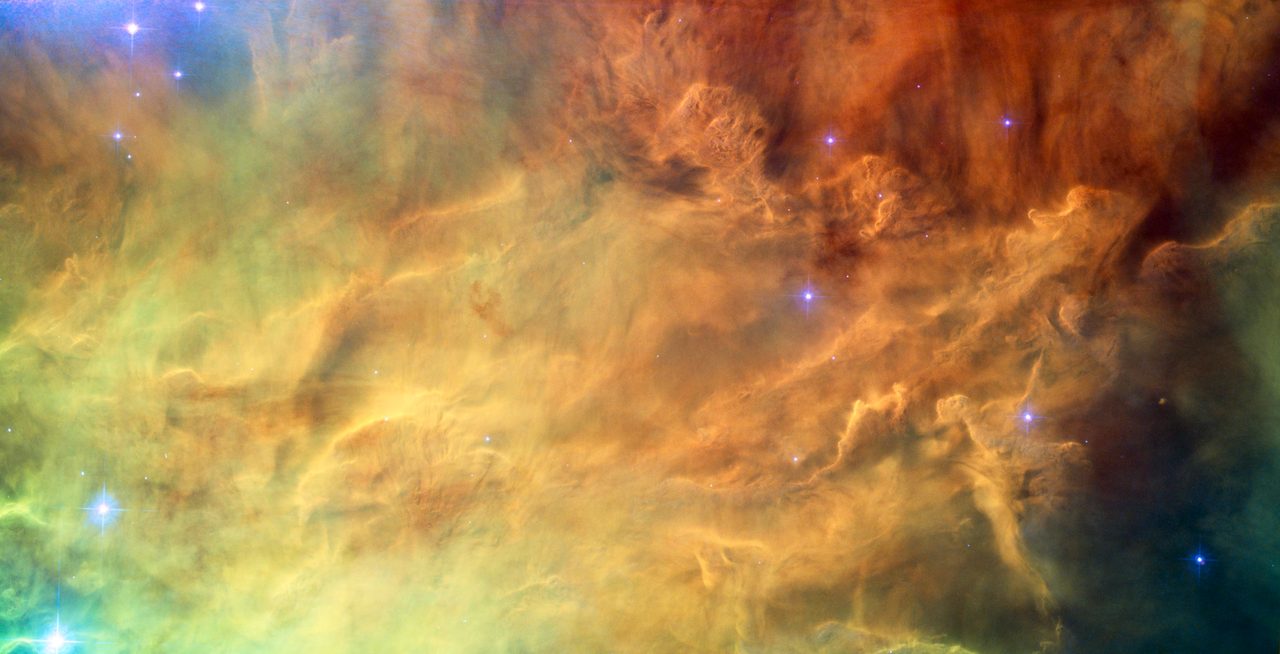
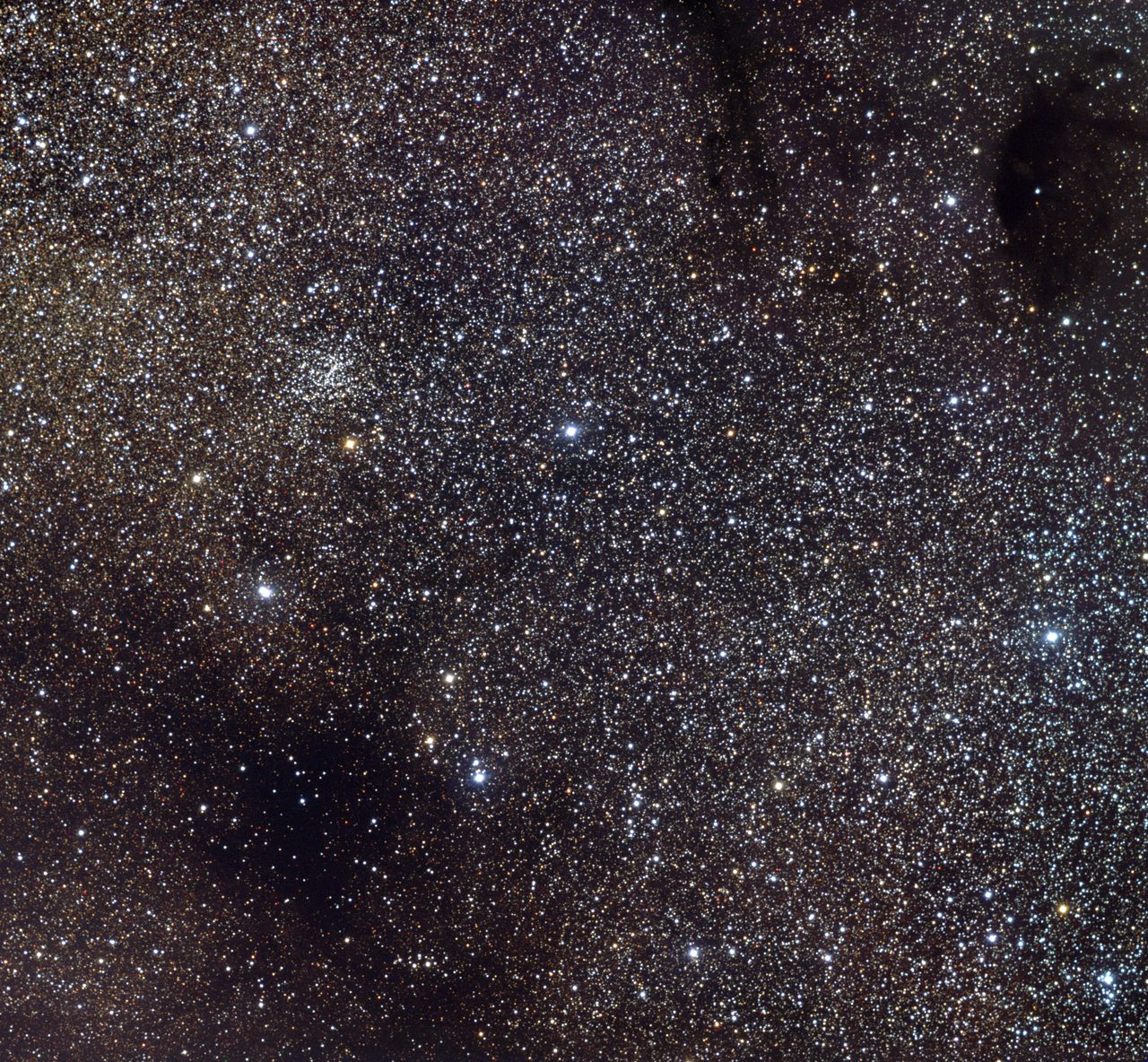
The Milky Way’s centre emerges between two telescopes at ESO’s La Silla Observatory in Chile’s Atacama Desert, with dark dust clouds interrupting a densely starred sky. Between the instruments lie the Trifid Nebula on the left and the Lagoon Nebula on the right, both in the constellation Sagittarius.
Their red glow comes from hydrogen ionised by young stars (atoms stripped of their electrons by stellar radiation). The Trifid also carries a blue tint where dust reflects starlight. Elsewhere, dust blocks the light behind it: the dark patches are obscuring material, not empty holes in the Galaxy.
The telescope on the left is ESO’s New Technology Telescope, a pioneer of active optics (controlled adjustments that maintain a telescope mirror’s shape during observations). On the right stands the ESO 3.6-metre telescope, home to the planet-hunting instruments HARPS and NIRPS. Together, these instruments connect the sweeping galactic view with the search for worlds around individual stars.
A changing foreground above the observatory
Astronomers study distant stars through a much nearer, increasingly populated orbital environment. Orbital Radar tracking data lists 15,887 active satellites orbiting Earth in 2026. That figure describes the wider observing environment, not objects identified in this photograph.
Orbital Radar’s live catalogue contains 31,833 objects, including debris, in 2026. Satellites can cross astronomical fields of view, while whether an observer sees one depends partly on sunlight reaching the spacecraft against a dark sky.
For your own night under the stars, the Orbital Radar Pass Predictor helps identify predicted visible satellite passes. It offers a practical way to distinguish a moving foreground visitor from the distant stellar background that makes this La Silla view so rich.
Frequently Asked Questions
Why do the Trifid and Lagoon nebulae look red?
Which telescopes frame the Milky Way in this image?
📎 Cite this article · data available
Orbital Radar Newsroom. (2026). Dark clouds and a starry night reveal the Milky Way’s heart. Orbital Radar. https://orbitalradar.com/blog/cosmic-gallery-2026-10-28"Dark clouds and a starry night reveal the Milky Way’s heart." Orbital Radar, 28 October 2026, https://orbitalradar.com/blog/cosmic-gallery-2026-10-28.@misc{orbitalradar_cosmic_gallery_2026_10_28,
title = {Dark clouds and a starry night reveal the Milky Way’s heart},
author = {{Orbital Radar}},
year = {2026},
howpublished = {\url{https://orbitalradar.com/blog/cosmic-gallery-2026-10-28}}
}