Earthly Expanse Around Rubin: Where Sky Meets Science
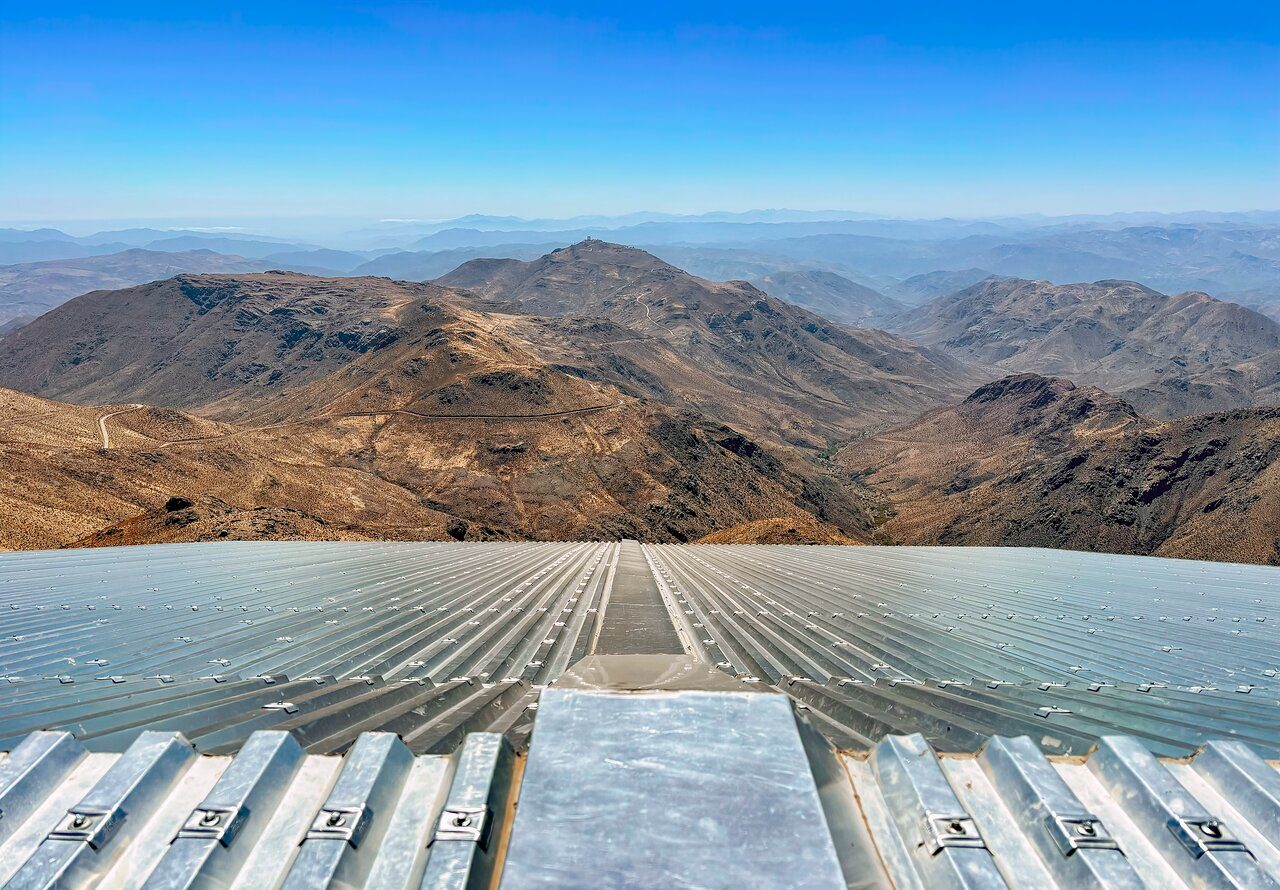
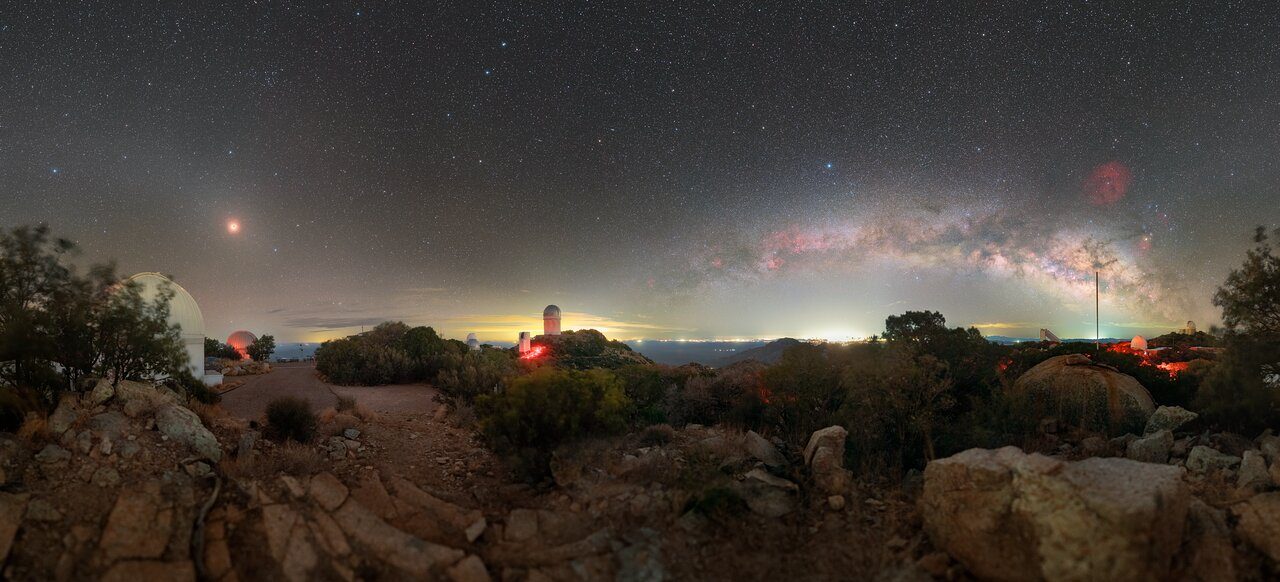
A northwest view from Rubin Observatory’s dome reveals the Chilean Andes—and the terrestrial infrastructure that helps turn clear skies into astronomical discoveries.
| Active satellites | 16,662 |
| Catalogued objects | 32,032 |
| Starlink active | 9,898 |
The Chilean Andes stretch beneath clear skies in this view looking northwest from the very top of the NSF–DOE Vera C. Rubin Observatory dome. Across the foothills, a distant mountain peak carries another astronomical landmark: the silver dome of the Víctor M. Blanco 4-metre Telescope at Cerro Tololo Inter-American Observatory.
The landscape helps explain why Chile is such an important centre for astronomy. Its arid climate and dark skies favour high-quality observations, but an observatory needs more than a clear view upwards: roads, communications and local expertise make its science possible.
During Rubin’s construction, the local governments of Coquimbo and La Serena helped equipment travel safely through populated areas. The resulting facility is jointly funded by the US National Science Foundation and the US Department of Energy’s Office of Science.
A mountain view connected to the world
Rubin’s connection to the cosmos also depends on a connection beneath its feet. Chile’s Research and Education Network, REUNA, carries observations through the national fibre-optic network, allowing data to reach SLAC National Accelerator Laboratory in California for processing within about seven seconds of image capture.
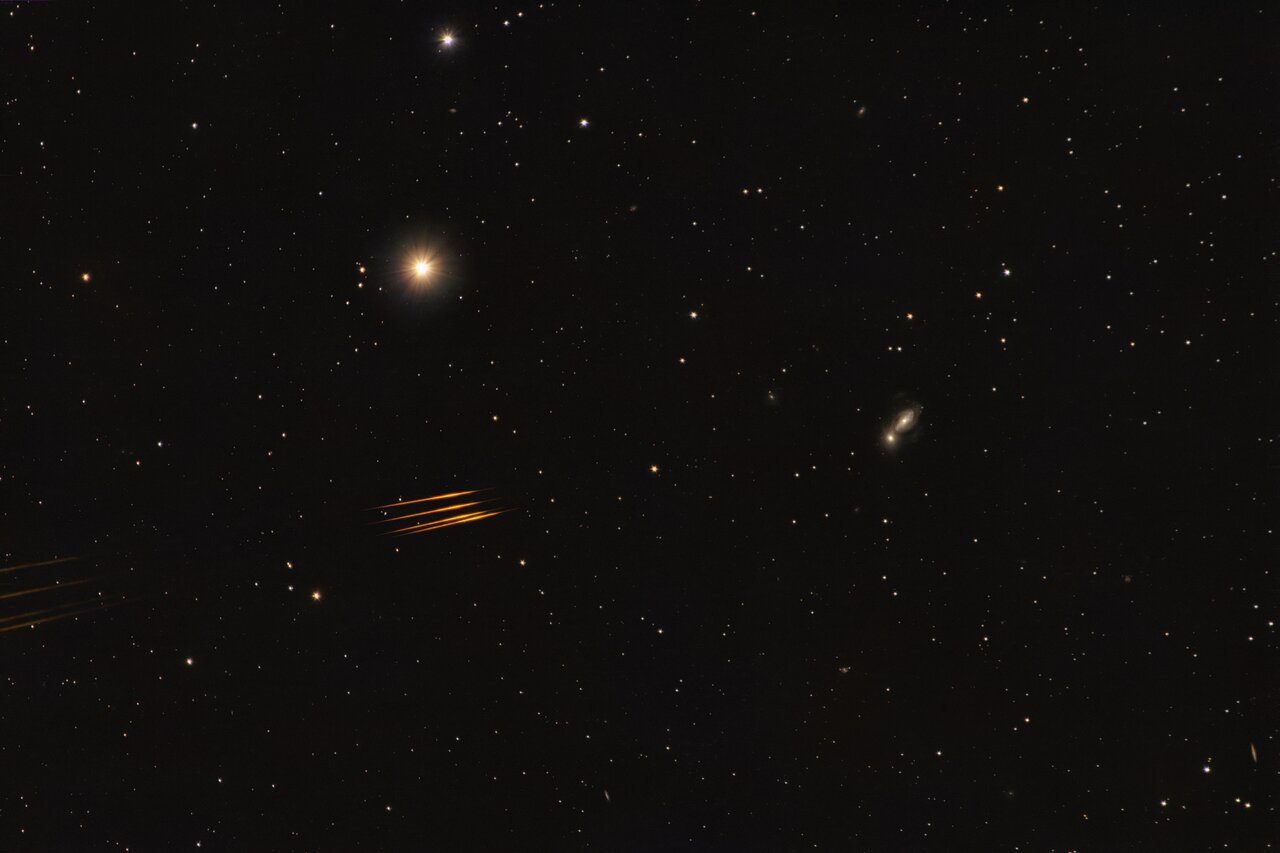
The sky above observatories is also a working environment for spacecraft. Orbital Radar tracking data lists 16,662 active satellites in orbit as of 6 November 2026. Satellites crossing a telescope’s field of view can leave trails in astronomical images, linking ground-based observing to the changing population overhead.
Orbital Radar tracking data lists 9,898 active Starlink satellites as of 6 November 2026. Readers can explore that constellation through the Orbital Radar Starlink Tracker, a complementary perspective on the shared sky above this mountain landscape.
Frequently Asked Questions
What telescope dome is visible in the distance from Rubin Observatory?
How quickly does Rubin Observatory send its images to California?
Cite this article
Pick a style, then copy it or download it for your reference manager.Orbital Radar. (2026, November 6). Earthly Expanse Around Rubin: Where Sky Meets Science. Retrieved November 6, 2026, from https://orbitalradar.com/blog/cosmic-gallery-2026-11-06
“Earthly Expanse Around Rubin: Where Sky Meets Science.” Orbital Radar, 6 Nov. 2026, orbitalradar.com/blog/cosmic-gallery-2026-11-06. Accessed 6 Nov. 2026.
Orbital Radar (2026) Earthly Expanse Around Rubin: Where Sky Meets Science. Available at: https://orbitalradar.com/blog/cosmic-gallery-2026-11-06 (Accessed: 6 November 2026).
Orbital Radar. “Earthly Expanse Around Rubin: Where Sky Meets Science.” Last modified November 6, 2026. https://orbitalradar.com/blog/cosmic-gallery-2026-11-06.
@misc{orbitalradar_blog_cosmic_gallery_2026_11_06,
  author       = {{Orbital Radar}},
  title        = {Earthly Expanse Around Rubin: Where Sky Meets Science},
  year         = {2026},
  month        = nov,
  howpublished = {\url{https://orbitalradar.com/blog/cosmic-gallery-2026-11-06}},
  url          = {https://orbitalradar.com/blog/cosmic-gallery-2026-11-06},
  urldate      = {2026-11-06},
  note         = {Accessed 2026-11-06}
}
TY - ELEC AU - Orbital Radar, TI - Earthly Expanse Around Rubin: Where Sky Meets Science PY - 2026 DA - 2026/11/06 PB - Orbital Radar UR - https://orbitalradar.com/blog/cosmic-gallery-2026-11-06 Y2 - 2026/11/06 LA - en ER -
Live figures change, so keep the date you accessed the page. How to cite Orbital Radar