ISS solar upgrade complete: Orbital Briefing, 6 November
Astronauts have installed the ISS's final upgraded solar array, completing a five-year effort. Meanwhile, Blue Origin has outlined a new stage for New Glenn.
| Active satellites | 16,662 |
| Starlink active | 9,898 |
| Catalogued objects | 32,032 |
| Active close approaches | 23 |
| People in space | 10 |
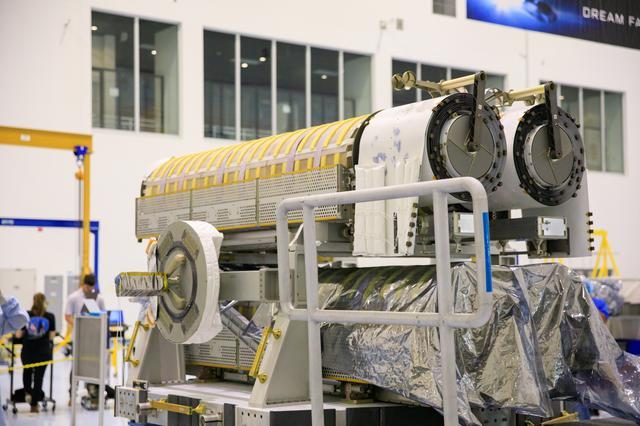
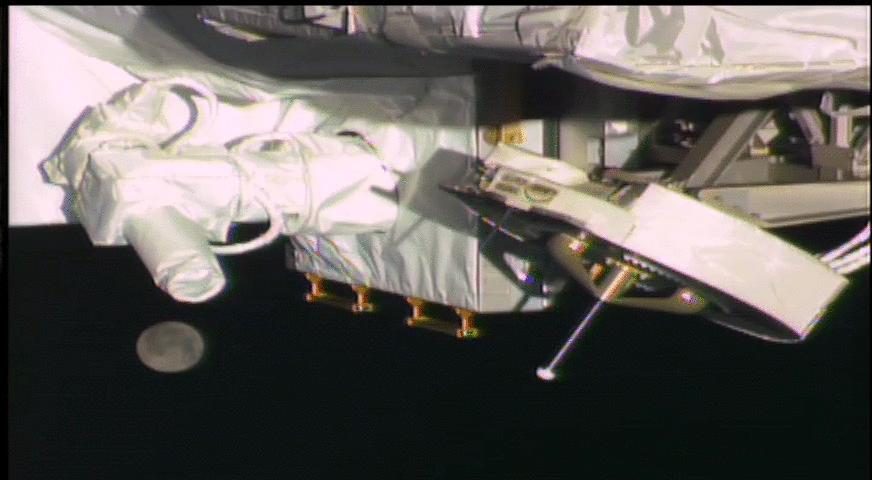
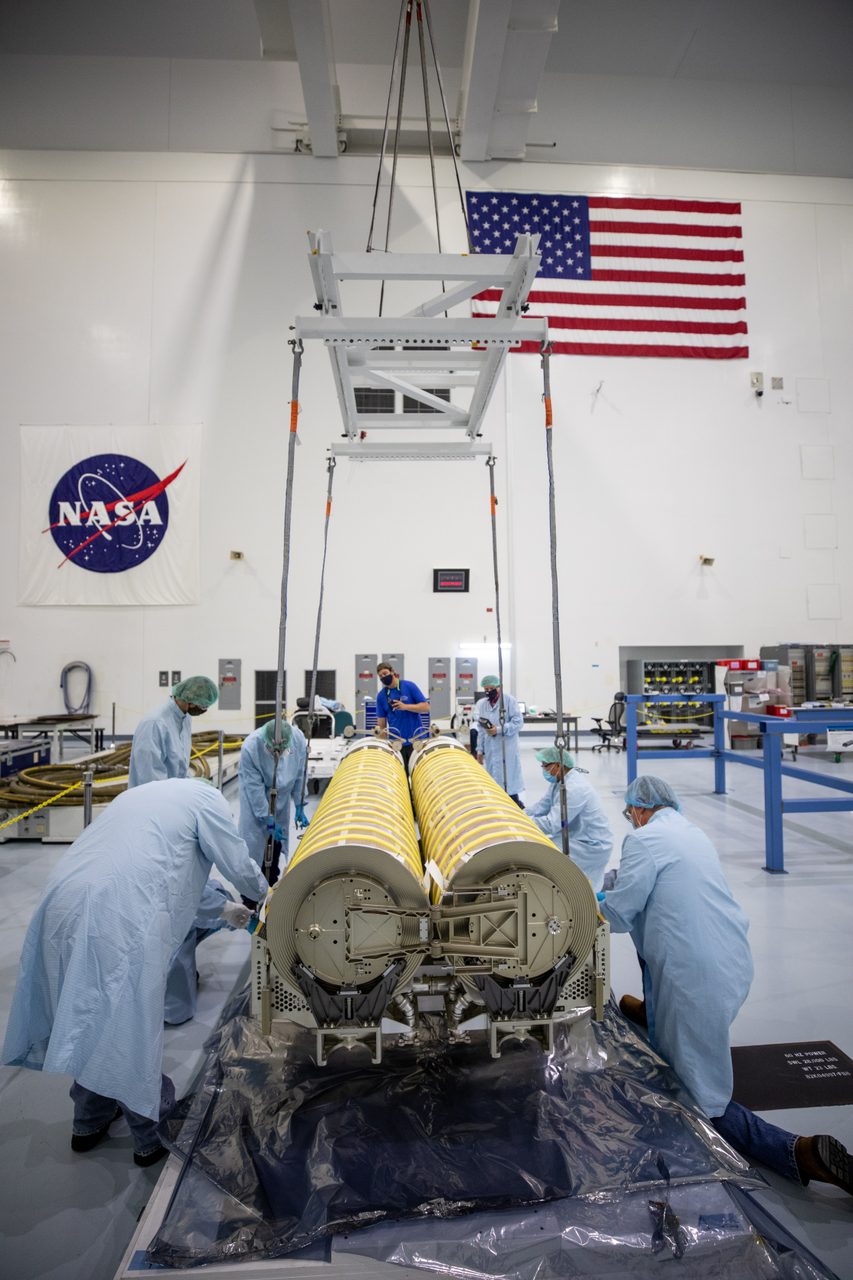
Astronauts have installed the International Space Station's eighth and final upgraded solar array, completing a five-year effort to augment its ageing power system. The installation closes a major chapter in maintaining the orbiting laboratory's electricity supply.
The iROSA programme — ISS Roll-Out Solar Arrays — adds generating capacity alongside the station's older arrays. That distinction matters: this is an augmentation of the existing power infrastructure, rather than wholesale replacement of the original solar wings.
For observers on the ground, the station remains a conspicuous moving point of light when sunlight and viewing geometry align. Local opportunities can be found through the Orbital Radar Pass Predictor; seeing the station does not mean individual solar arrays will be distinguishable.
New Glenn's next stage
Blue Origin has announced a new kick stage for New Glenn, alongside engine developments. A kick stage is an additional propulsion stage used after the main launch sequence to deliver payloads towards their intended orbits; the announcement describes a third-stage capability for the rocket.
The development shifts attention beyond getting a payload into orbit to what a launch vehicle can do afterwards. An extra stage can broaden delivery options, although an announcement alone does not establish operational performance or a flight timetable. New Glenn's place among orbital launchers can be explored in Orbital Radar's Launch Vehicles directory.
Close approaches in a crowded orbit
Orbital Radar tracking data records 16,662 active satellites as of 6 November 2026. Orbital Radar tracking data lists 9,898 operational Starlink satellites on 6 November 2026.
Orbital Radar tracking data shows 23 active close approaches under monitoring on 6 November 2026. Among the listed encounters, SUPERVIEW NEO-2 03 and SUPERVIEW NEO-2 04 have a reported minimum separation of approximately 1.38 km, while TIANHUI 5A and TIANHUI 5B are listed at approximately 1.75 km.
Those distances are not collision probabilities: assessing risk also requires understanding uncertainty in the predicted positions. The Orbital Radar space situational awareness toolkit provides context for following orbital traffic, while the Debris Map illustrates the wider tracked population.
What to Watch
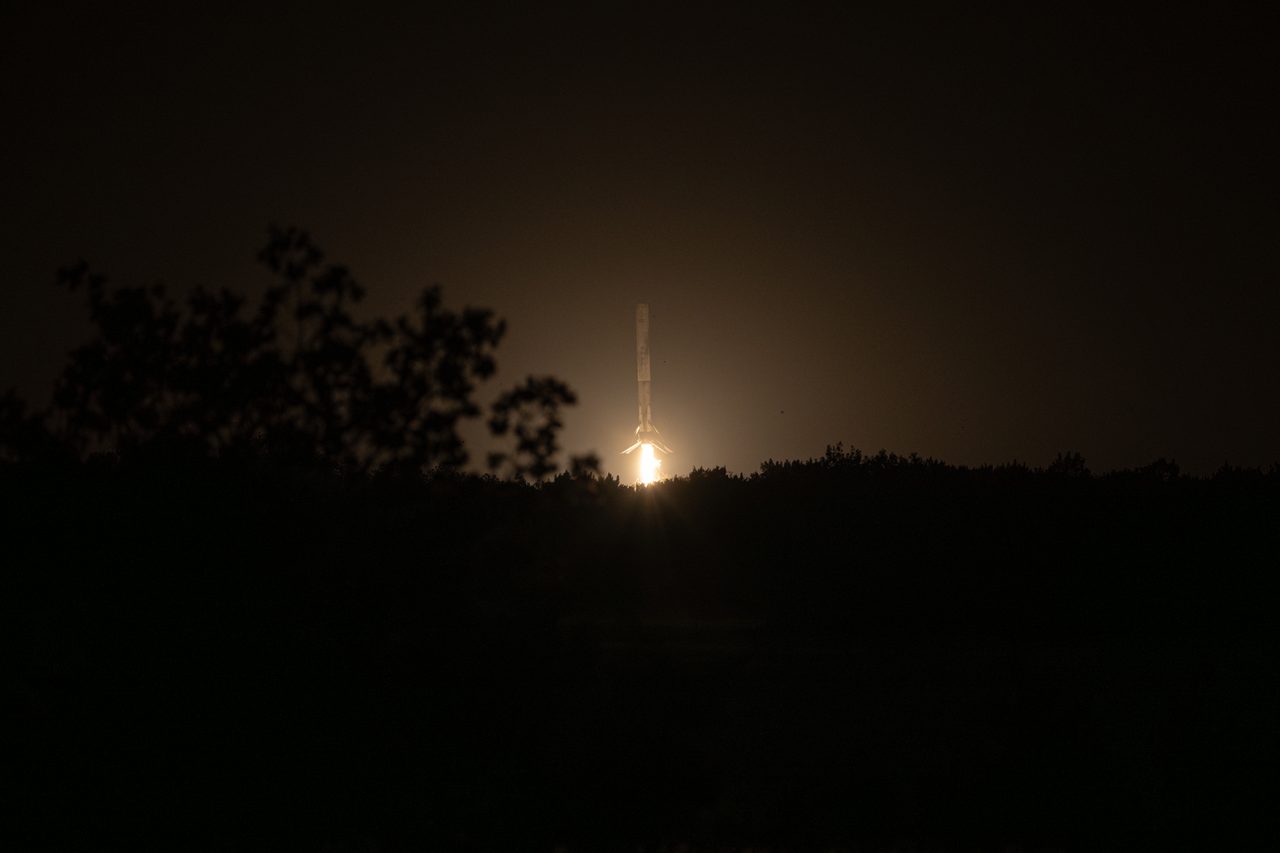
Ceres-2 is marked go for launch at 23:35 UTC on 6 November, carrying an unidentified payload. Falcon 9's USSF-432 mission follows at 00:46 UTC on 7 November, with low Earth orbit listed as its destination.
Long March 12 is scheduled for 20:25 UTC on 8 November, with its SatNet group designation still tentative. Starship Flight 15 remains listed for November with its date to be determined; these are schedules, not guarantees of liftoff.
The latest completed launch in this sequence was Long March 2C carrying Yaogan 51-07 to 09 at 15:58 UTC on 5 November. Follow timing changes and mission status through the Orbital Radar Launch Schedule.
Frequently Asked Questions
Have astronauts finished installing the ISS's upgraded solar arrays?
What space launches are scheduled for 6 and 7 November 2026?
Cite this article
Pick a style, then copy it or download it for your reference manager.Orbital Radar. (2026, November 6). ISS solar upgrade complete: Orbital Briefing, 6 November. Retrieved November 6, 2026, from https://orbitalradar.com/blog/orbital-briefing-2026-11-06
“ISS solar upgrade complete: Orbital Briefing, 6 November.” Orbital Radar, 6 Nov. 2026, orbitalradar.com/blog/orbital-briefing-2026-11-06. Accessed 6 Nov. 2026.
Orbital Radar (2026) ISS solar upgrade complete: Orbital Briefing, 6 November. Available at: https://orbitalradar.com/blog/orbital-briefing-2026-11-06 (Accessed: 6 November 2026).
Orbital Radar. “ISS solar upgrade complete: Orbital Briefing, 6 November.” Last modified November 6, 2026. https://orbitalradar.com/blog/orbital-briefing-2026-11-06.
@misc{orbitalradar_blog_orbital_briefing_2026_11_06,
  author       = {{Orbital Radar}},
  title        = {ISS solar upgrade complete: Orbital Briefing, 6 November},
  year         = {2026},
  month        = nov,
  howpublished = {\url{https://orbitalradar.com/blog/orbital-briefing-2026-11-06}},
  url          = {https://orbitalradar.com/blog/orbital-briefing-2026-11-06},
  urldate      = {2026-11-06},
  note         = {Accessed 2026-11-06}
}
TY - ELEC AU - Orbital Radar, TI - ISS solar upgrade complete: Orbital Briefing, 6 November PY - 2026 DA - 2026/11/06 PB - Orbital Radar UR - https://orbitalradar.com/blog/orbital-briefing-2026-11-06 Y2 - 2026/11/06 LA - en ER -
Live figures change, so keep the date you accessed the page. How to cite Orbital Radar